Fractions of Shapes Worksheets for Ages 4-7 - Page 2
38 filtered results
-
From - To
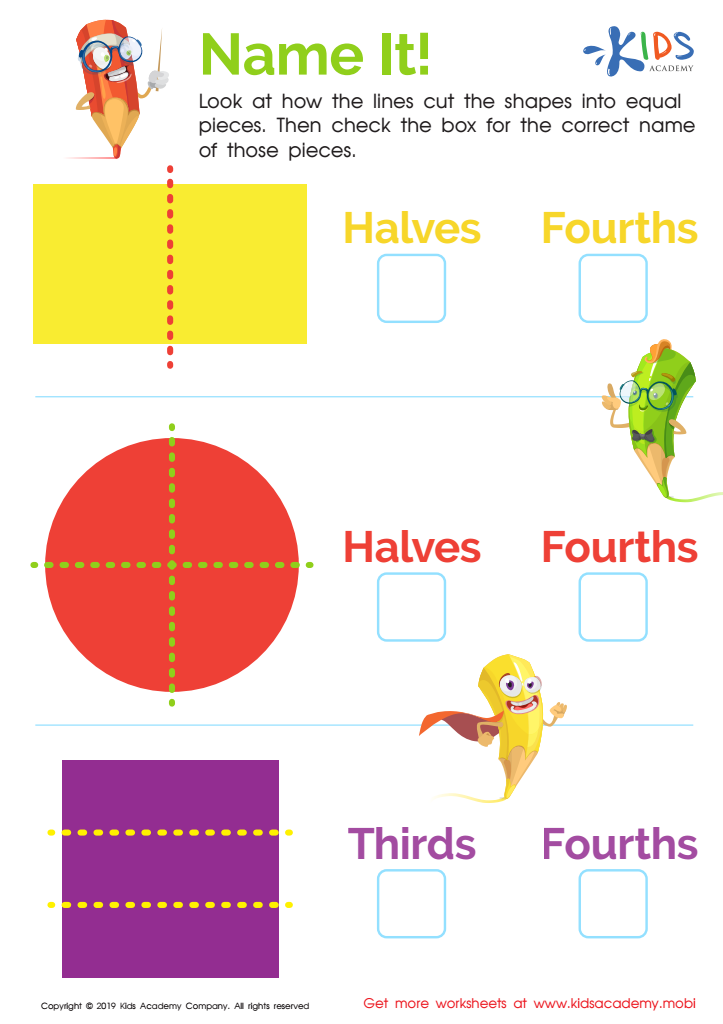
Name It! Worksheet
 Assign to My Students
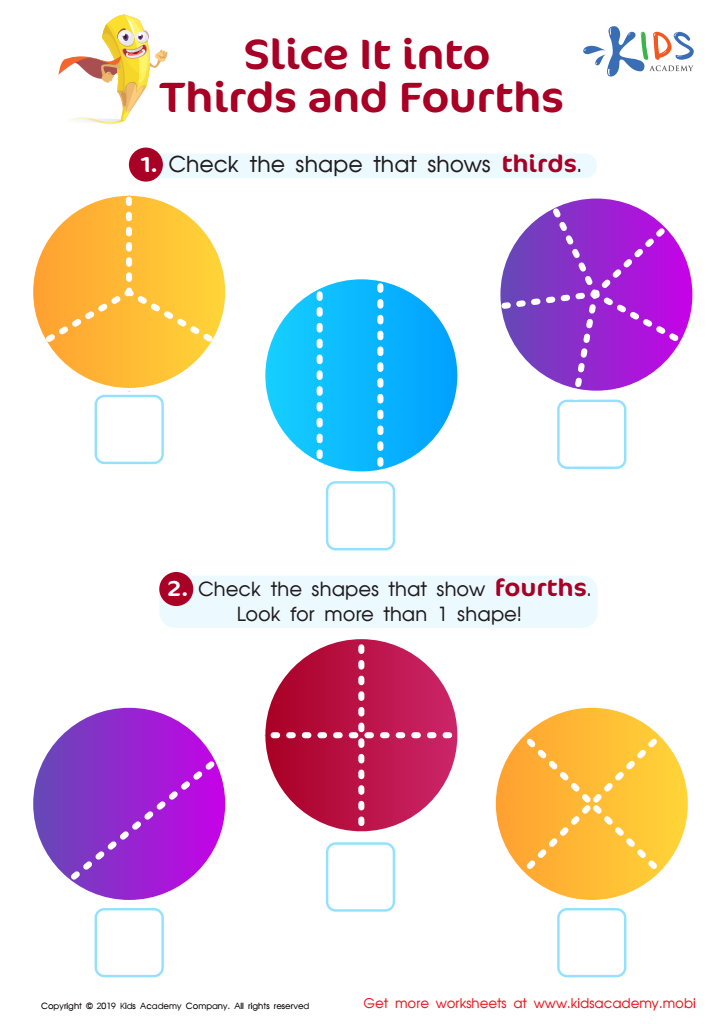
Slice in Thirds Fourths Worksheet
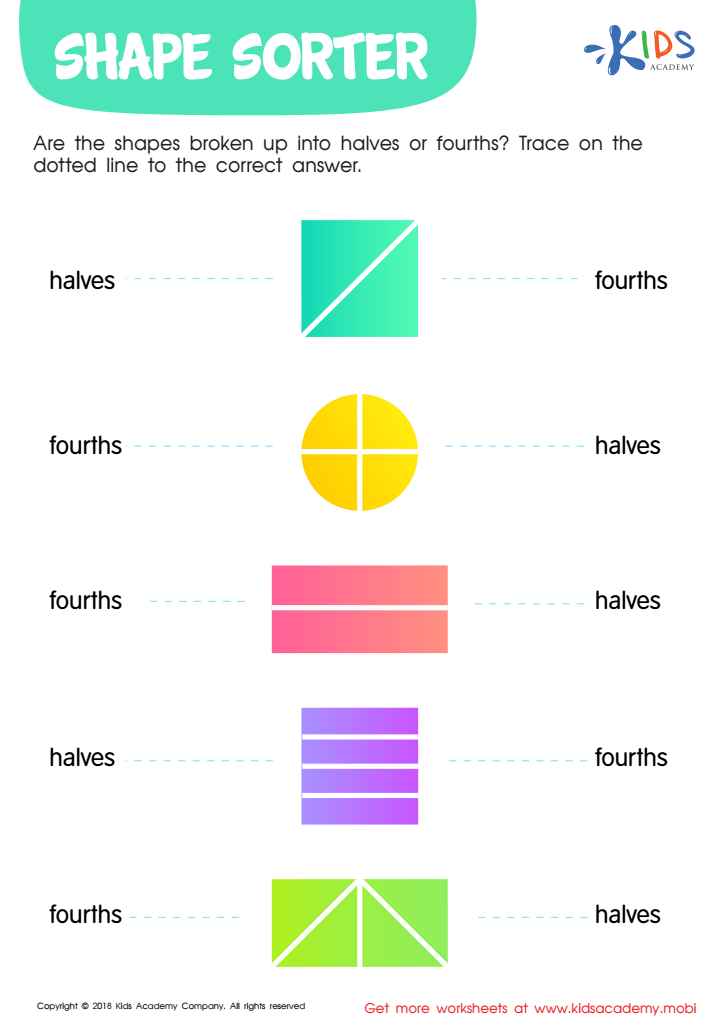
Shape Sorter Worksheet
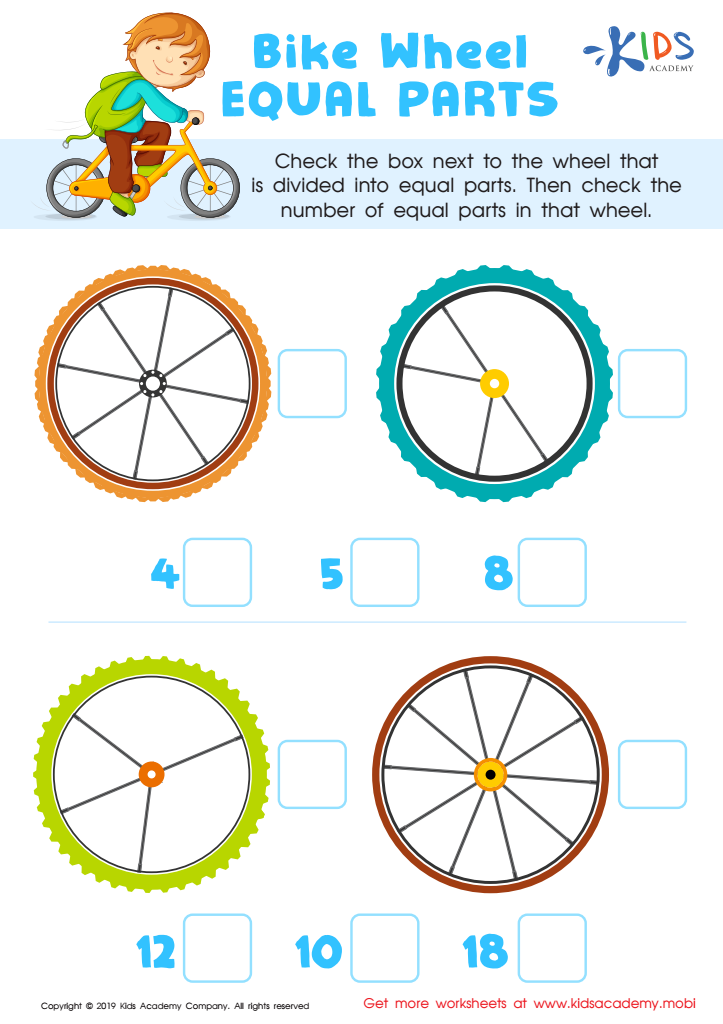
Bike Wheel Equal Parts Worksheet
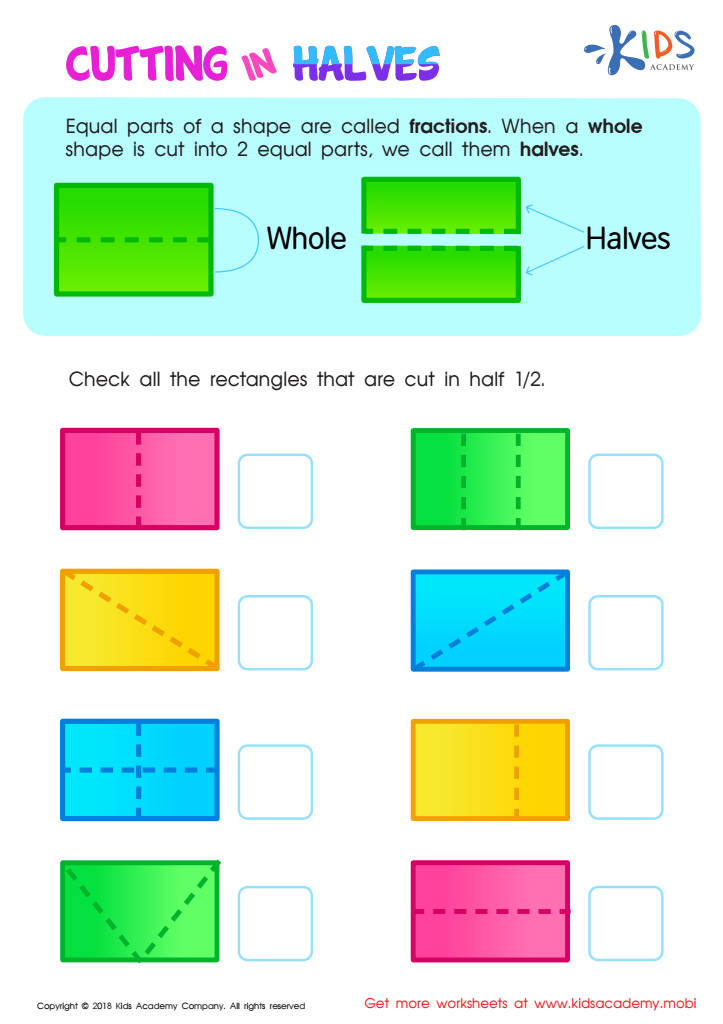
Cutting in Halves Worksheet
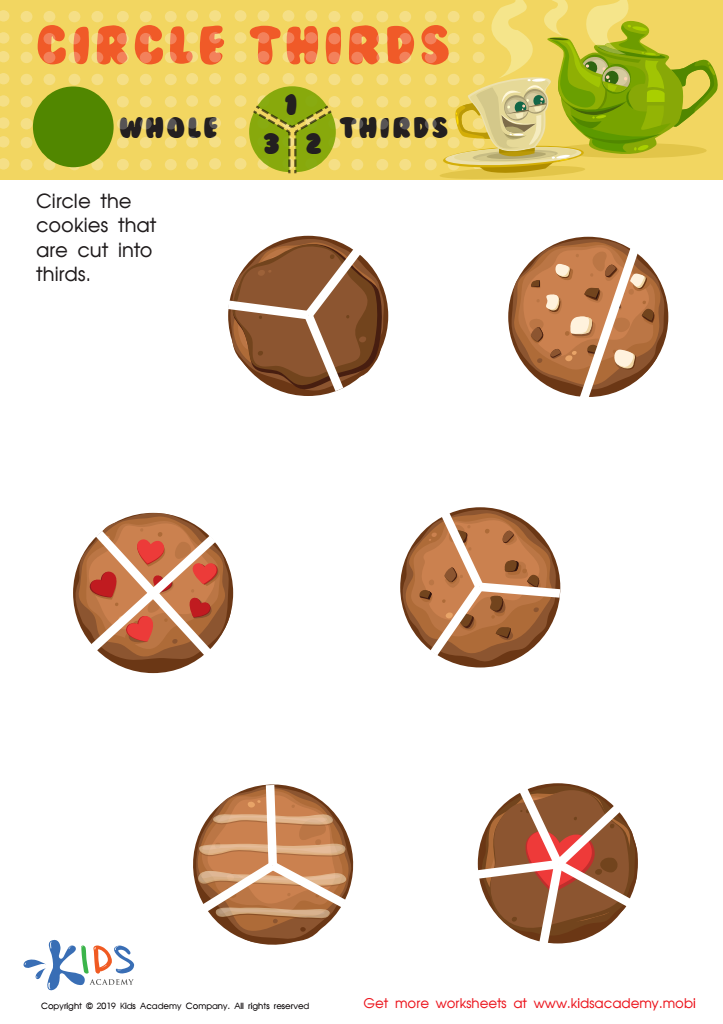
Circle Thirds Worksheet
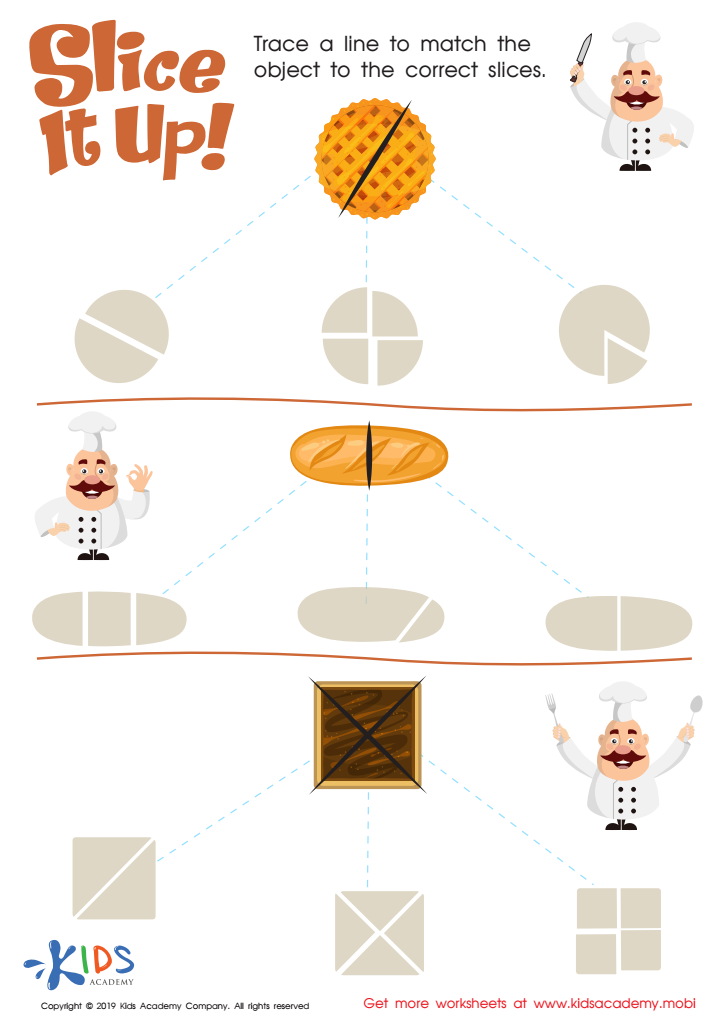
Slice It Up Worksheet
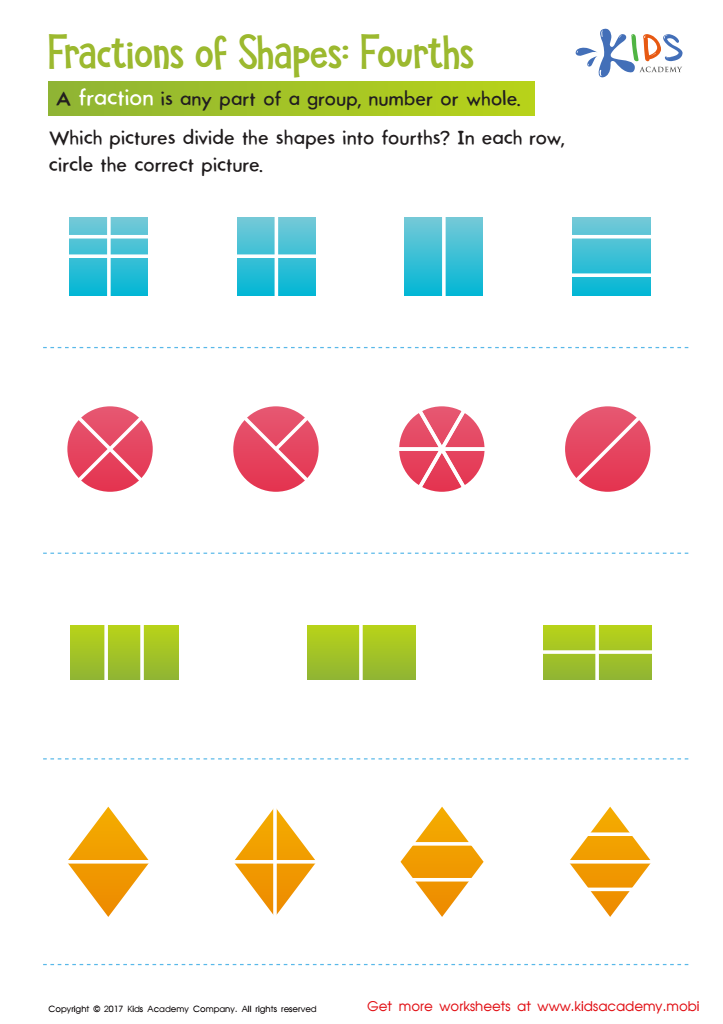
Fractions of Shapes Worksheet
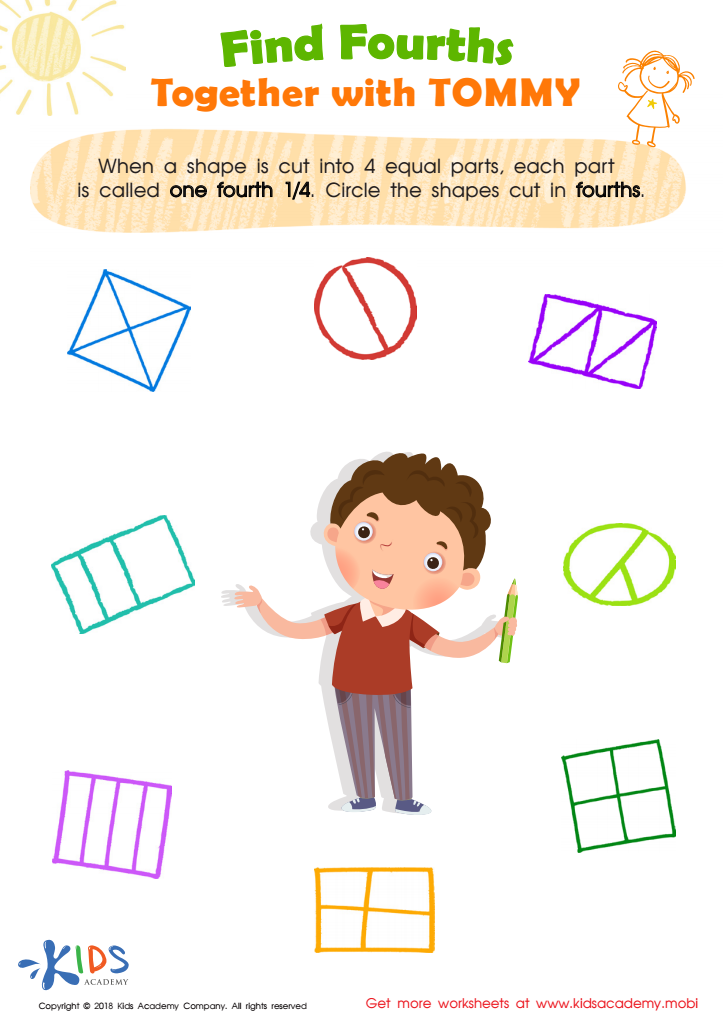
Find Fourths Together with Tommy Worksheet
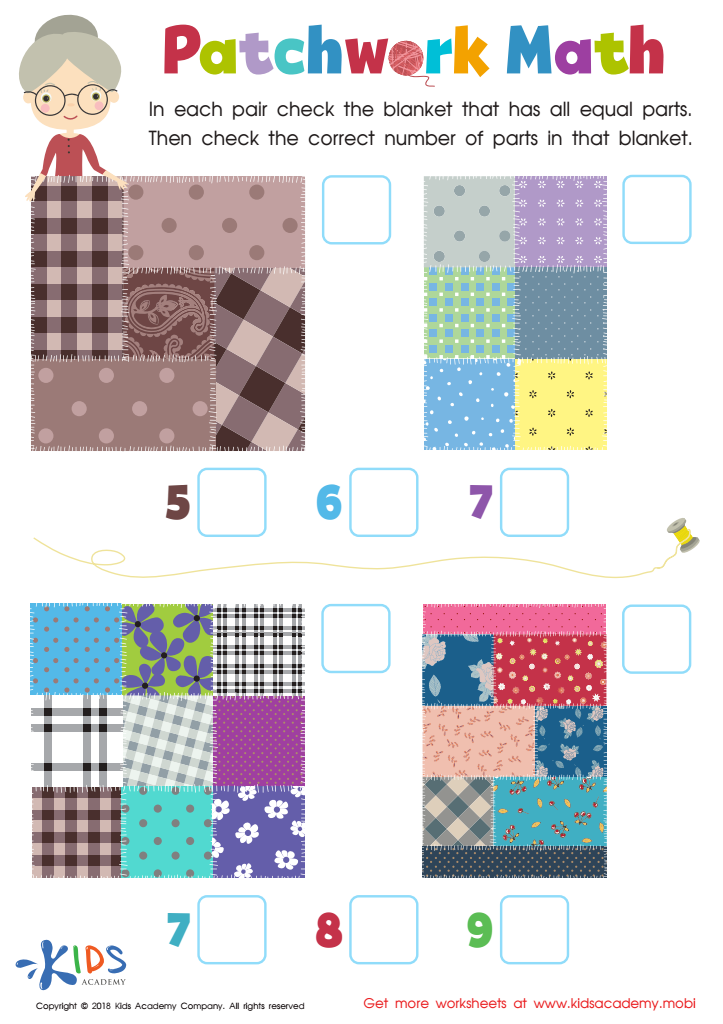
Patchwork Math Worksheet
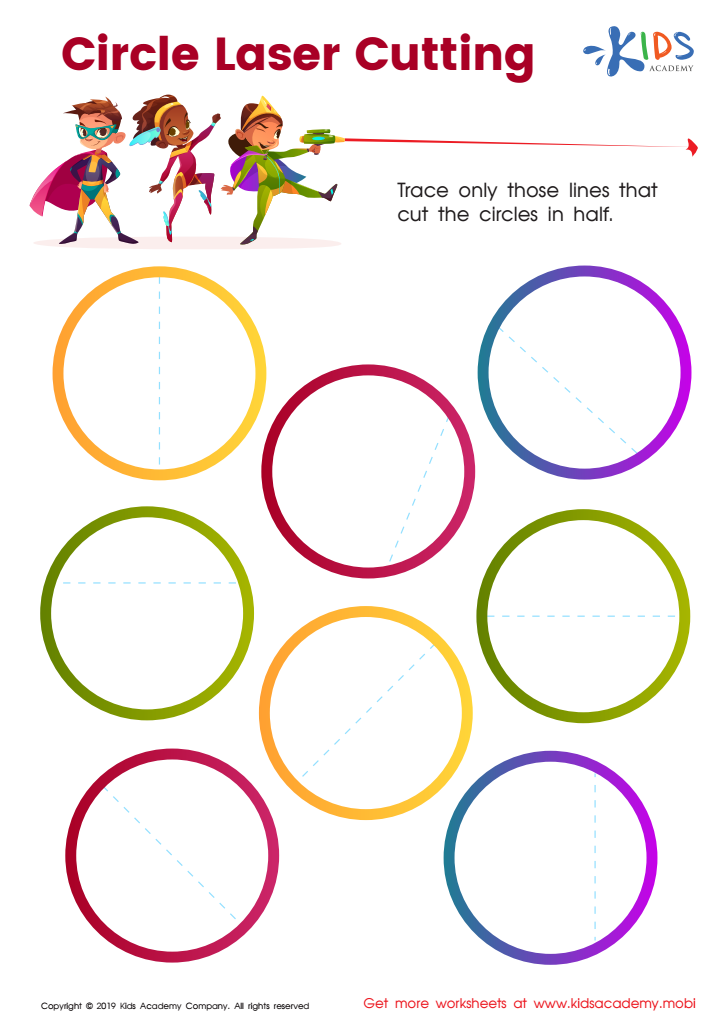
Circle Laser Cutting Worksheet
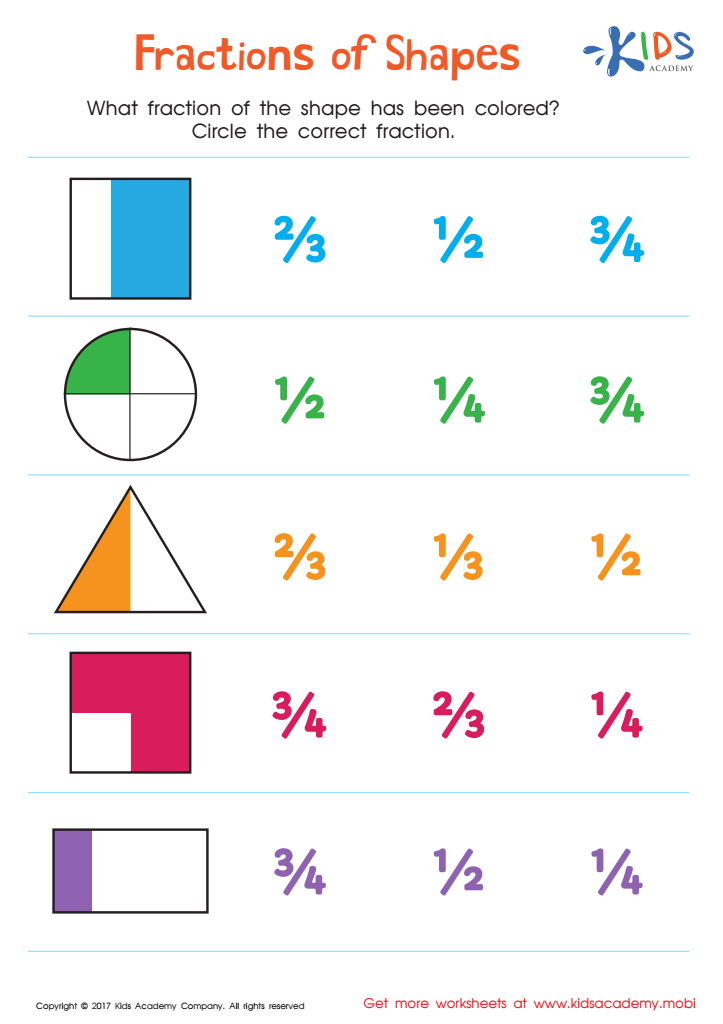
Fractions of Shapes: Math Concept Worksheet
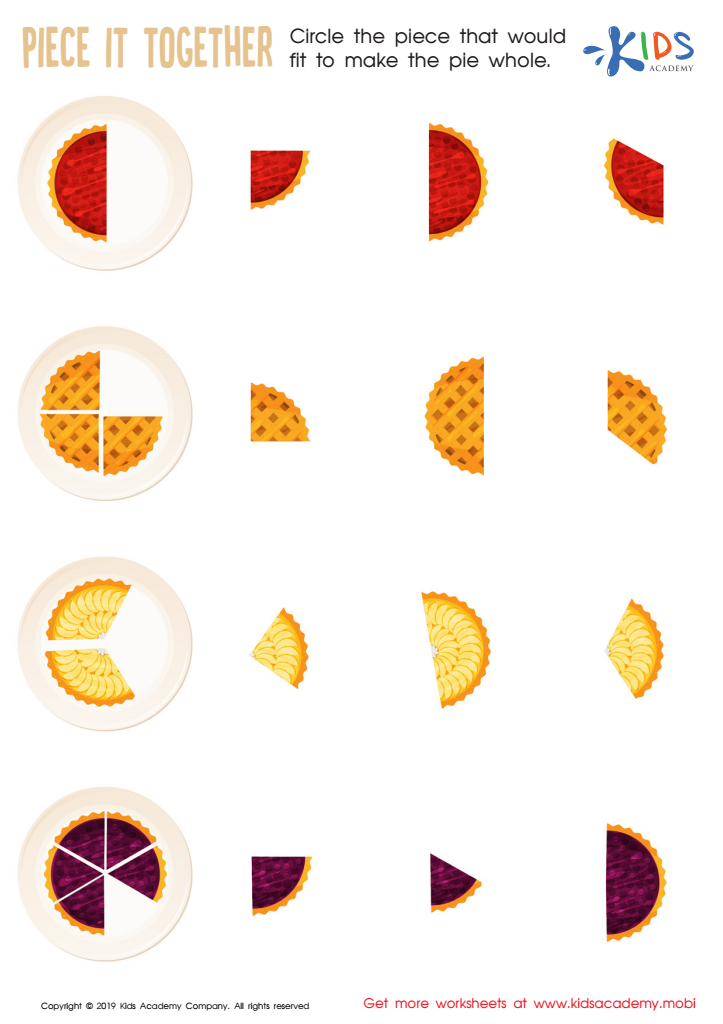
Piece it together Worksheet
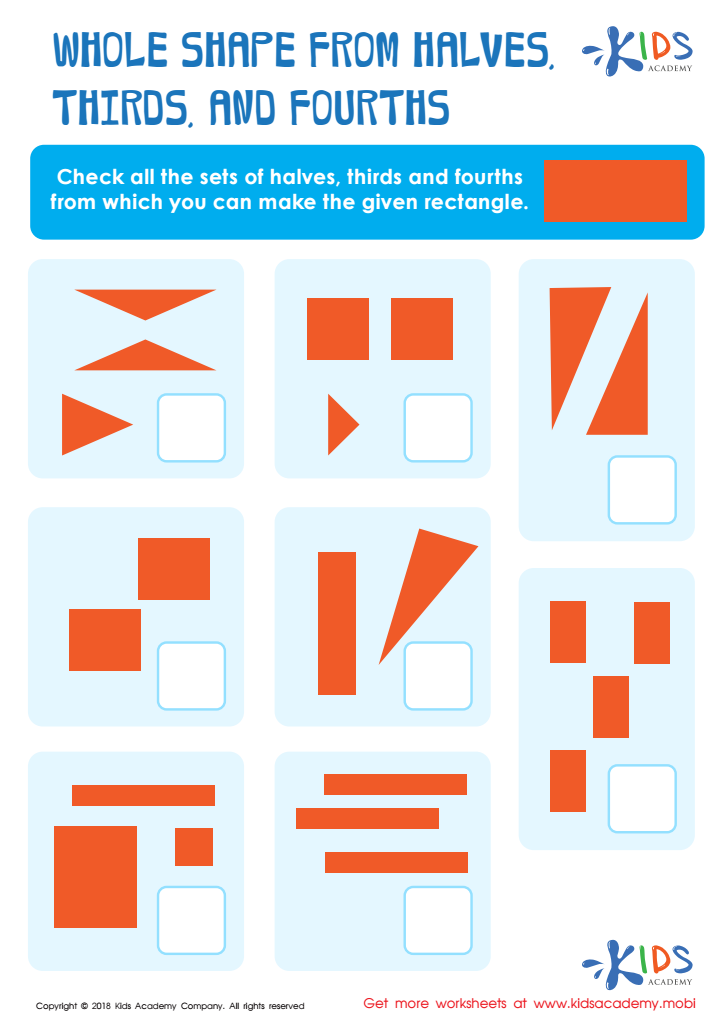
Whole Shape from Halves, Thirds and Fourths Worksheet








Parents and teachers should care about fractions of shapes for children ages 4-7 because this foundational concept is crucial for developing early mathematical understanding and problem-solving skills. Introducing fractions using shapes allows children to visually and tangibly grasp the idea of parts making up a whole. For example, when they see a square divided into four equal parts, they begin to understand what "one-quarter" or "one-fourth" means.
At this developmental stage, concrete visual experiences are vital as young minds are not yet ready for abstract thinking. Shapes like circles, squares, and rectangles help solidify their comprehension of how fractions work practically. Learning fractions through shapes also enhances spatial reasoning, which is essential not only in math but in everyday decision-making and tasks.
Furthermore, early exposure to fractions builds confidence and reduces math anxiety. Children accustomed to seeing and handling fractions early on view them as regular and solvable parts of mathematics, counteracting common future struggles in higher-level math topics. Teachers and parents who prioritize this fundamental skill help foster a positive and strong mathematical mindset in their young learners, setting the stage for academic success.