Time Worksheets for Ages 4-7 - Page 2
25 filtered results
-
From - To
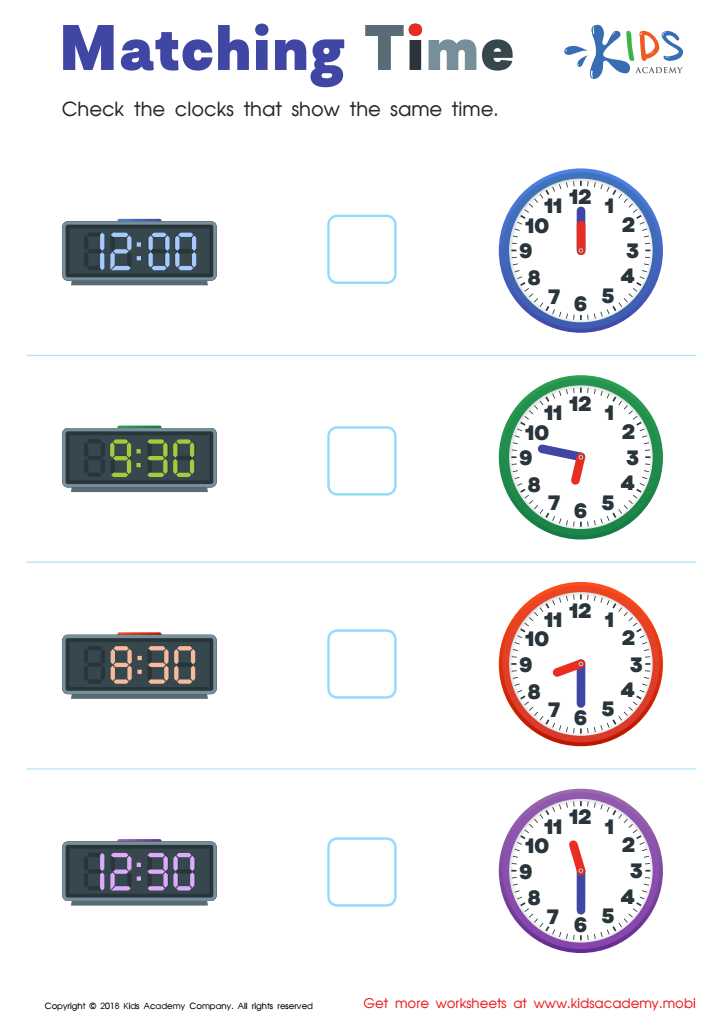
Matching Time Worksheet
 Assign to My Students








Understanding time is a fundamental skill that significantly impacts a child’s daily life and long-term development. For children aged 4-7, grasping the concept of time helps with structure, routine, and predictability, contributing to a sense of security and well-being. When children know what to expect, it reduces anxiety and helps them transition smoothly between activities, making both home and classroom environments more harmonious.
Parents and teachers should focus on teaching time to instill a sense of responsibility and time management from an early age. Simple concepts like days of the week, months, morning, and evening help children order their experiences and understand daily sequences, which is crucial for cognitive development.
Moreover, understanding time aids in the development of numeracy skills, such as counting, understanding sequences, and recognizing patterns. Learning to read a clock or comprehend a calendar also enhances literacy and fosters independent skills, such as preparing for school or understanding deadlines.
Additionally, appreciation for time teaches children the value of timeliness and punctuality. This awareness reinforces good habits that are significant in academic success and later in life. Therefore, investing time and effort in teaching young children about the concept and use of time lays a critical foundation for their overall development and success.








