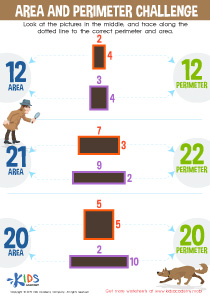
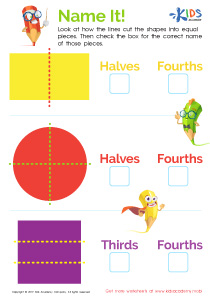
2D Shapes Worksheets for Ages 4-8 - Page 4
75 filtered results
-
From - To
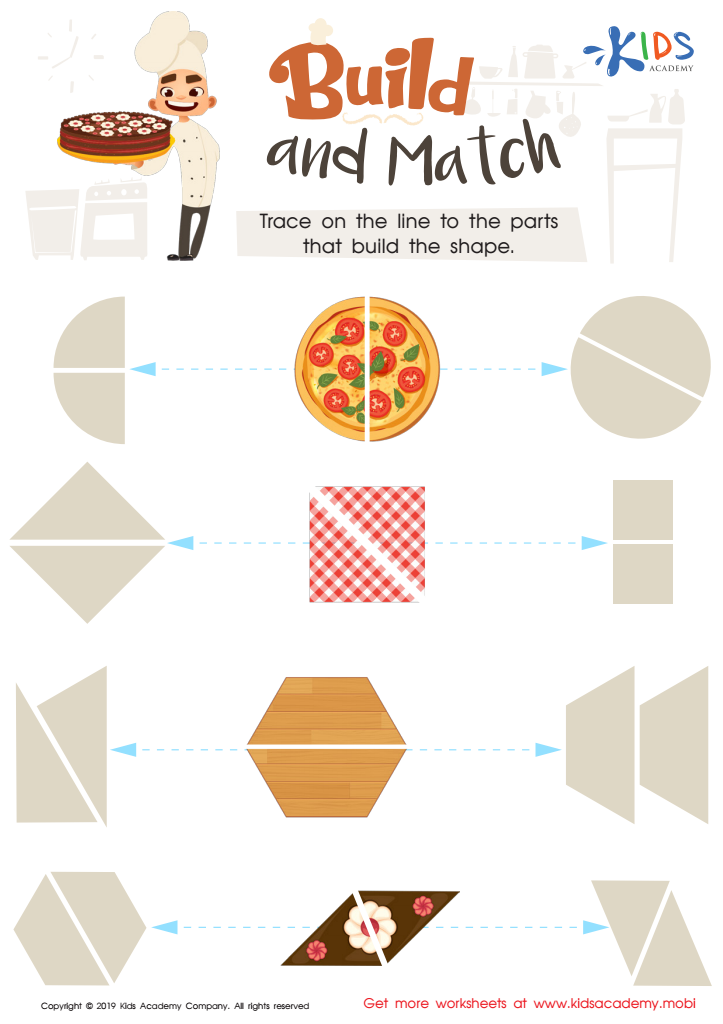
Build and Match Worksheet
 Assign to My Students


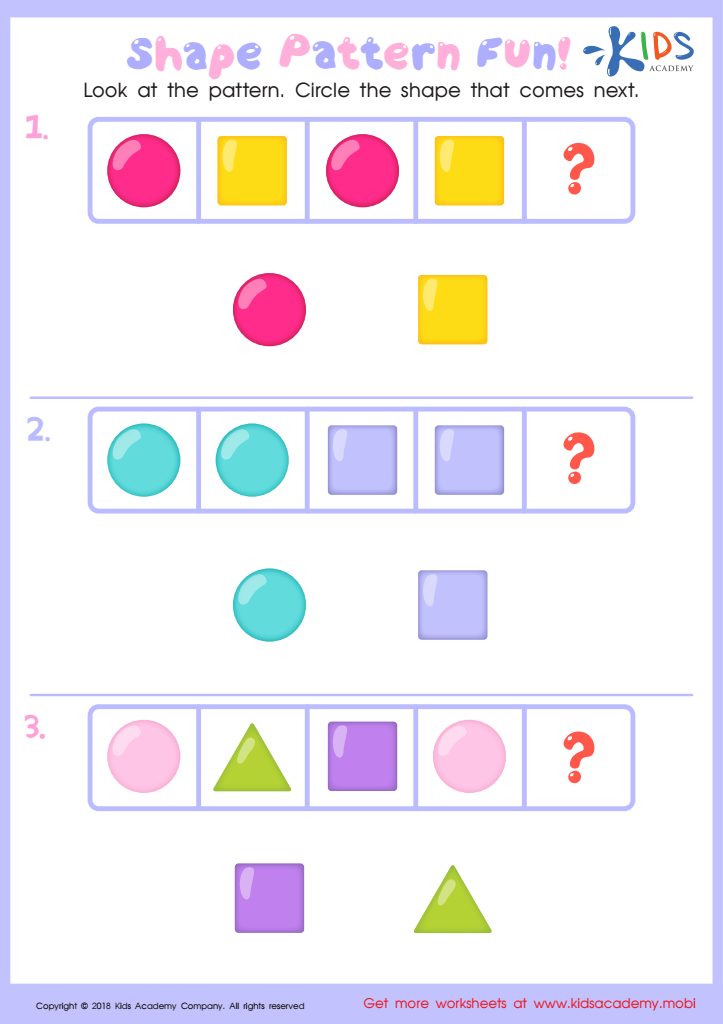
Shape Pattern Fun Worksheet
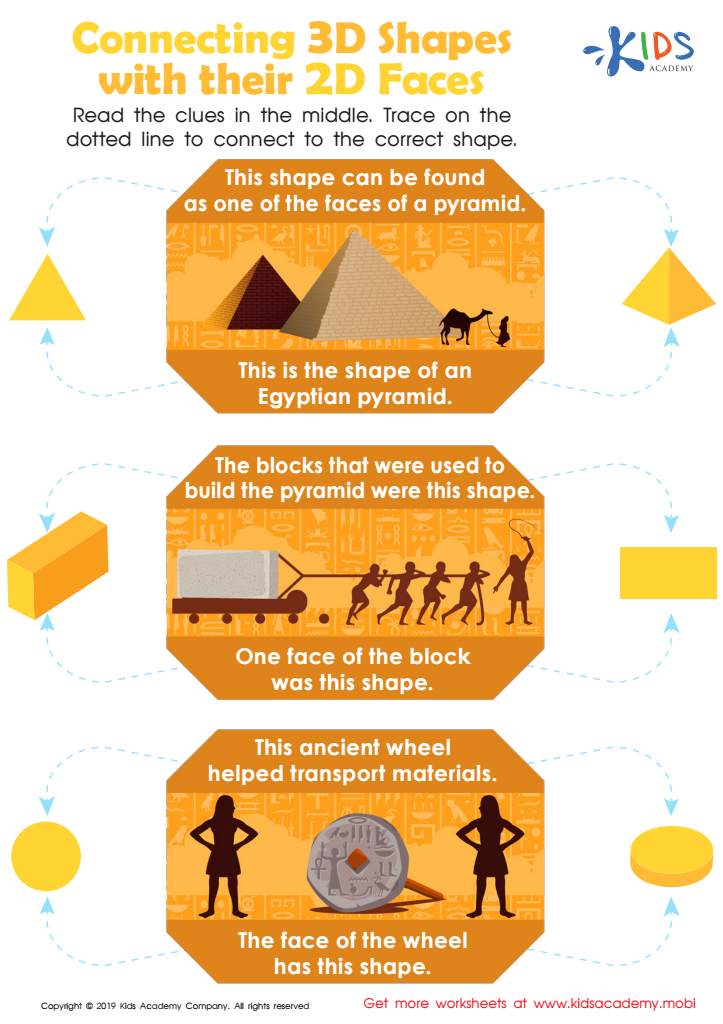
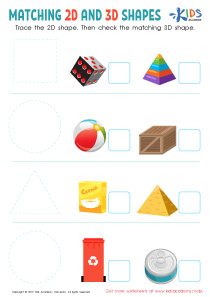
Connecting 3D Shapes with Their 2d Faces Worksheet








Parents and teachers should care about 2D shapes for children aged 4-8 because understanding these fundamental concepts lays the foundation for crucial mathematical skills and cognitive development. At this age, children are naturally curious and engage in hands-on learning. Introducing 2D shapes—such as circles, squares, triangles, and rectangles—through engaging activities aids in developing spatial awareness and observational skills.
Recognizing and naming shapes enables children to make sense of the world around them, whether in art, architecture, or natural formations. This knowledge also foster critical thinking: for example, comparing shapes, identifying patterns, and solving problems. Activities involving sorting and classifying shapes promote logical reasoning and data organization, key skills for future success in mathematics.
Moreover, 2D shape recognition plays a pivotal role in literacy development. When children learn terms related to these shapes, it enhances their vocabulary and ability to describe objects accurately, supporting language development.
Furthermore, building a strong understanding of 2D shapes generates excitement about learning and encourages children to explore further mathematical concepts, setting a solid foundation for more complex geometric principles in the future. Providing interactive and playful learning experiences regarding shapes nurtures a lifelong passion for learning in children.