Numbers up to 100 Worksheets for Ages 4-8 - Page 3
50 filtered results
-
From - To
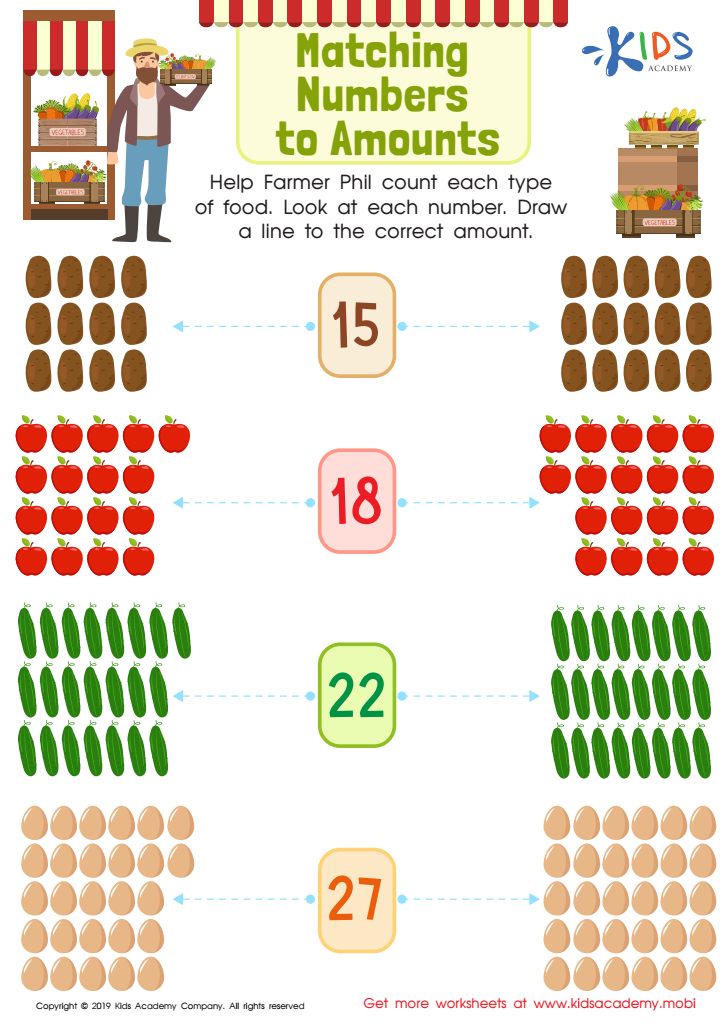
Matching Numbers to Amounts Worksheet
 Assign to My Students

Counting on the City Skyline: Dot-to-Dot Worksheet






%20(1).jpg)

Understanding numbers up to 100 is crucial for children aged 4-8 as it lays the foundation for future mathematical concepts. For one, it develops their numerical literacy, helping kids recognize, count, and write numbers accurately. These are essential skills necessary not just in math, but in everyday activities like telling time, understanding dates, and managing small amounts of money.
Learning numbers up to 100 enhances cognitive development and logical thinking. Kids begin to grasp number patterns, sequences, and simple arithmetic (like addition and subtraction) which are building blocks for more complex math topics. This age-appropriate exposure to numerical concepts feeds into other aspects of education, like measuring and sorting objects, which are critical activities across subjects from science to art.
Additionally, proficiency in numbers up to 100 boosts children's confidence. When they're comfortable with these numbers, they approach math with a positive attitude, which is paramount for long-term academic success. Teachers and parents play a vital role here by providing supportive and interactive learning environments, whether through educational games, hands-on activities, or continuous encouragement. Engaging with numbers in everyday scenarios, like counting steps or identifying house numbers, can also make learning enjoyable and relevant.








