Time Worksheets for Ages 4-8 - Page 2
25 filtered results
-
From - To
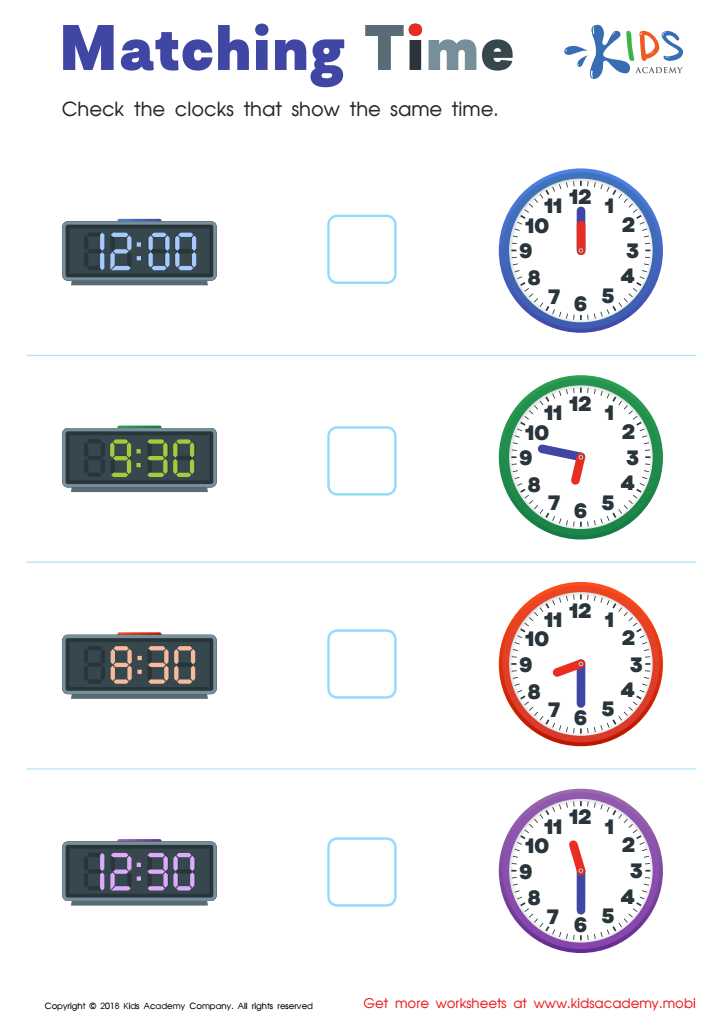
Matching Time Worksheet
 Assign to My Students




.jpg)



Parents and teachers should deeply care about teaching time to children aged 4-8 because it forms a foundational life skill that is vital for daily functioning and independence. Understanding time helps children develop a sense of routine, which is crucial for their overall well-being and organization. At this age, children are naturally curious and eager to learn, making it an excellent time to introduce concepts of time such as hours, minutes, days, and months.
By comprehending time, children can better manage their schedules, such as knowing when to get ready for school, when to eat, or when playtime begins. It also enhances their social skills, as they learn to coordinate activities with peers. Moreover, time concepts support cognitive development, including problem-solving and critical thinking.
Beyond practical applications, mastering time allows children to better understand the world around them, fostering a sense of predictability and security. It is essential for their academic growth, as time management and punctuality are valued skills in educational settings. Investing in teaching time now can set the stage for future successes, making it an essential focus for both parents and teachers in fostering independence and responsible habits in young learners.








