Long Vowels Worksheets for Ages 4-9 - Page 2
29 filtered results
-
From - To
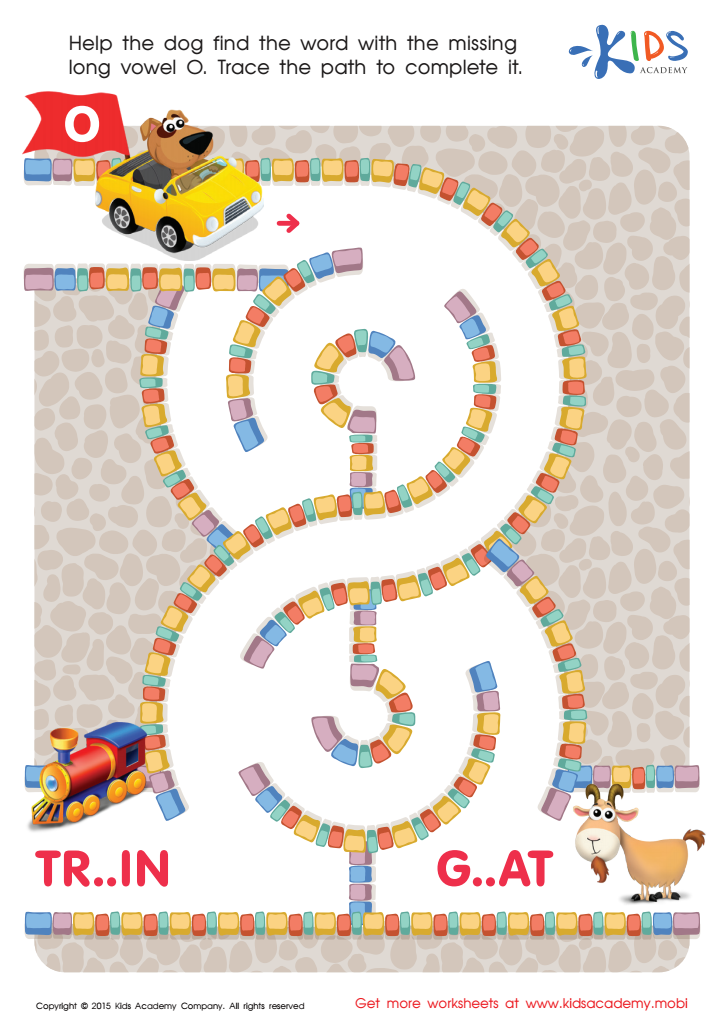
Long Vowel Sound O Worksheet
 Assign to My Students
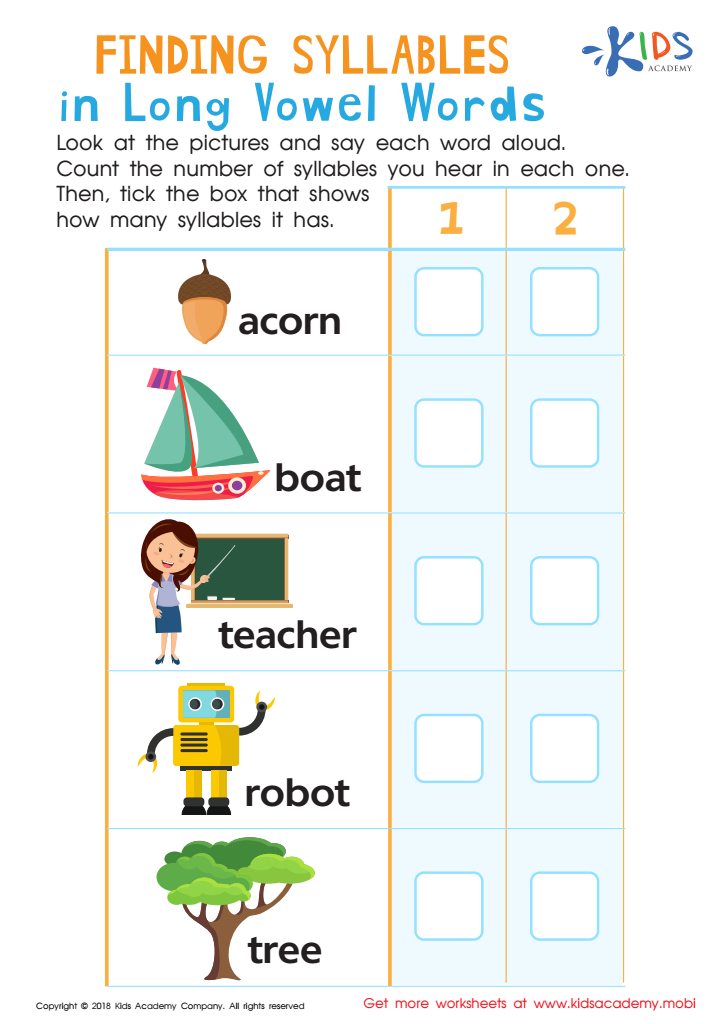
Finding Syllables in Long Vowel Words Worksheet
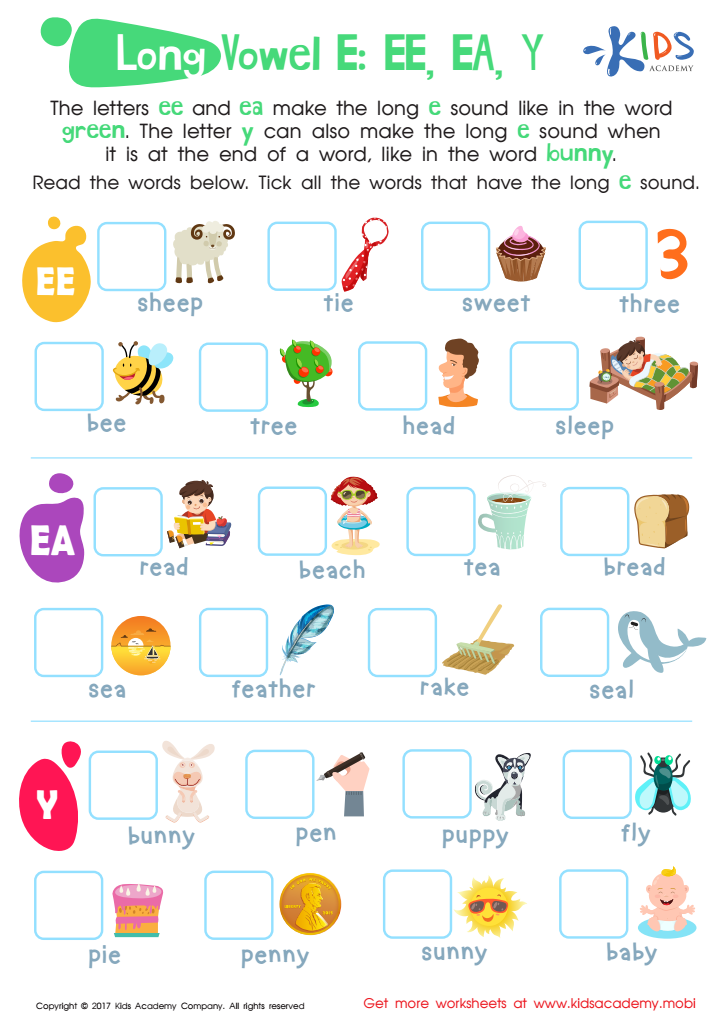
Long Vowel E Printable
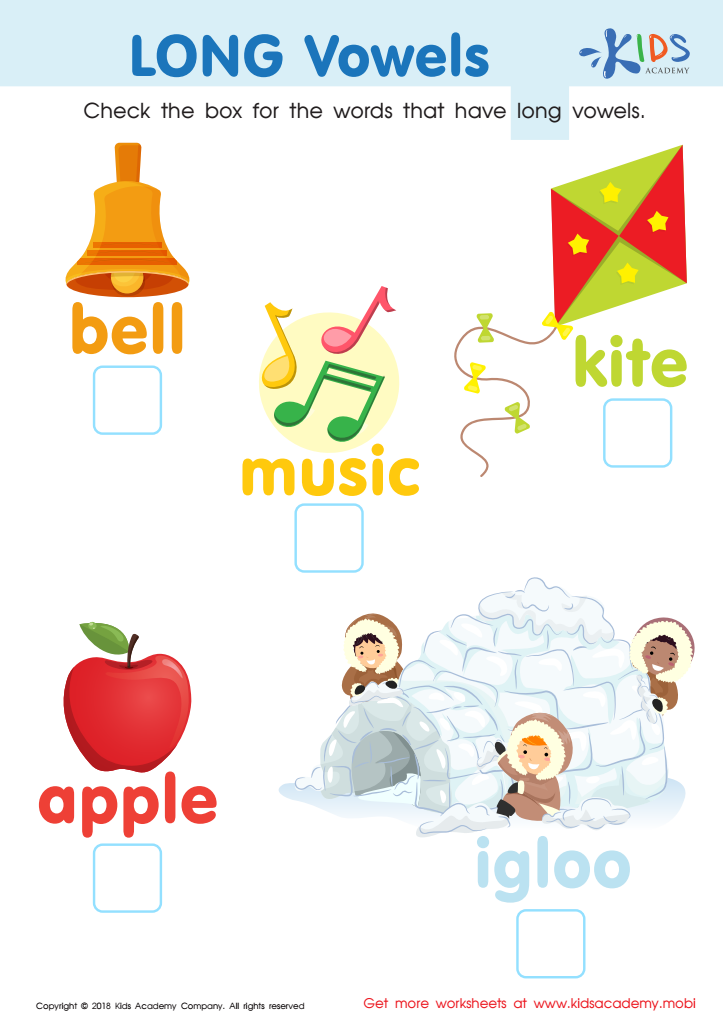
long vowels Worksheet
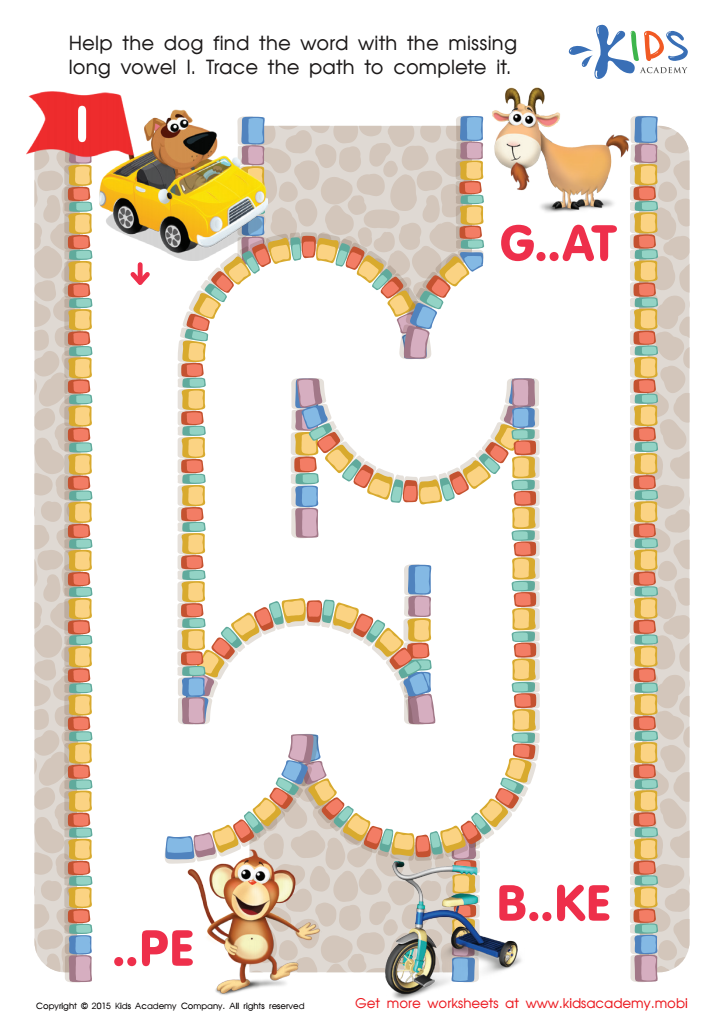
Long Vowel Sound I Worksheet



Understanding long vowels is crucial for children aged 4-9 as they form a foundational element of reading and language development. Long vowels help children distinguish between similar-sounding words, which fosters their phonemic awareness. This awareness is vital for reading fluency, enabling children to decode words accurately and confidently.
Moreover, recognizing long vowels strengthens spelling skills. Children equipped with this knowledge can better understand word structures, enhancing their ability to spell accurately. It also expands their vocabulary, as many longer words contain vowel sounds that contribute to meaning.
Educationally, mastering long vowels supports comprehensive reading strategies and encourages independent reading. Children who grasp these concepts are more likely to engage with texts and develop a love of reading, which is essential for academic success.
Finally, long vowels create connections between oral and written language, aiding in effective communication. Parents and teachers play a crucial role in this learning process; through games, songs, and interactive activities, they can make learning about long vowels enjoyable and engaging. By prioritizing long vowels, adults set the stage for robust literacy skills, laying the groundwork for children’s future educational achievements.








