Silent Vowels Worksheets for Ages 4-9
5 filtered results
-
From - To
Introducing our engaging "Silent Vowels Worksheets for Ages 4-9" – a fun, interactive way to enhance your child's understanding of phonics! These specially designed worksheets focus on silent vowels, helping young learners identify and master words with silent letters. Each worksheet features captivating illustrations and age-appropriate exercises that promote essential literacy skills. Ideal for both classroom and at-home learning, these materials encourage kids to develop their reading and writing skills through practice and creativity. Discover the joy of learning as your child gains confidence in their abilities! Download our printable worksheets today and watch their literacy flourish!
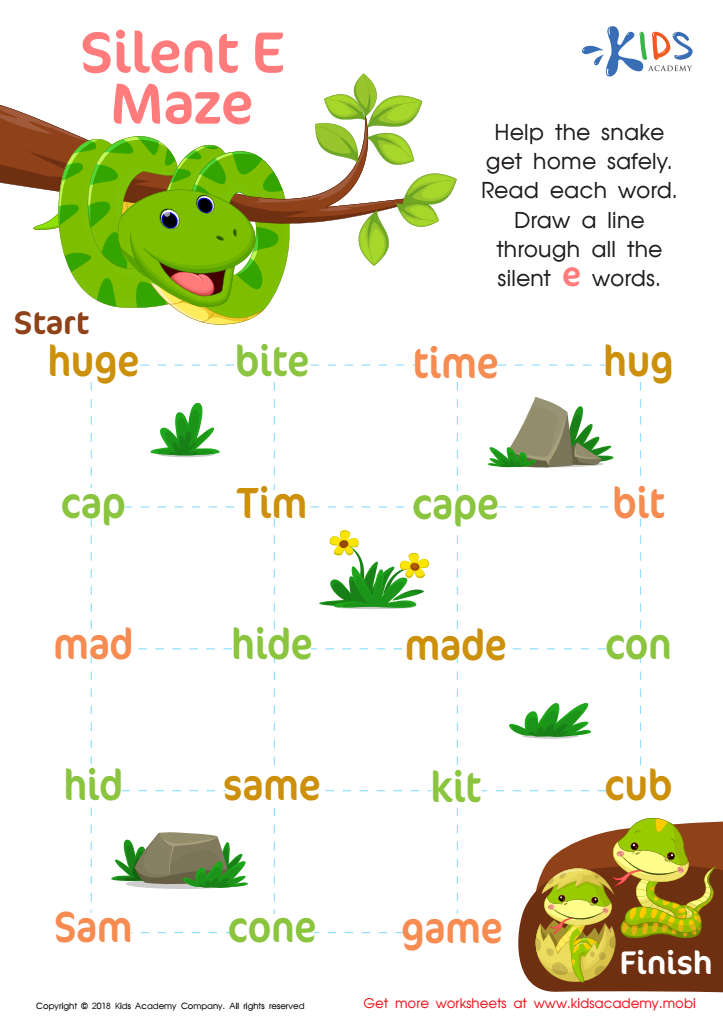
Silent E Maze Worksheet
 Assign to My Students
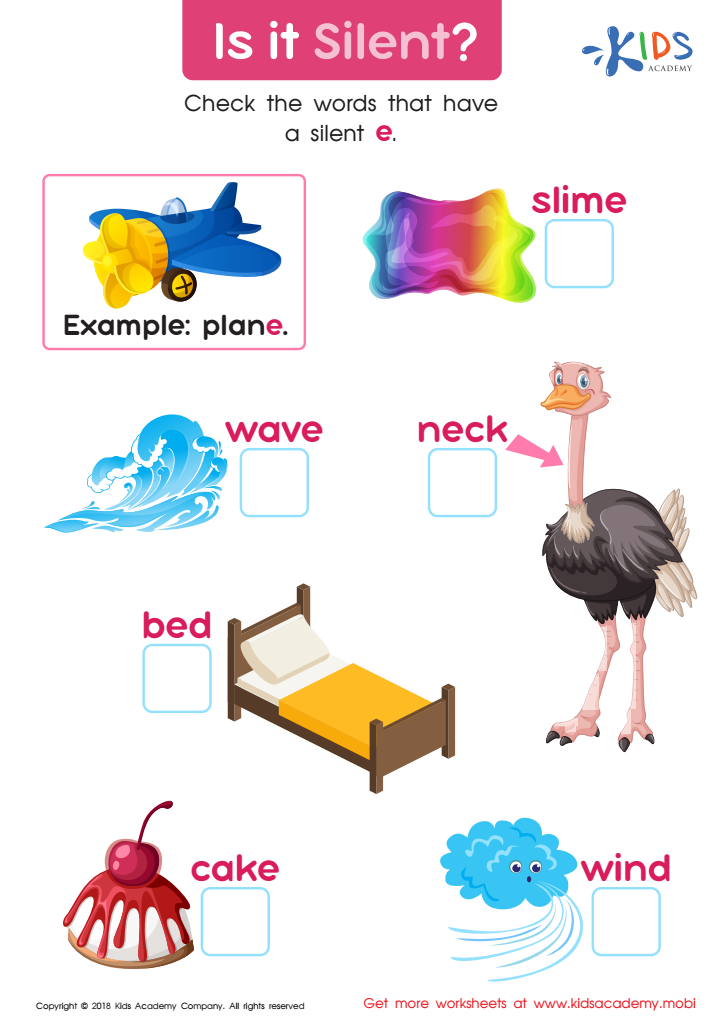
Is It Silent? Worksheet
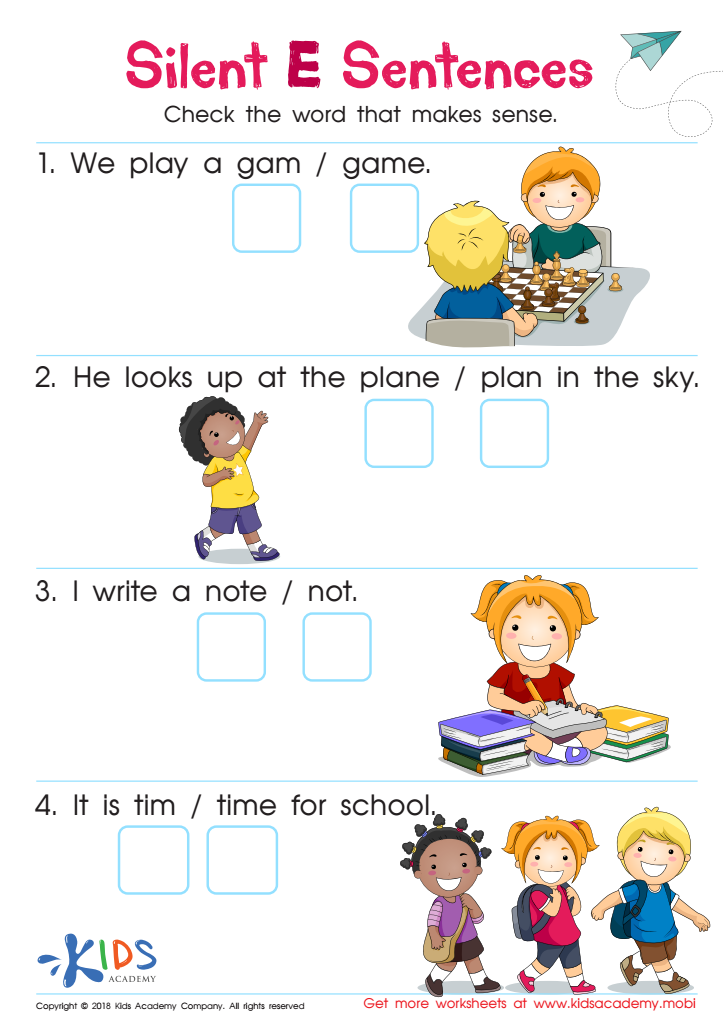
Silent E Sentences Worksheet
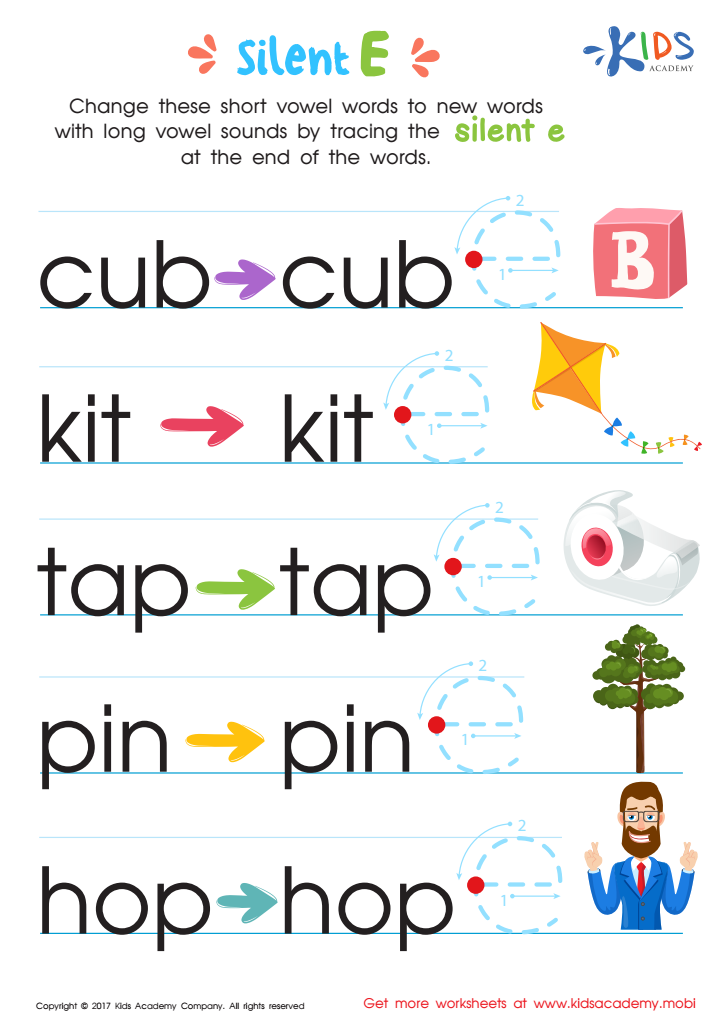
Silent E Words Worksheet
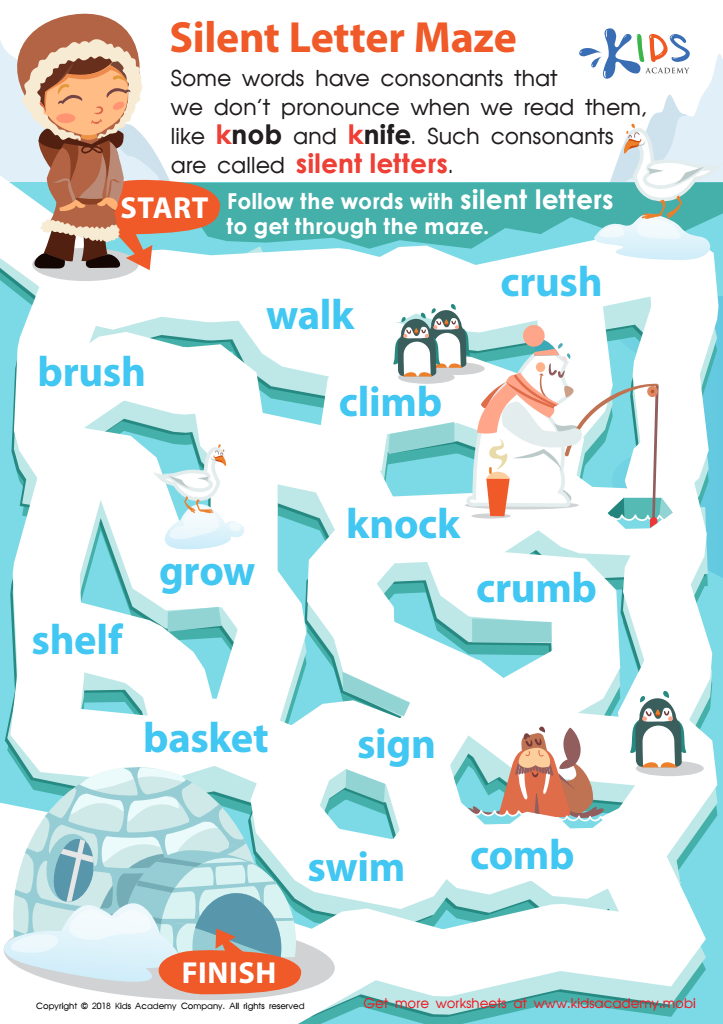
Silent Letter Maze Worksheet


Silent vowels, often found in words like "bake" and "like," play an essential role in developing reading skills for children aged 4-9. Understanding these silent letters helps young learners grasp the complexities of phonetics, thereby improving their decoding abilities. When children recognize that not all letters produce sounds in a word, they build their phonemic awareness, which is fundamental for reading fluency.
Moreover, knowledge of silent vowels enriches vocabulary development. As children encounter new words across books and conversations, they become aware of word structures and patterns, enhancing their spelling skills. This expands their capacity to recognize familiar patterns in unfamiliar words, making reading a more manageable and enjoyable experience.
Additionally, teaching silent vowels can enhance a child's confidence. Understanding that words are not always pronounced as they are spelled helps minimize frustration during reading activities. It encourages persistence and fosters a more positive relationship with literacy.
Parents and teachers, by emphasizing silent vowels creatively—through games, stories, and engaging activities—lay a substantial groundwork for children's language skills. Early mastery paves the way for academic success, as readers who are confident and competent are more likely to enjoy literature and excel in their studies.