Vowel Diphthongs Worksheets for Ages 4-9 - Page 2
27 filtered results
-
From - To
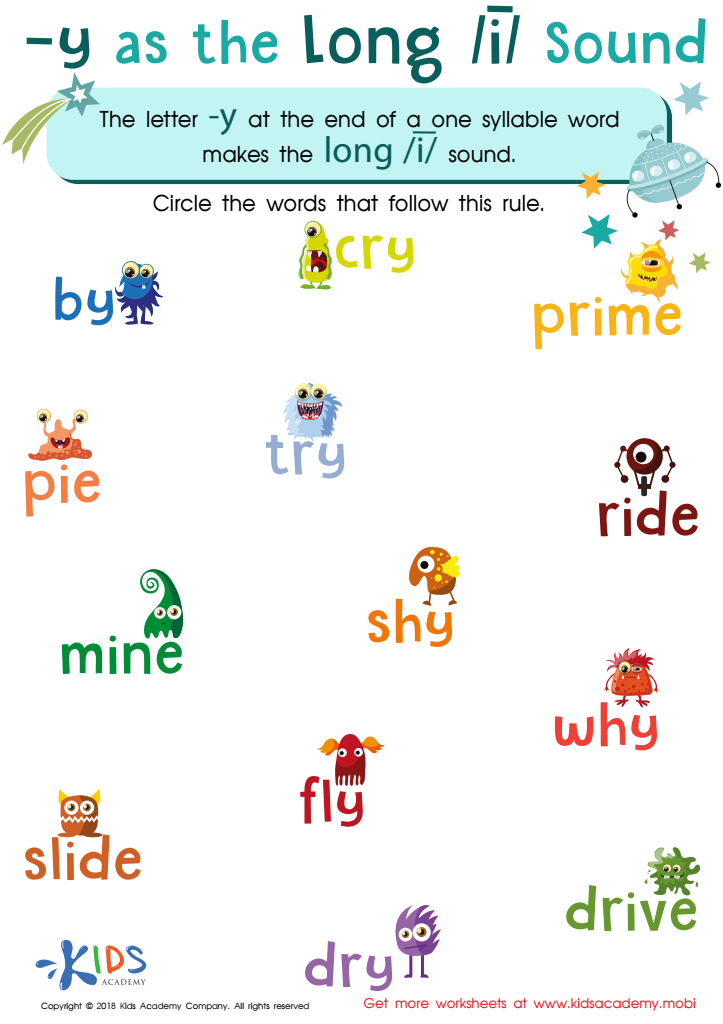
Reading: Y as Long I Worksheet
 Assign to My Students
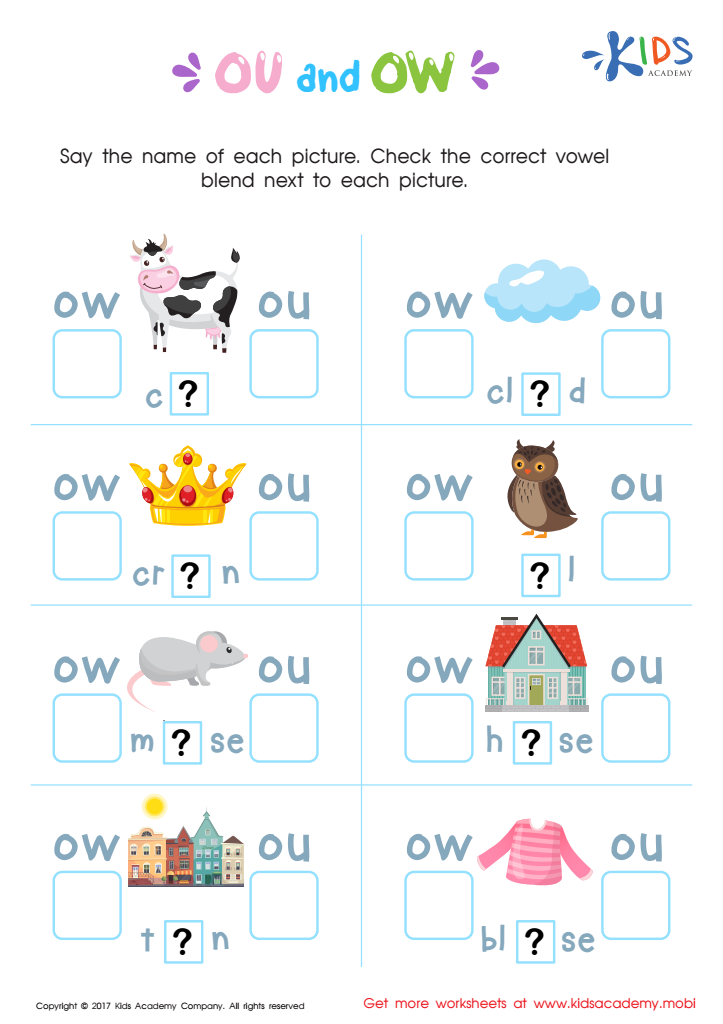
OU and OW Words Worksheet
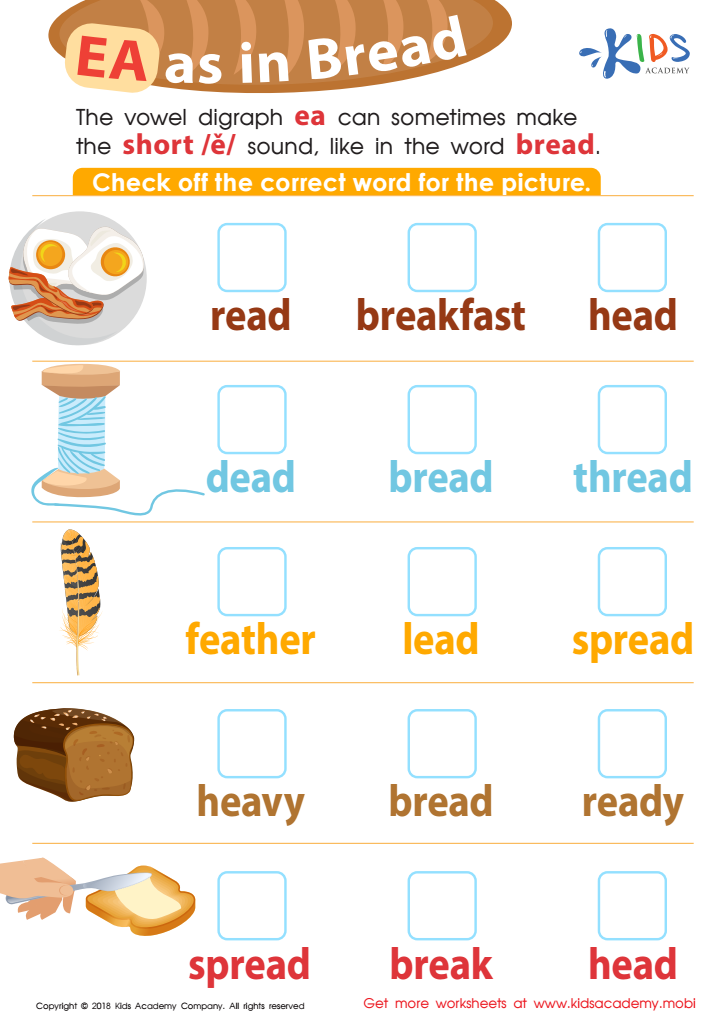
Reading: EA as in Bread Worksheet


Vowel diphthongs are crucial for early reading and language development, particularly for children ages 4-9. Understanding diphthongs enhances phonemic awareness—the ability to hear and manipulate sounds in words—which is foundational for reading fluency. Diphthongs, which are complex vowel sounds formed by combining two vowels into one syllable (like "oi" in "boil" or "ow" in "crow"), challenge children’s pronunciation and spelling skills.
When parents and teachers foster awareness of diphthongs, they help children recognize these sounds, leading to improved decoding abilities. This recognition allows young learners to tackle more complex words confidently, significantly increasing their vocabulary and comprehension. Moreover, consistent exposure to diphthongs can enhance children’s listening skills, vital for effective communication and academic achievement.
Engaging children in playful and interactive activities centered around vowel diphthongs—through songs, readings, and games—can effectively cultivate interest and understanding. This underscoring this linguistic element not only builds foundational literacy skills but supports overall cognitive development, laying the groundwork for lifelong learning. Therefore, emphasizing vowel diphthongs in early education ultimately benefits children's reading skills, communication abilities, and overall academic confidence. Parents and teachers play key roles in nurturing this aspect of language learning.