2D Shapes Worksheets for Ages 4-9 - Page 4
75 filtered results
-
From - To
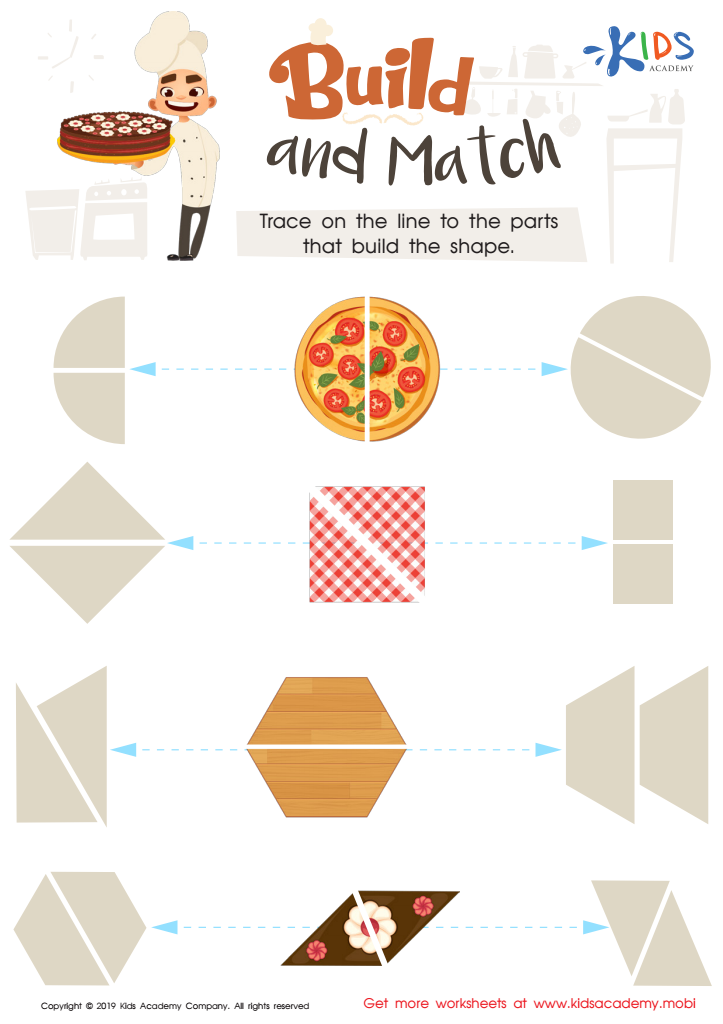
Build and Match Worksheet
 Assign to My Students


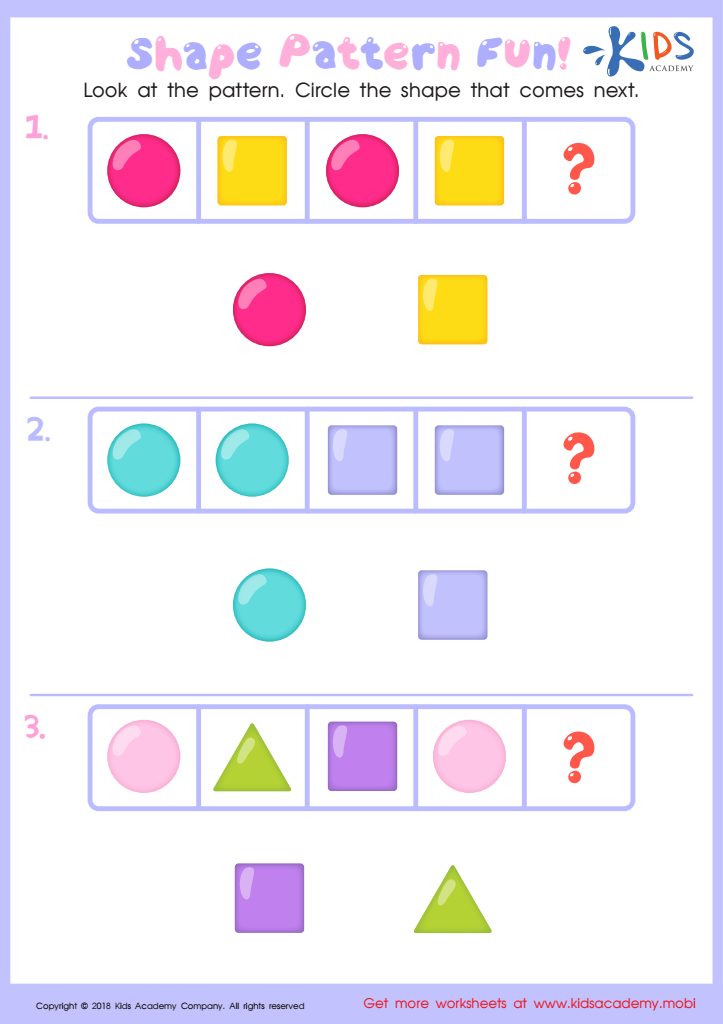
Shape Pattern Fun Worksheet
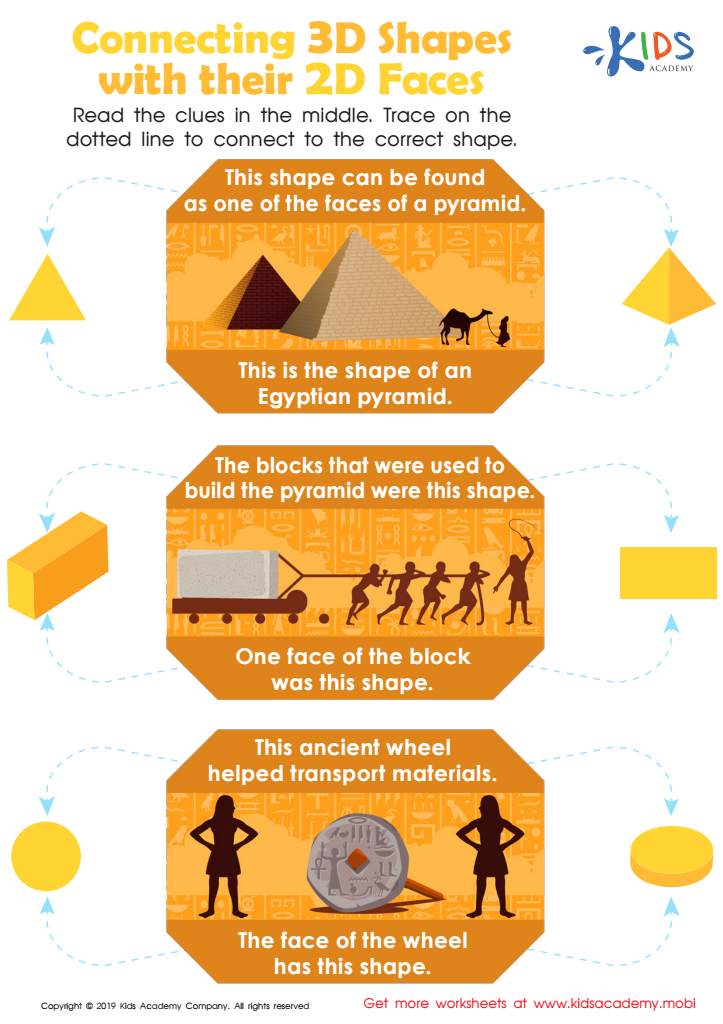
Connecting 3D Shapes with Their 2d Faces Worksheet








Understanding 2D shapes is foundational for young children ages 4-9, as it plays a critical role in their cognitive and mathematical development. At this pivotal age, recognizing and understanding basic shapes such as circles, squares, and triangles helps to build spatial awareness, critical thinking, and problem-solving skills.
Early exposure to 2D shapes also aids in more advanced math topics. Shapes are everywhere, from classroom objects to household items, and learning about them helps children make sense of their world in an organized way. Comparing shapes nurtures observation skills and analytical thinking, while sorting shapes reinforces categorization and classification—key concepts in both math and science.
For parents and teachers, incorporating shape recognition into everyday activities such as play, art, and storytime can make learning interactive and enjoyable. As children draw, cut out, or build using different shapes, they enhance both fine motor skills and hand-eye coordination.
Moreover, early proficiency with shapes connects directly to later success in geometry, where understanding more complex structures and the properties of shapes is crucial. Thus, fostering an early appreciation for 2D shapes lays a cornerstone for lifelong learning, making it imperative for parents and teachers to focus on this essential area of early childhood education.