Governance and Civics Worksheets for Ages 4-9 - Page 3
51 filtered results
-
From - To
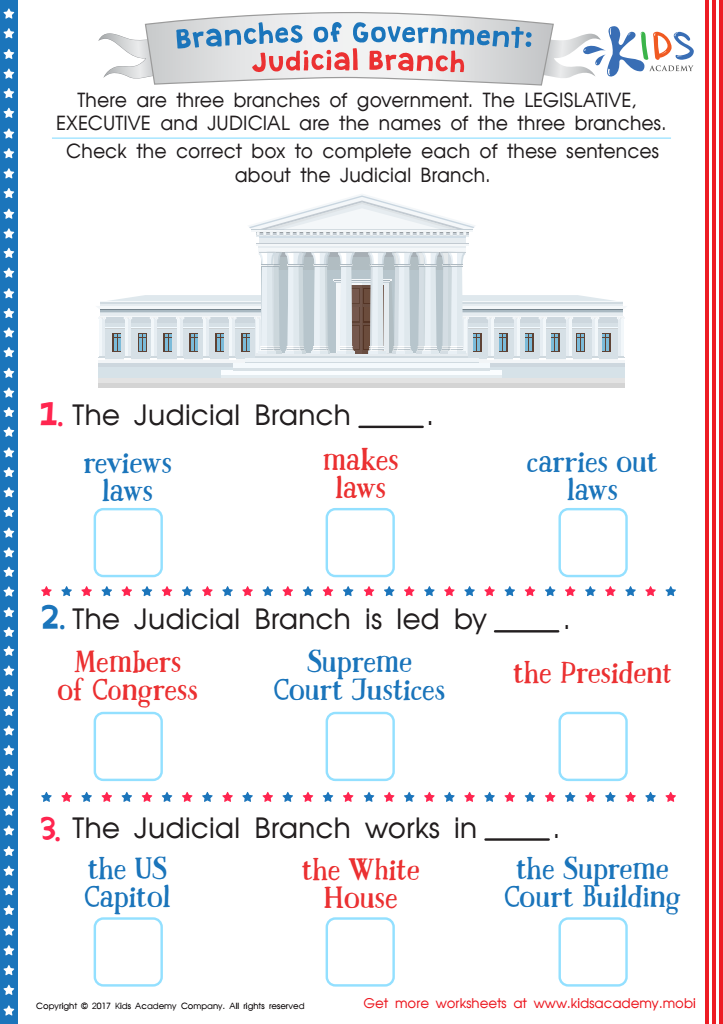
Braches of the Government: Judicial Branch Worksheet
 Assign to My Students
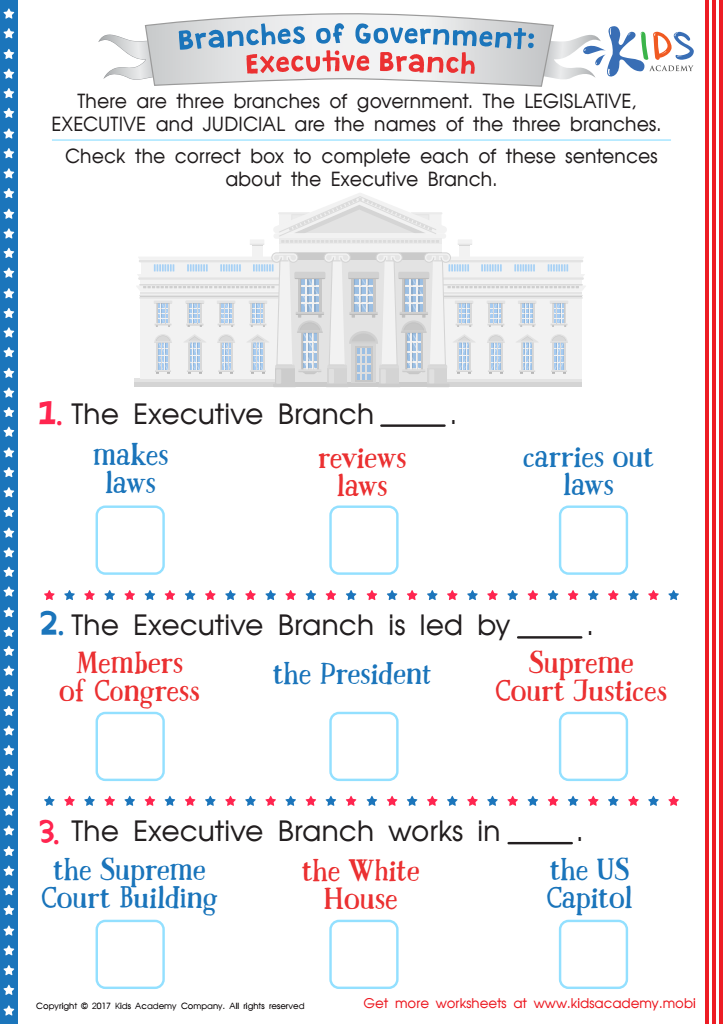
Branches of the Government: Executive Branch Printable
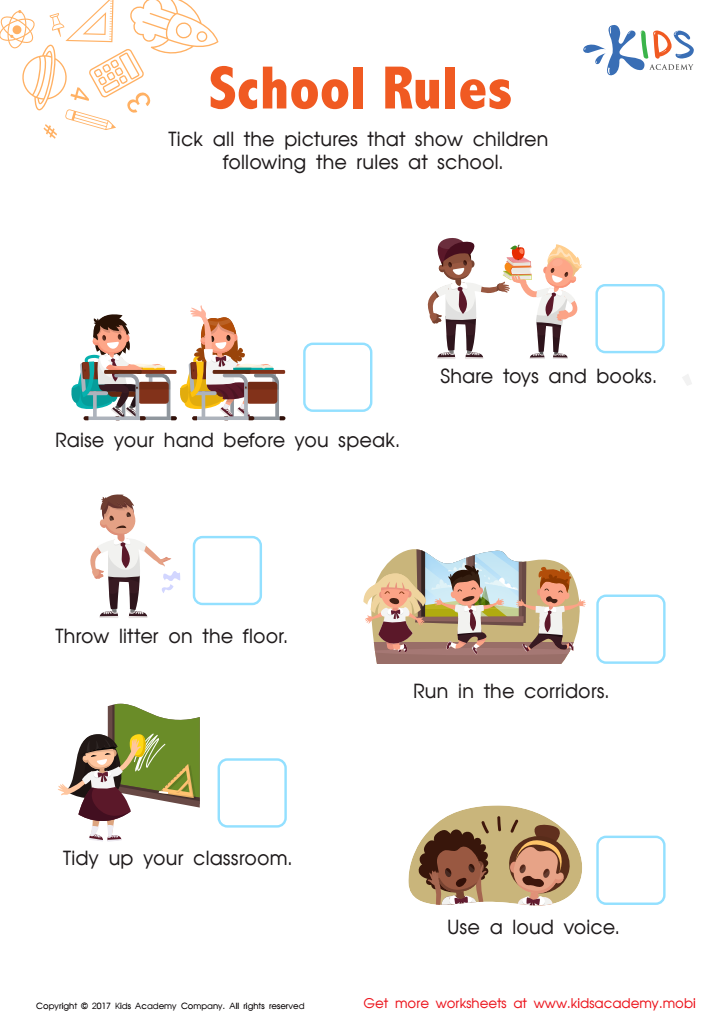
School Rules Worksheet


Governance and Civics are foundational elements that help children develop into informed and responsible citizens. Teaching these concepts to children aged 4-9 helps cultivate a sense of fairness, cooperation, respect for rules, and understanding of community participation from an early age.
At this formative stage, children begin absorbing values and behaviors that shape their character and worldview. When parents and teachers introduce basic governance and civics, they encourage critical thinking and moral reasoning. Kids learn the significance of rules, both for their safety and for societal harmony. The idea is not to burden them with complex details but to instill an awareness of how communities function and why participation matters.
Moreover, early education in civics encourages kids to respect diversity and develop empathy. They begin to understand that people have different roles and responsibilities in a community, which helps prevent bullying and promotes inclusiveness. These lessons in cooperation and respect emanate beyond classrooms and playgrounds, positively impacting their interactions everywhere.
By fostering these principles early on, parents and teachers set the groundwork for future engagement in democratic processes. When children appreciate the importance of contributing to their community, they grow up to be civic-minded adults who value participation and collective well-being. Thus, early education in governance and civics lays the foundation for a healthier, more engaged, and responsible society.








