Governance and Civics Worksheets for Ages 5-7 - Page 2
34 filtered results
-
From - To
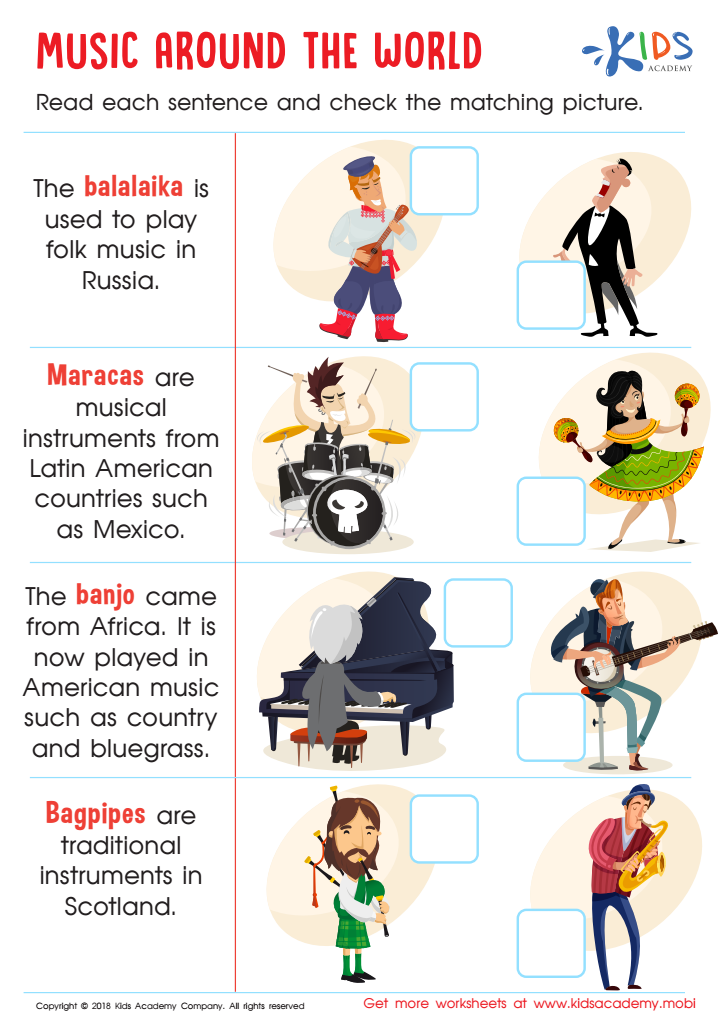
Music Around the World Worksheet
 Assign to My Students
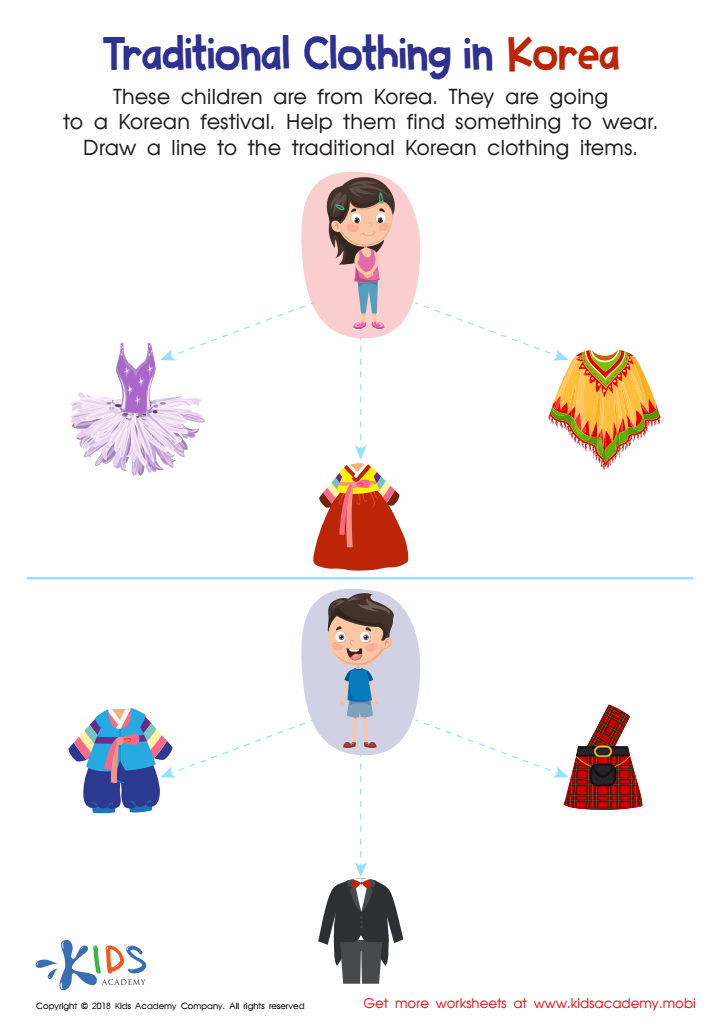
Traditional Clothing in Korea Worksheet
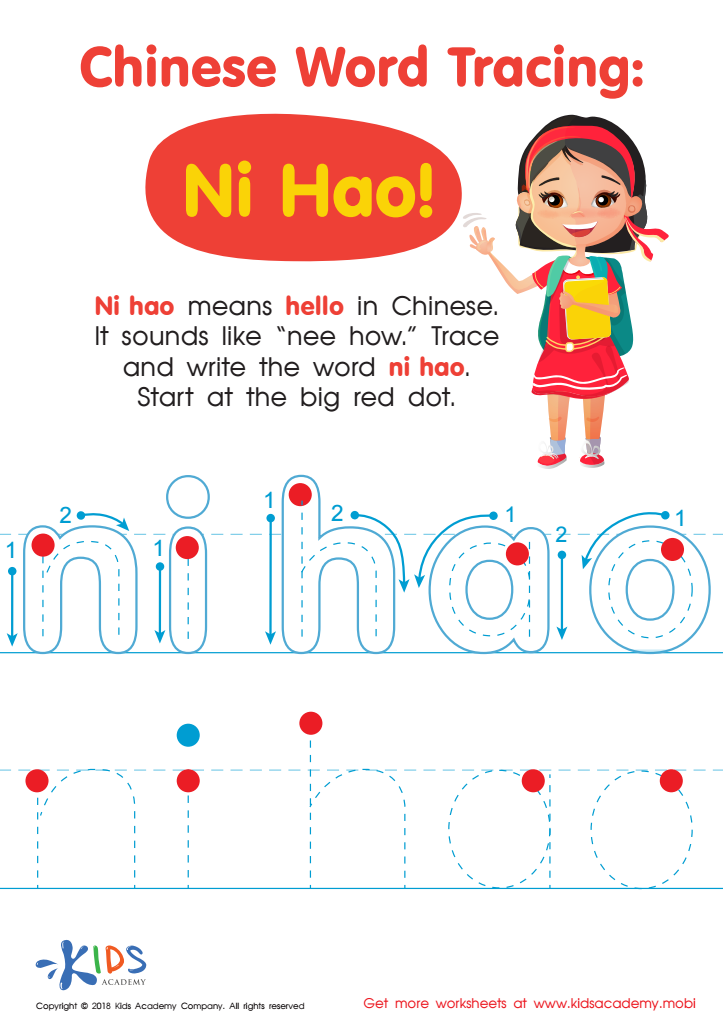
Chinese Word Tracing: Ni Hao Worksheet
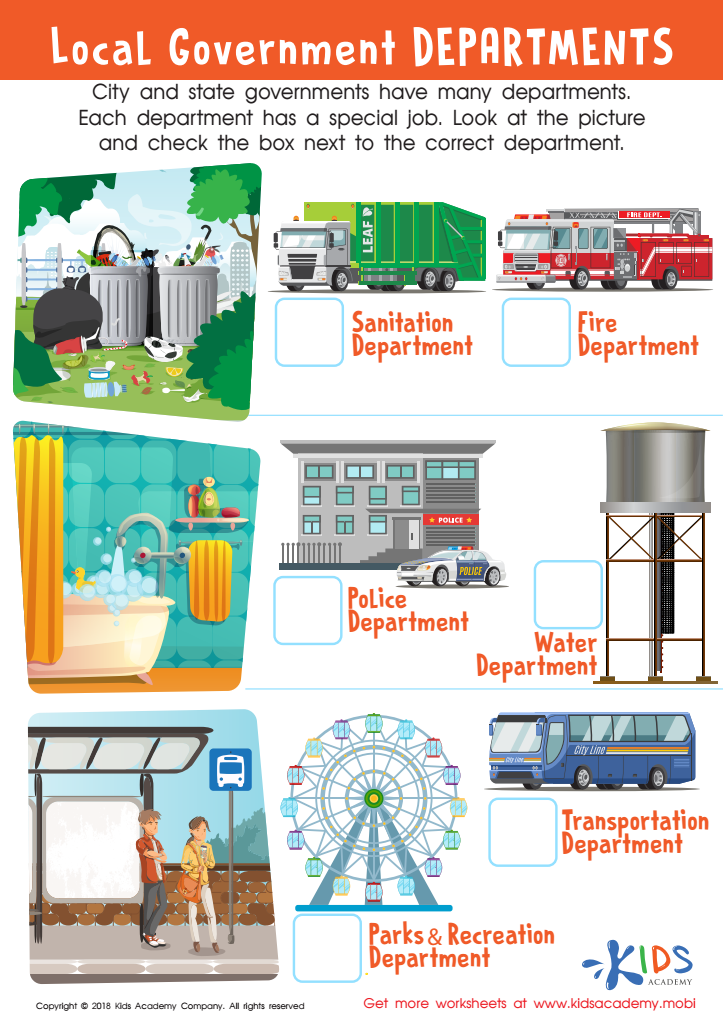
Local Government Departments Worksheet
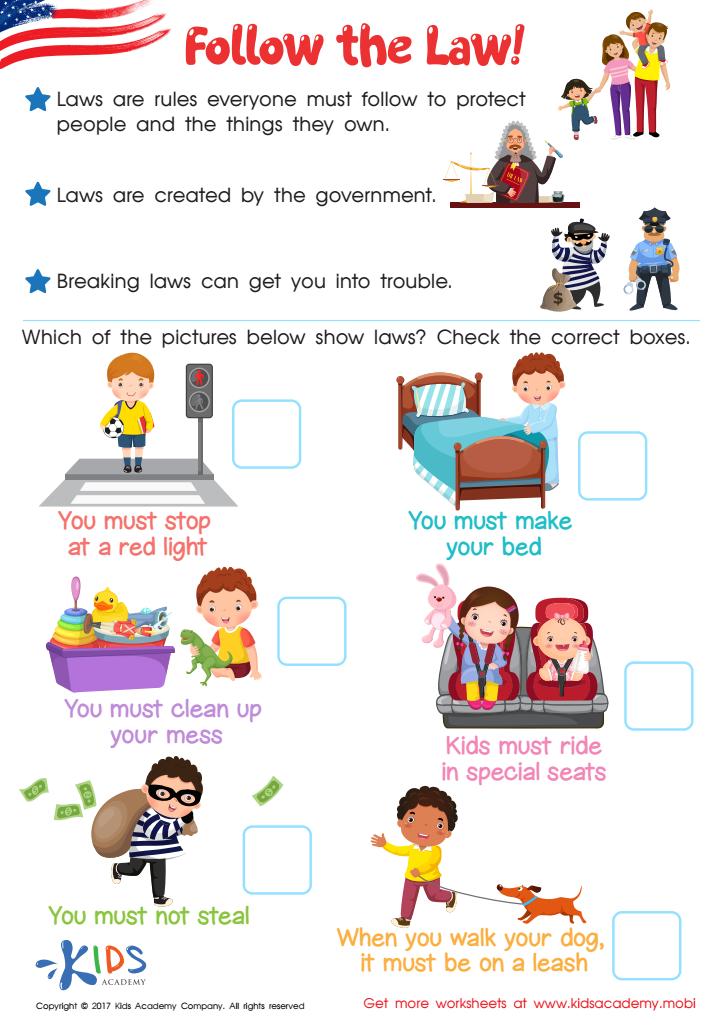
Follow the Law Worksheet
Italian Vocabulary Matching Worksheet
Ben Franklin Part 2 Worksheet
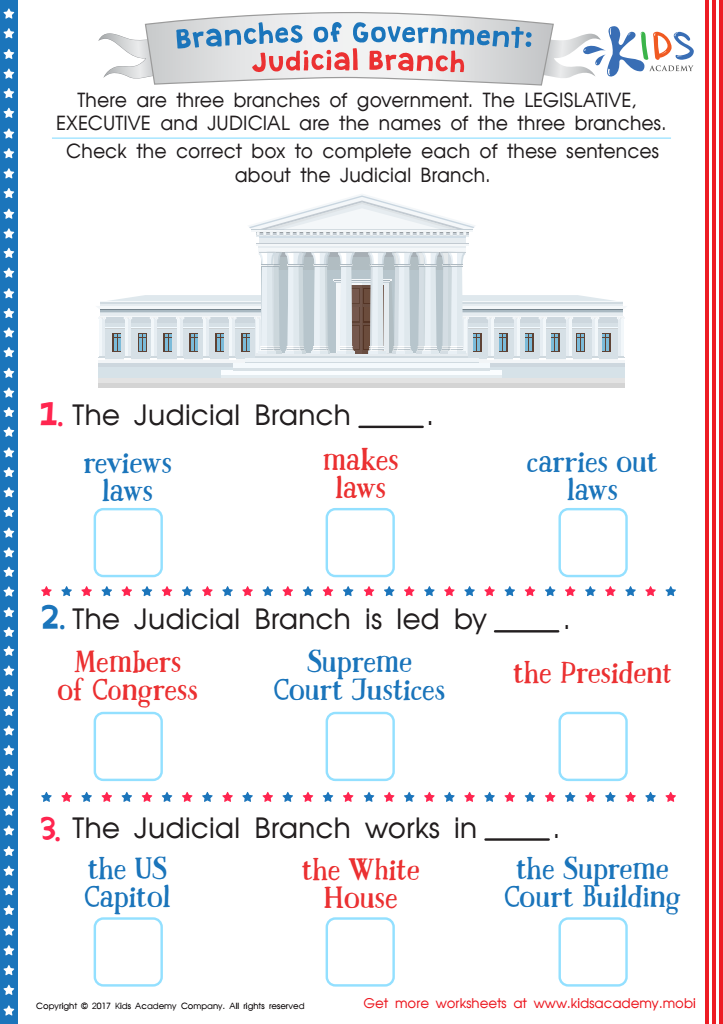
Braches of the Government: Judicial Branch Worksheet
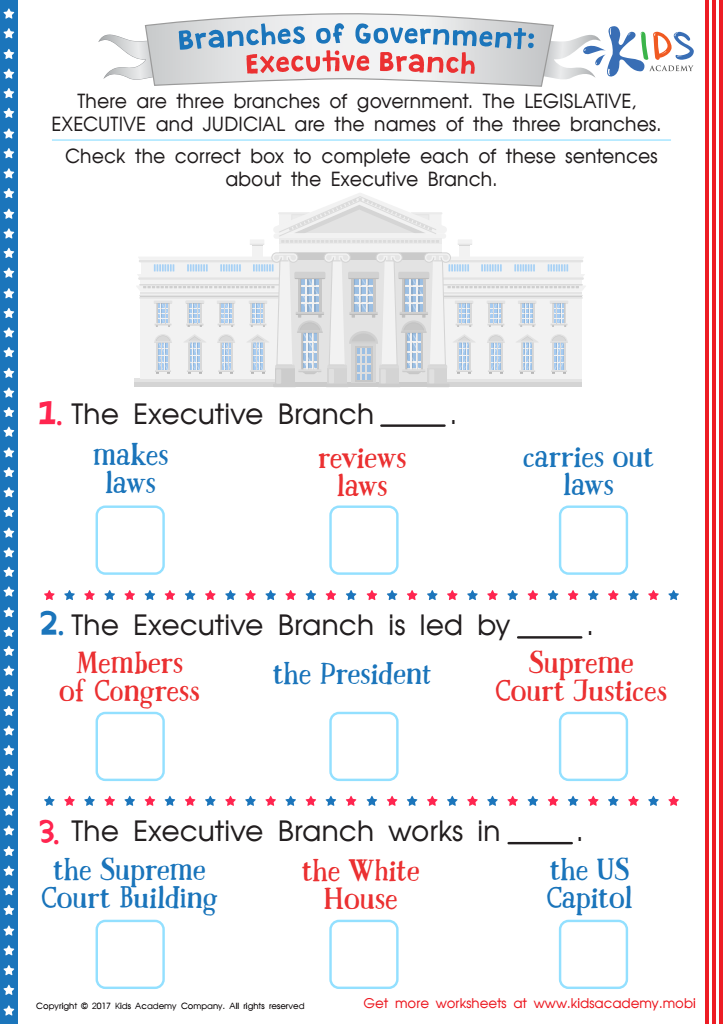
Branches of the Government: Executive Branch Printable
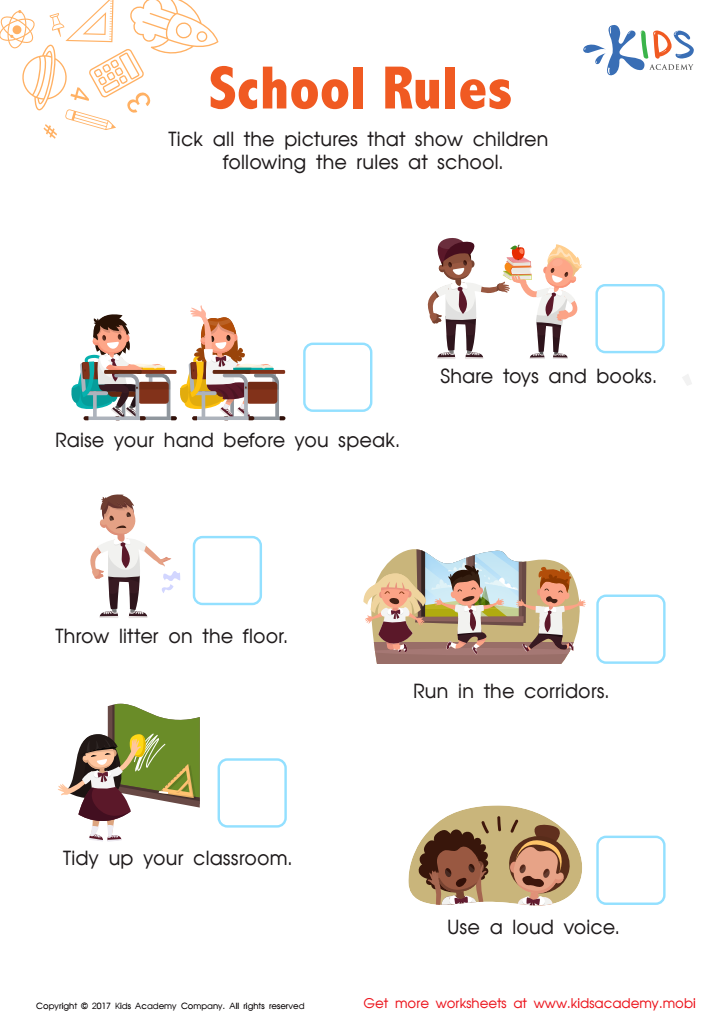
School Rules Worksheet


Teaching governance and civics to children aged 5-7 is crucial for several reasons. Firstly, early exposure to civic concepts fosters a sense of belonging and community. When children understand the roles of leaders, laws, and their own responsibilities, they begin to appreciate what it means to be an active participant in their world. This foundation helps them develop skills in teamwork, empathy, and conflict resolution, all of which are essential for functioning in society.
Secondly, engaging young learners with governance nurtures critical thinking. They learn to ask questions, analyze situations, and understand different perspectives. This ability is vital as they encounter various social issues later in life. Introducing basic democratic principles—such as fairness, equality, and respect for others—encourages them to express their opinions confidently while respecting those of others.
Finally, when parents and teachers emphasize civics education, they instill a sense of responsibility in children. They learn the importance of making informed choices and becoming responsible citizens. Overall, caring about governance and civics from an early age shapes well-rounded individuals who can contribute positively to their families, schools, and communities in the future.








