Letter I Worksheets for Ages 5-8
5 filtered results
-
From - To
Welcome to our engaging collection of Letter I worksheets designed specifically for children ages 5 to 8! These fun, printable resources promote early literacy skills and letter recognition through various activities. Your little learners will enjoy tracing, coloring, and identifying words that begin with the letter I. Our worksheets foster creativity and critical thinking while developing fine motor skills. Perfect for homeschoolers or classroom settings, these activities make learning the alphabet an enjoyable experience. Dive into the world of the letter I and enhance your child's educational journey today! Explore now for exciting printable worksheets that inspire learning and discovery.
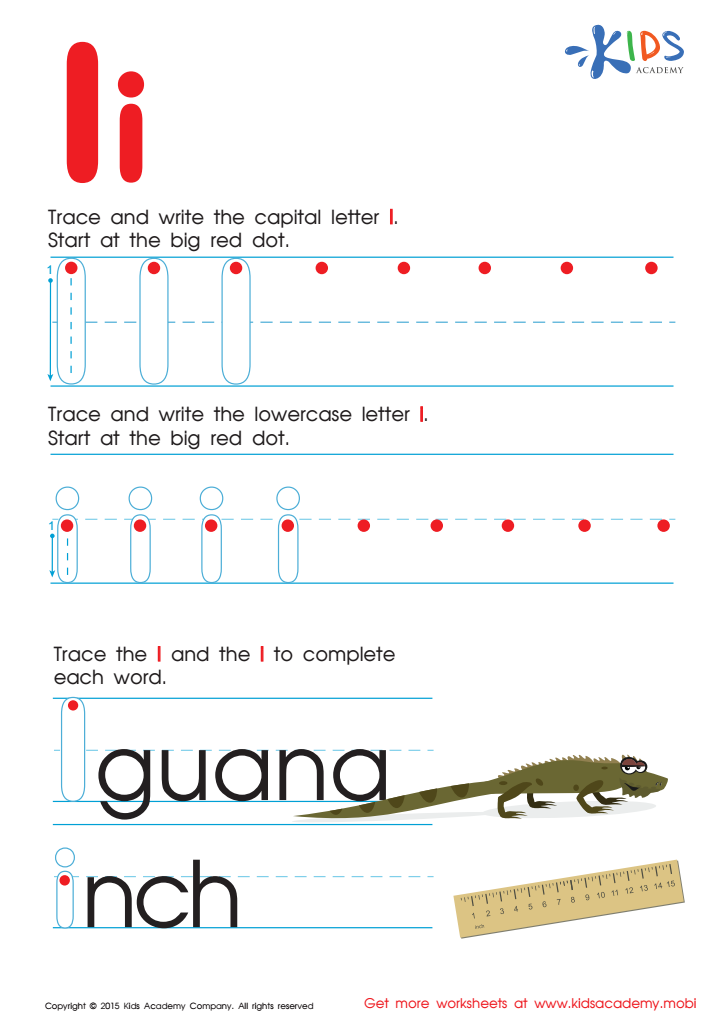
Letter I Tracing Page
 Assign to My Students
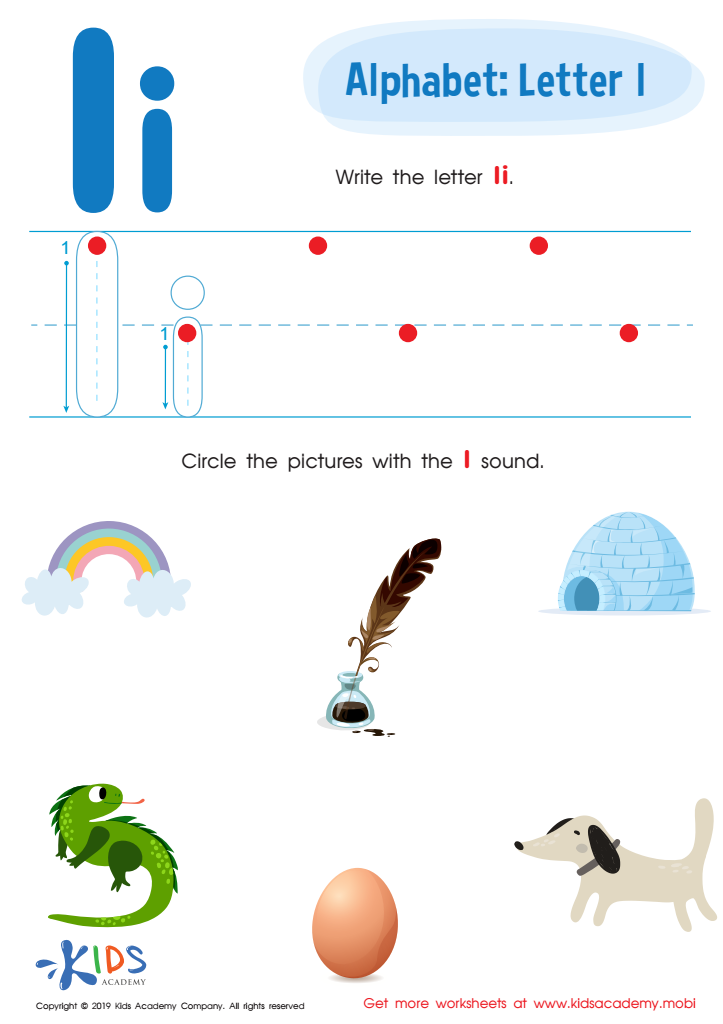
Letter I Tracing Worksheet
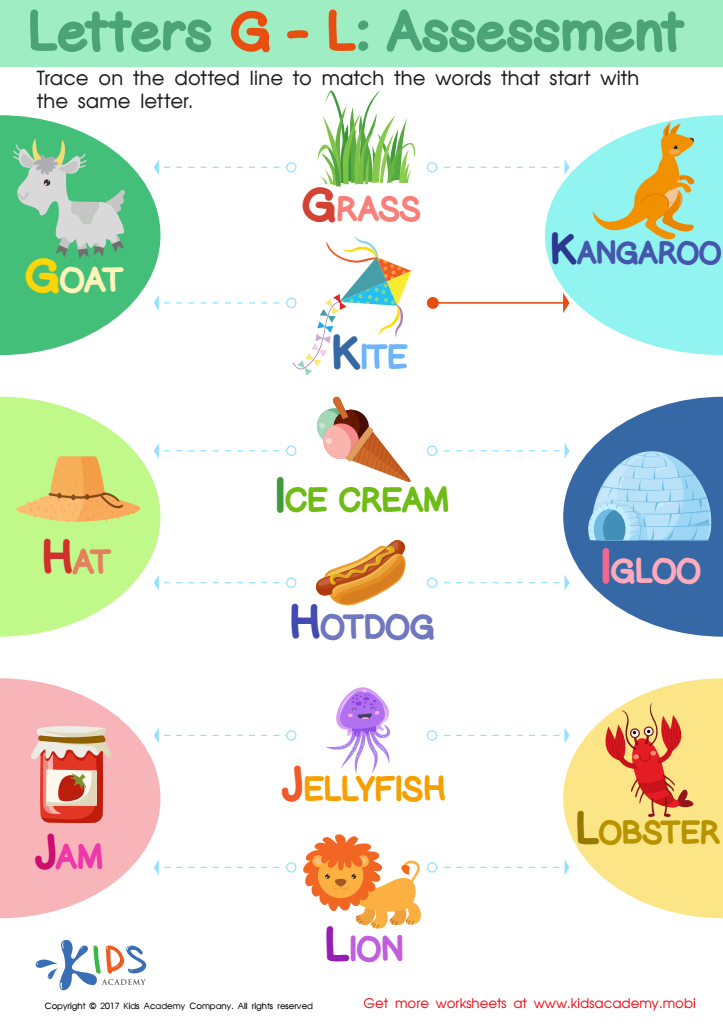
Letters G-L Worksheet
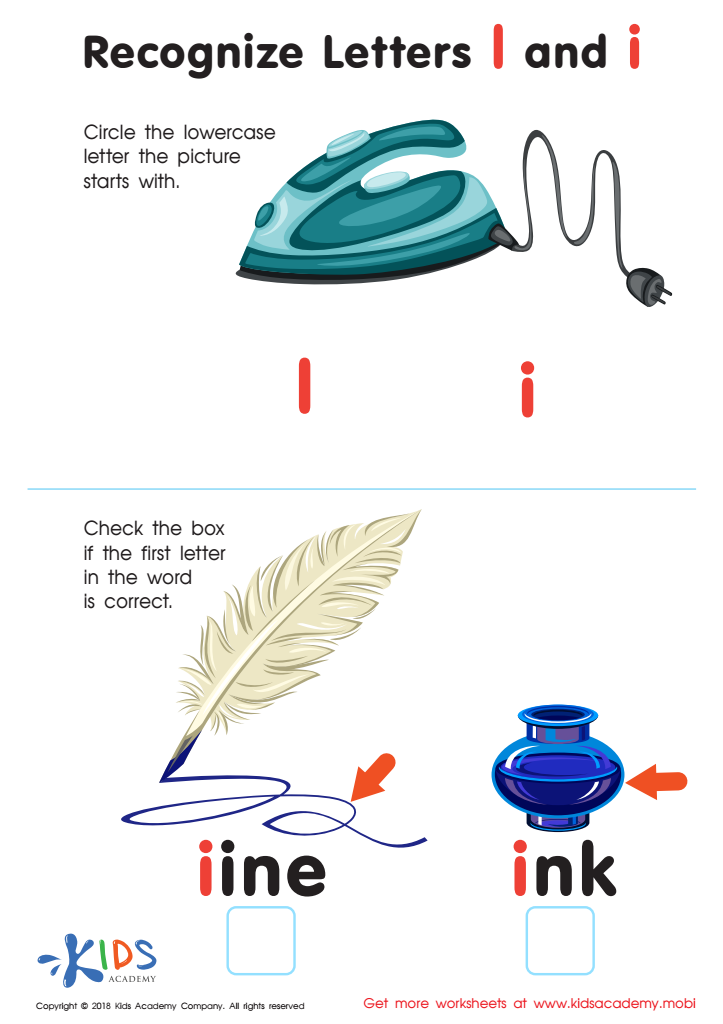
Recognize Letters l and i Worksheet
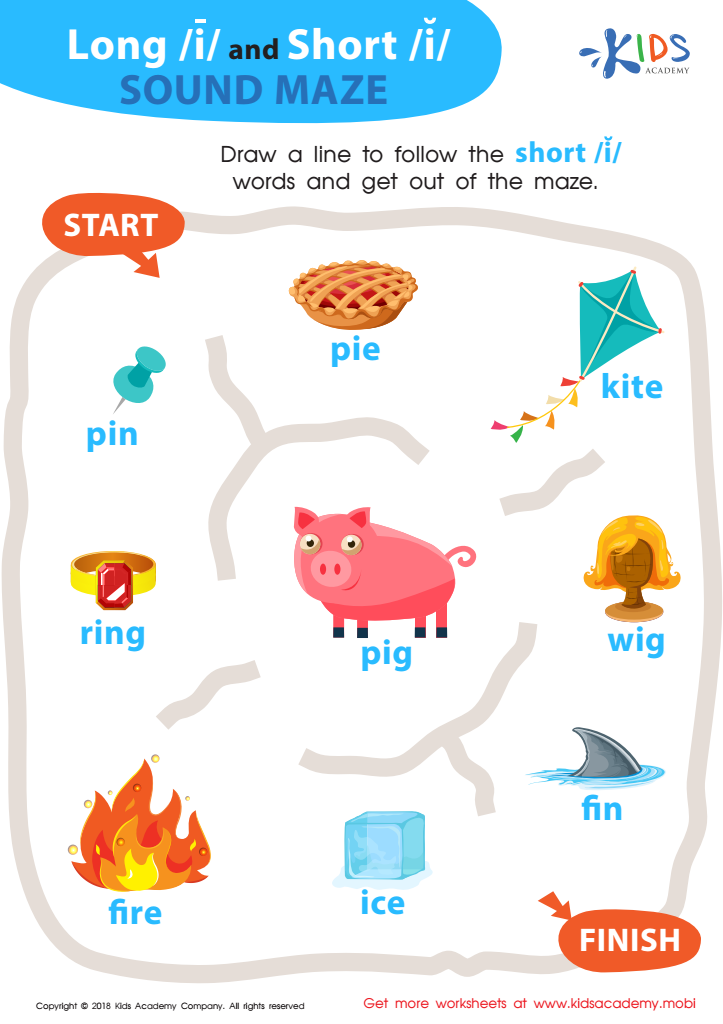
Reading: Long I and Short I Sound Maze Worksheet







Teaching children about the letter "I" is important for several reasons, particularly for ages 5-8. At this developmental stage, children are honing their literacy skills, and understanding the letter "I" is a key component of reading and writing. Recognizing the letter helps them decode words and enhances their phonetic awareness. It's essential for them to grasp both uppercase "I" and lowercase "i" since both forms are used differently in writing.
Moreover, the letter "I" is the first person singular pronoun, pivotal in encouraging self-expression and language development. When children understand how to use “I,” it fosters confidence in communicating their thoughts, feelings, and experiences. This involvement promotes social skills by allowing them to share their stories in group settings.
Additionally, incorporating activities related to "I," such as identifying words that start with it (like "ice" or "igloo") or exploring its sound, makes learning fun and interactive. Through this engaging approach, children can build their vocabulary, boost their cognitive skills, and develop a love for language. Thus, parents and teachers should prioritize the teaching of the letter "I" to foster well-rounded literacy development in young learners.