2D Shapes Worksheets for Ages 5-8 - Page 4
75 filtered results
-
From - To
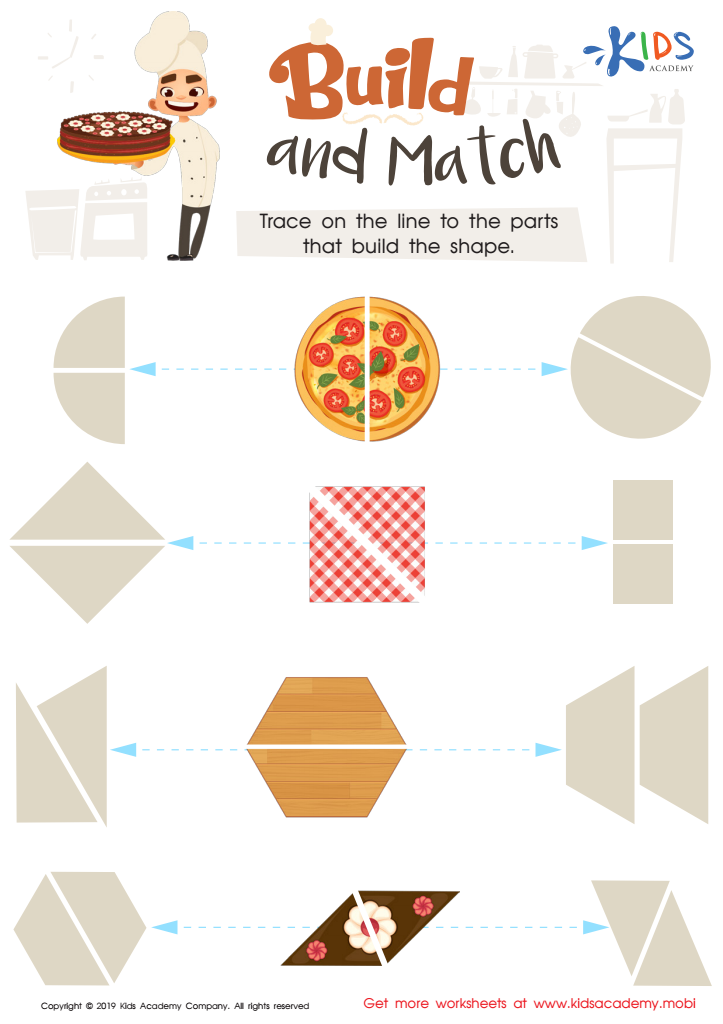
Build and Match Worksheet
 Assign to My Students


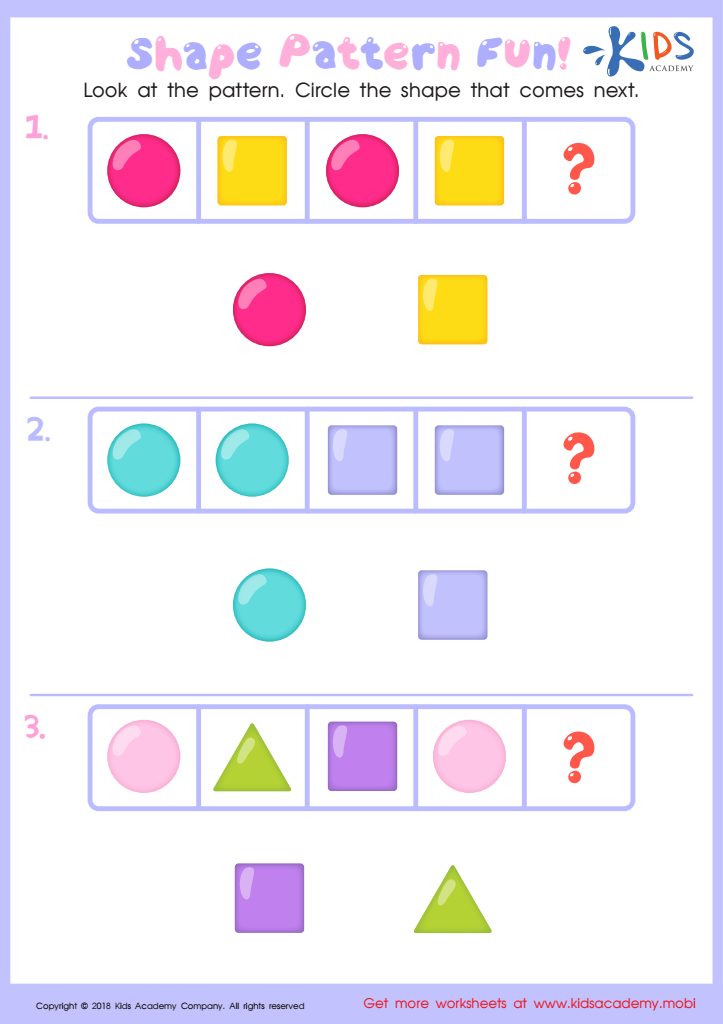
Shape Pattern Fun Worksheet
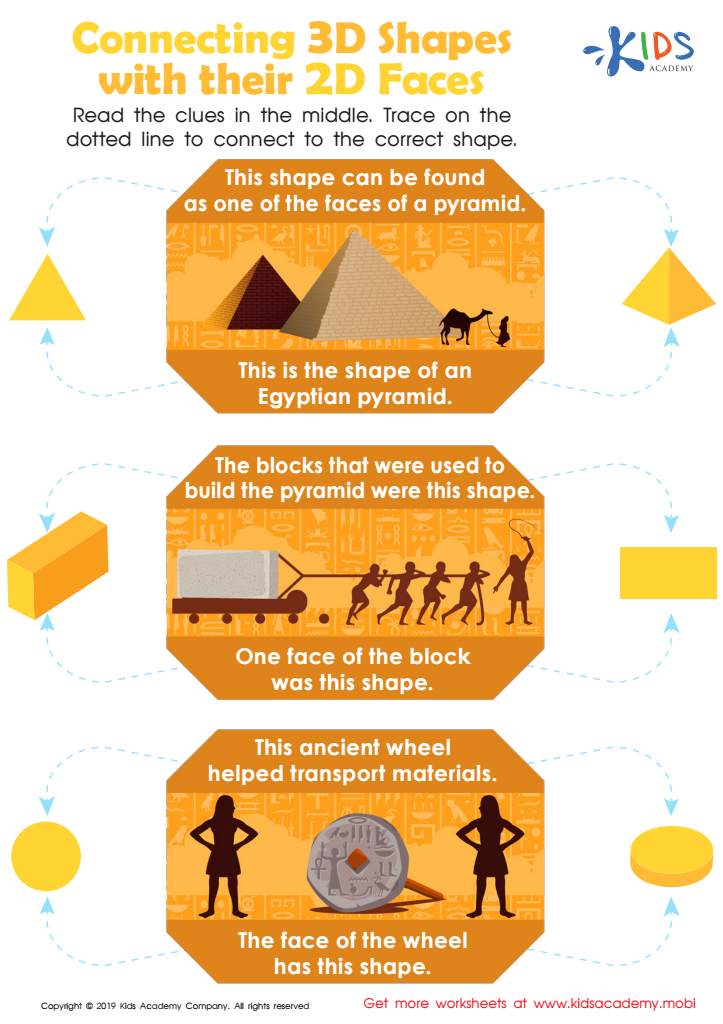
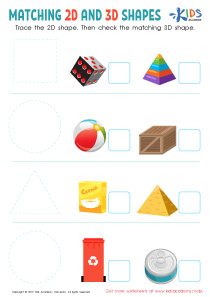
Connecting 3D Shapes with Their 2d Faces Worksheet








Understanding 2D shapes is crucial for children aged 5-8, as it lays the foundation for various mathematical concepts and critical thinking skills. At this stage, children naturally explore their environment and recognize shapes in everyday objects, making learning both engaging and relevant. By emphasizing 2D shapes, parents and teachers can help children develop spatial awareness, which is vital for problem-solving and understanding geometry in higher grades.
Moreover, recognizing shapes improves fine motor skills, as children participate in activities like tracing, drawing, and manipulating objects. Early shape recognition also enhances language skills; discussing shapes introduces new vocabulary and encourages verbal expression. Recognizing and categorizing shapes fosters logical reasoning, which is essential not only for math but for analysis in science and other subjects.
In addition, shape activities can strengthen collaboration skills when done in groups, as children share ideas and solutions. As they progress, a solid grasp of 2D shapes supports more complex geometry and mathematical reasoning, setting them up for future success. Therefore, incorporating 2D shapes into learning is beneficial not just for mathematics, but as a vital part of holistic development in these early years.