Graphs Worksheets for Ages 5-8 - Page 2
27 filtered results
-
From - To
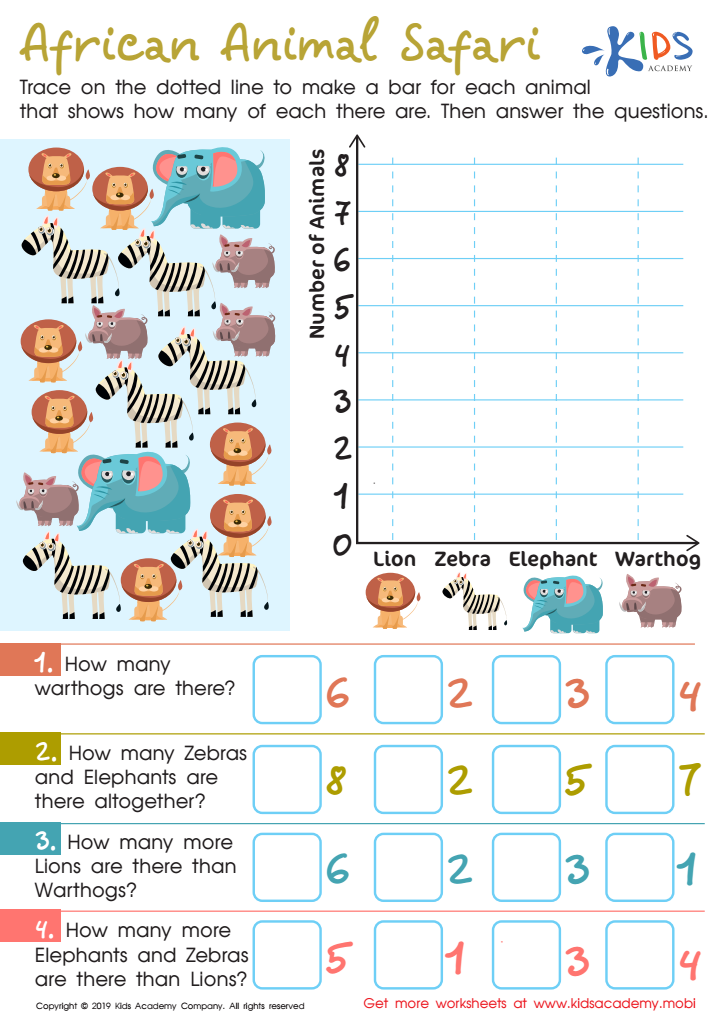
African Animal Safari Worksheet
 Assign to My Students
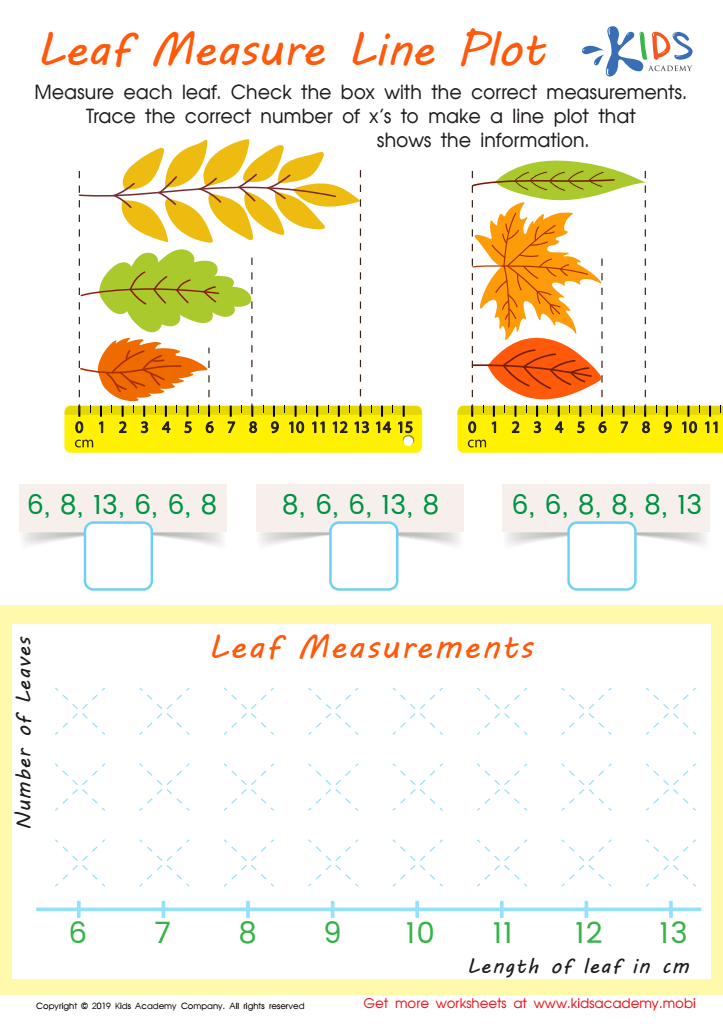
Leaf Measure Line Plot Worksheet
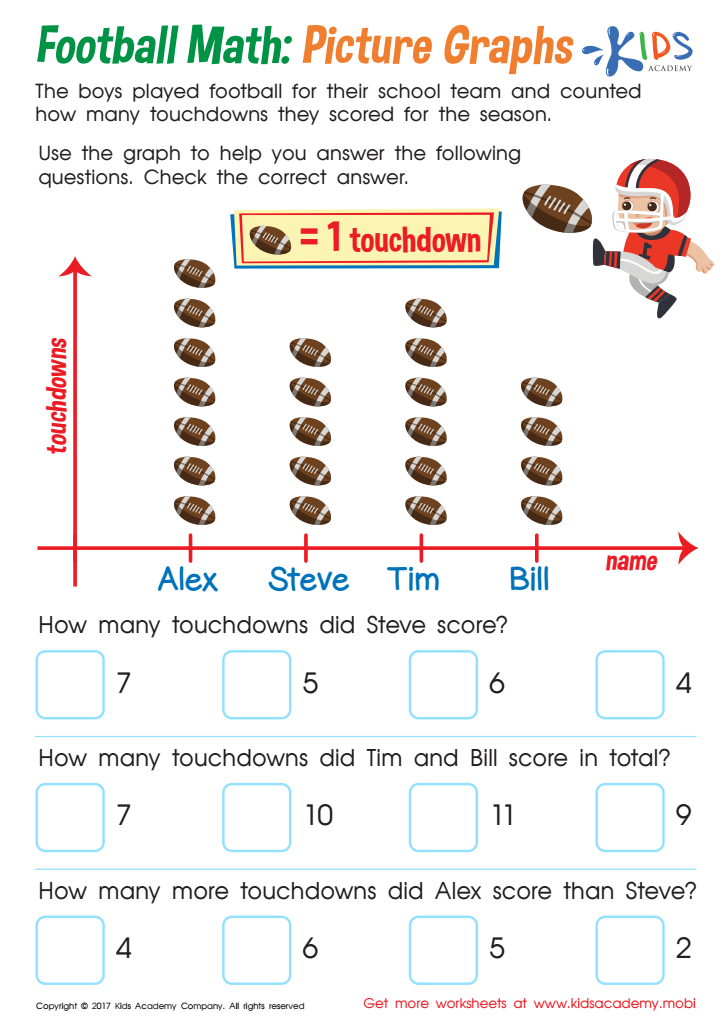
Football Math Worksheet








Graphs play a crucial role in the development of critical thinking and analytical skills for children ages 5-8. At this formative stage, children are introduced to the concepts of data visualization, which helps them understand and interpret information in a structured way. By teaching children about graphs, parents and teachers provide them with the tools to make sense of the world around them.
Engaging with graphs fosters curiosity; children can see relationships among variables and recognize patterns. For instance, when presented with a bar graph showing their favorite fruits, children learn to compare and categorize data, enhancing their mathematical skills. Moreover, graphs can illustrate real-life situations, making abstract concepts more tangible. This not only aids in academic learning but also in everyday decision-making.
Additionally, understanding graphs builds foundational skills for future studies in science, math, and social studies. As children progress, the ability to analyze data will be invaluable in higher-level problem-solving. Encouraging this understanding at an early age ensures that they are better prepared for more complex concepts later on. Ultimately, graphs help make learning engaging and interactive, empowering children to become informed thinkers and effective communicators.








