The 5 Senses Worksheets for Ages 5-9
3 filtered results
Difficulty Level
Grade
Age
-
From - To
Subject
Activity
Standards
Explore our engaging "The 5 Senses Worksheets for Ages 5-9"! Designed to spark curiosity, these worksheets help young learners delve into the fascinating world of sight, sound, taste, touch, and smell. Each worksheet is packed with fun activities that encourage exploration and critical thinking, making learning about the senses interactive and enjoyable. Kids will connect with their surroundings through exciting illustrations and prompts that stimulate their imagination while enhancing fine motor skills. Perfect for at-home learning or classroom use, our worksheets are a fantastic resource for parents and teachers looking to enrich their students' understanding of the world around them.
Favorites
With answer key
Interactive
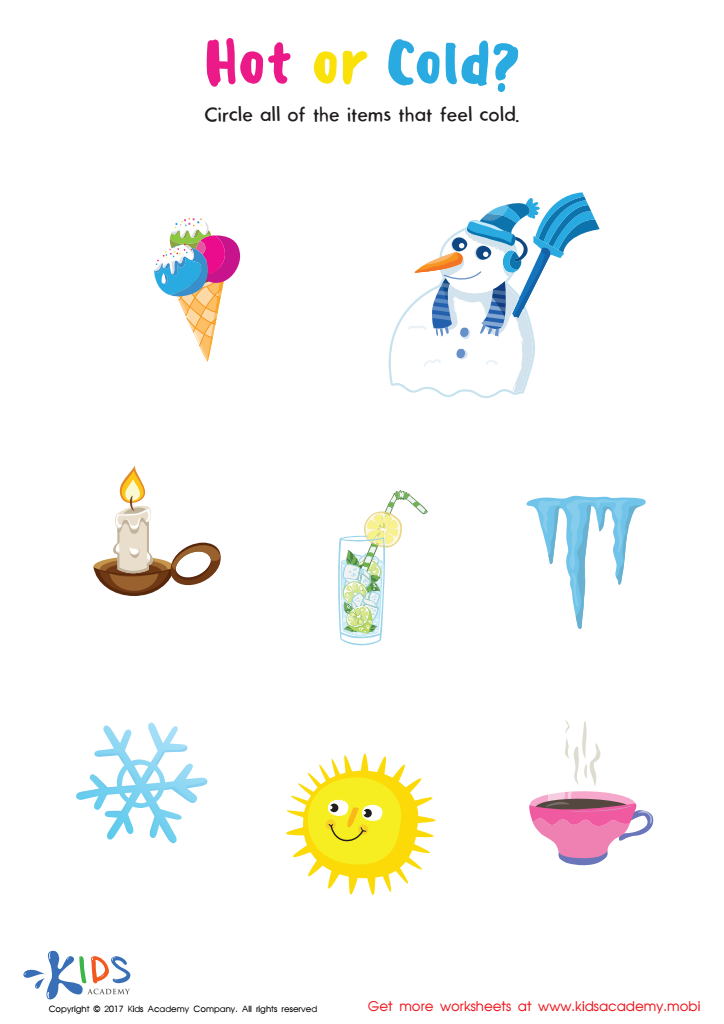
Hot or Cold Printable
Help your child stay safe with this hot or cold worksheet! It promotes problem solving skills and teaches the important concept of temperature differences. Plus, it’s fun! Get your child to learn by playing.
 Assign to My Students
Hot or Cold Printable
Worksheet
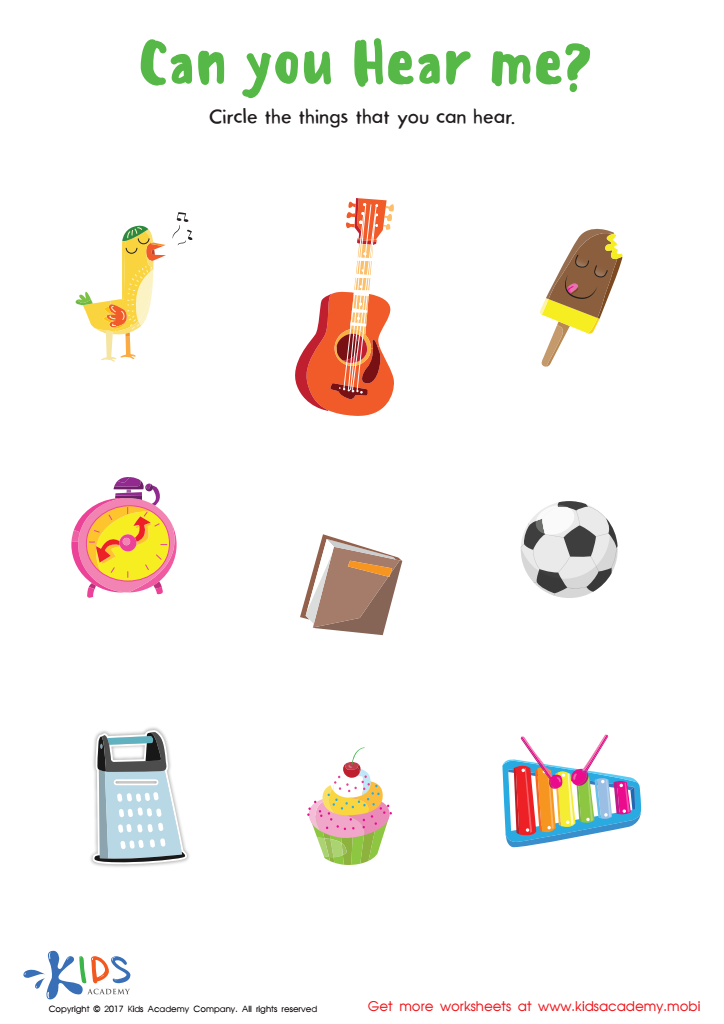
Can You Hear Me Worksheet
Challenge your child's thinking and help them learn by using this cute "Can You Hear Me?" worksheet. It encourages use of prior knowledge to identify objects that make sounds, developing critical thinking skills. As they imagine balls and cupcakes making sounds, your child will have plenty of laughs. Extend learning by talking about the sounds and why certain objects make them.
Can You Hear Me Worksheet
Worksheet
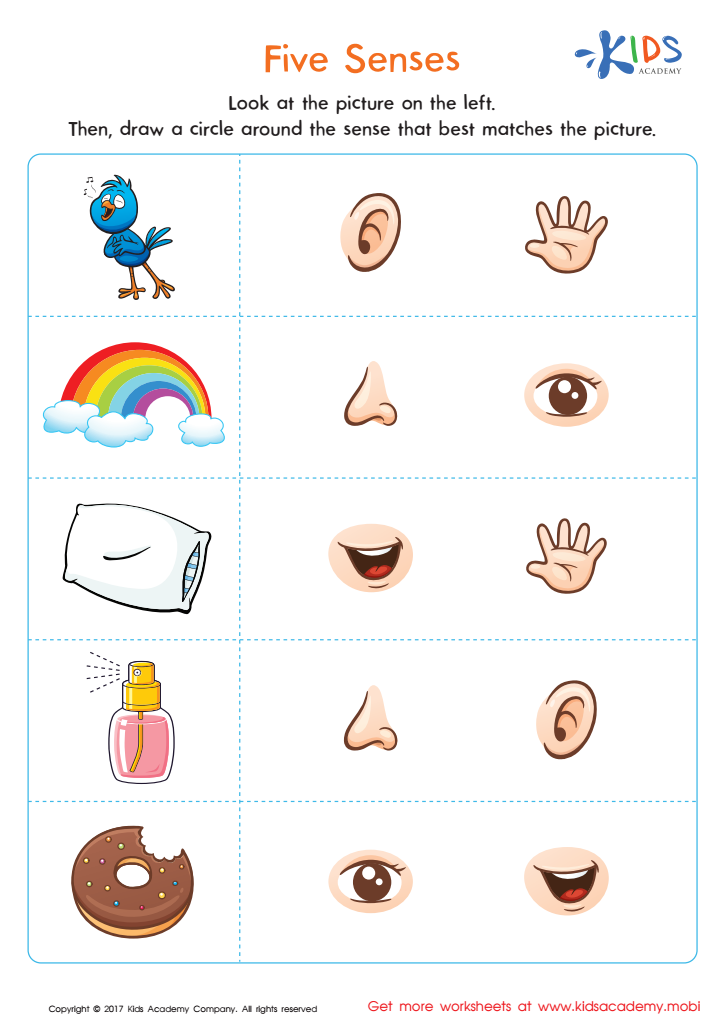
Five Senses Printable
For an easy way to jumpstart your child's critical thinking and introduce the five senses, print our free worksheets! These are great for reviewing each sense and practicing critical thinking skills. Work with your child and discuss each image. After completing the worksheet, find objects around the house so they can quiz themselves!
Five Senses Printable
Worksheet
Join Kids Academy for Free
Who is primarily going to use this learning content?




The 5 senses—sight, hearing, taste, touch, and smell—play a crucial role in the cognitive and emotional development of children aged 5-9. Understanding these senses helps children engage with the world around them, form connections, and enhance their learning experiences.
Firstly, teaching about the senses fosters curiosity and encourages observation, key components of effective learning. Children learn by exploring their environment. Awareness of their senses amplifies this exploration, making experiences more vivid and memorable.
Additionally, lessons focused on the 5 senses support essential skills such as critical thinking and problem-solving. By analyzing how they perceive different stimuli, children learn to interpret their surroundings and communicate better, both verbally and non-verbally.
Furthermore, the senses are intertwined with social-emotional learning. Emotions are often linked to sensory experiences—like the comforting smell of a favorite food or the joy of listening to music. Recognizing these connections fosters empathy and self-awareness, helping children articulate their feelings and understand those of others.
Finally, incorporating the discussion of senses in education and parenting makes learning multidimensional and enjoyable, promoting more effective retention of knowledge during formative years. Ultimately, nurturing this awareness equips children for richer interactions with their environment and each other.