Short Vowels Worksheets for Ages 6-8
16 filtered results
-
From - To
Welcome to our collection of Short Vowels Worksheets designed for children aged 6-8! These engaging worksheets help young learners master the key concepts of short vowel sounds through fun and interactive activities. Each worksheet features a variety of exercises such as matching, filling in the blanks, and word searches to reinforce phonetic skills. Perfect for both classroom and home learning, our resources promote literacy development and boost confidence in reading. Discover the joy of learning with our colorful and captivating worksheets that cater to different learning styles. Explore today and watch your child's reading abilities soar!
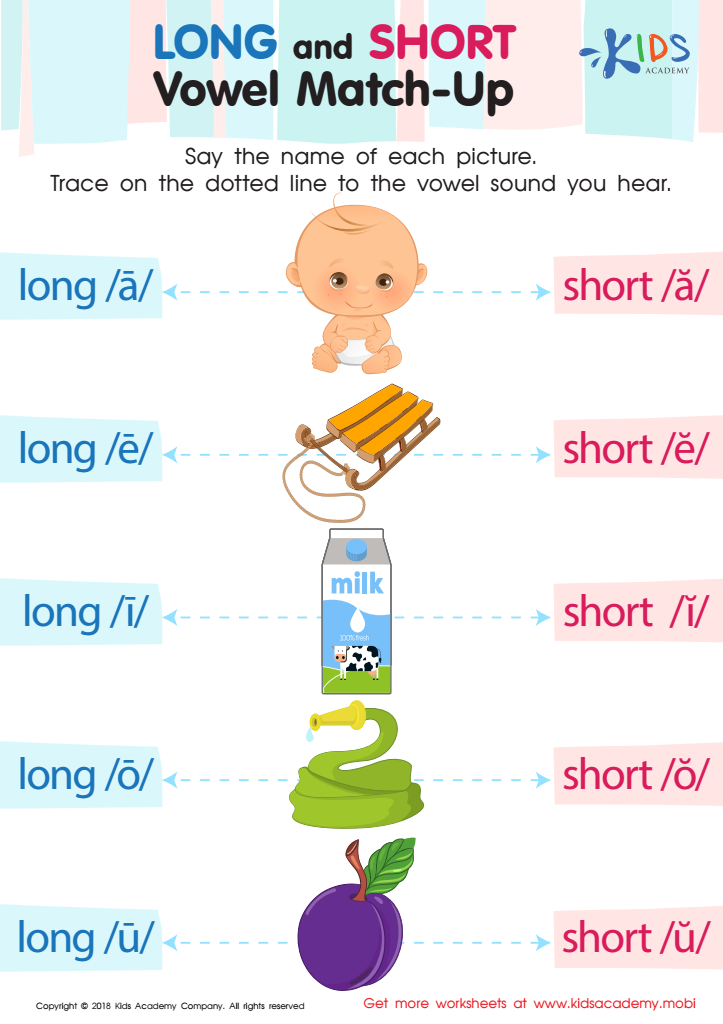
Long and Short Vowel Match up Reading Worksheet
 Assign to My Students
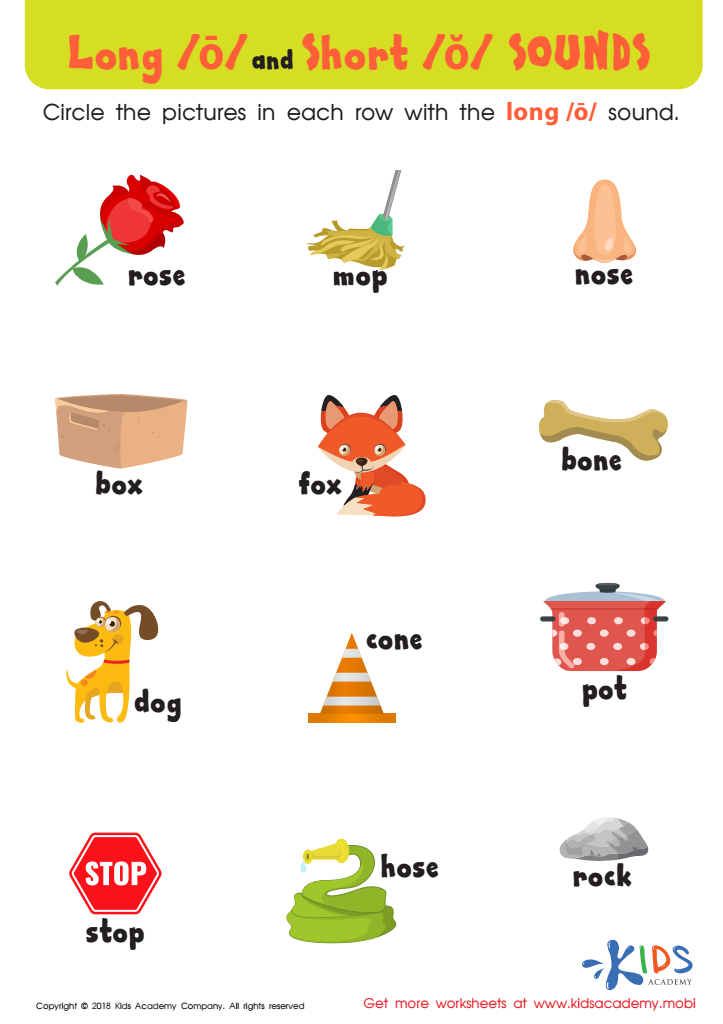
Reading: Long O and Short O Sounds Worksheet
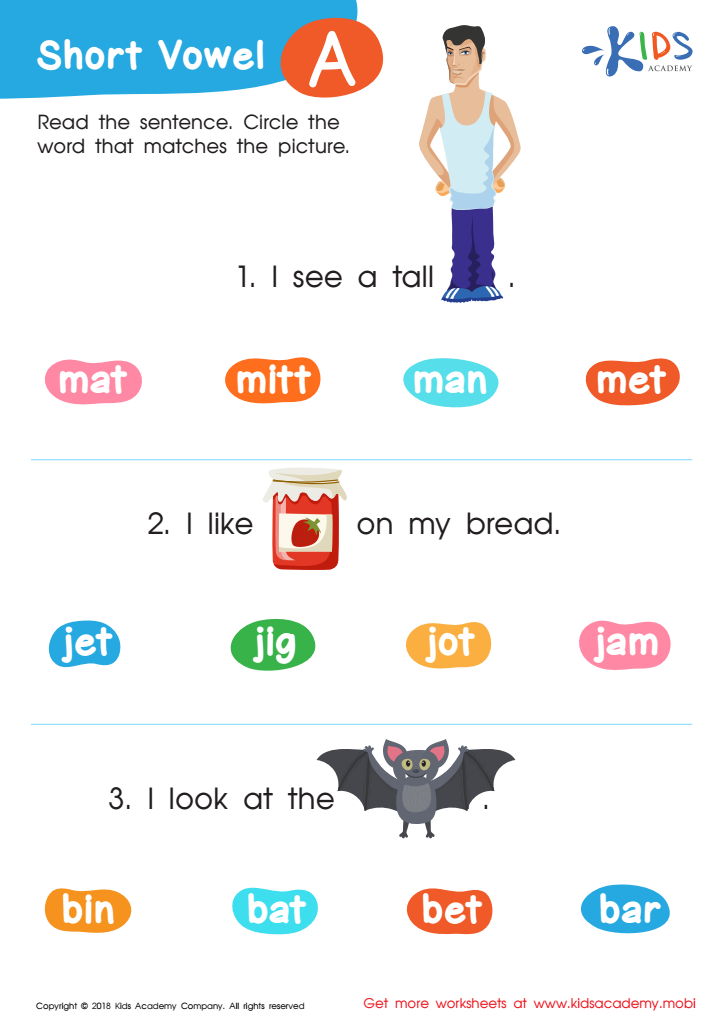
Short Vowel /a/ Worksheet
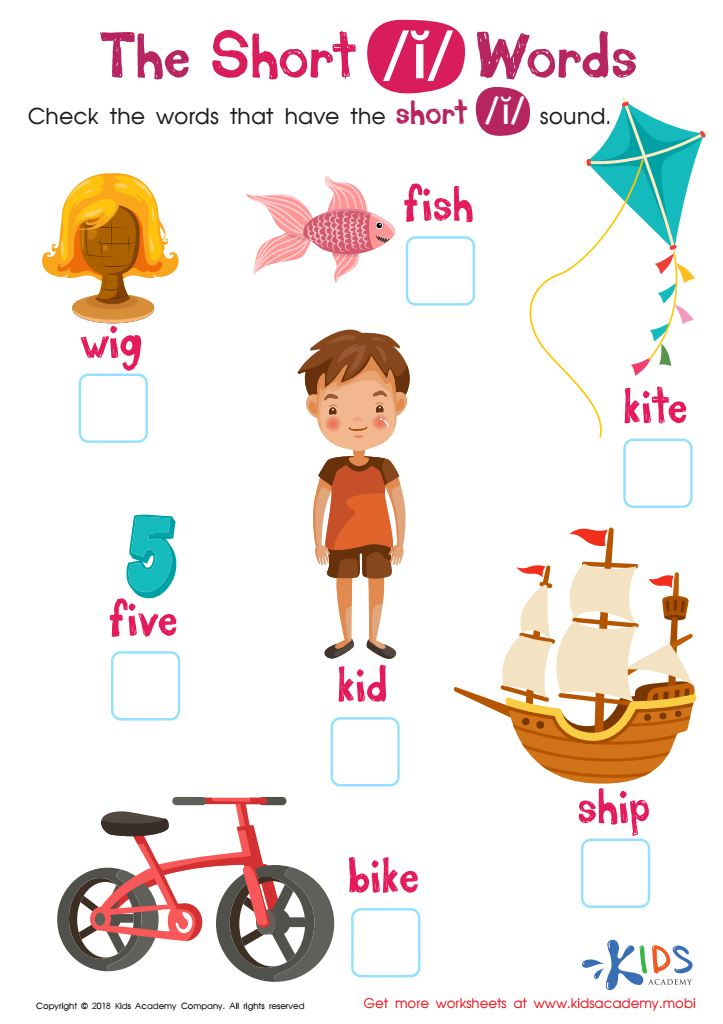
The Short I Words Reading Worksheet
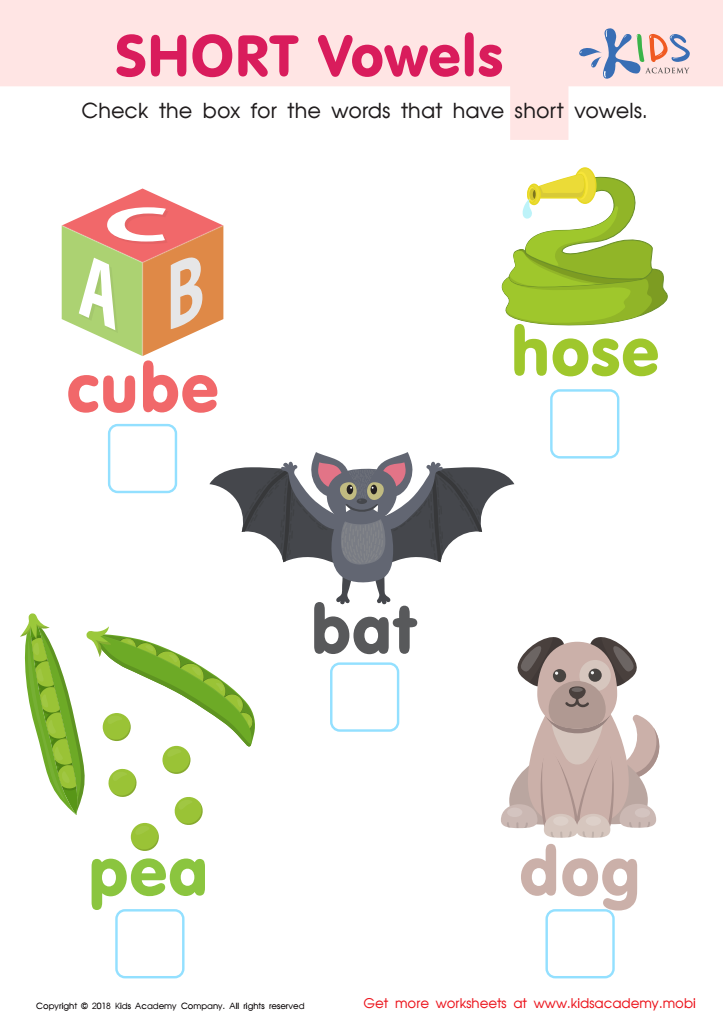
short vowels Worksheet
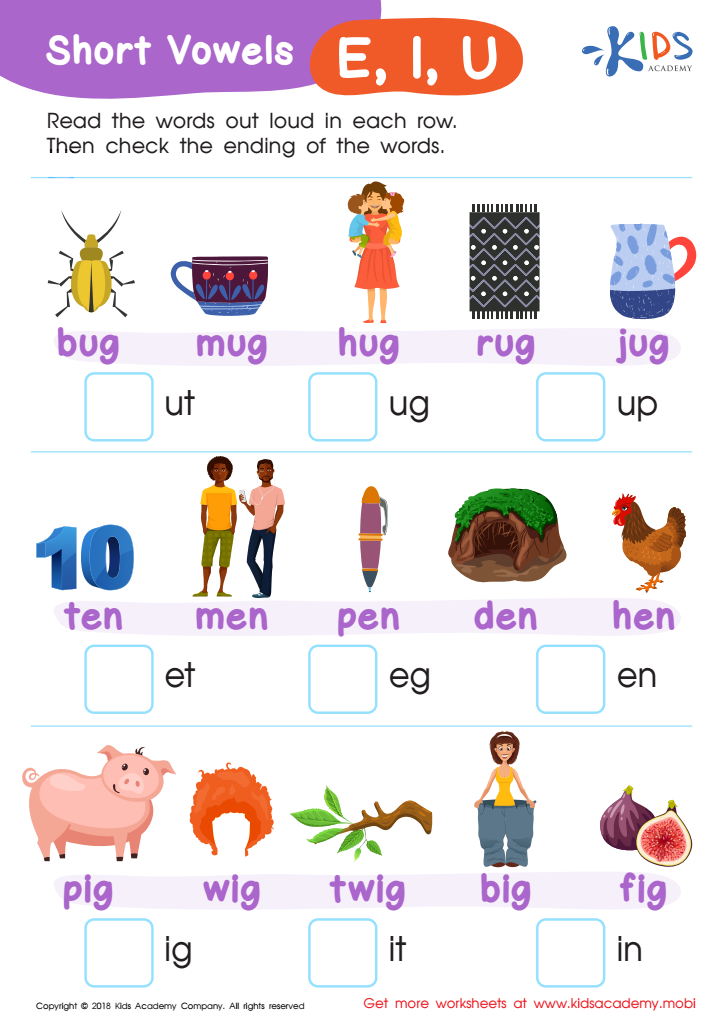
Short Vowels /e/, /i/, and /u/ Worksheet
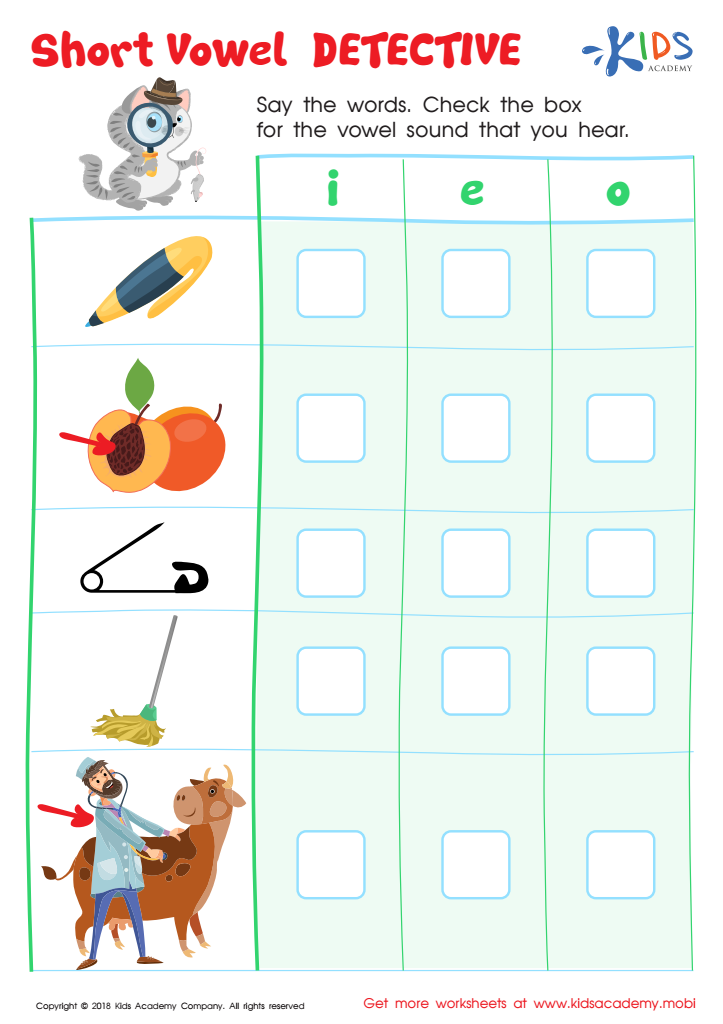
Short Vowel Detective Worksheet
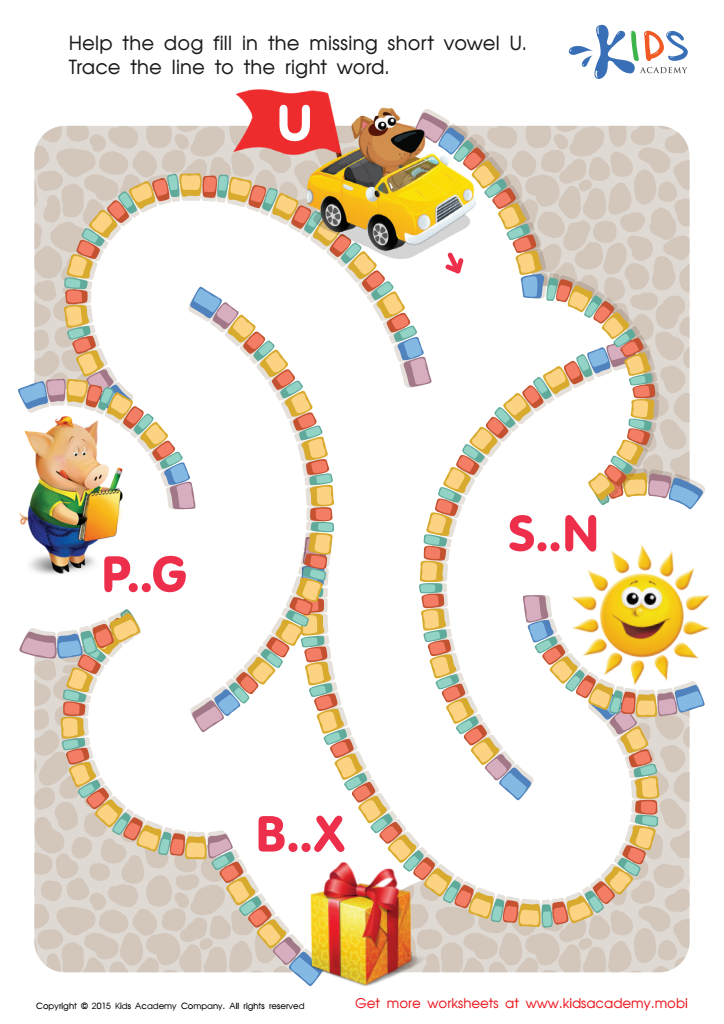
Short Vowel Sound U Worksheet
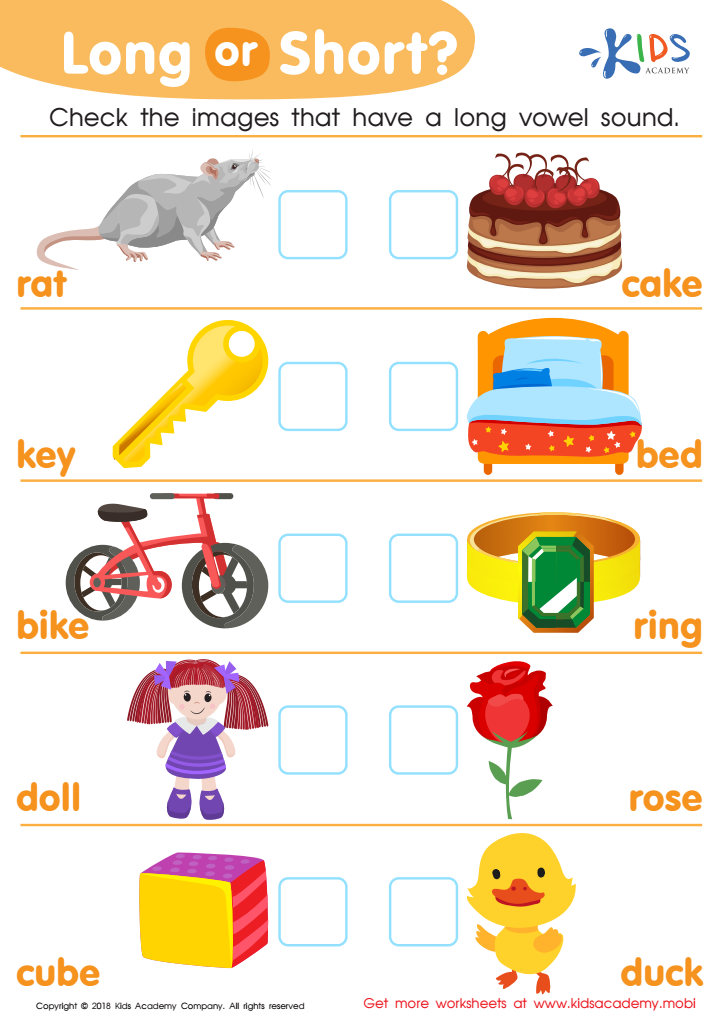
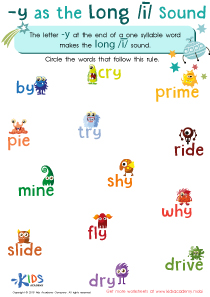
Long or Short Reading Worksheet
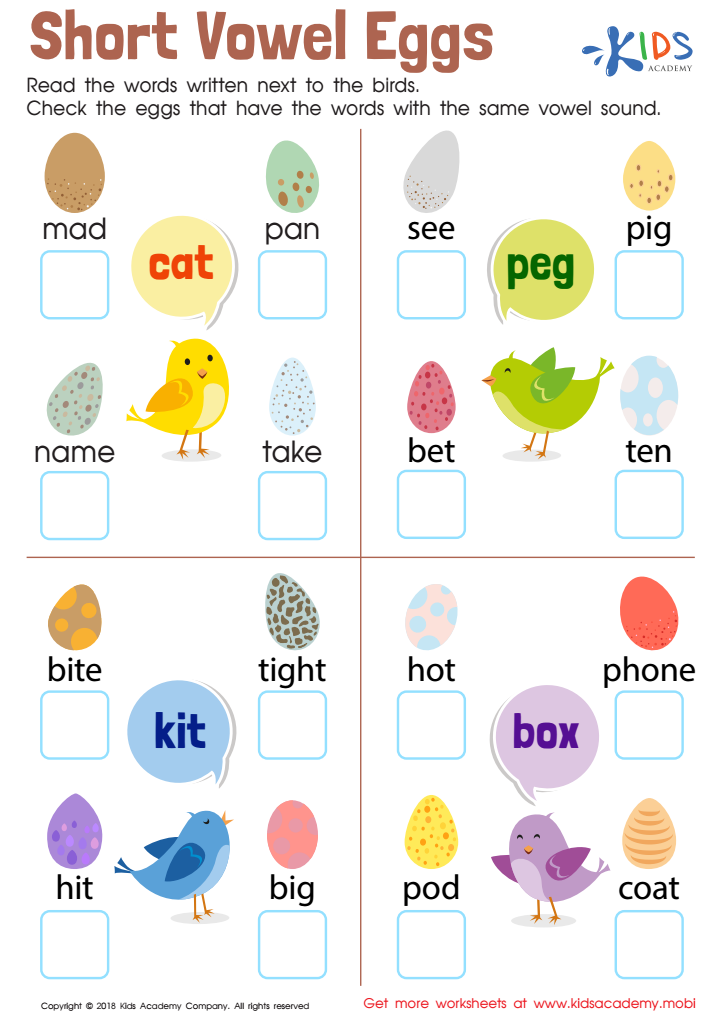
Short Vowel Eggs Worksheet
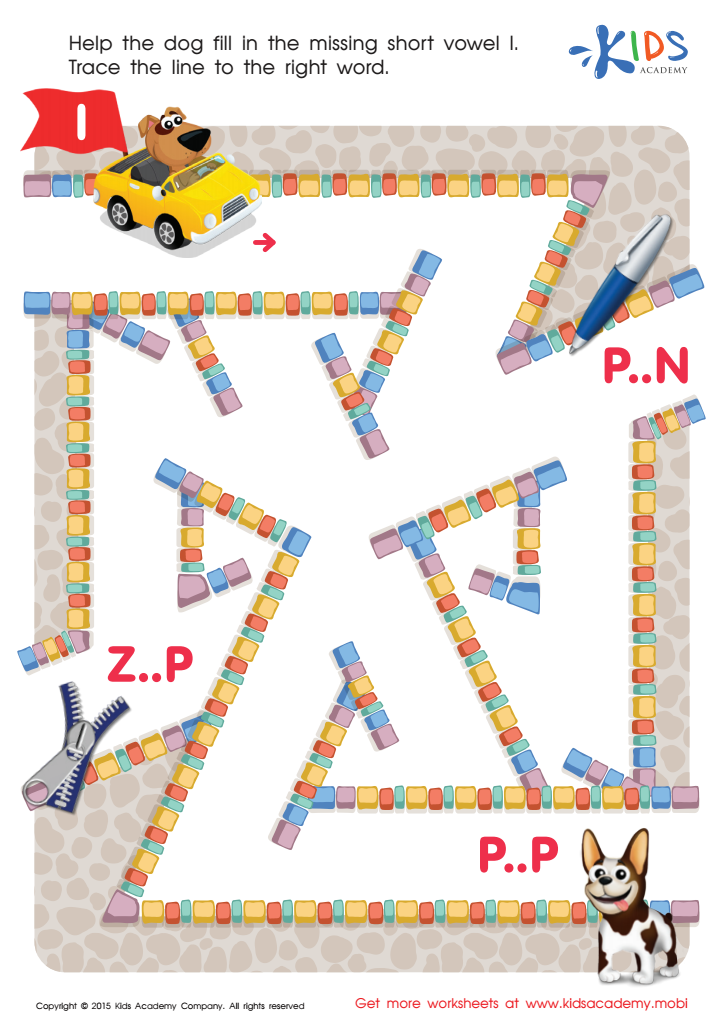
Short Vowel Sound I Worksheet
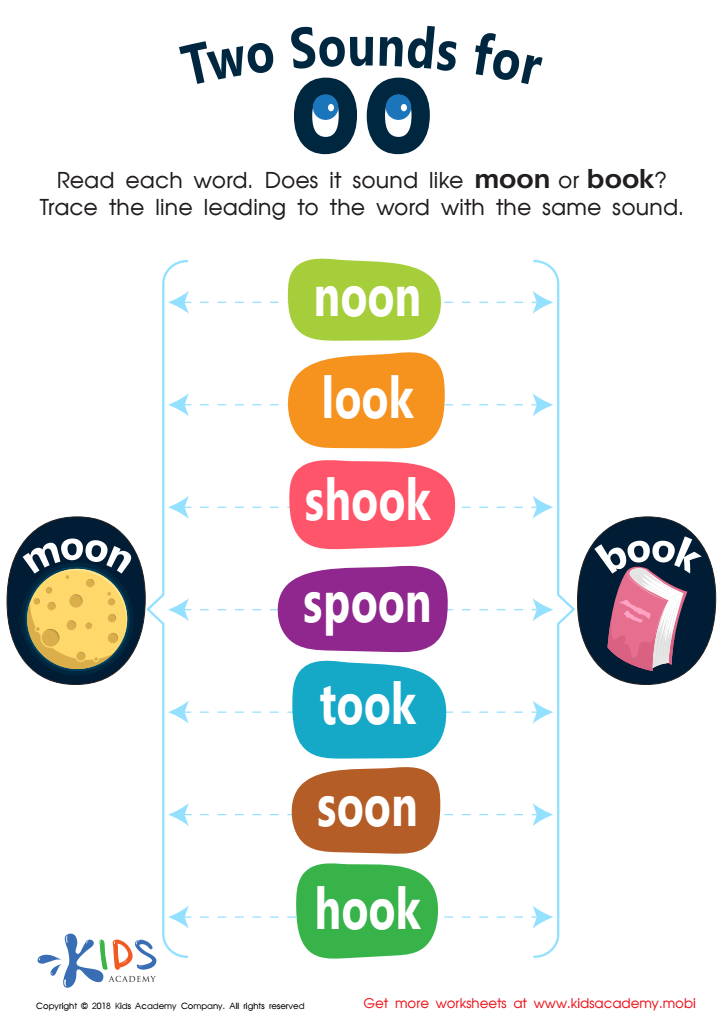
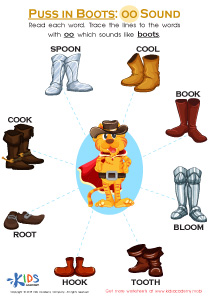
Two Sounds for OO Worksheet
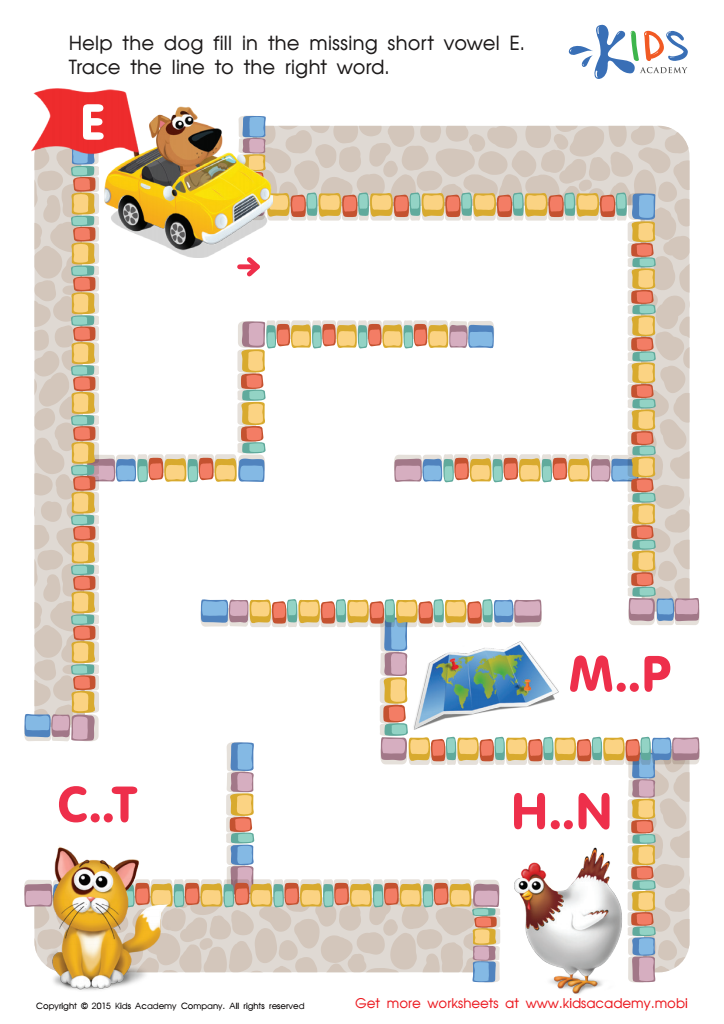
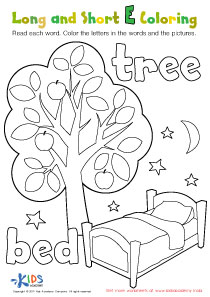
Short Vowel Sound E Worksheet
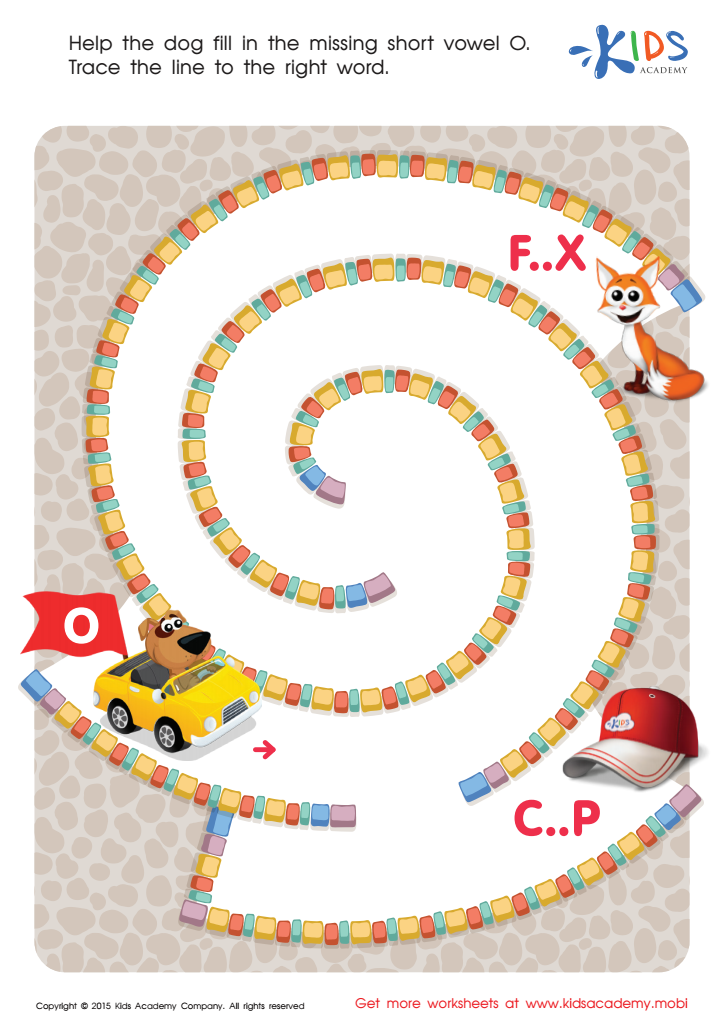
Short Vowel Sound O Worksheet
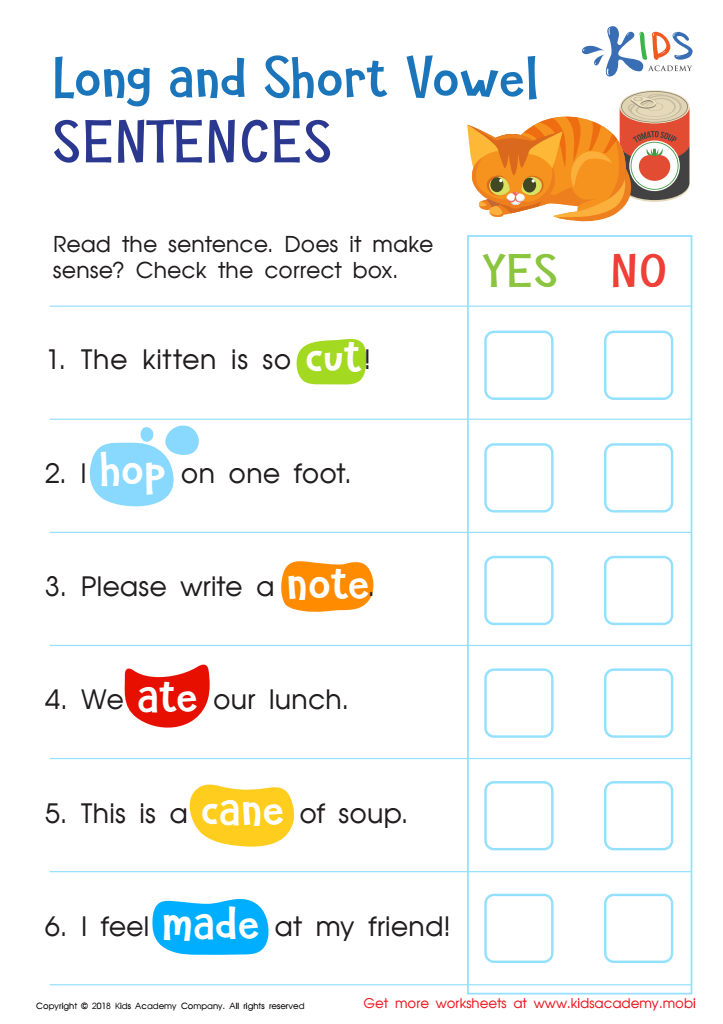
Long and Short Vowel Sentences: Assessment Worksheet
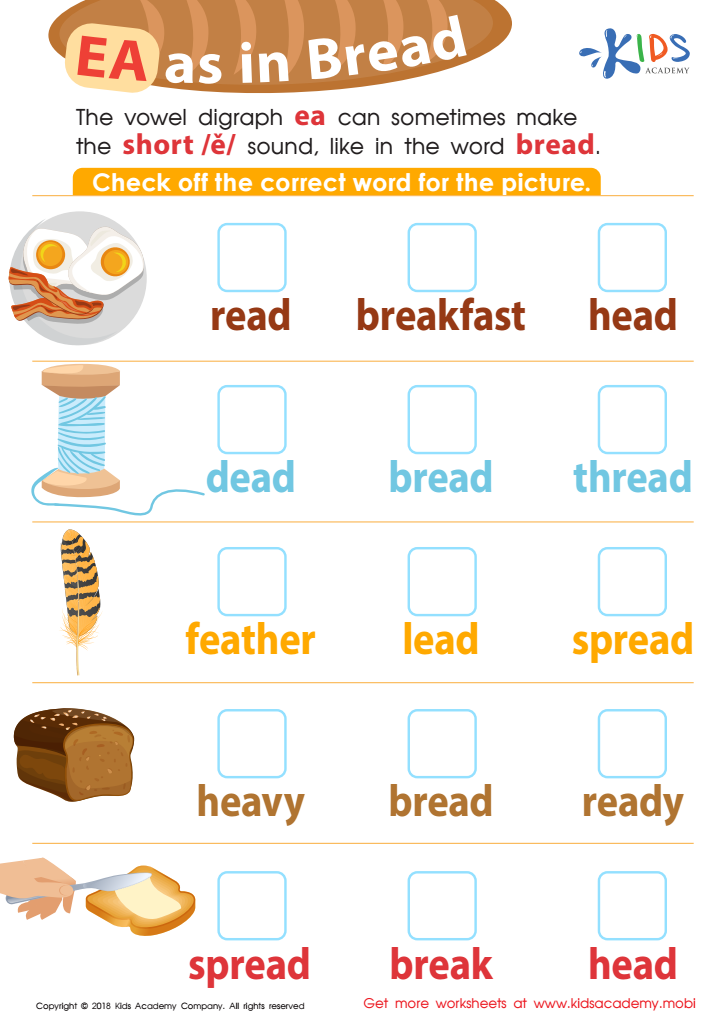
Reading: EA as in Bread Worksheet



Short vowels are a foundational element of literacy for children aged 6-8, making them crucial for both parents and teachers to focus on. At this developmental stage, children are typically learning to read and write, and understanding short vowels helps them decode words more effectively. Short vowels—usually represented by the letters a, e, i, o, and u—serve as the building blocks for many basic words. Grasping their sounds enables children to sound out and recognize a significant number of sight words, which is vital for fluency.
Additionally, short vowels play a critical role in spelling. Children who understand the initial short vowel sounds often find it easier to write words correctly and expand their vocabulary. Recognizing patterns in short vowels can help them improve their phonemic awareness, a skill linked to later reading success.
Moreover, engaging with short vowels can make learning enjoyable. Fun activities like word games, rhymes, and songs centered around short vowel sounds can foster a positive learning environment. By emphasizing this fundamental aspect of literacy, parents and teachers can help instill confidence and a love for reading, which supports lifelong learning.