Governance and Civics Worksheets for Ages 6-8 - Page 3
51 filtered results
-
From - To
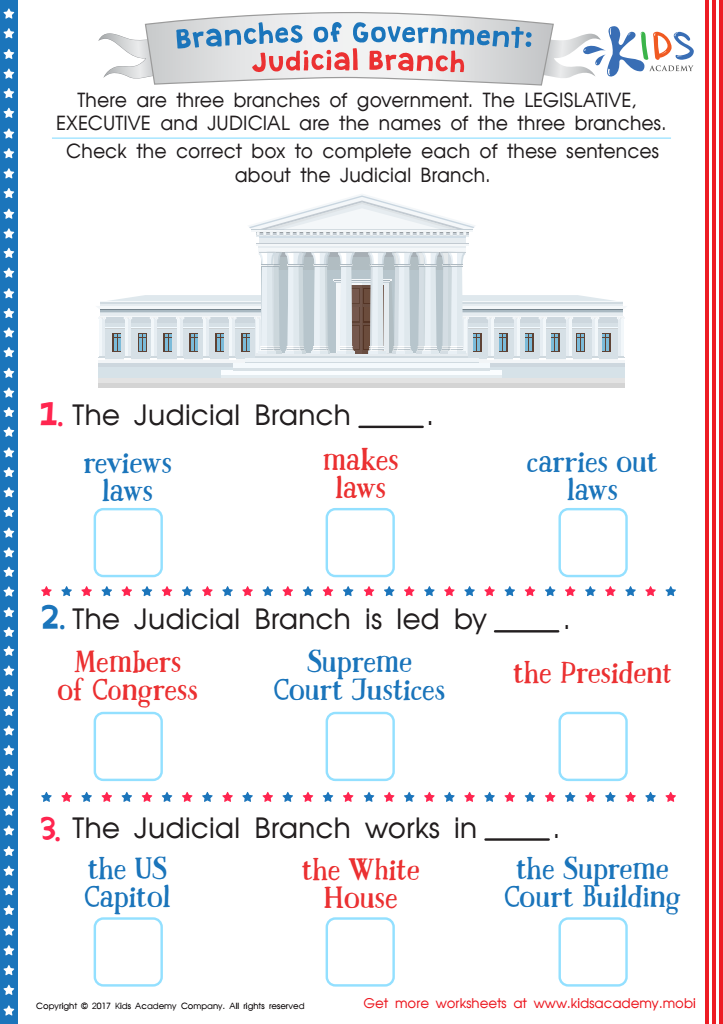
Braches of the Government: Judicial Branch Worksheet
 Assign to My Students
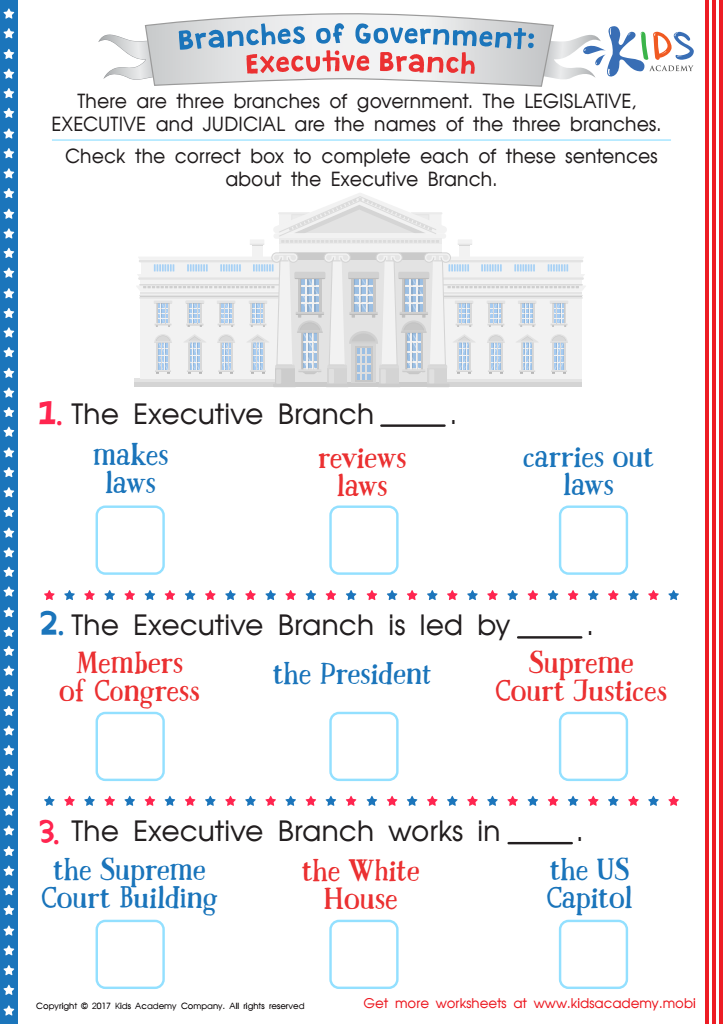
Branches of the Government: Executive Branch Printable
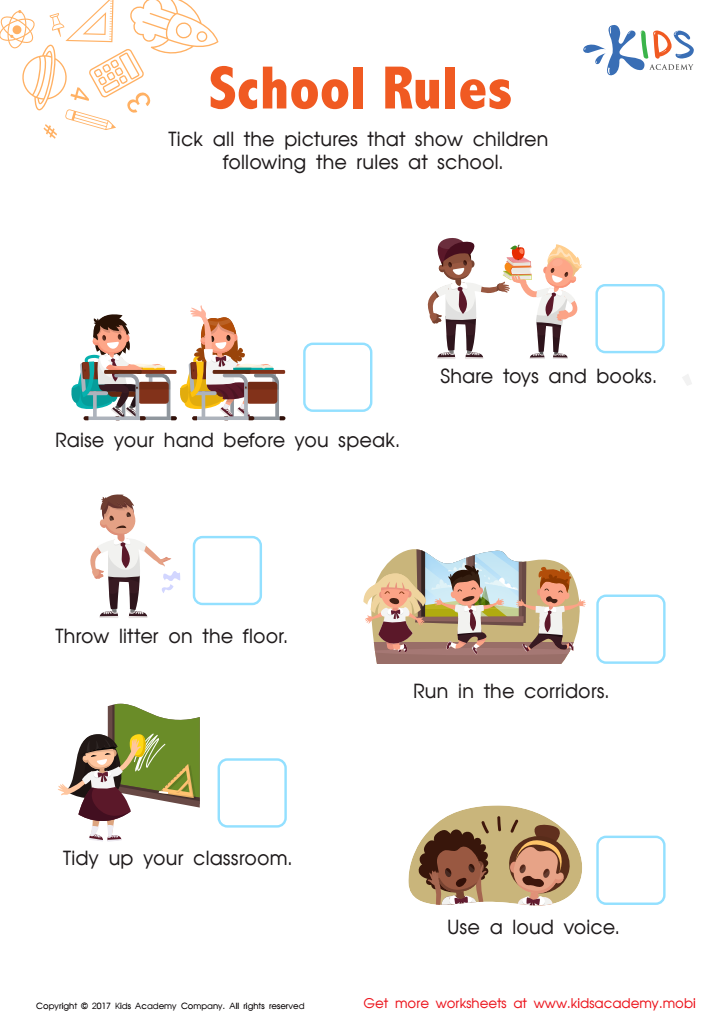
School Rules Worksheet


Governance and civics are essential subjects for children aged 6-8 as they lay the foundation for understanding their roles in society. At this age, children are naturally curious about their environment and how things work. Introducing concepts of governance and civics fosters a sense of belonging and responsibility, helping them to appreciate the importance of community, rules, and participation.
Teaching children about civic values, such as respect, fairness, and empathy, encourages them to build positive relationships with their peers. It also reinforces the idea that every individual has a voice and can contribute to decision-making processes, even in small ways, like classroom discussions or school projects.
Moreover, when parents and teachers discuss the significance of governance, they empower children to be informed and engaged citizens. This early understanding cultivates critical thinking skills, enabling children to ask questions about the world around them and understand how their actions affect others.
Supporting civics education not only nurtures responsible and active members of society but also helps in the holistic development of children as they learn to recognize that their contributions matter. This foundational education ultimately shapes the leaders of tomorrow, instilling a strong sense of community and civic duty from an early age.








