Time Worksheets for Ages 6-9 - Page 2
25 filtered results
-
From - To
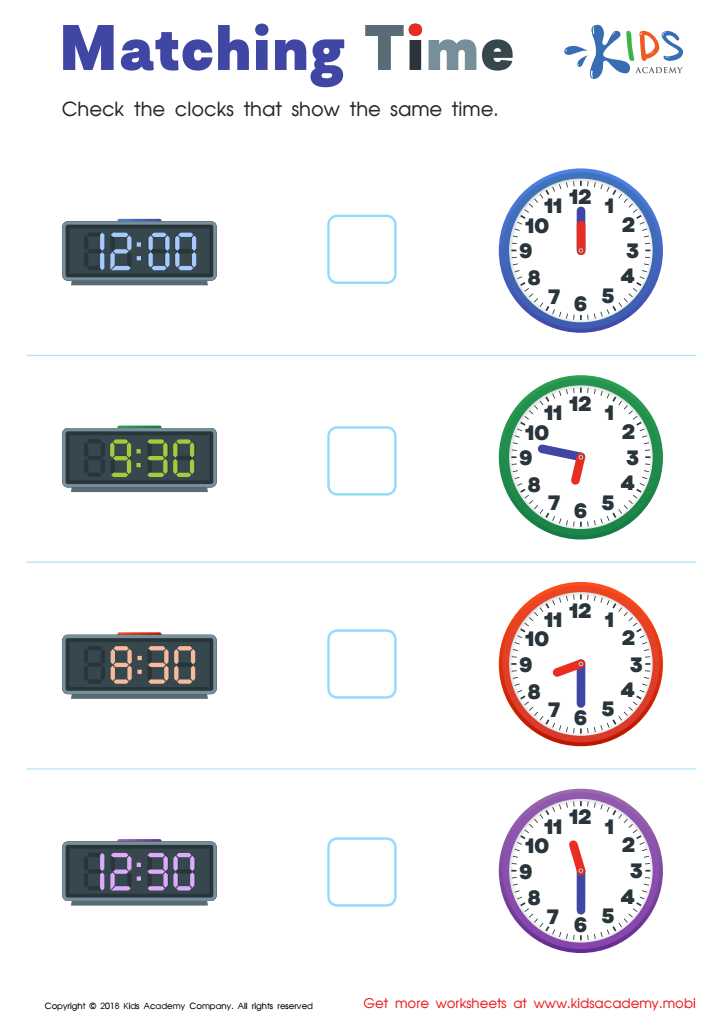
Matching Time Worksheet
 Assign to My Students








Time plays a crucial role in the development of children aged 6-9. For parents and teachers, understanding the significance of time is essential for several reasons. First, this age group is in a critical period of learning to manage and understand the concept of time, which is fundamental for their cognitive development. Knowing how to read clocks, understand the calendar, and manage time helps with their organizational skills and independence.
Additionally, structured timeframes and schedules provide a stable environment that aids in forming routines, reducing anxiety, and creating a sense of security. Consistent schedules can dramatically improve a child's ability to concentrate, thus enhancing academic performance and overall well-being.
Incorporating time management skills at an early age also sets the foundation for future responsibilities. Teaching the value of punctuality, time allocation, and priorities not only preps them for academic scenarios but also for real-world scenarios, making them efficient and reliable.
Moreover, keeping track of time helps in balancing play and studies, ensuring children have a wholesome development rather than a lopsided one focused solely on academics. Hence, caring about time for children aged 6-9 benefits them by boosting multiple areas of development, which, in turn, lays a stronger foundation for their future.








