Easy Multiplication and Division Word Problems Worksheets for Ages 4-5
4 filtered results
-
From - To
Introduce your young learners to the world of basic math with our Educational Online Printables, specifically designed for children aged 4-5 years. Our Easy Multiplication and Division Word Problems worksheets are crafted to make learning math a fun, engaging, and interactive experience. These printables help kids grasp fundamental concepts through simple, relatable scenarios that encourage logical thinking and problem-solving skills. Perfect for early learners, these worksheets are your go-to resource for introducing essential arithmetic skills in a playful and accessible manner. Start your child's mathematical journey with confidence and curiosity!
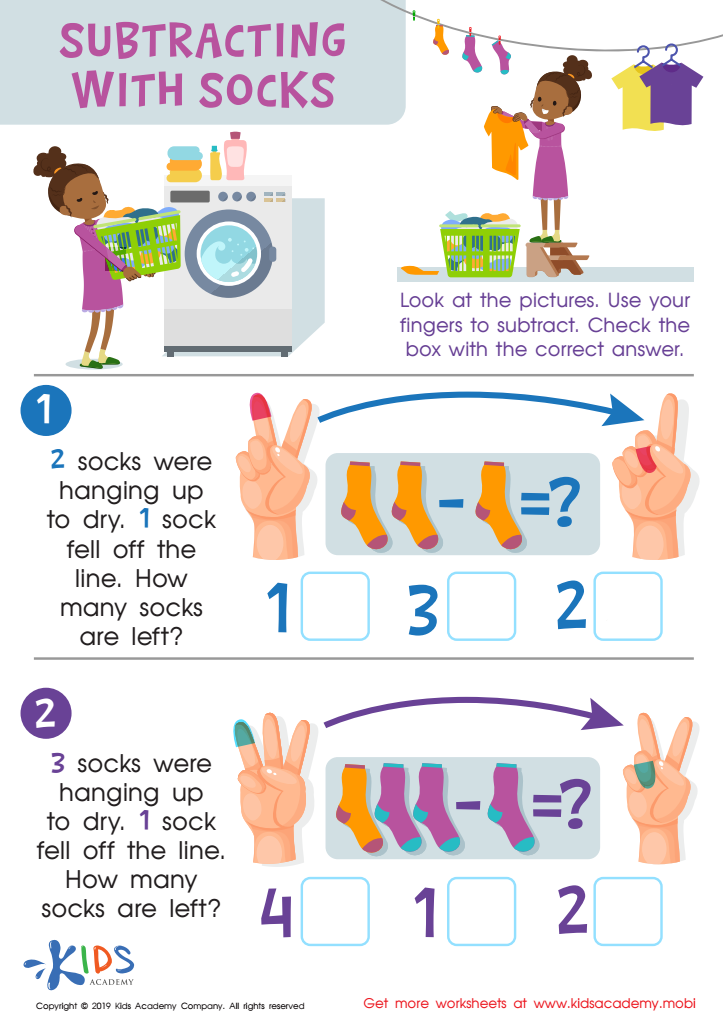
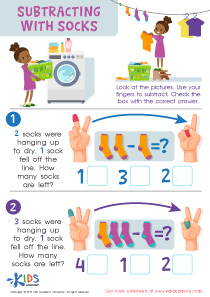
Subtracting Socks Worksheet
 Assign to My Students
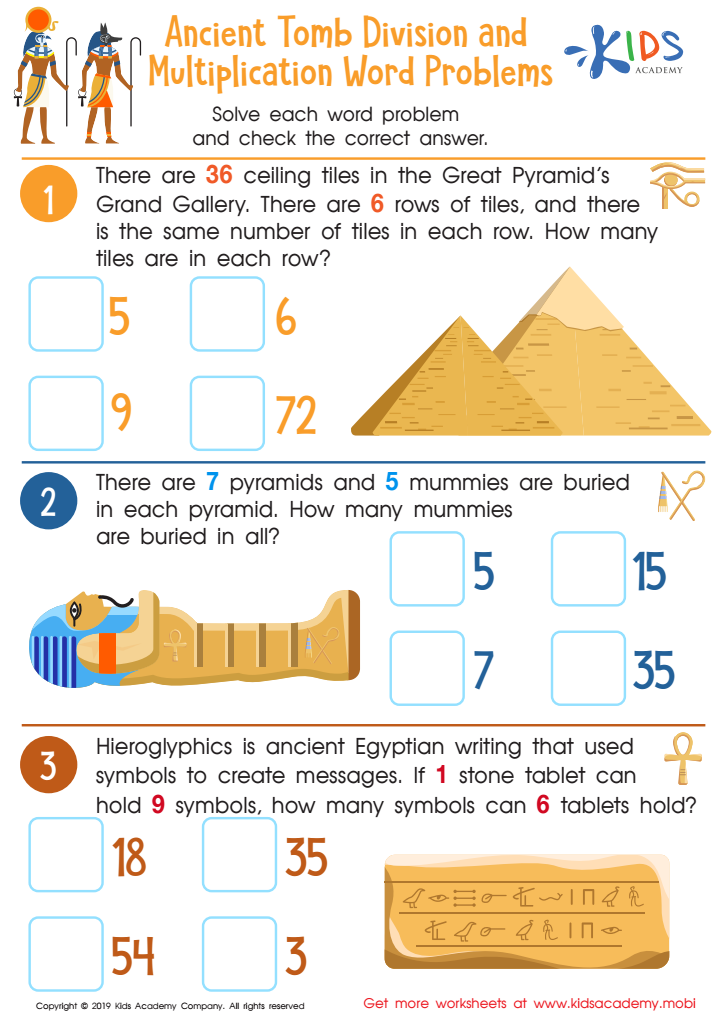
Ancient Tomb Division and Multiplication Word Problems Worksheet
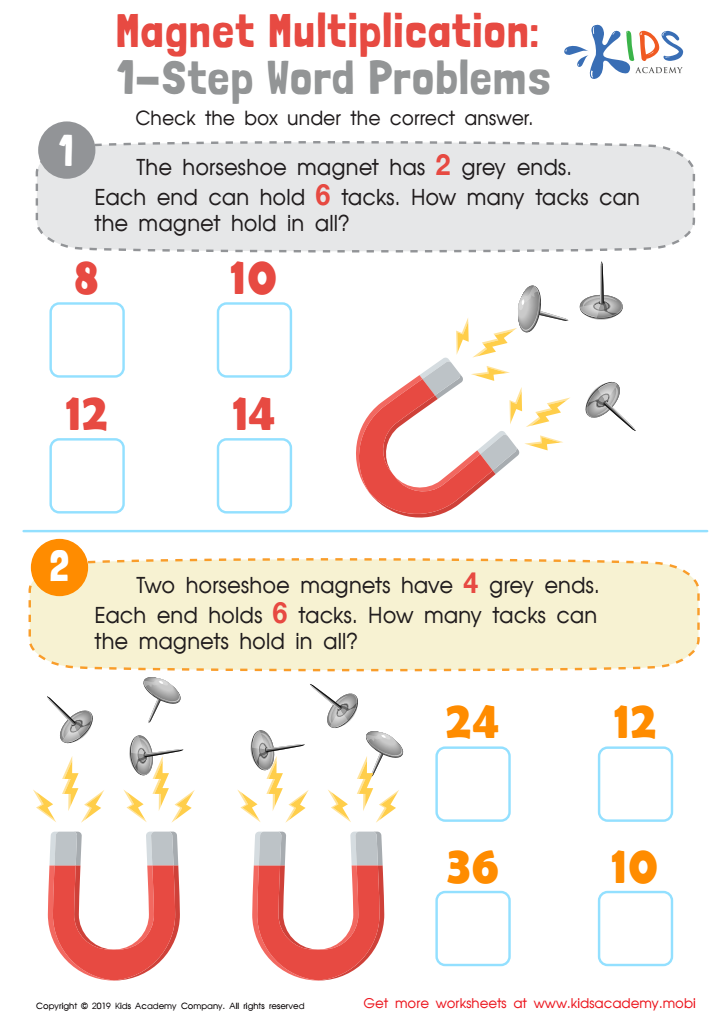
Magnet Multiplication: 1-Step Word Problems Worksheet
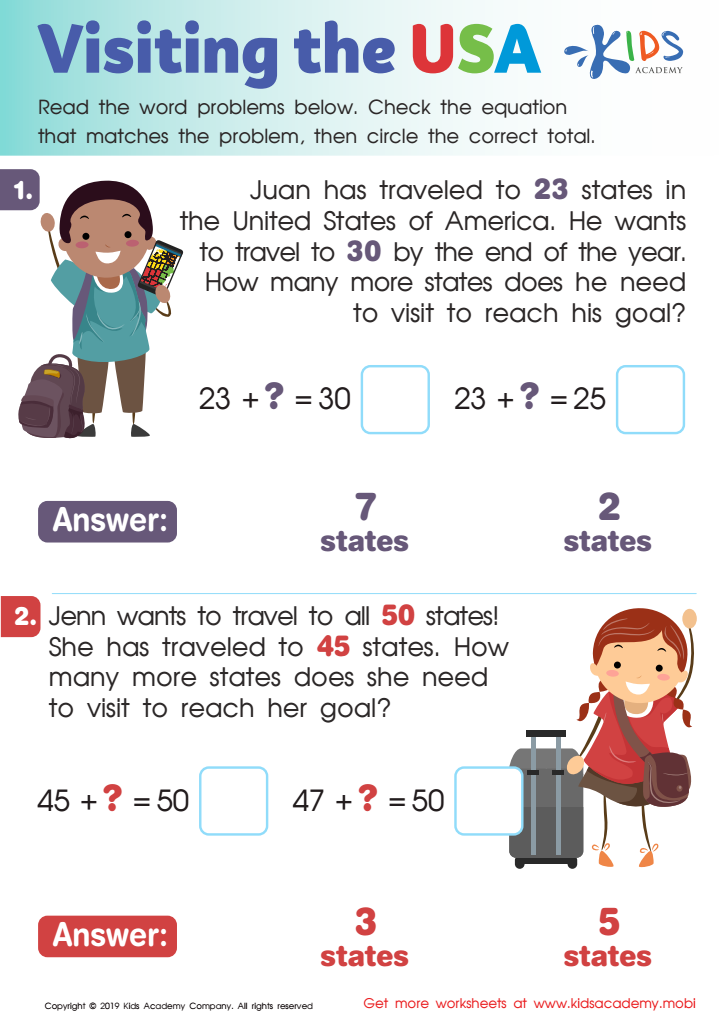
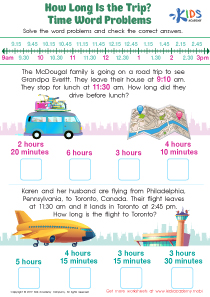
Visiting the USA Worksheet








Title: The Benefits of Educational Interactive Worksheets on Multiplication and Division Word Problems for Early Learners
Teaching young children the concepts of multiplication and division can be a daunting task. It requires not only introducing them to new numerical operations but also ensuring that they understand and can apply these concepts effectively in real-world situations. This is where educational interactive worksheets on multiplication and division word problems come into play, especially designed for children aged 4-5 years. These worksheets are more than just learning tools; they are gateways to building a solid mathematical foundation through enjoyable and engaging activities.
Why Focus on Multiplication and Division Word Problems?
At the age of 4-5, children are at a crucial developmental stage where they begin to understand basic numerical concepts and how they relate to their everyday environment. Multiplication and division are fundamental operations that help in developing reasoning and analytical skills. By introducing word problems at this stage, children can start to see mathematics as a part of their daily lives, making learning more relevant and meaningful.
Word problems in particular help shift the learning experience from rote memorization to practical application. When children relate these problems to real-life scenarios, such as sharing snacks equally among friends (division) or calculating total numbers of legs on several animals (multiplication), they are more likely to grasp and retain these concepts.
Advantages of Educational Interactive Worksheets
-
Engaging Learning Experience: Educational interactive worksheets are designed to capture the attention of young learners. They often include colorful images, fun characters, and interactive elements that make learning playful and exciting. This increases children’s engagement and willingness to participate in mathematical exercises.
-
Boosts Cognitive Development: These worksheets are structured to challenge young minds at a comfortable pace. They encourage children to think critically as they solve problems, boosting cognitive abilities and problem-solving skills. Early exposure to solving word problems helps enhance logical thinking and reasoning skills.
-
Hands-On Learning: Many educational interactive worksheets include activities that require manipulation such as dragging and dropping, matching, or drawing lines. These hands-on activities are crucial for the development of fine motor skills and also help in reinforcing the mathematical concepts being learned.
-
Instant Feedback: In interactive worksheets, children often receive instant feedback. This helps them understand what they got right and where they need improvement, fostering a better learning curve and boosting their confidence.
-
Customizable Difficulty Levels: Since children develop at different rates, the customizable difficulty levels of these worksheets make them ideal for accommodating individual learning paces. Teachers and parents can adjust the complexity of problems based on the child's understanding and progress, ensuring that the learning experience remains challenging yet achievable.
-
Promotes Independent Learning: Educational interactive worksheets are designed to be intuitive for young users, allowing children to navigate through problems with minimal supervision. This promotes a sense of independence and self-directed learning, important traits for lifelong learning.
-
Facilitates Repeated Practice: With interactive worksheets, children can repeat exercises as many times as needed to master the concepts. Repetition is key in early education, as it helps reinforce learning and improve memory retention.
-
Integration of Multimedia Elements: Many educational interactive worksheets incorporate multimedia elements such as sounds, animations, and videos. These elements can help explain complex ideas in simple ways and keep the learning environment dynamic and stimulating.
-
Accessibility: Being primarily digital, these worksheets are easily accessible from various devices, including tablets and computers. This allows children to learn anytime and anywhere, be it at home or while traveling, making effective use of time that might otherwise not be conducive to learning.
-
Parental Involvement: These worksheets offer an excellent opportunity for parents to get involved in their child's learning process. Working together on the worksheets can enhance the child's learning experience and give parents insight into the educational progress and challenges their child faces.
Conclusion
Educational interactive worksheets on multiplication and division word problems for children aged 4-5 years are an excellent resource for early mathematics education. They make learning visible and interactive, which is crucial for young learners who benefit from seeing and engaging directly with content. By addressing real-world problems through age-appropriate word problems, these worksheets not only teach fundamental math skills but also how to apply them, fostering both academic and practical intelligence from a young age. Investing in such educational tools is an investment in building the analytical and problem-solving capabilities of future generations.