Easy Lowercase/Small Letters Worksheets for Ages 4-6
3 filtered results
-
From - To
Introducing our Easy Lowercase/Small Letters Worksheets, perfectly tailored for young learners aged 4-6. These engaging worksheets are designed to help children master the alphabet in its lowercase form through a series of fun and interactive activities. Whether it's tracing, matching, or identifying small letters, our carefully curated exercises ensure a comprehensive understanding and ease in learning. Ideal for preschoolers and kindergarteners, our worksheets make learning lowercase letters a delightful experience. Watch your child's confidence grow as they navigate the world of letters with ease. Embark on this educational journey and lay a solid foundation in literacy with our Easy Lowercase/Small Letters Worksheets for Ages 4-6.
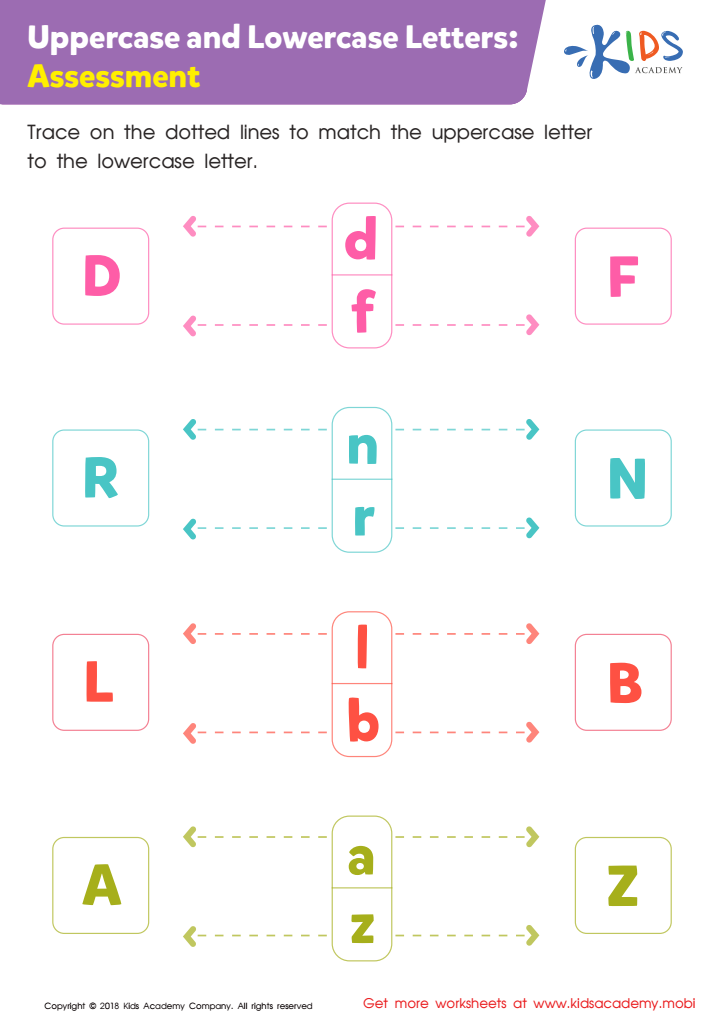
Uppercase and Lowercase Letters: Assessment Worksheet
 Assign to My Students
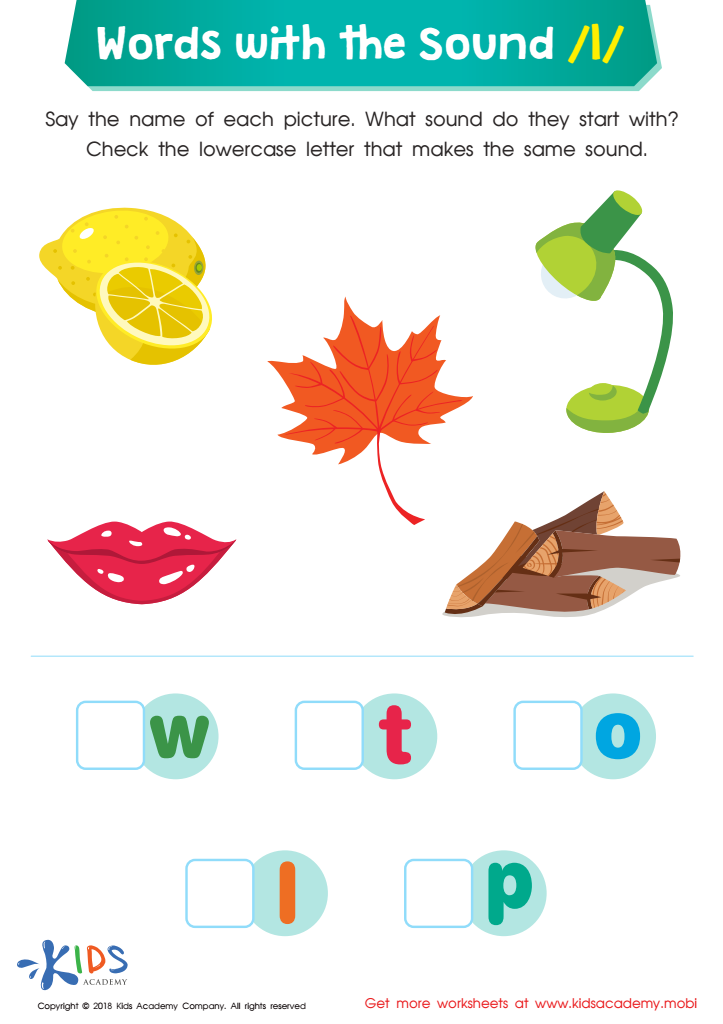
Words with Sound L Reading Worksheet
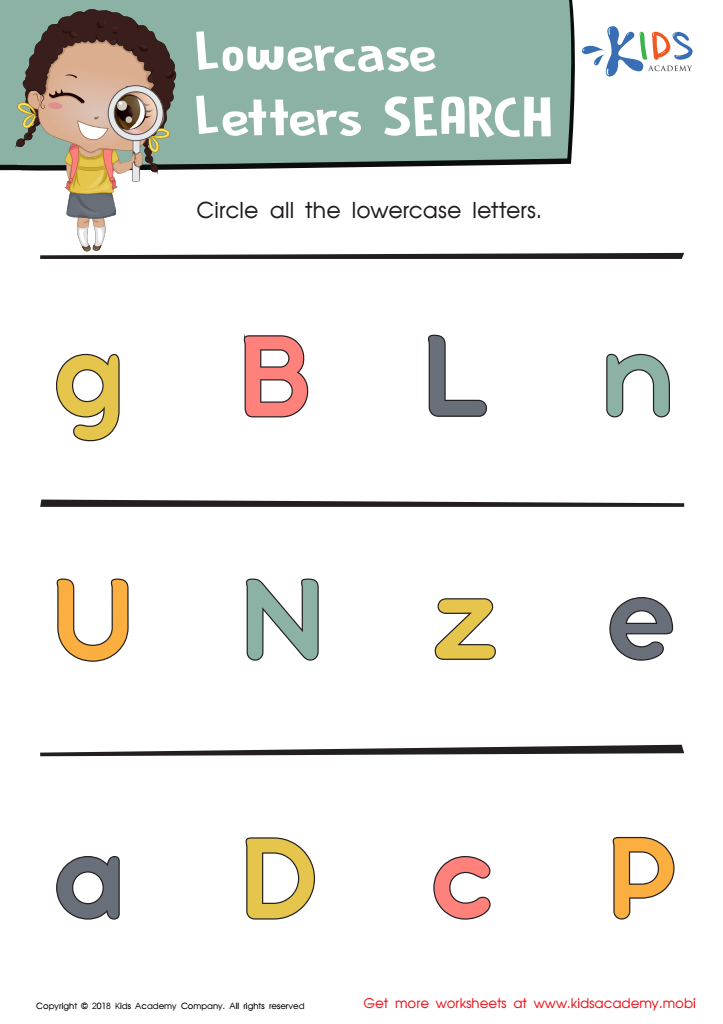
Lowercase Letters Search: Assessment Worksheet


Easy Lowercase/Small Letters worksheets are an invaluable resource for young learners aged 4-6, aimed at developing foundational literacy skills that are essential for their educational journey. These worksheets are designed to make learning not just effective but also engaging for young minds, ensuring that they grasp the basics of the alphabet in a fun and interactive manner.
The significance of these worksheets lies in their targeted approach to introducing lowercase or small letters, which often pose a challenge to early learners due to their varying shapes and sizes. By focusing on lowercase letters, these worksheets provide a structured way for children to familiarize themselves with the alphabet beyond the capital letters, which are typically introduced first. This is crucial as lowercase letters make up the majority of text children will encounter in books and daily reading.
Furthermore, Easy Lowercase/Small Letters worksheets for Ages 4-6 are designed with simplicity and age-appropriateness in mind. They include activities like tracing, matching, and identifying letters, which help in reinforcing letter recognition, improving handwriting, and building confidence in young readers and writers. By engaging with these worksheets, children not only learn at their own pace but also develop a strong foundation in literacy that will support their academic growth in the years to come.