Filters

56 filtered results

Clear all filters
Favorites
With answer key
Interactive

56 filtered results

Difficulty Level

Grade


Check out this FREE Trial Lesson on Reading Comprehension for age 4-7!

Identify Basic Similarities and Differences Between Two Texts on the Same Topic

Favorites
With answer key
Interactive
  • 4-7
  • With answer key
  • Reading Comprehension
  • Easy
Tractors Worksheet
Tractors Worksheet

Tractors Worksheet

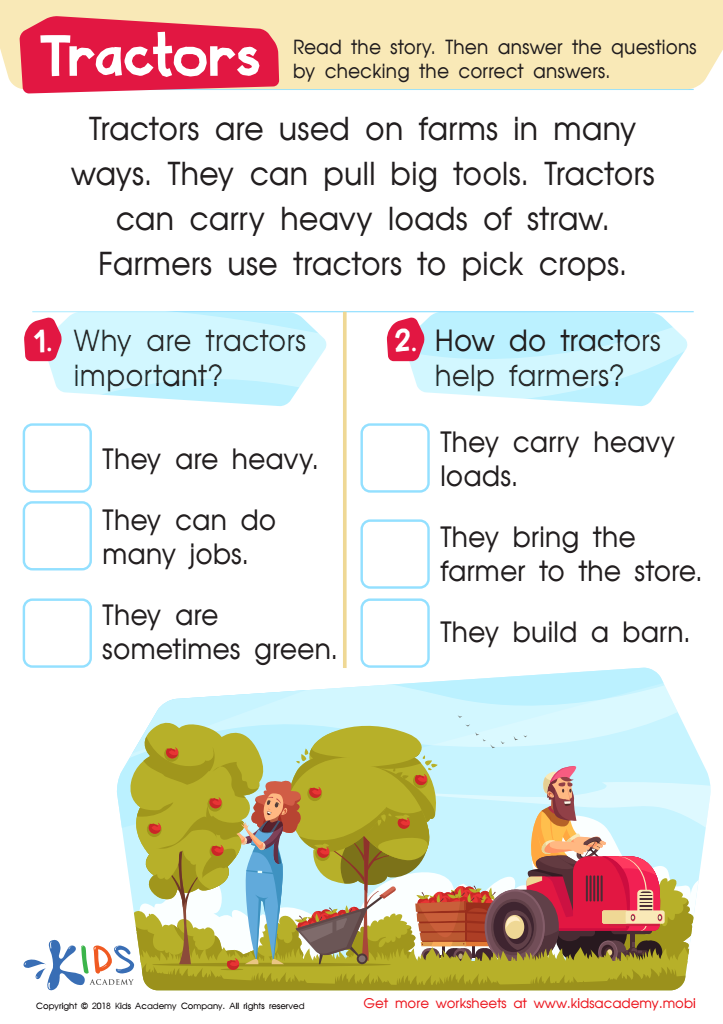
Kids love tractors! Let them read about what they do, what they use, and who uses them with this free worksheet. After reading, they can answer reading comprehension questions to test their knowledge; multiple choices make it easy! Little do they know, they're boosting their literacy skills along the way!
Tractors Worksheet
Worksheet
Character’s Feelings Worksheet

Character’s Feelings Worksheet

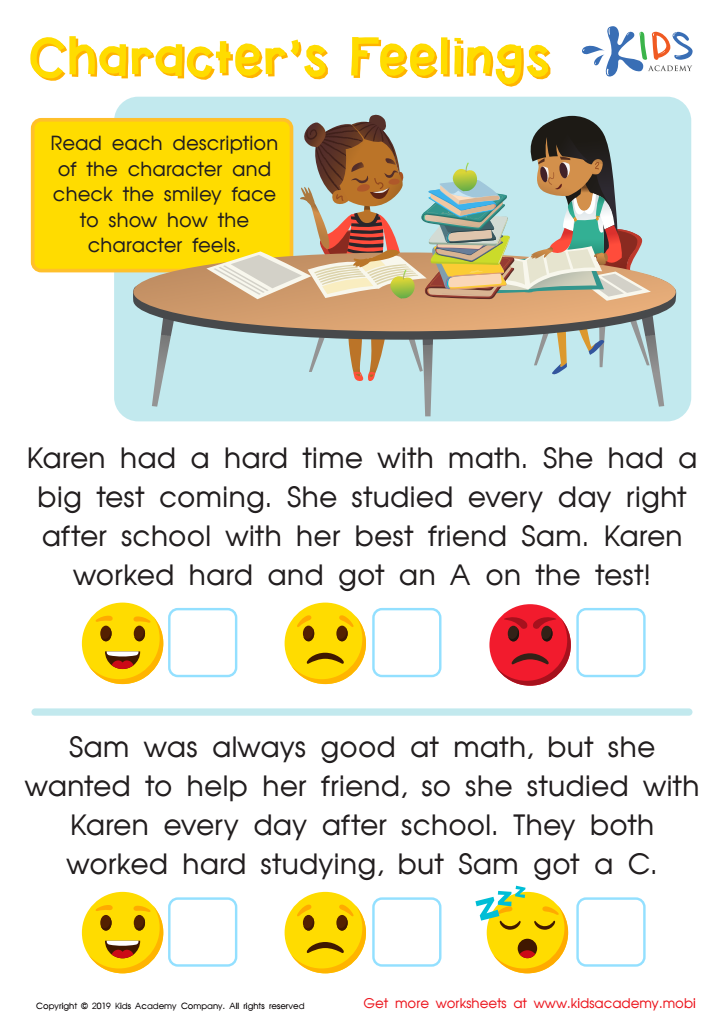
To help your child with reading and writing, encourage them to read simple texts and comprehension passages. This will help them learn new words, build their grammar and practice their reading skills. Go through a worksheet together, read the character descriptions then ask your child to pick the smiley face which shows how the character feels.
Character’s Feelings Worksheet
Worksheet
Cities: Finding Similarities Worksheet

Cities: Finding Similarities Worksheet

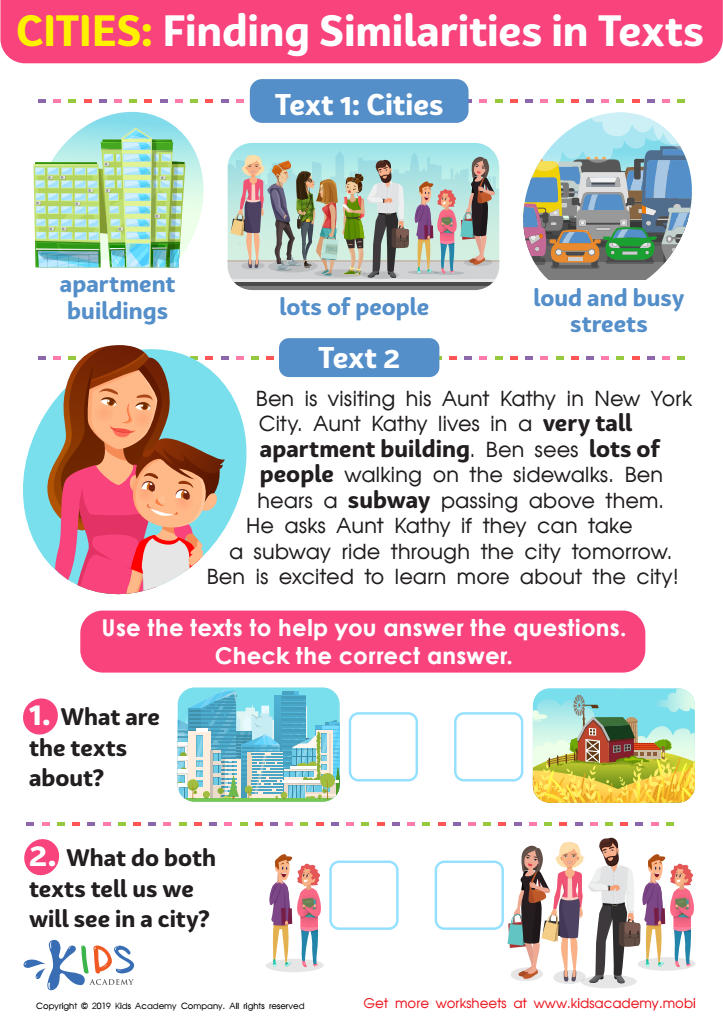
This worksheet offers kids a chance to explore how information can be presented differently but still contain similar facts. They'll compare two texts and look for similarities, honing their reading comprehension and critical thinking skills.
Cities: Finding Similarities Worksheet
Worksheet
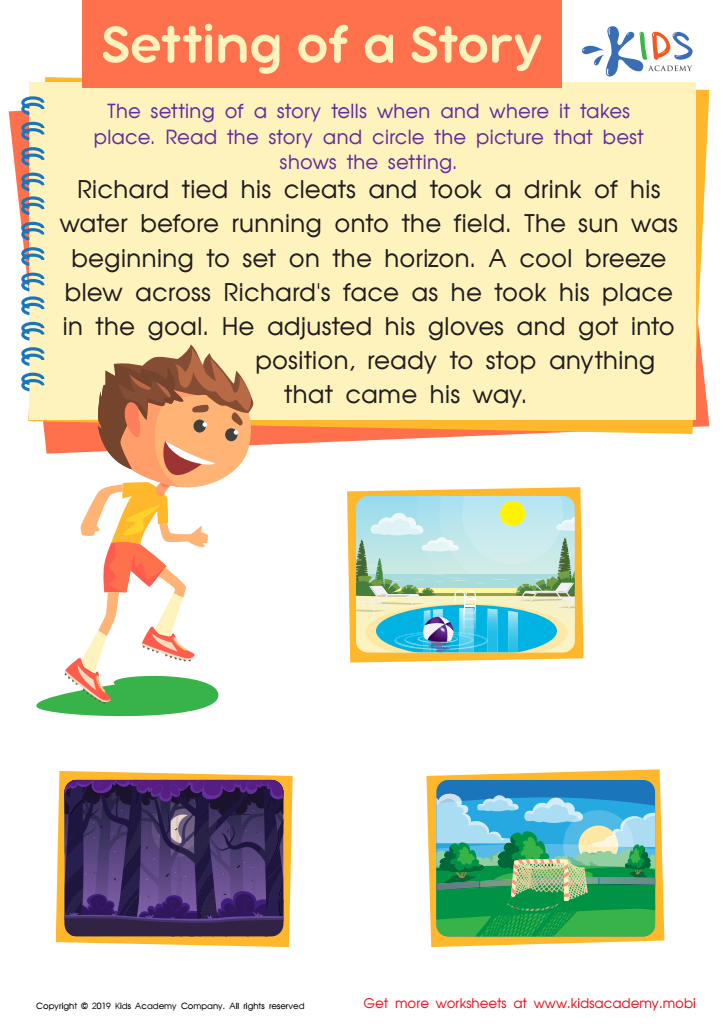
Setting of a Story Worksheet

Setting of a Story Worksheet

You need characters, theme, POV, plot and setting to tell a good story. Ask your kids to explain them and use this worksheet with a story to teach them about setting. Read the story with your kids, then have them circle the picture that best shows the setting.
Setting of a Story Worksheet
Worksheet
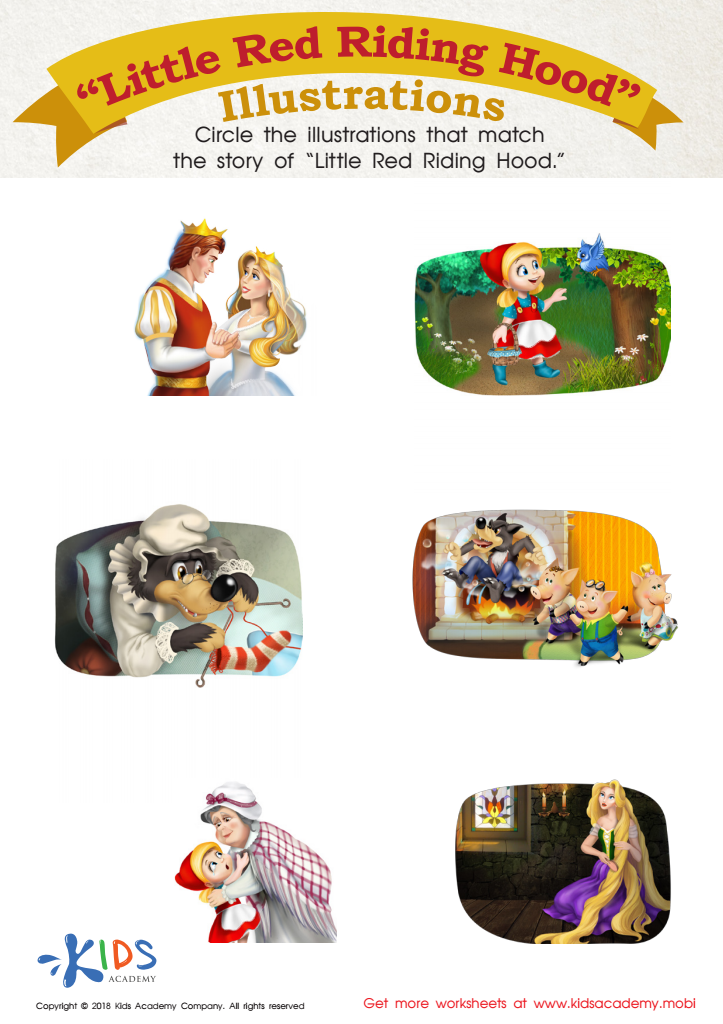
Little Red Riding Hood: Illustrations Worksheet

Little Red Riding Hood: Illustrations Worksheet

This worksheet encourages children to analyze illustrations from familiar fairy tales, such as Little Red Riding Hood, and decide which ones match the story and which don't. It's a great way to help them recall and retell stories they've heard or read. Illustrations are important elements that help children comprehend advanced readings.
Little Red Riding Hood: Illustrations Worksheet
Worksheet
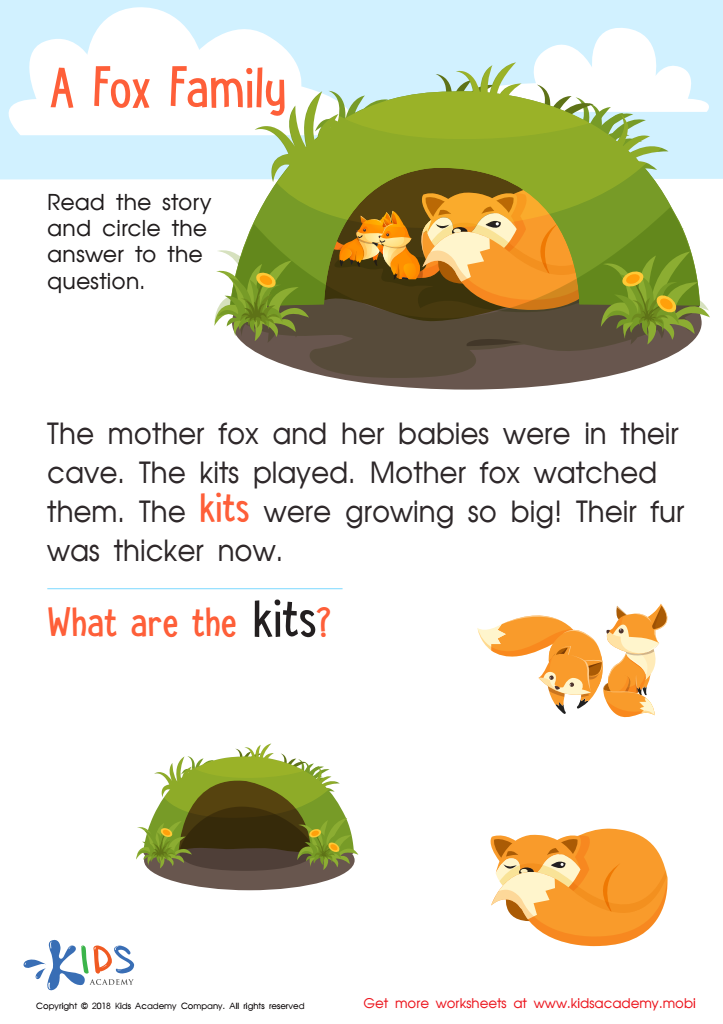
A Fox Family Worksheet

A Fox Family Worksheet

Reading is an easy way to learn new words. This worksheet introduces an interesting story about a fox family, teaching your child that "kits" refers to baby foxes. Read the text together and circle the picture to answer the question.
A Fox Family Worksheet
Worksheet
Check Memory Worksheet

Check Memory Worksheet

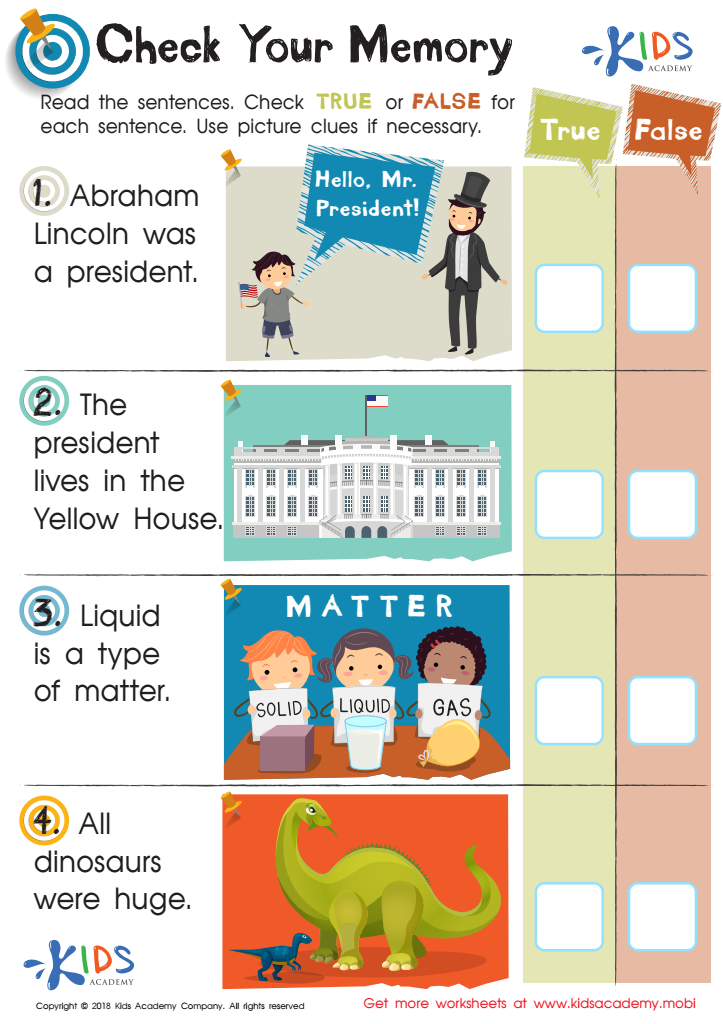
Assisting your kids with their homework and using worksheets is a great way for them to learn. The vibrant visuals in this printout can help stimulate the mind and motivate your child. Have them read the sentences and then point to the associated images. Afterwards, ask them to state True or False for each sentence. If they are still uncertain, offer them the picture clues to assist further.
Check Memory Worksheet
Worksheet
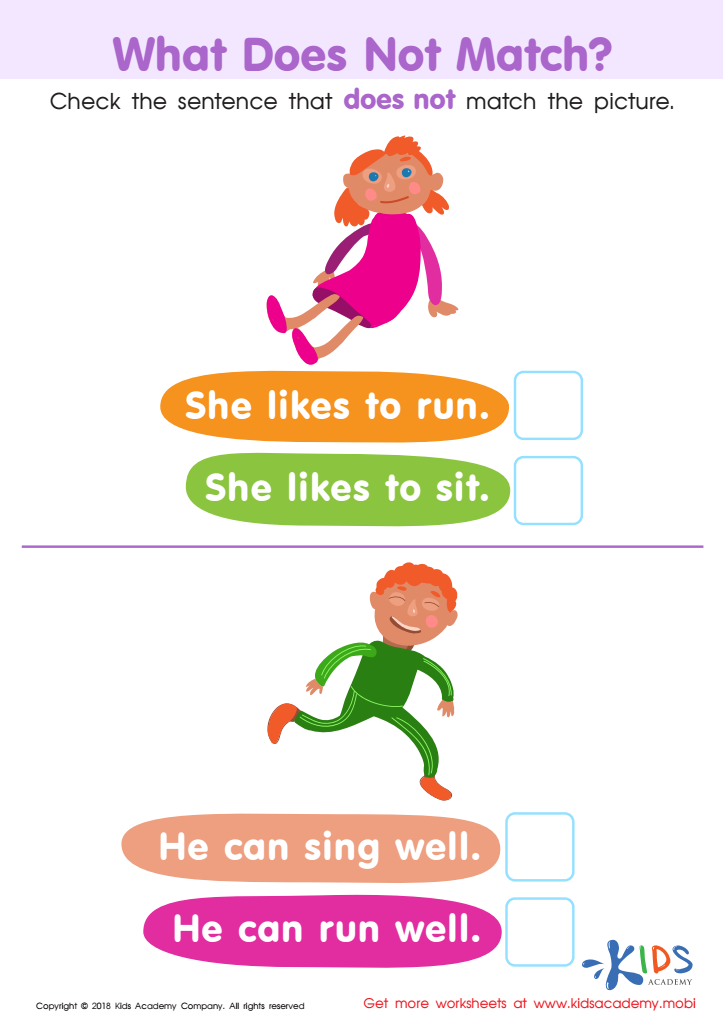
What Does Not Match? Worksheet


What Does Not Match? Worksheet

Emerging readers need to practice using visual cues and repetitive text. This colorful PDF provides them with an opportunity to look at pictures, use discrimination and discern which phrase does not match. It also enables them to gain familiarity with high-frequency words to aid decoding longer sentences.
What Does Not Match? Worksheet
Worksheet


... 2 3

Reading comprehension is a fundamental skill for young learners, directly influencing their academic success and lifelong learning. For children aged 4-7, mastering comprehension sets the stage for effective reading, critical thinking, and communication. Parents and teachers should prioritize easy reading comprehension during these crucial formative years for several compelling reasons.

Firstly, this stage is when children develop their language skills and begin to connect sounds with letters and words. Providing age-appropriate texts encourages them to practice decoding while reinforcing understanding. When children engage with simple, relatable stories, they learn to make predictions, identify main ideas, and draw conclusions, fostering a deeper connection to what they read.

Moreover, strong comprehension skills enhance a child's overall confidence and motivation as they tackle increasingly complex materials. This decisive phase aligns with early literacy standards, and fostering these skills can lead to a more positive attitude toward reading.

In addition, investing time in comprehension activities nurtures parent-child or teacher-student relationships, promoting collaboration in learning. By creating a supportive environment, adults can celebrate small victories with children, bolstering their enthusiasm for reading. Ultimately, prioritizing reading comprehension for young learners cultivates a foundation for a successful, enriching educational journey.