Easy Lowercase/Small Letters Worksheets for Ages 4-8
3 filtered results
-
From - To
Welcome to our "Easy Lowercase/Small Letters Worksheets" designed for children aged 4-8! These engaging worksheets focus on helping young learners master lowercase letters while nurturing their creativity and fine motor skills. Featuring a variety of fun activities including tracing, identifying, and coloring, our resources cater to different learning styles and promote early literacy development. Perfect for parents and educators, these worksheets encourage independent practice, enhance letter recognition, and build confidence in young readers. Explore our interactive and printable options to make learning the alphabet enjoyable and effective. Empower your child's journey to reading success with our delightful worksheets today!
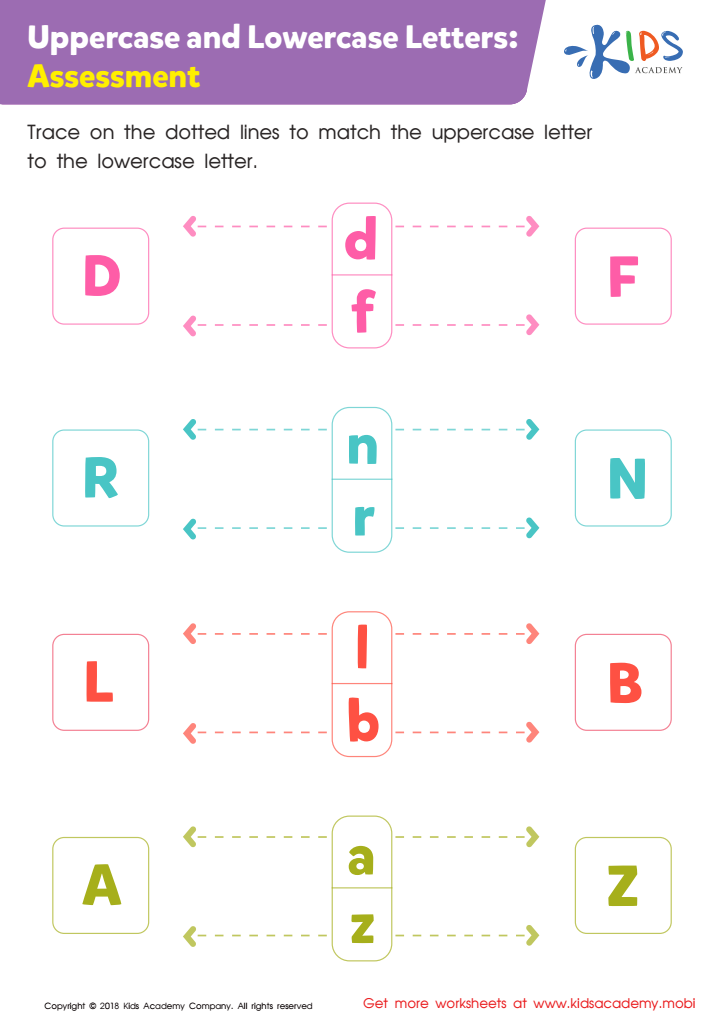
Uppercase and Lowercase Letters: Assessment Worksheet
 Assign to My Students
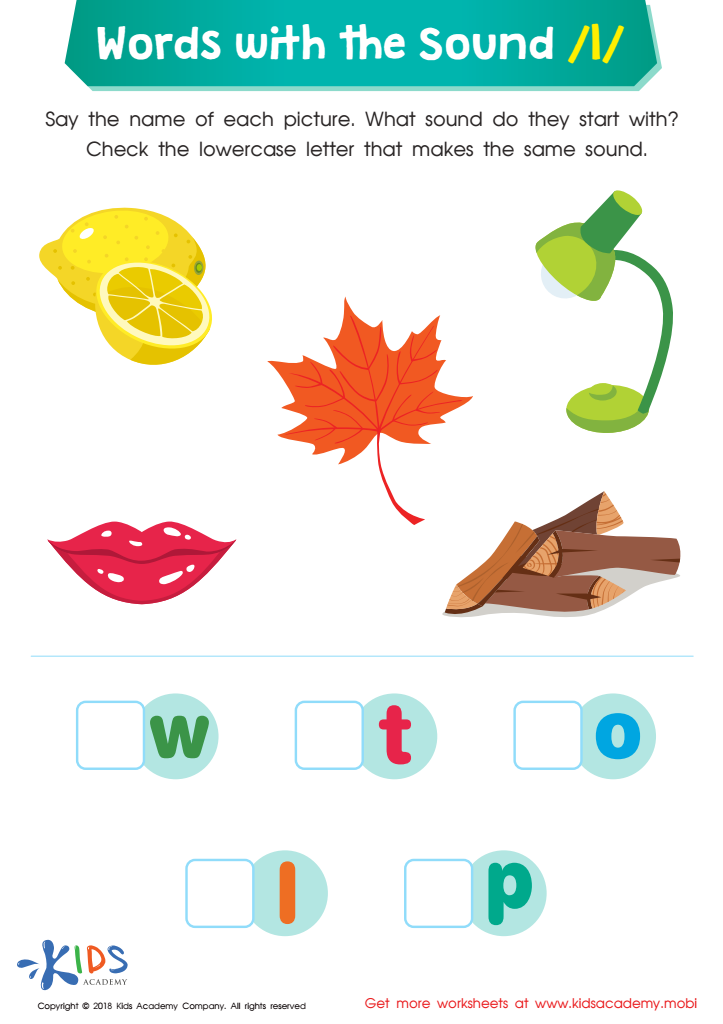
Words with Sound L Reading Worksheet
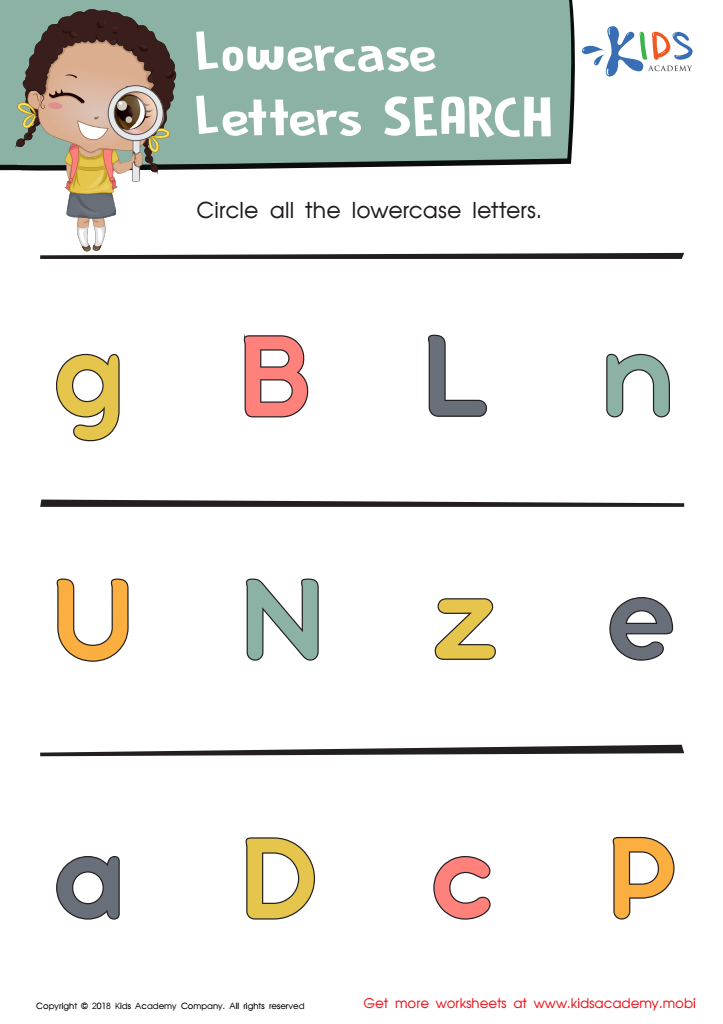
Lowercase Letters Search: Assessment Worksheet


Teaching children about lowercase letters is essential for their literacy development and overall learning trajectory. For ages 4-8, mastering easy lowercase letters provides a foundation for reading and writing—an integral part of their cognitive and communication skills. Recognizing and understanding these letters helps children build vocabularies, making it easier for them to form words and understand basic sentence structures.
Lowercase letters are predominantly used in everyday reading materials, enabling children to engage with age-appropriate books, signs, and labels. This exposure fosters a love of reading, boosting their confidence and encouraging exploration of language. Moreover, understanding lowercase letters is tied to writing skills. Children who are proficient in lowercase form letters are more likely to write legibly and express their thoughts effectively.
Additionally, focusing on lowercase letters prepares children for standardized testing and assessments in their educational journey. These foundational skills often dictate their future success in literacy-related subjects. Overall, parents and teachers should prioritize easy lowercase letter learning as it not only enhances literacy skills but also nurtures critical thinking and creativity, laying the groundwork for a lifetime of learning. Engaging children in interactive and playful manners will make the process enjoyable and effective.