Easy Comparison Worksheets for Ages 5-7
3 filtered results
-
From - To
Discover our engaging Easy Comparison Worksheets designed specifically for children aged 5-7. These worksheets simplify the concept of comparison, helping young learners grasp the basics of greater than, less than, and equal to. Each worksheet features vibrant illustrations and fun, relatable examples tailored to keep kids motivated and excited about learning. Perfect for home or classroom use, our easy-to-follow activities encourage critical thinking while enhancing early math skills. Help your child build confidence in their abilities and enjoy the process of learning with our thoughtfully created comparison worksheets! Visit our website to access a variety of free downloadable resources for your young learners.
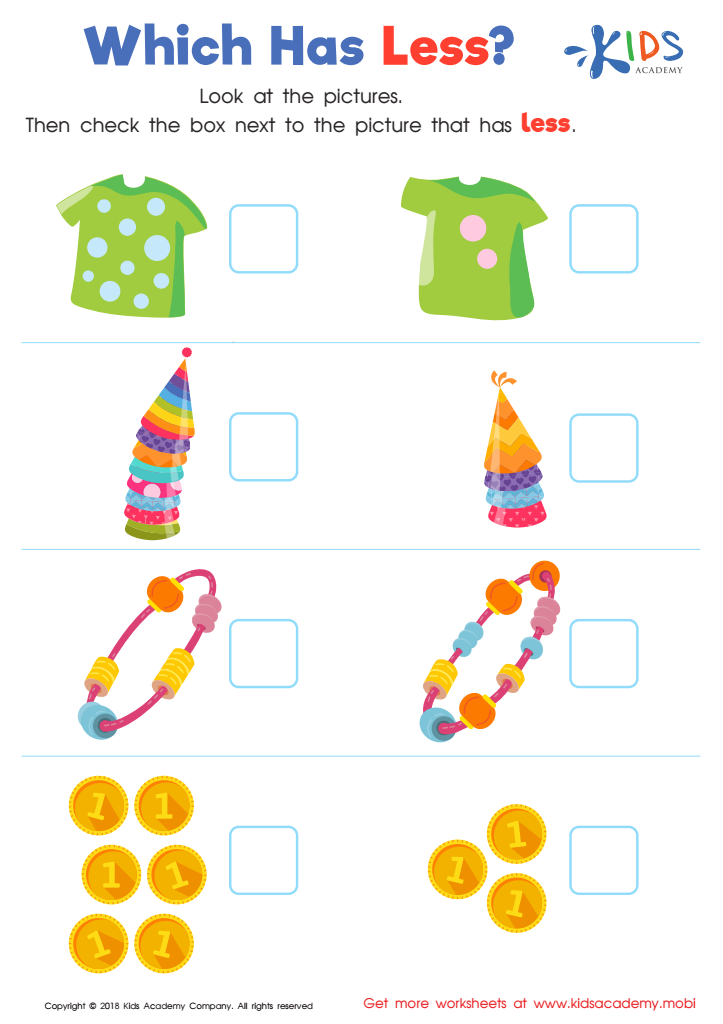
Which Has Less? Worksheet
 Assign to My Students
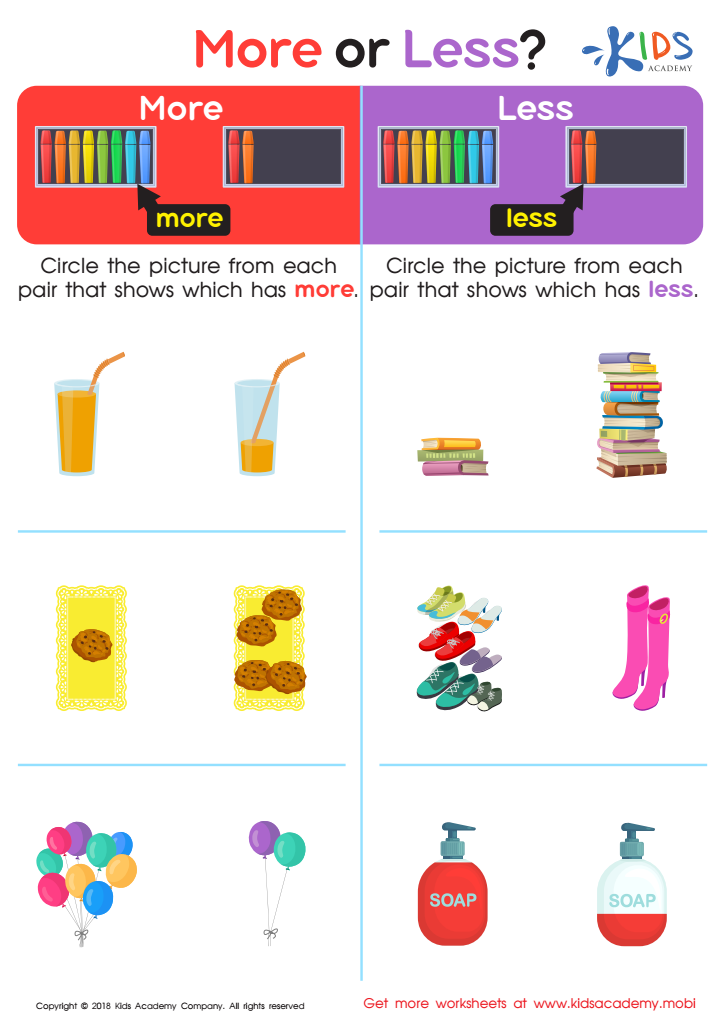
More or Less? Worksheet
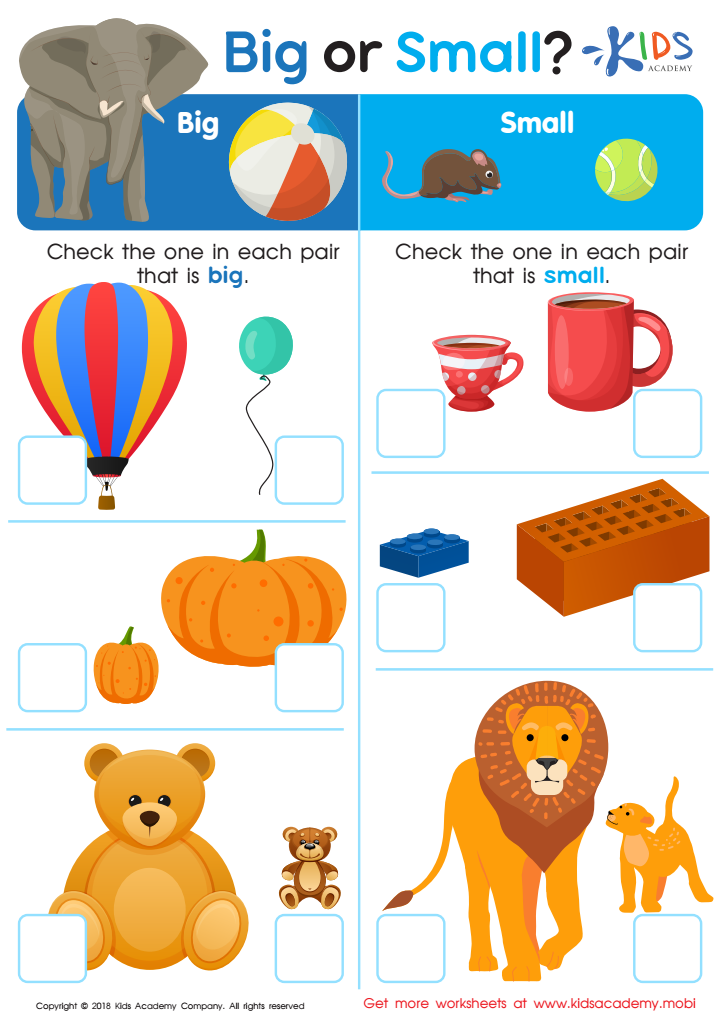
Big or Small? Worksheet






Easy Comparison for Ages 5-7 is crucial for children's early development as it builds foundational skills necessary for understanding mathematical concepts. During this formative stage, children begin to encounter the world of numbers, patterns, and relationships. Easy comparisons help them grasp the notion of differences and similarities, fostering critical thinking and analytical skills.
Parents and teachers should care about this tool because it engages children in an interactive and fun way, making learning more enjoyable. Simplified comparative tasks, such as weighing objects or counting items, enable young learners to understand concepts like more, less, greater, and smaller. These skills promote mathematical comprehension and support later subjects, such as arithmetic and problem-solving.
Moreover, easy comparison encourages language development by introducing children to comparative vocabulary and prompts discussions about quantity and quality, enhancing their communicative abilities. Additionally, it nurtures social skills as children often work in pairs or groups during comparison activities, teaching them collaboration and negotiation.
Ultimately, incorporating Easy Comparison strategies in learning environments cultivates curiosity, instills confidence, and lays a strong foundation for future academic success. Engaging with these comparative concepts early on helps to ensure that children are well-equipped for a world that increasingly relies on analytical abilities.








