Easy 2D Shapes Worksheets for Ages 5-9
18 filtered results
-
From - To
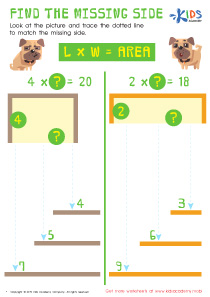
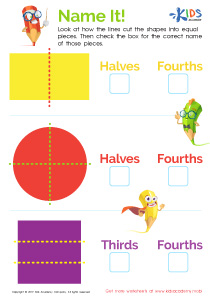
Explore our Easy 2D Shapes Worksheets designed for children ages 5-9! These engaging and educational printable worksheets help young learners to recognize, draw, and understand various two-dimensional shapes. Perfect for early grade students, each activity promotes critical thinking and enhances geometry skills through fun exercises and colorful illustrations. With clear instructions and age-appropriate challenges, kids can practice and reinforce their knowledge at their own pace. Ideal for both classroom use and home practice, our shapes worksheets make learning a delightful and successful experience. Equip your child with the foundational skills they need in geometry with Kids Academy!
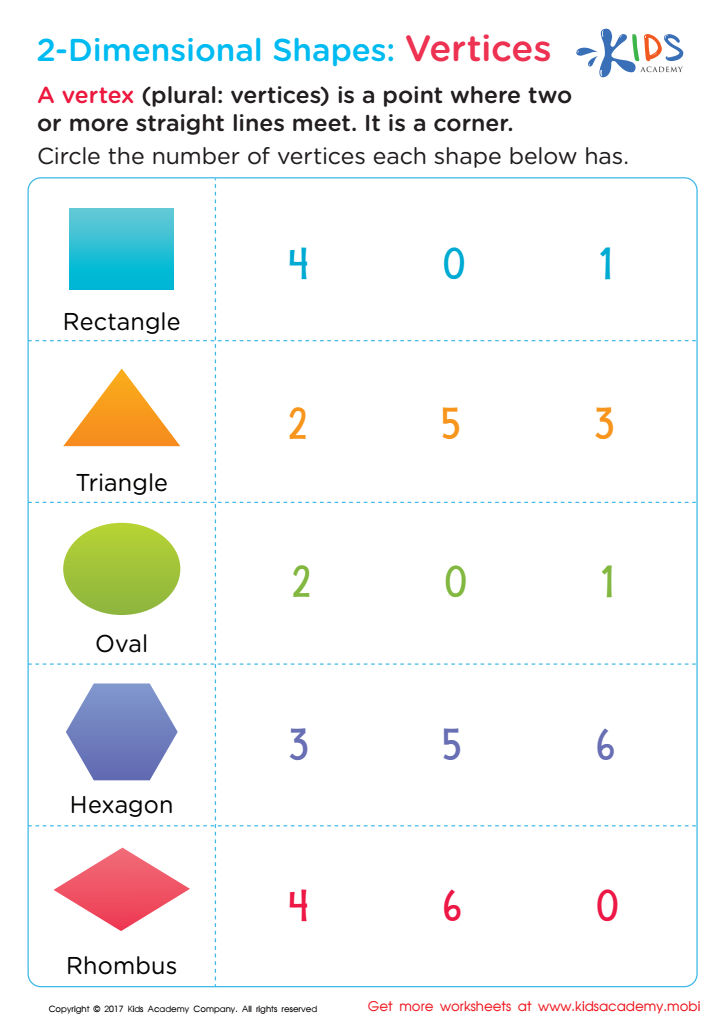
Two–Dimensional Shapes: Vertices Printable
 Assign to My Students

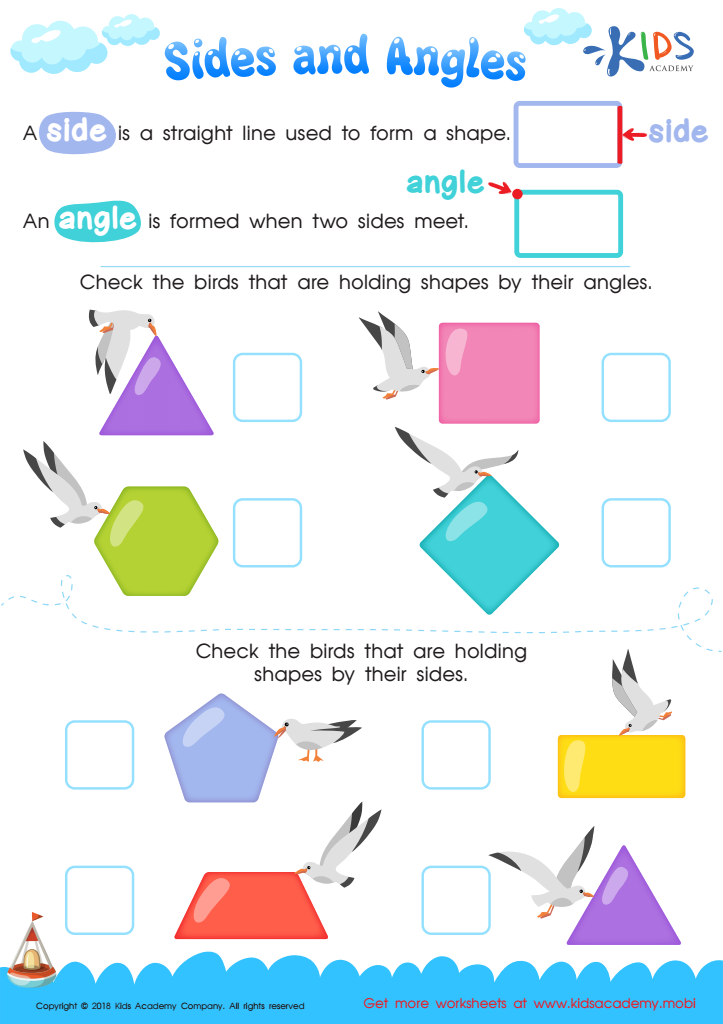
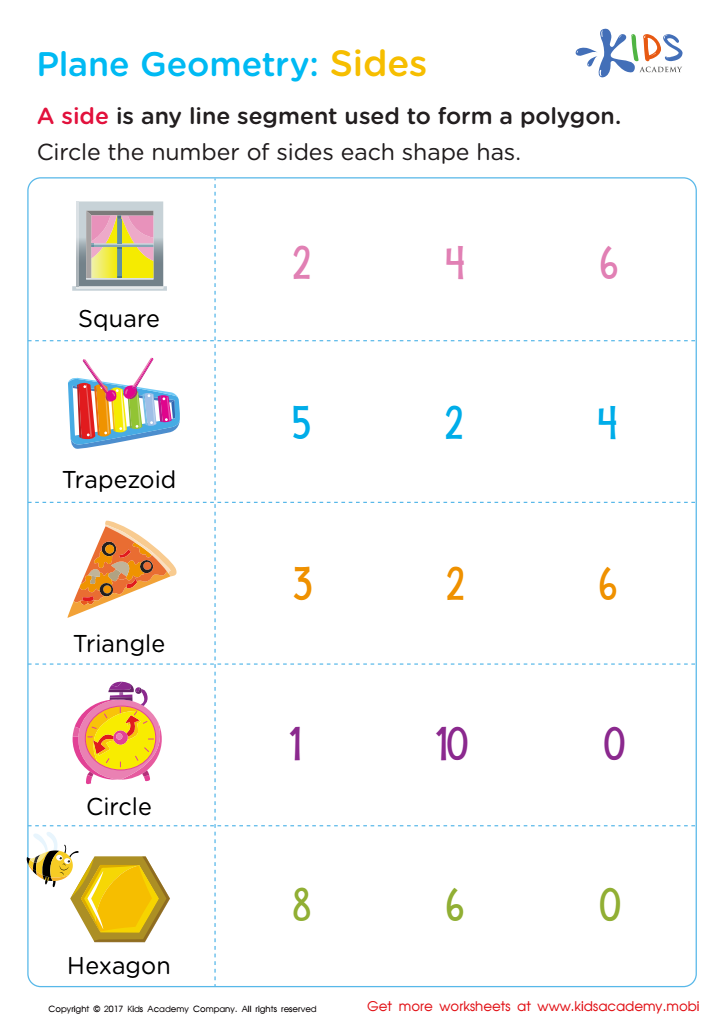
Sides and Angles Worksheet
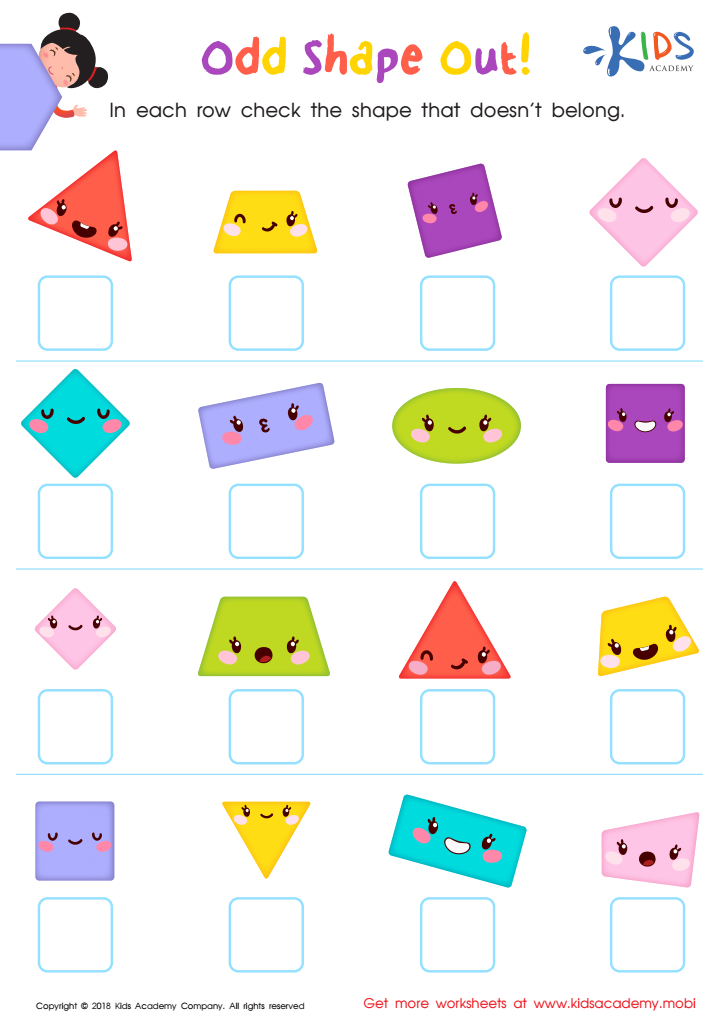
Odd Shape Out Worksheet for Grade 3
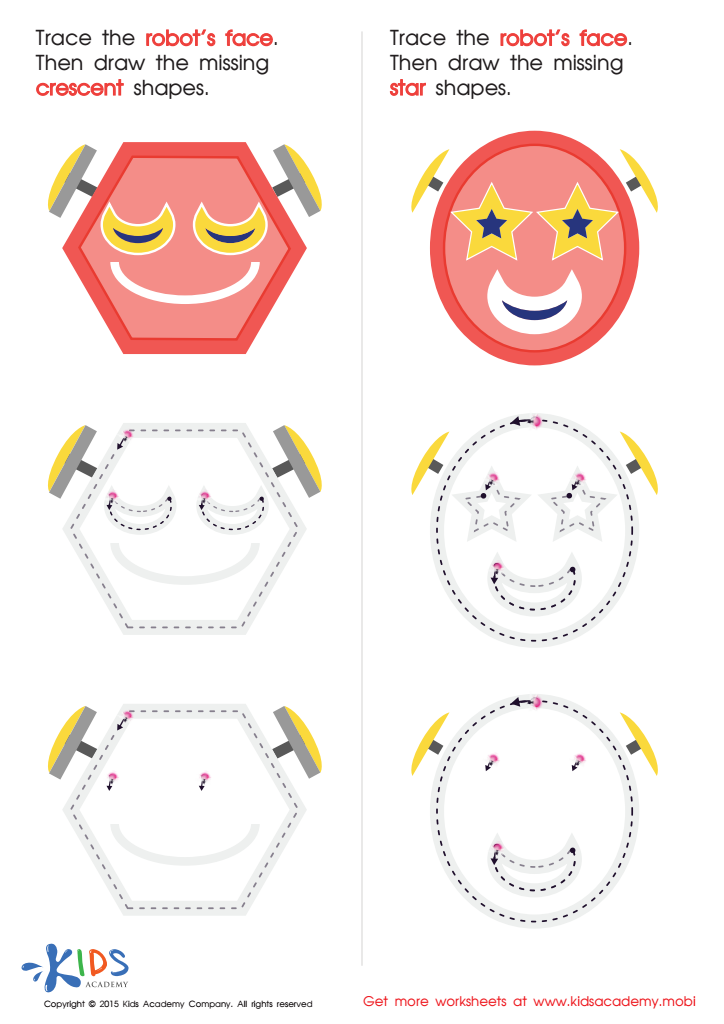
Composing a Robot's Face of Crescents And Stars Worksheet
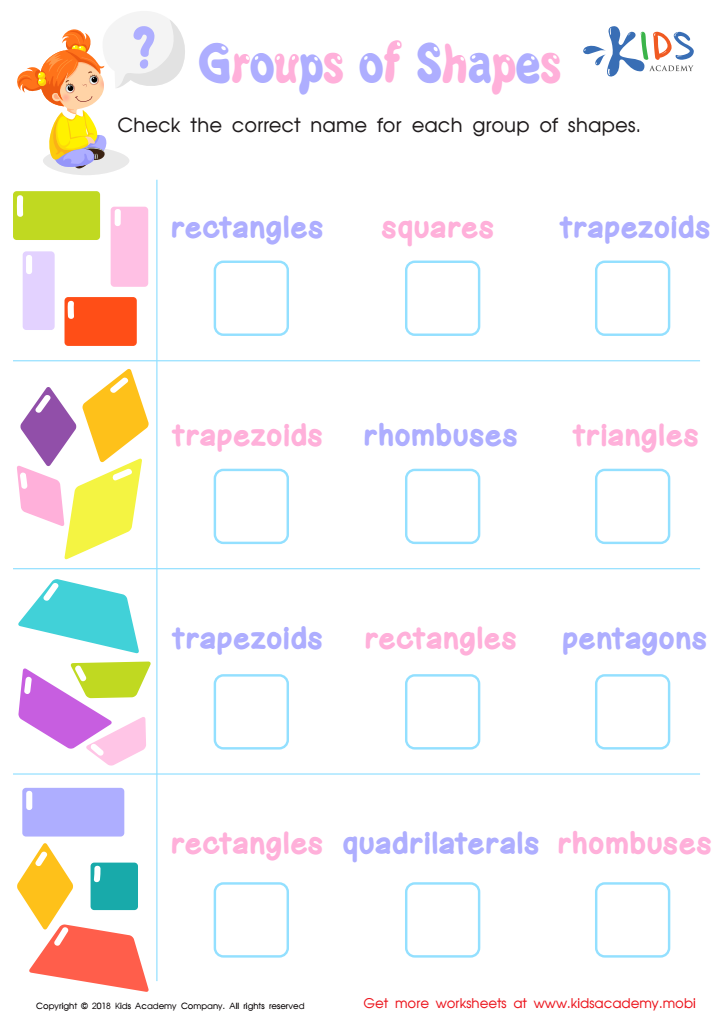
Groups of Shapes Worksheet
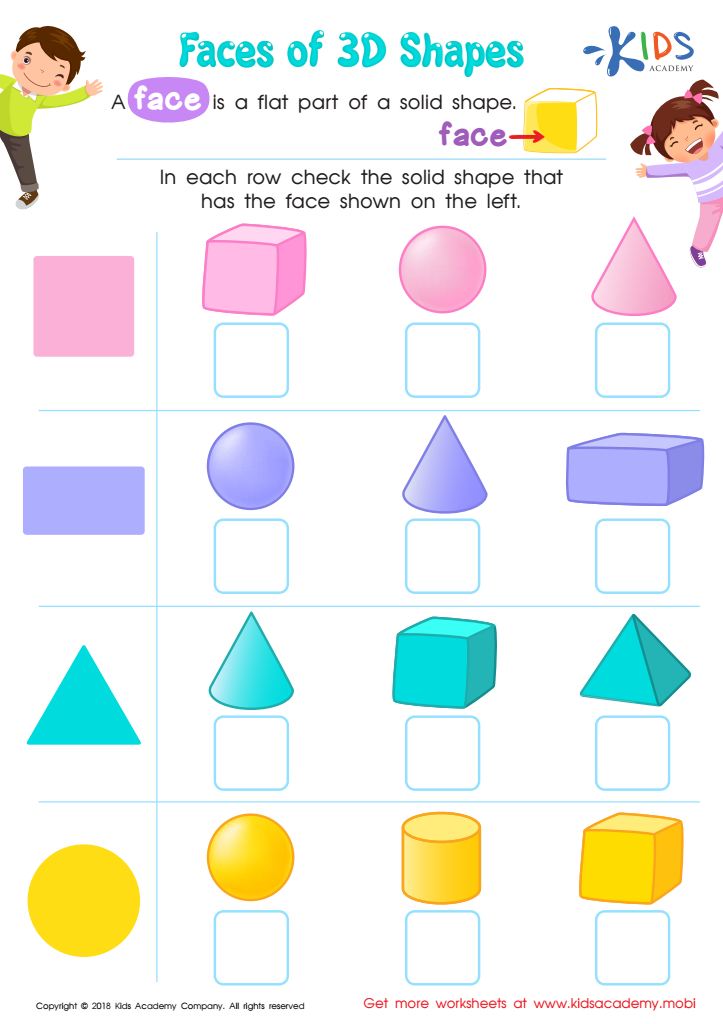
Faces of 3D Shapes Worksheet
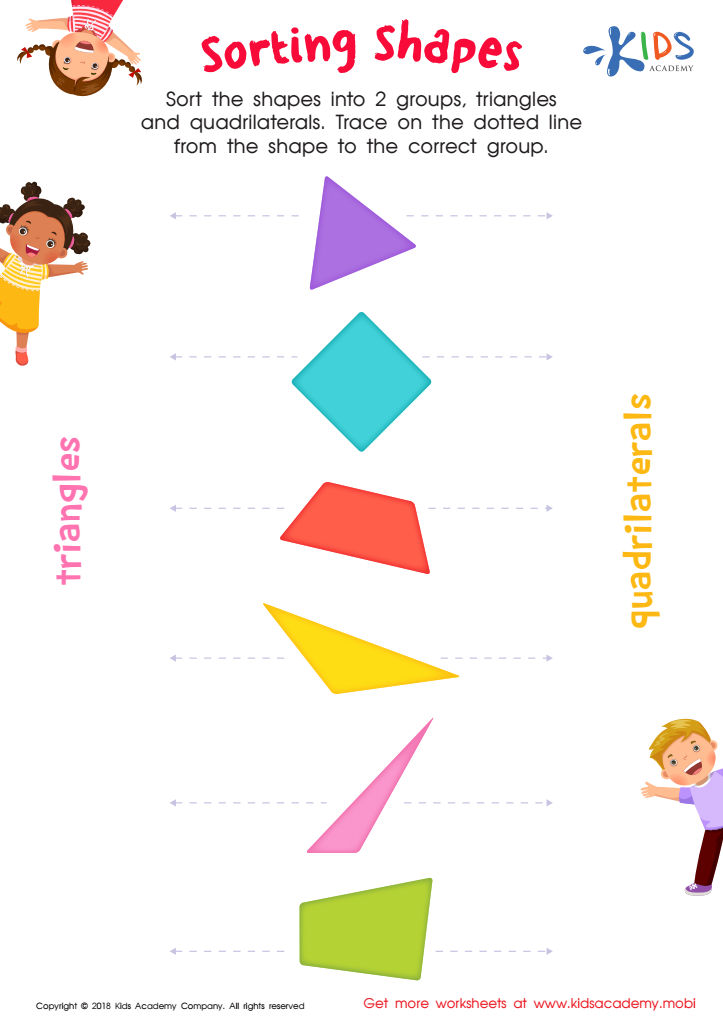
Sorting Shapes Worksheet
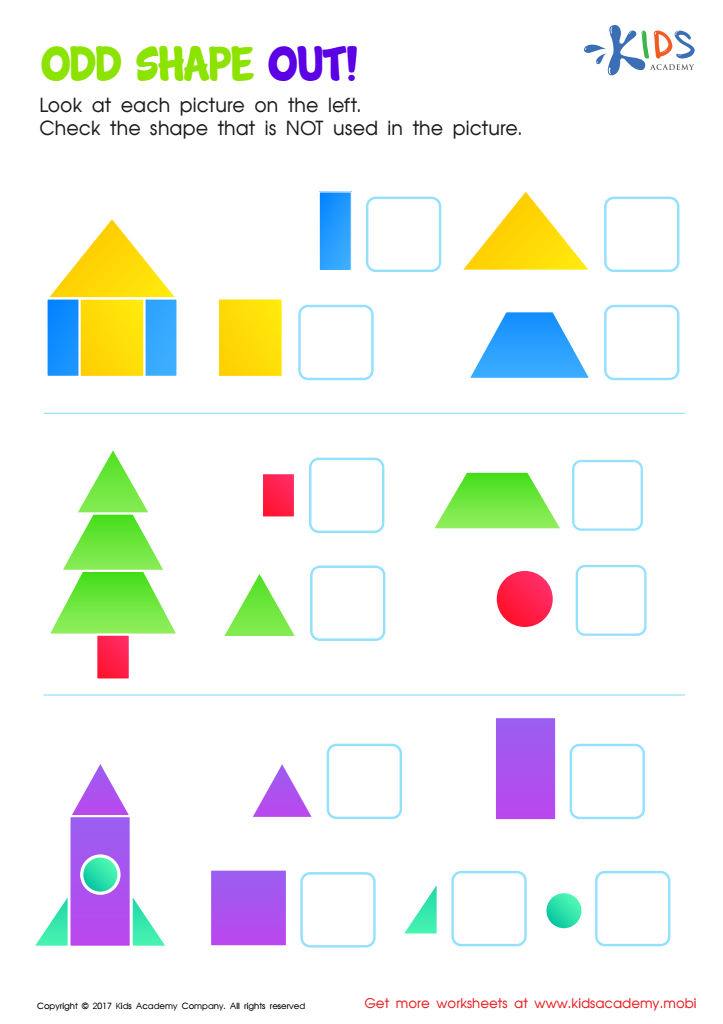
Odd Shape Out Worksheet for Grade 1
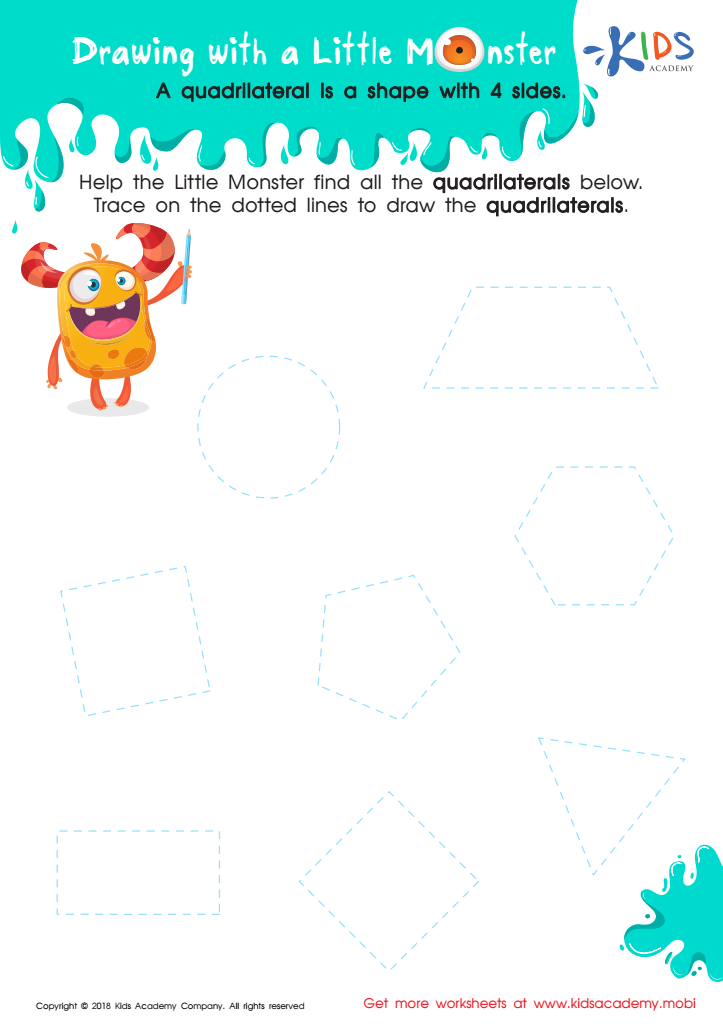
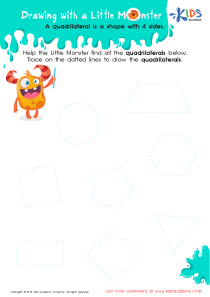
Drawing with a Little Monster Worksheet
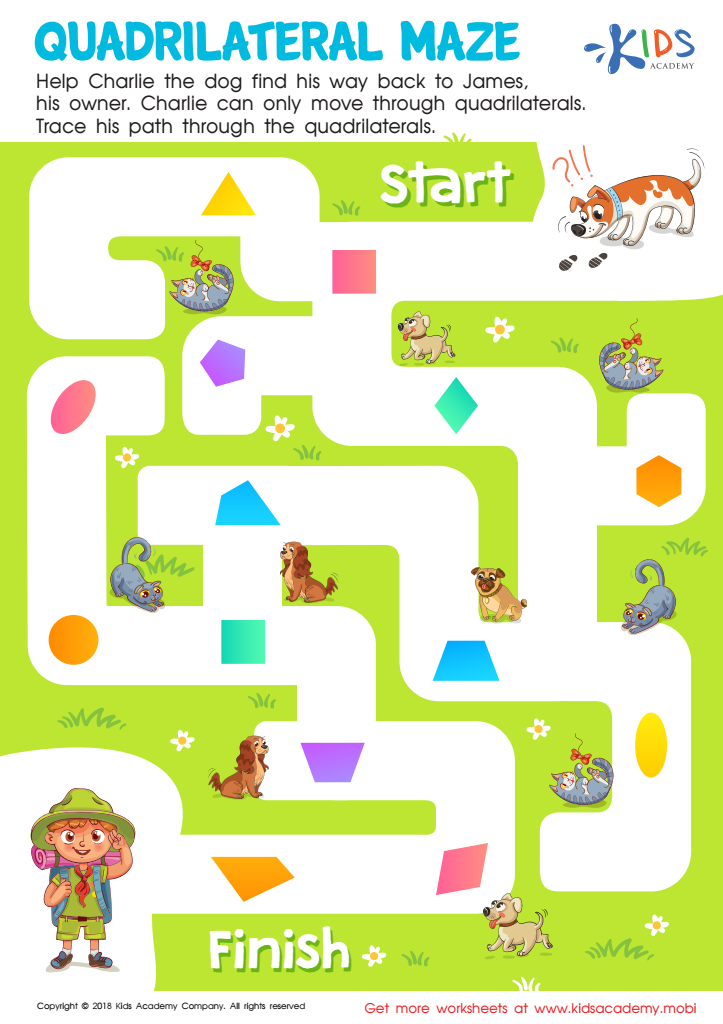
Quadrilateral Maze Worksheet
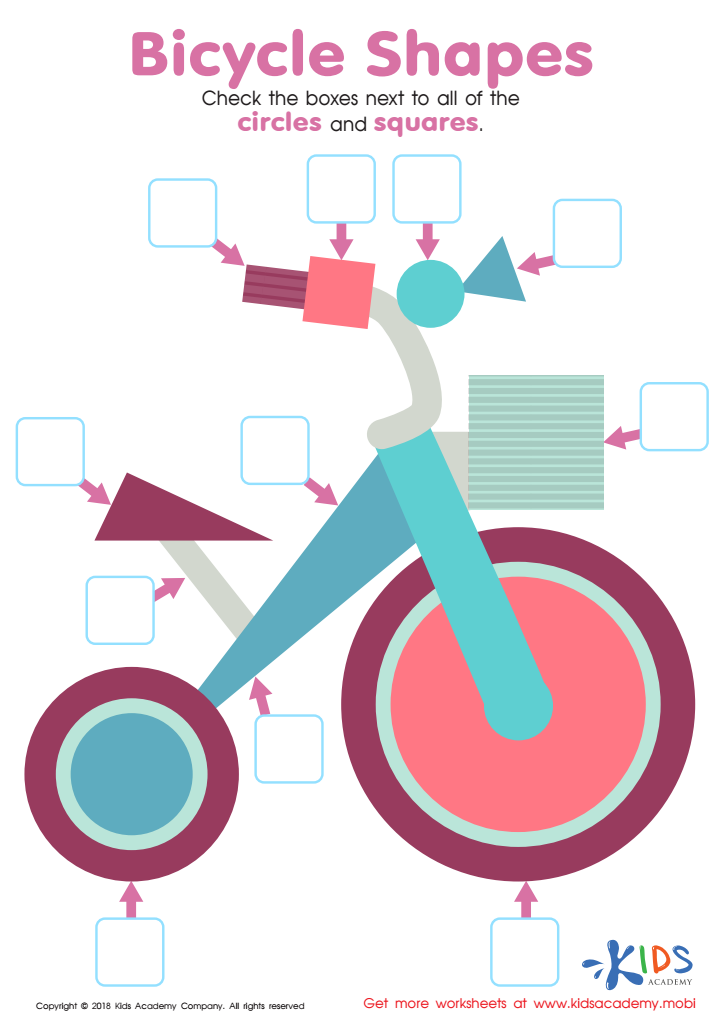
Bicycle Shapes Worksheet
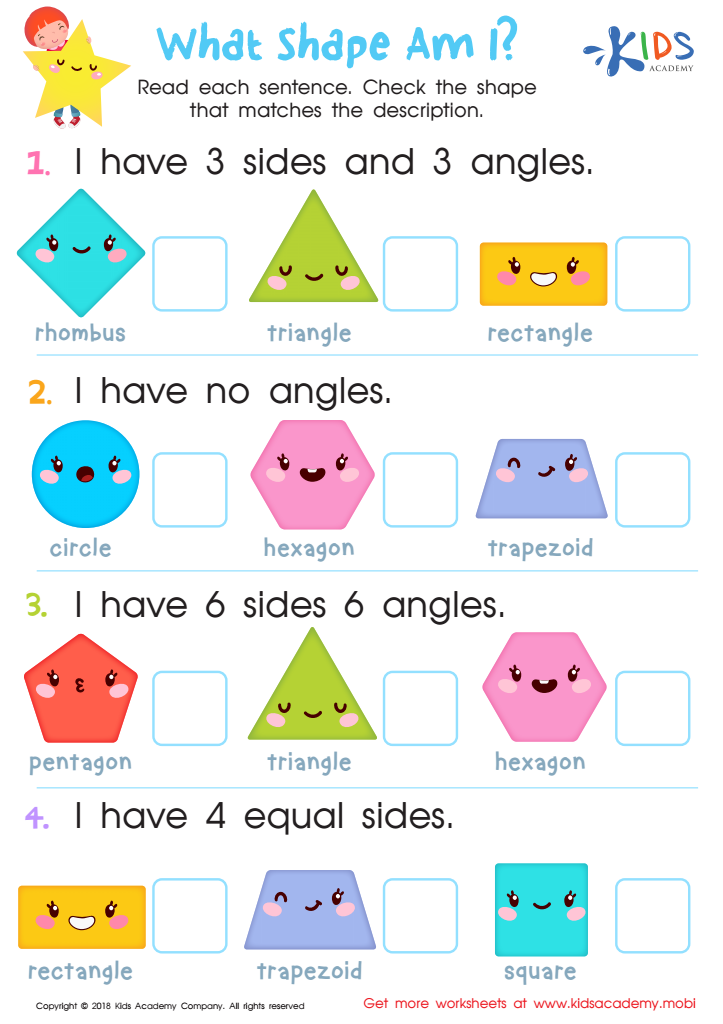
What Shape Am I? Worksheet
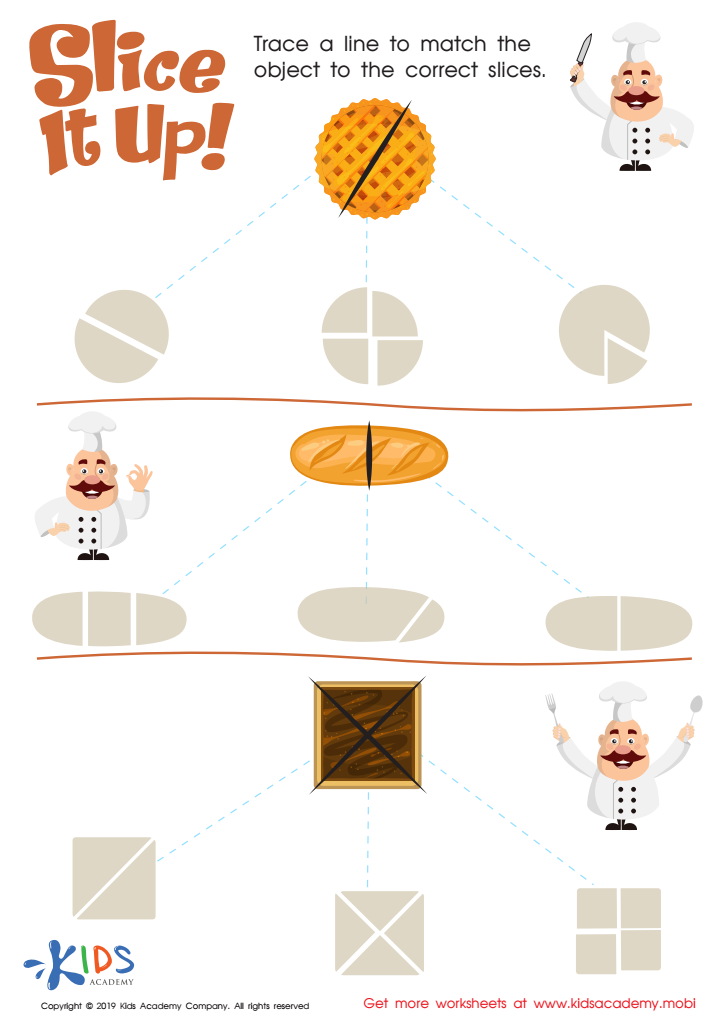
Slice It Up Worksheet
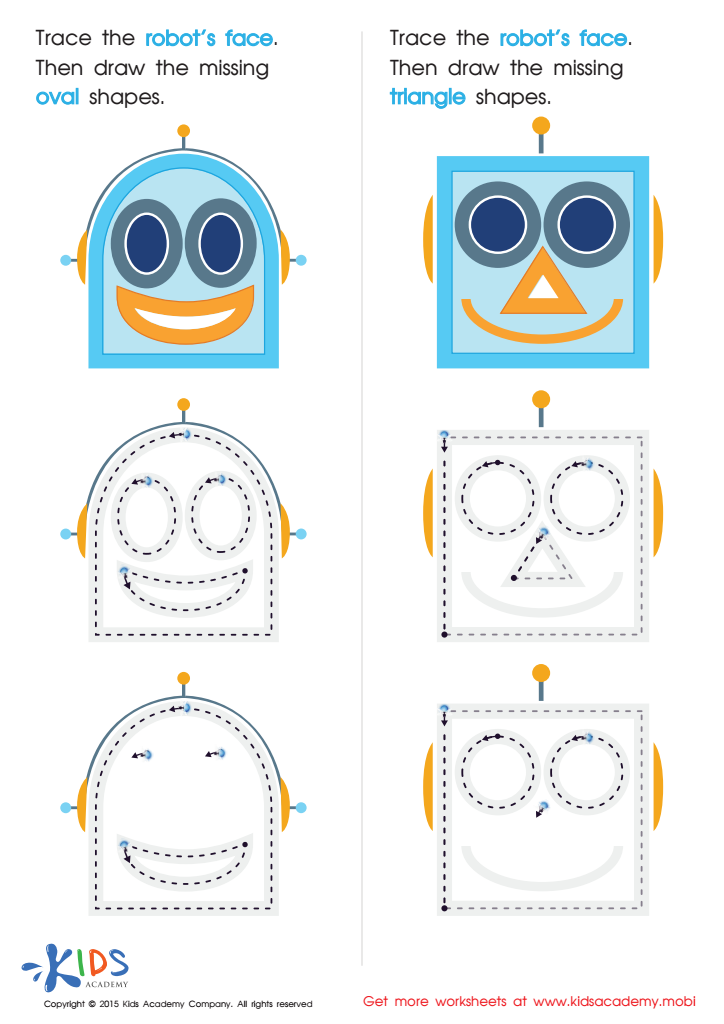
Drawing Ovals And Triangles with Fun Printable
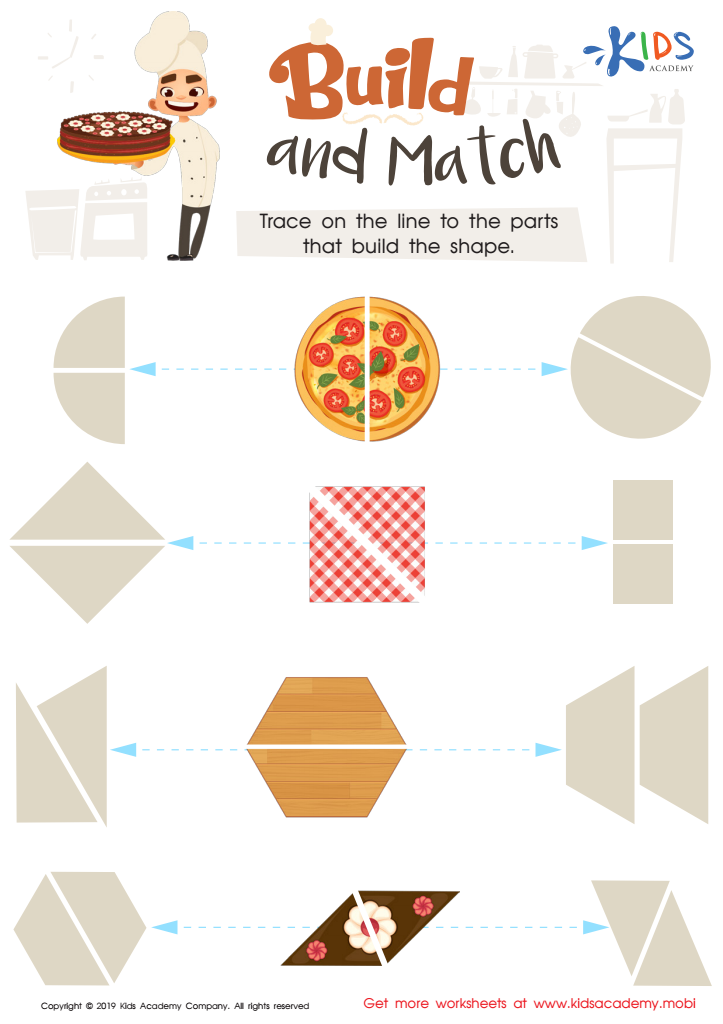
Build and Match Worksheet
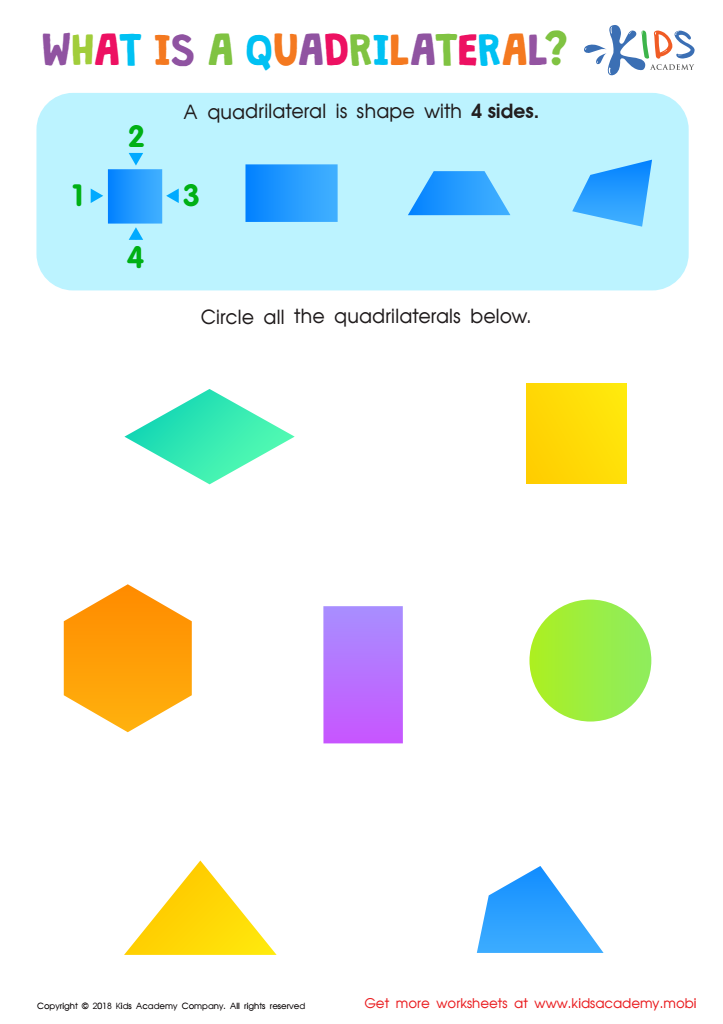
What Is a Quadrilateral? Worksheet
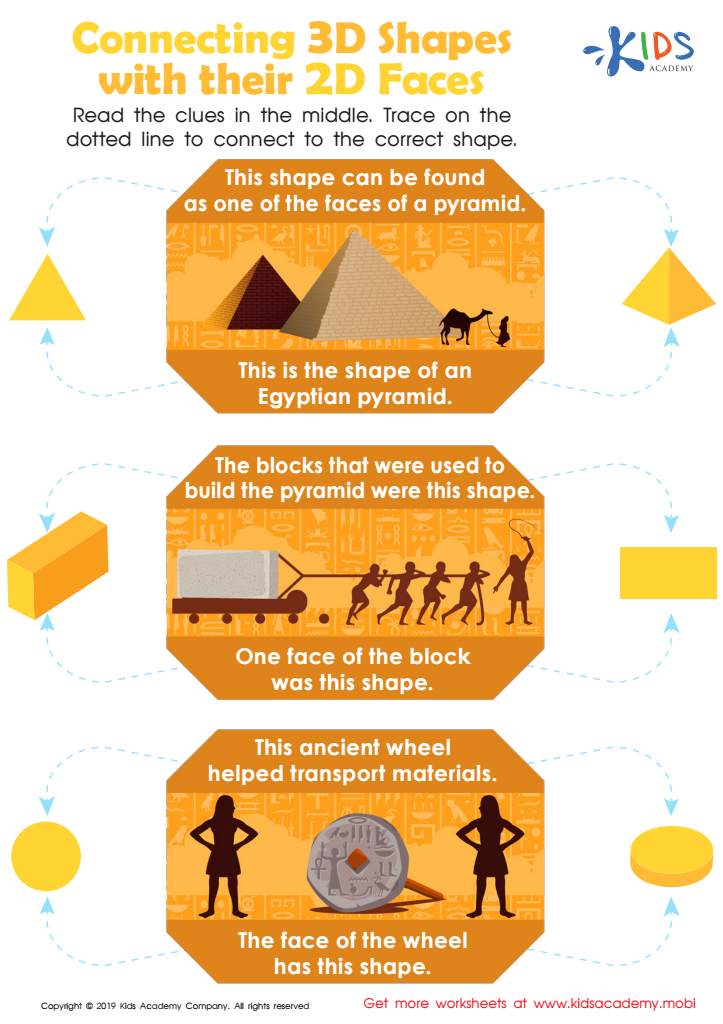
Connecting 3D Shapes with Their 2d Faces Worksheet








Caring about easy 2D shapes for children aged 5-9 is crucial because this knowledge forms the foundation for their future mathematical understanding and spatial reasoning skills. Recognizing simple shapes like circles, squares, and triangles helps young students improve their cognitive skills, enabling them to identify patterns, differentiate objects, and understand more complex mathematical concepts later.
Learning about 2D shapes is also directly linked to the development of early geometry skills. By understanding shapes, children begin to grasp key ideas such as symmetry, angles, perimeter, and area. These concepts are essential for arithmetic progression and later more complicated mathematics, such as algebra and calculus.
Furthermore, incorporating shapes into early education supports children's fine motor skills and visual processing abilities. Activities like drawing, tracing, and cutting shapes require coordination and precision, enhancing their dexterity and all-around physical development.
Socially and emotionally, discussing and exploring shapes can aid in creative expression and real-world problem solving. For instance, designing patterns or recognizing shapes in their environment encourages critical thinking and fosters imagination.
In conclusion, nurturing an understanding of 2D shapes has profound educational, developmental, and social benefits, making it an essential area of focus for parents and teachers dedicated to fostering well-rounded, mathematically able children.