Easy Comparison Worksheets for Ages 6-7
3 filtered results
-
From - To
Discover engaging Easy Comparison Worksheets designed specifically for children ages 6-7. These printable activities from Kids Academy enhance mathematical skills by making number comparison fun and interactive. Tailored to early-grade students, the worksheets use colorful visuals and simple instructions to help young learners grasp the concepts of greater than, less than, and equal to. Boost your child's confidence and mastery in mathematics with an understanding through hands-on practice. Ideal for home or classroom use, our worksheets guarantee a solid foundation in comparison skills, setting up young minds for future math success. Convenient and educational—download now!
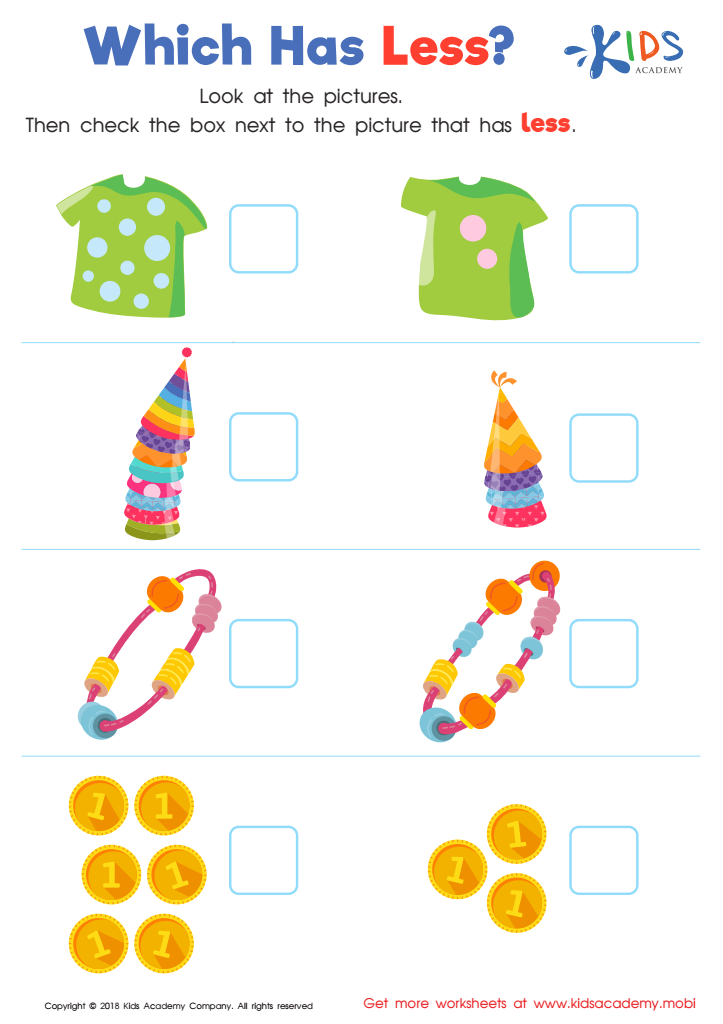
Which Has Less? Worksheet
 Assign to My Students
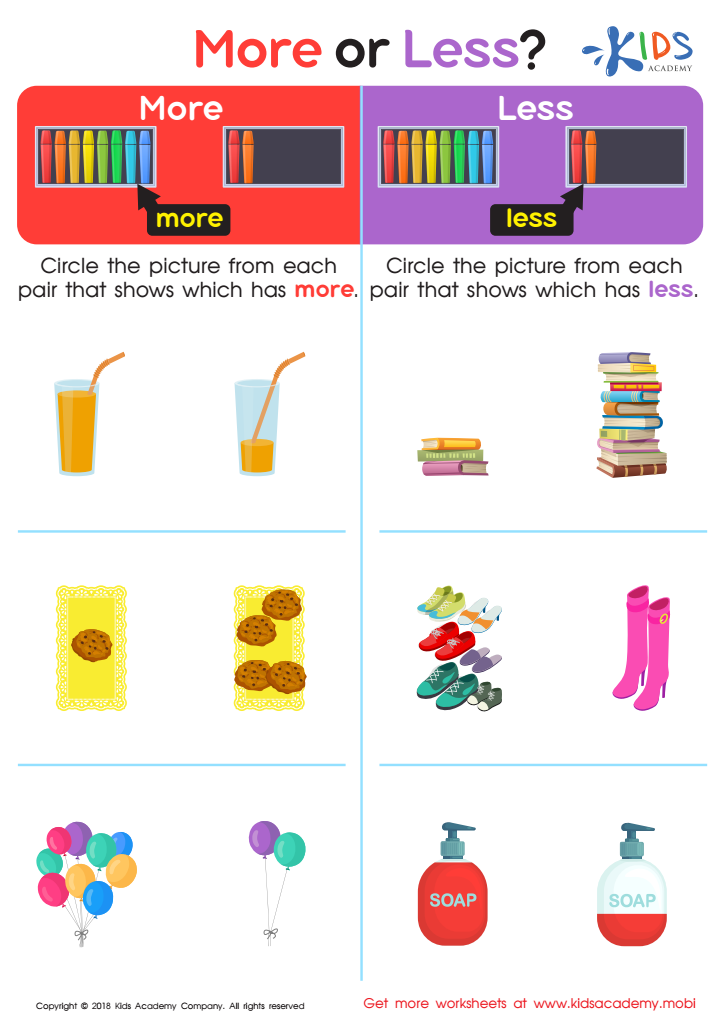
More or Less? Worksheet
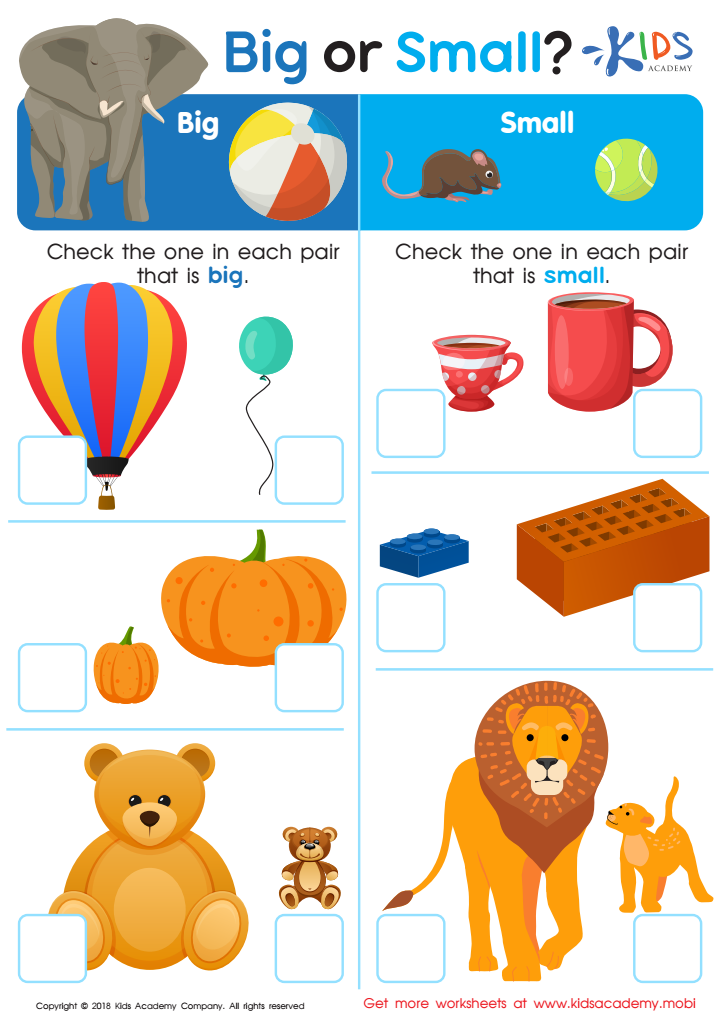
Big or Small? Worksheet




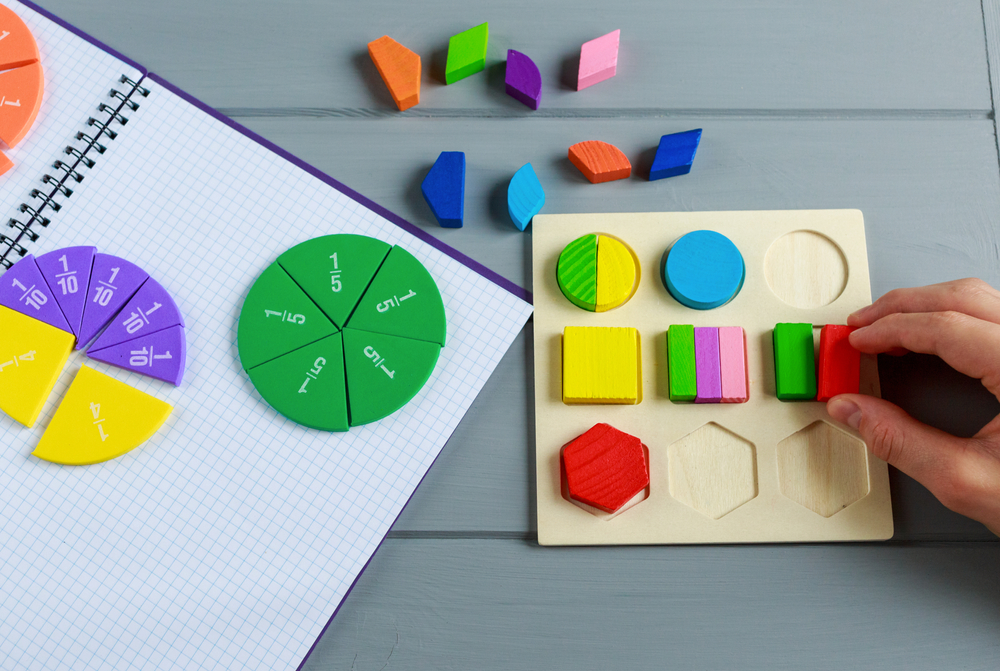

Easy comparison is a crucial skill for children aged 6-7 because it lays the foundation for more advanced mathematical and logical reasoning. At this developmental stage, children start grasping concepts of similarity and difference, greater than and less than, as well as sorting objects based on specific attributes such as size, shape, and color. These activities are not just academic drills; they help young minds make sense of the world around them.
When parents and teachers encourage easy comparison, they help children develop critical thinking and decision-making skills. For instance, comparing objects helps in nurturing problem-solving abilities—deciding whether one toy is bigger than another, or which fruit is heavier. These are elementary yet vital steps toward understanding more complex mathematical concepts like place value, arithmetic operations, and even basic statistics later on.
Furthermore, easy comparisons enhance language and communication skills. By describing how two things are alike or different, kids improve their vocabulary and verbal expression. This keeps them engaged and motivated, making learning an enjoyable experience.
Notably, fostering this ability provides a smooth transition into the formal education system, giving children the confidence and competence to tackle schoolwork effectively. Therefore, stressing easy comparison at an early age is an investment in a child’s overall cognitive development and academic success.








