Easy Reading Fiction Worksheets for Ages 6-9 - Page 2
26 filtered results
-
From - To
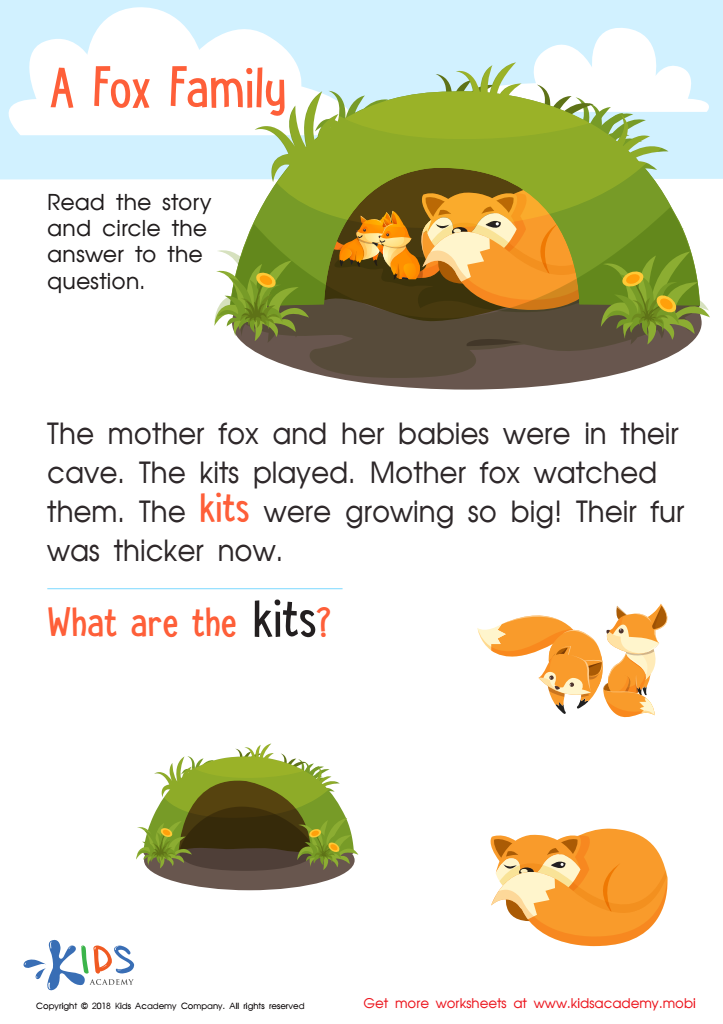
A Fox Family Worksheet
 Assign to My Students
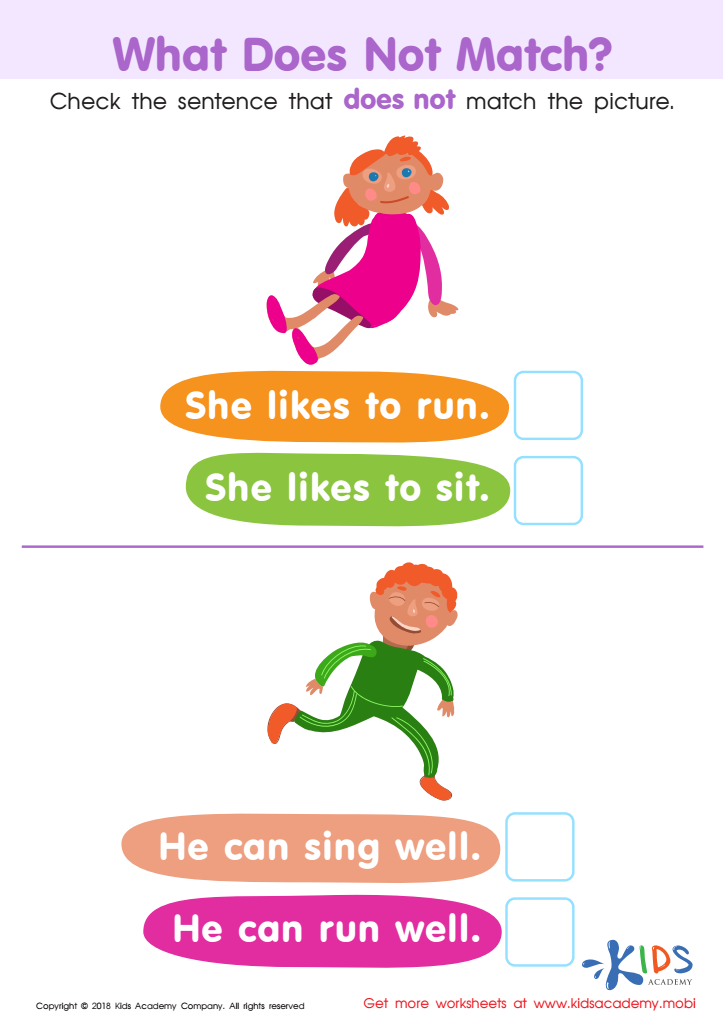
What Does Not Match? Worksheet






.jpg)

Easy Reading Fiction for children aged 6-9 plays a crucial role in early literacy development. At this formative stage, children transition from learning to read to reading to learn. Engaging, age-appropriate fiction helps instill a love for reading, turning it into an enjoyable activity rather than a chore. These stories often feature simple language and imaginative plots that capture young minds, thereby fostering creativity and improving vocabulary.
Additionally, reading fiction enhances comprehension skills. It helps young readers understand narrative structures, character development, and the cause-effect relationships within a story. These elements are foundational for critical thinking and analytical skills later in life.
Easy reading fiction also promotes empathy and social understanding. Characters often face relatable problems and emotions, providing young readers with new perspectives and coping strategies for their own challenges.
For parents and teachers, providing access to such books can facilitate meaningful interactions. Reading together allows for bonding moments and provides opportunities to discuss moral values and life lessons illustrated in the stories. For teachers, incorporating easy fiction in the classroom can stimulate group discussions, improve listening skills, and foster a supportive learning environment.
Ultimately, easy reading fiction for ages 6-9 is not just about literacy; it's about shaping young minds and hearts, laying the foundation for lifelong learning and emotional intelligence.