Easy Time Worksheets for Ages 7-8
8 filtered results
-
From - To
Discover our collection of "Easy Time Worksheets for Ages 7-8," designed to help young learners master time concepts with engaging and interactive activities. Tailored specifically for children in this age group, our worksheets feature a variety of exercises that teach essential skills, including reading clocks, understanding time intervals, and solving practical time-related problems. These worksheets are perfect for classroom use or at-home practice, providing an enjoyable and effective approach to learning about time. With colorful illustrations and straightforward instructions, children will build confidence in their time-telling abilities while having fun. Access our easy-to-use resources today and watch their skills soar!
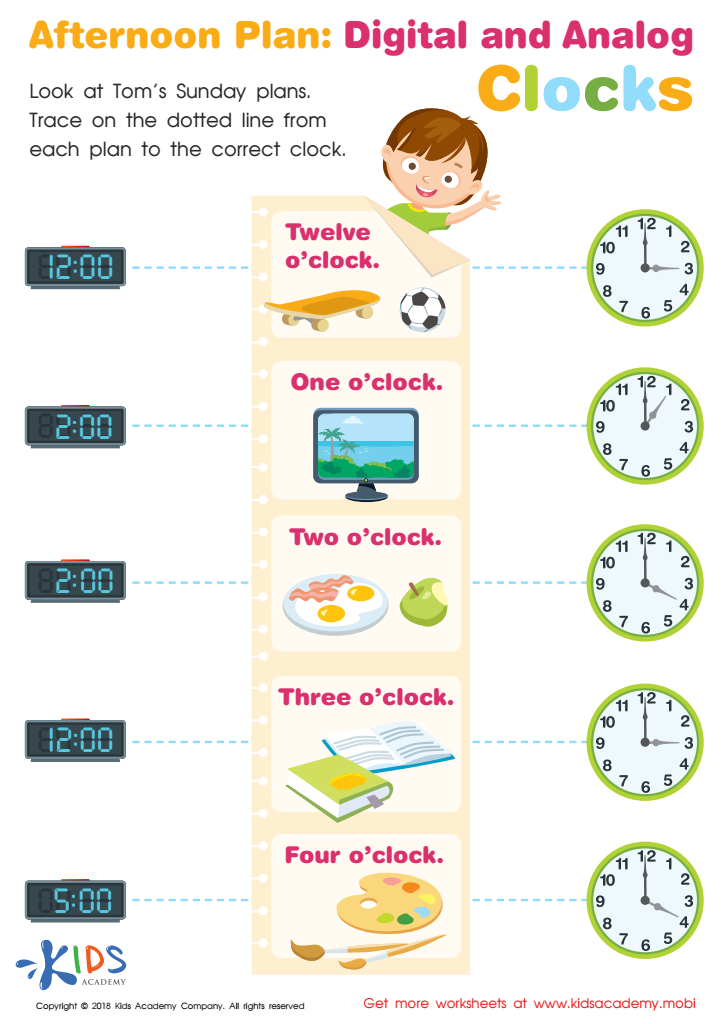
Afternoon Plan: Digital and Analog Clocks Worksheet
 Assign to My Students
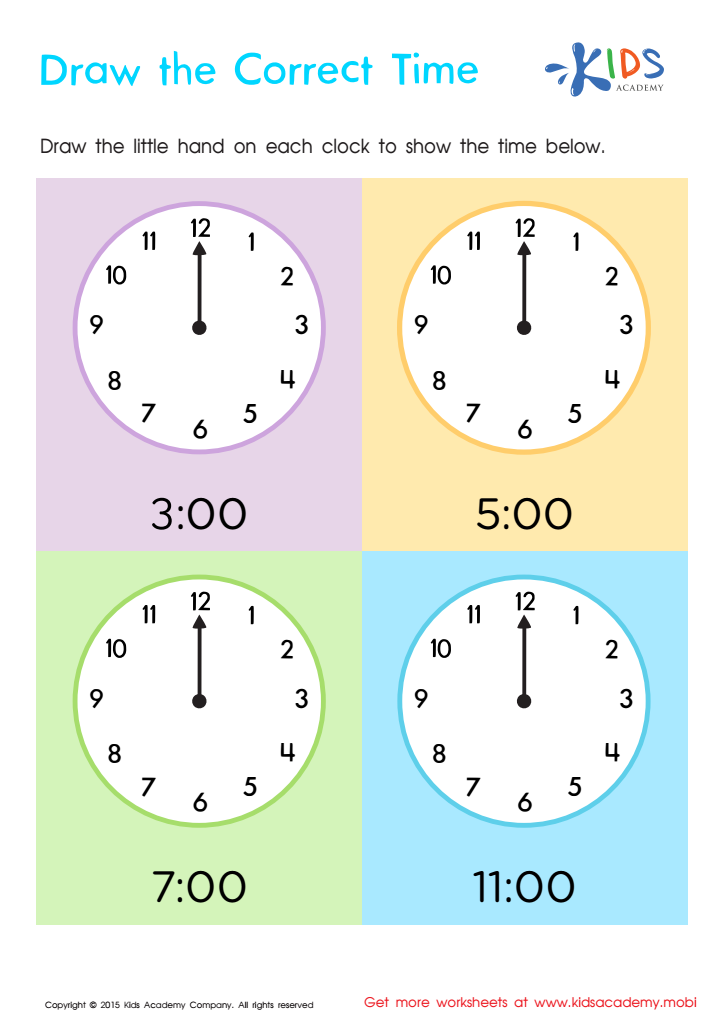
Telling The Time Worksheet: Part 1
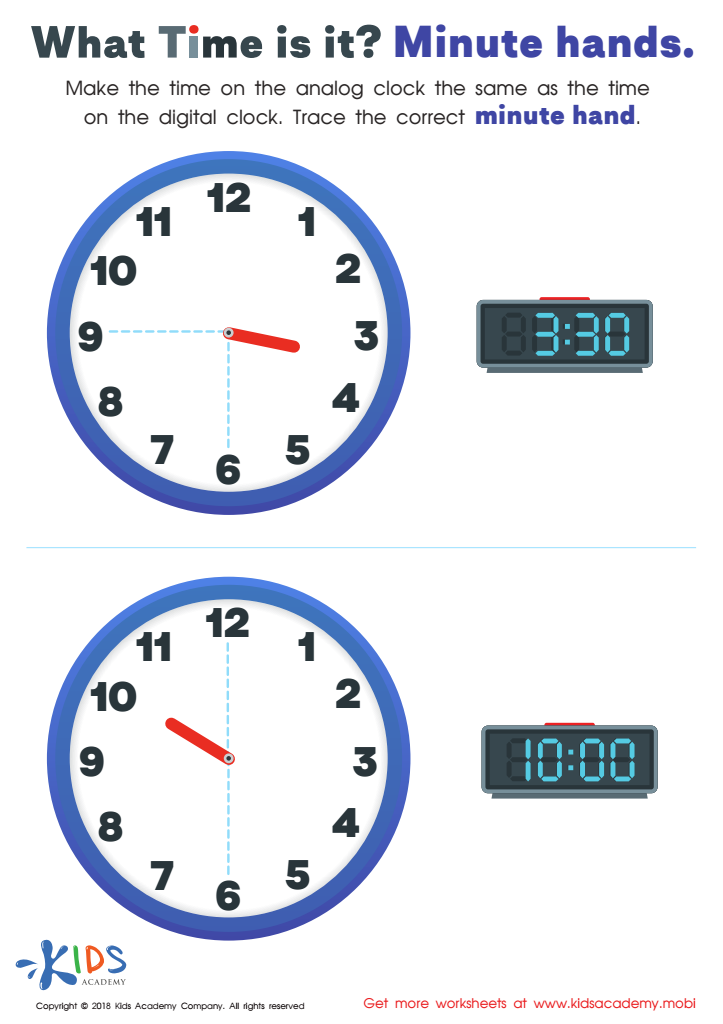
What Time Is it? Minute Hands Worksheet
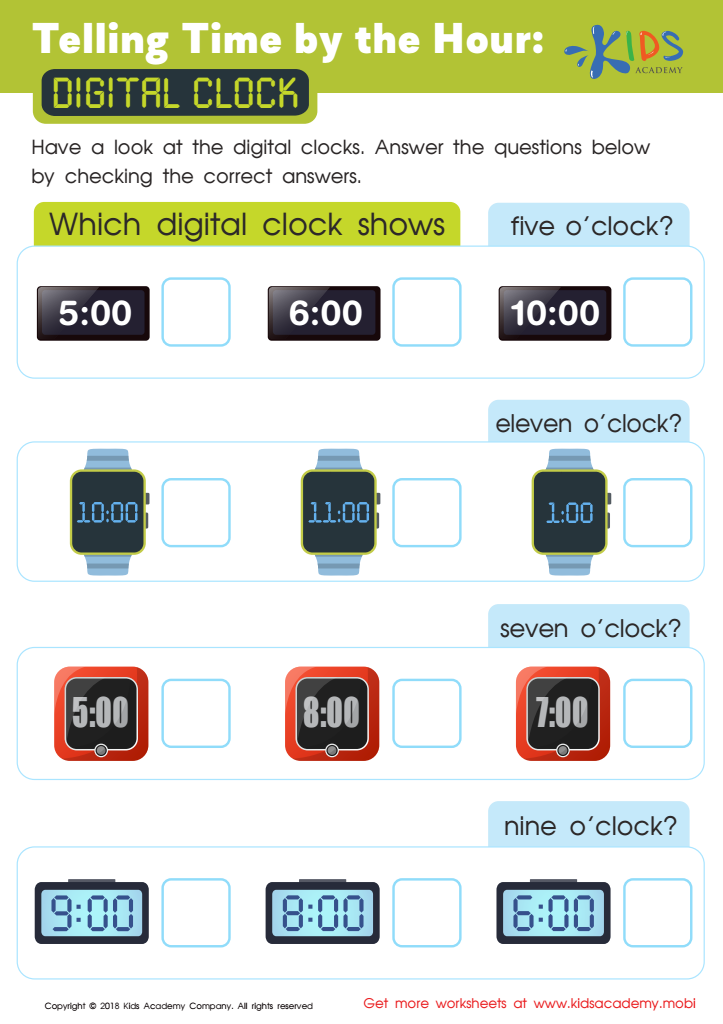
Telling Time by the Hour: Digital Clock Worksheet
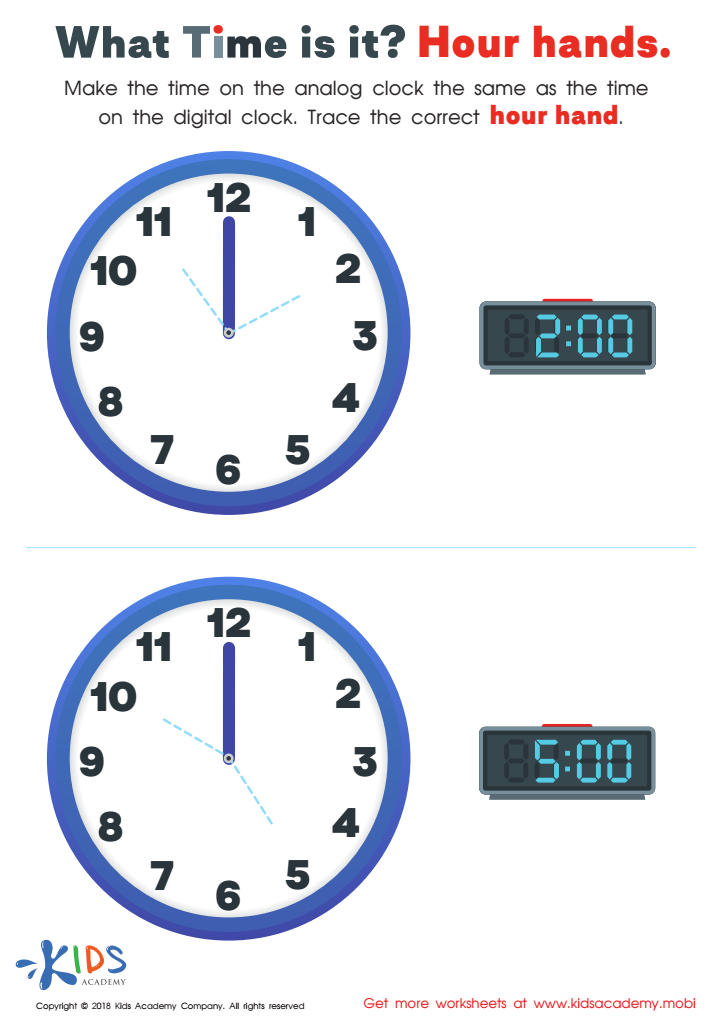
What Time Is it? Hour Hands Worksheet
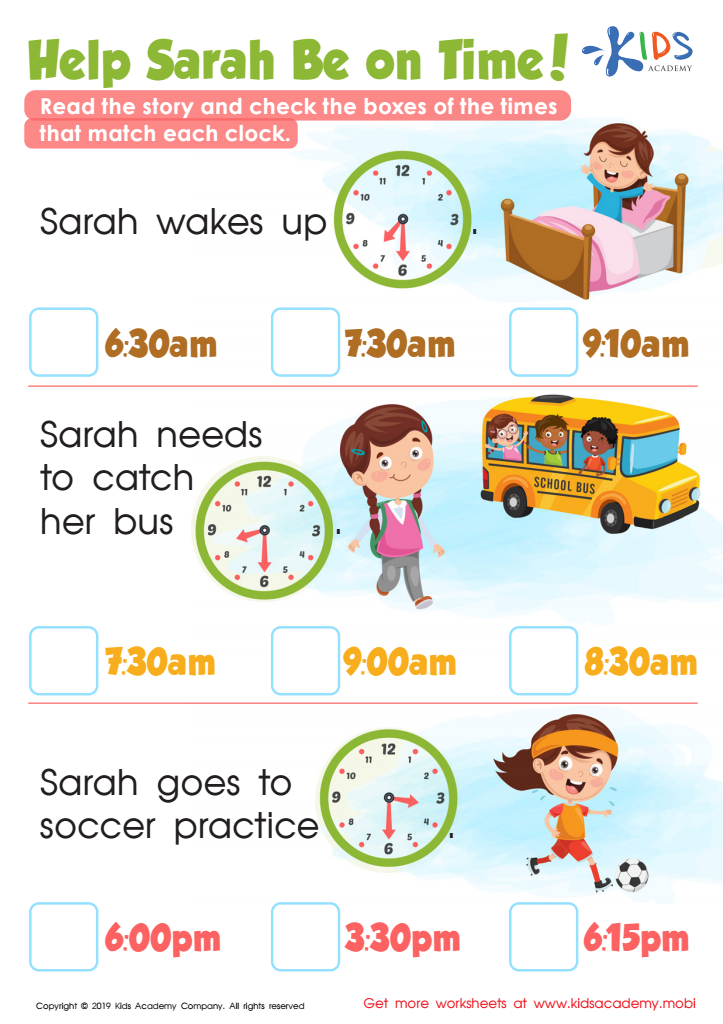
Help Sarah Be on Time! Worksheet
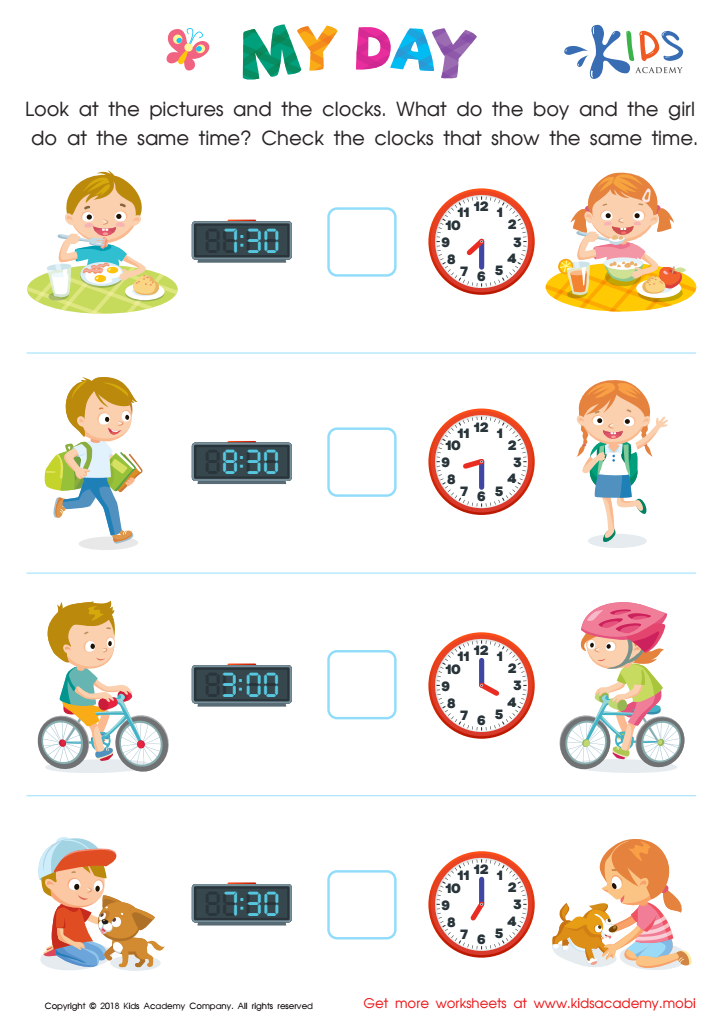
My Day Worksheet
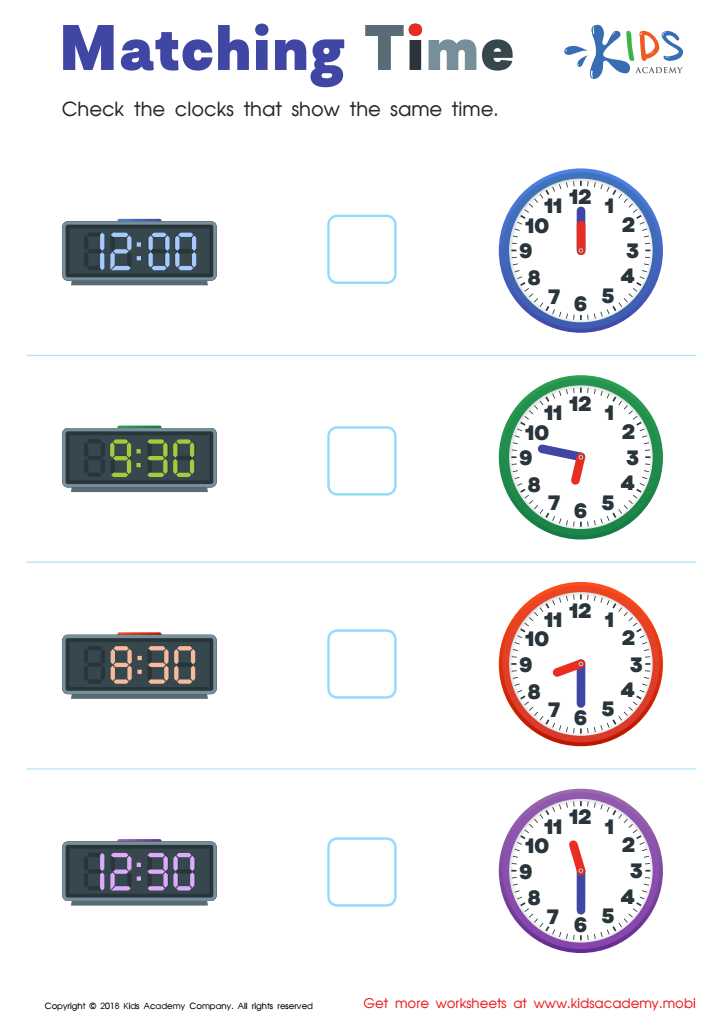
Matching Time Worksheet








"Easy Time for Ages 7-8" is an invaluable resource for both parents and teachers as it provides essential strategies and activities to support a pivotal stage in children's development. At this age, children are developing critical thinking skills and a sense of time management that will serve them throughout their academic journey. This program helps to facilitate structured activities that encourage responsibility and independence, essential traits for lifelong learning.
Parents benefit from having actionable tools to reinforce these skills at home, creating a more conducive learning environment and fostering effective routines. On the other hand, teachers can integrate these practices into their lessons, making use of engaging exercises that align with core competencies in various subjects.
Moreover, the emphasis on play-based and interactive strategies can cater to different learning styles, ensuring that all children remain engaged and motivated. By focusing on time allocation and planning within routines, children learn to prioritize tasks, manage anxiety about deadlines, and develop a sense of accomplishment—skills that are integral to their future success. Overall, "Easy Time for Ages 7-8" empowers both parents and educators to nurture confident, well-rounded, and self-sufficient learners.








