Extra Challenge Fractions of Shapes Worksheets for Ages 4-7
10 filtered results
-
From - To
Enhance your child's math skills with our "Extra Challenge Fractions of Shapes Worksheets" for ages 4-7! Designed to promote a deeper understanding of basic fractions, these worksheets offer colorful and engaging activities that help young learners visualize and identify fractions within various shapes. With fun illustrations and challenging tasks, children will become more confident in recognizing halves, quarters, and more. Perfect for at-home learning or classroom activities, these worksheets cater to different learning paces, ensuring all students can succeed. Explore our collection and watch your child excel in understanding fractions through exciting and interactive learning experiences!
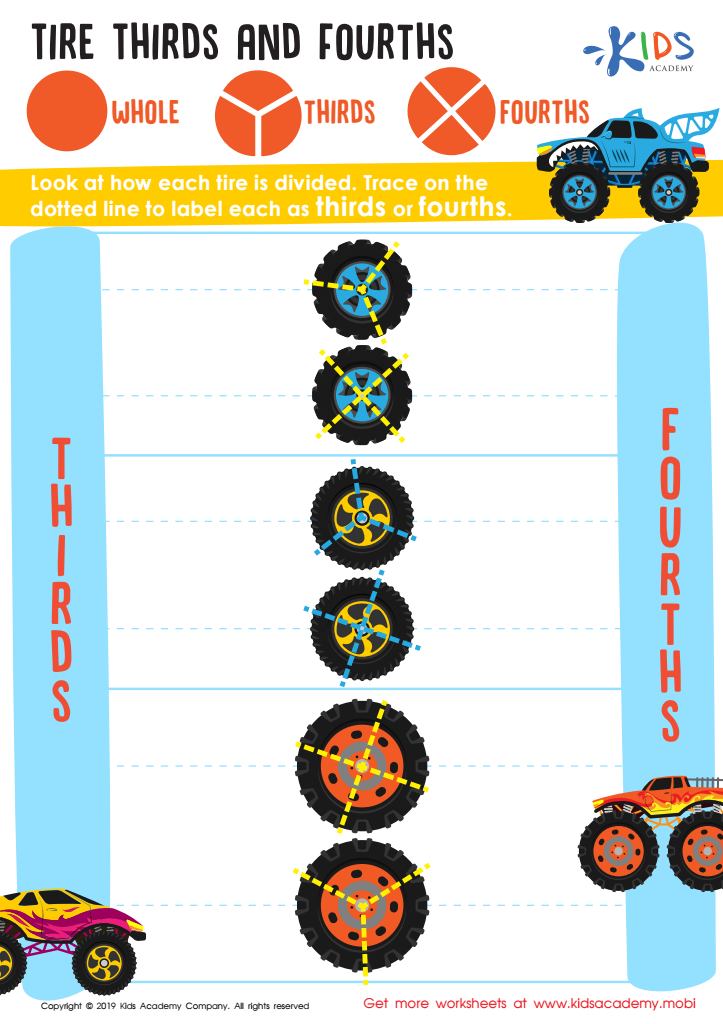
Tire Thirds and Fourths Worksheet
 Assign to My Students
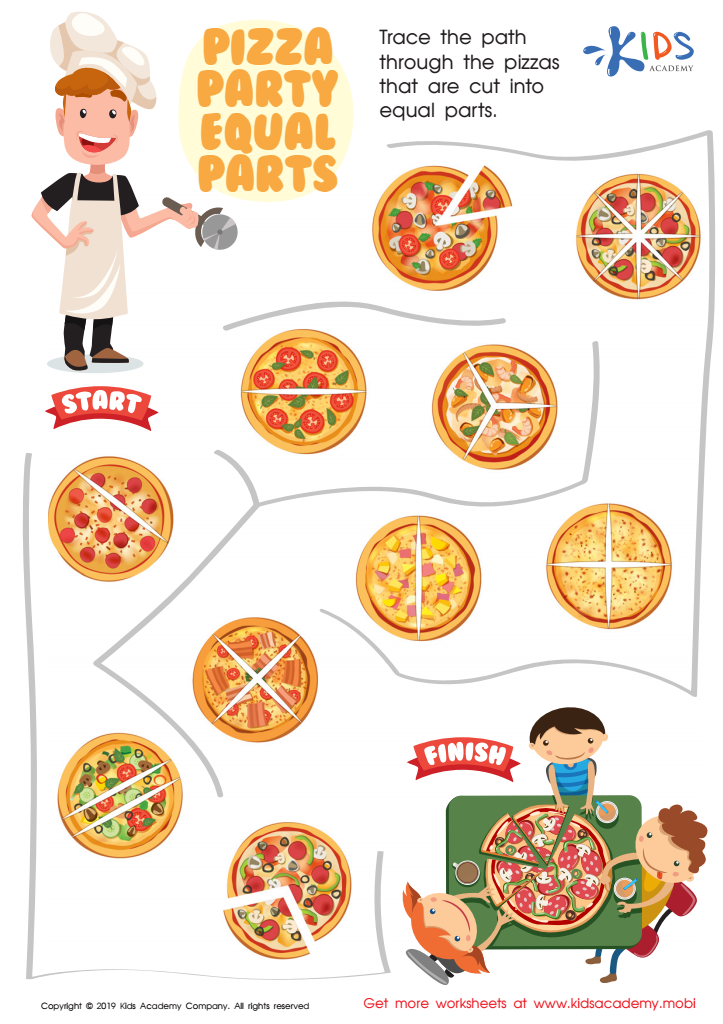
Pizza Party Equal Parts Worksheet
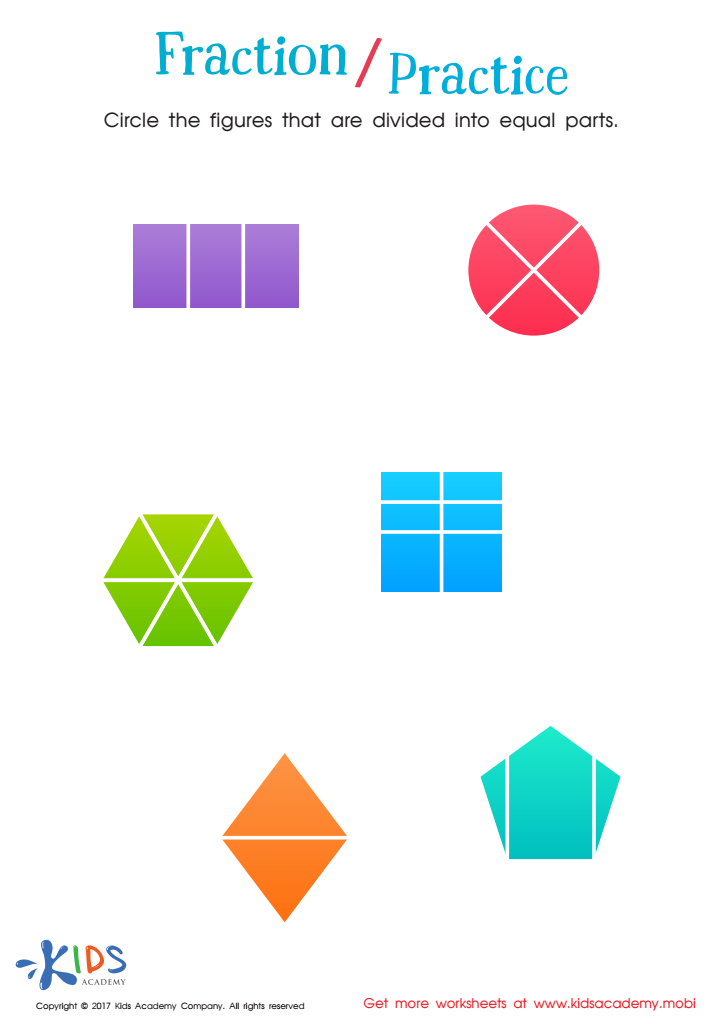
Fractions: Shapes Worksheet
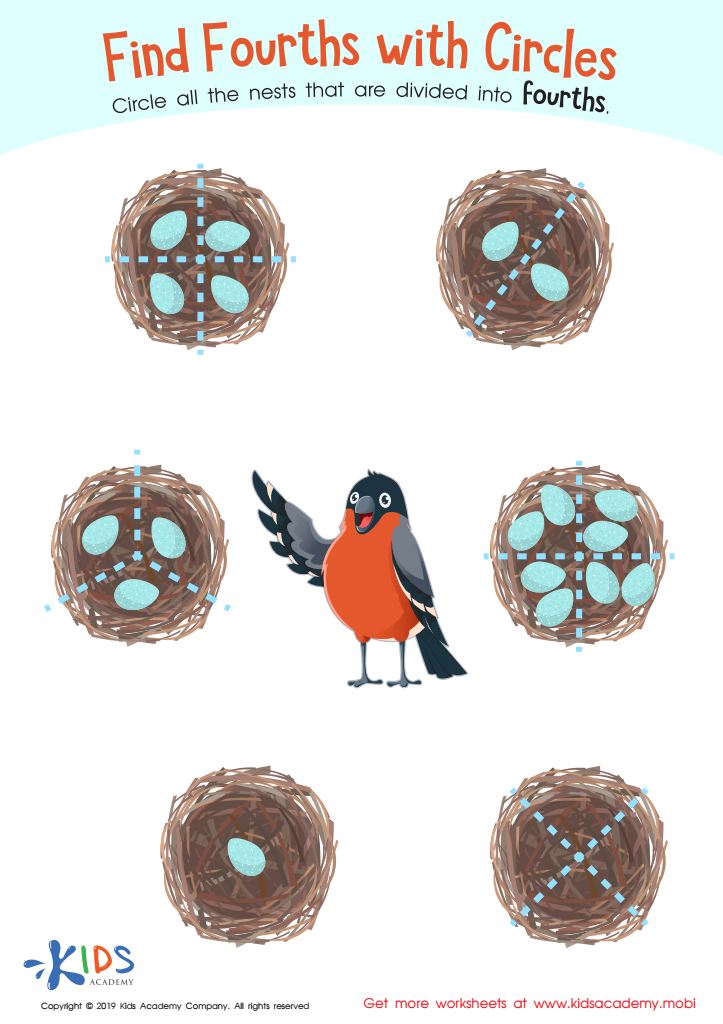
Find Fourths Circles Worksheet
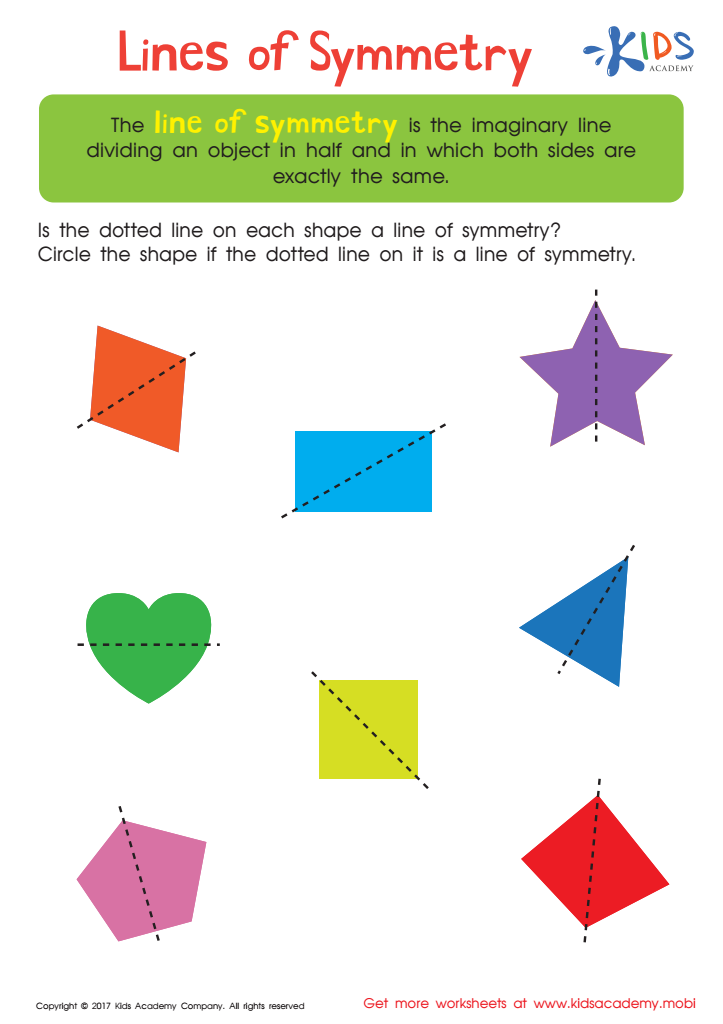
Lines of Symmetry Printable
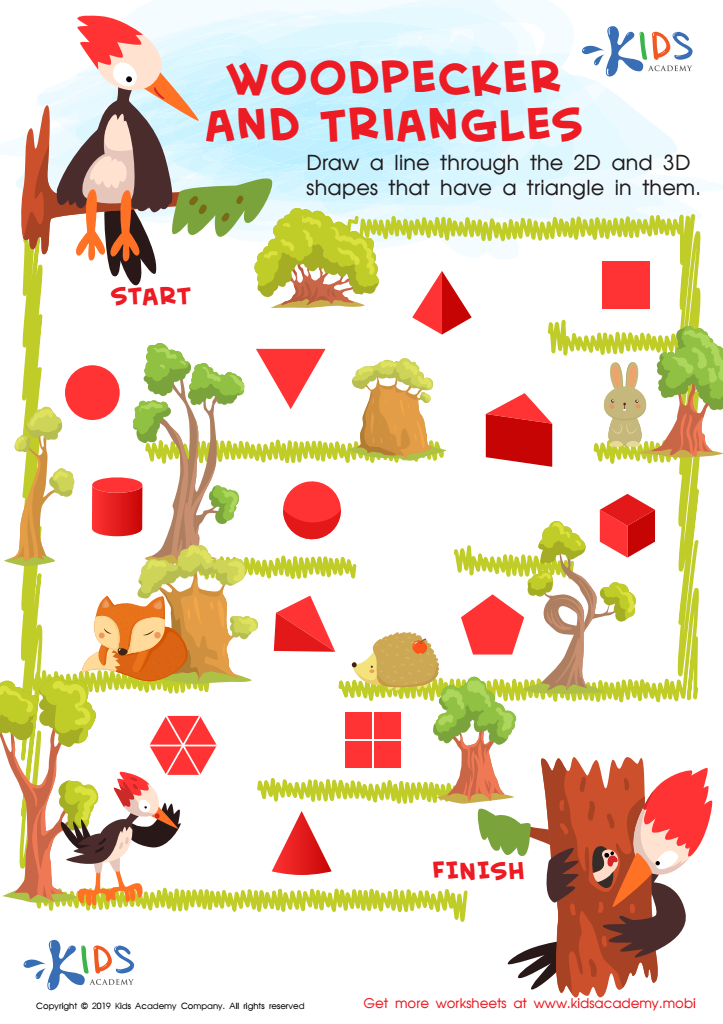
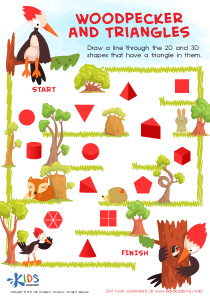
Woodpecker and Triangles Worksheet
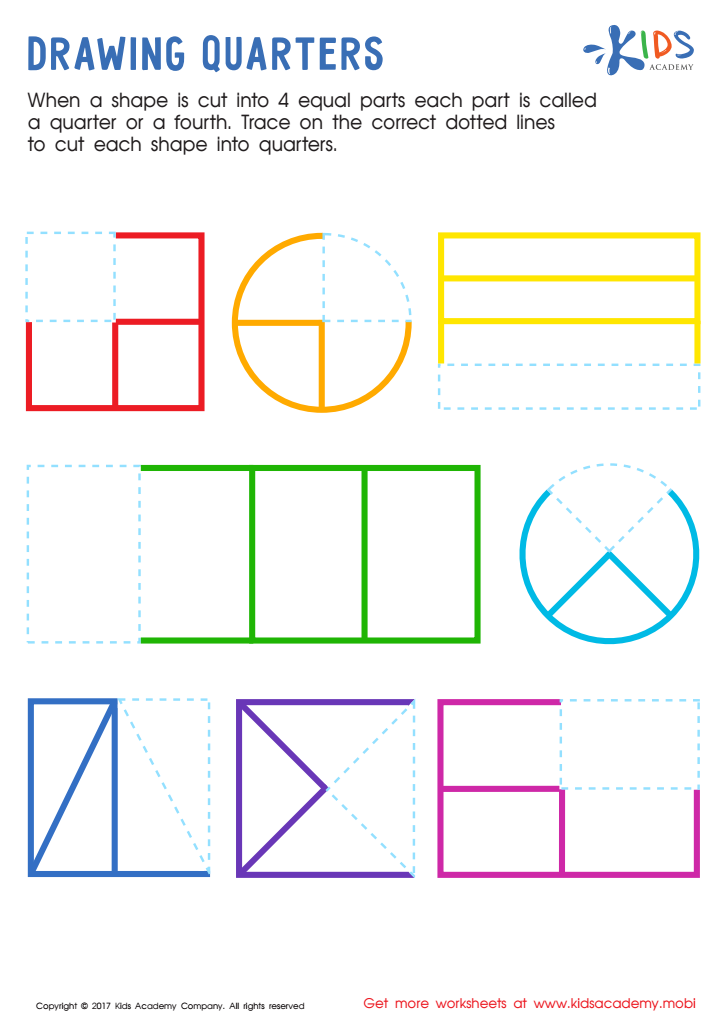
Drawing Quarters Worksheet
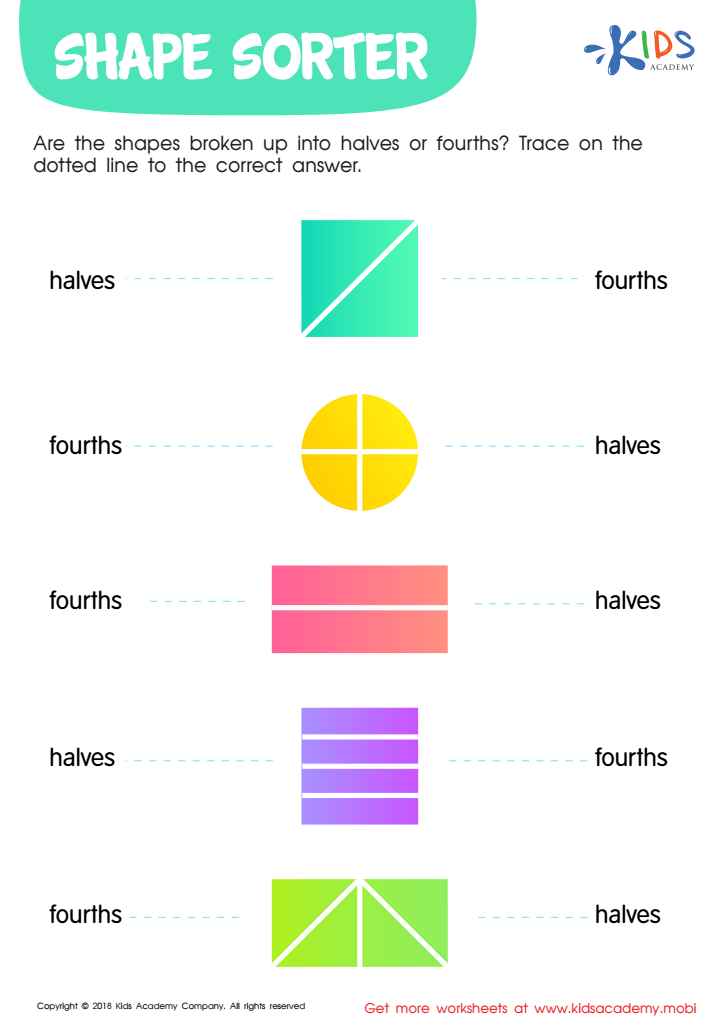
Shape Sorter Worksheet
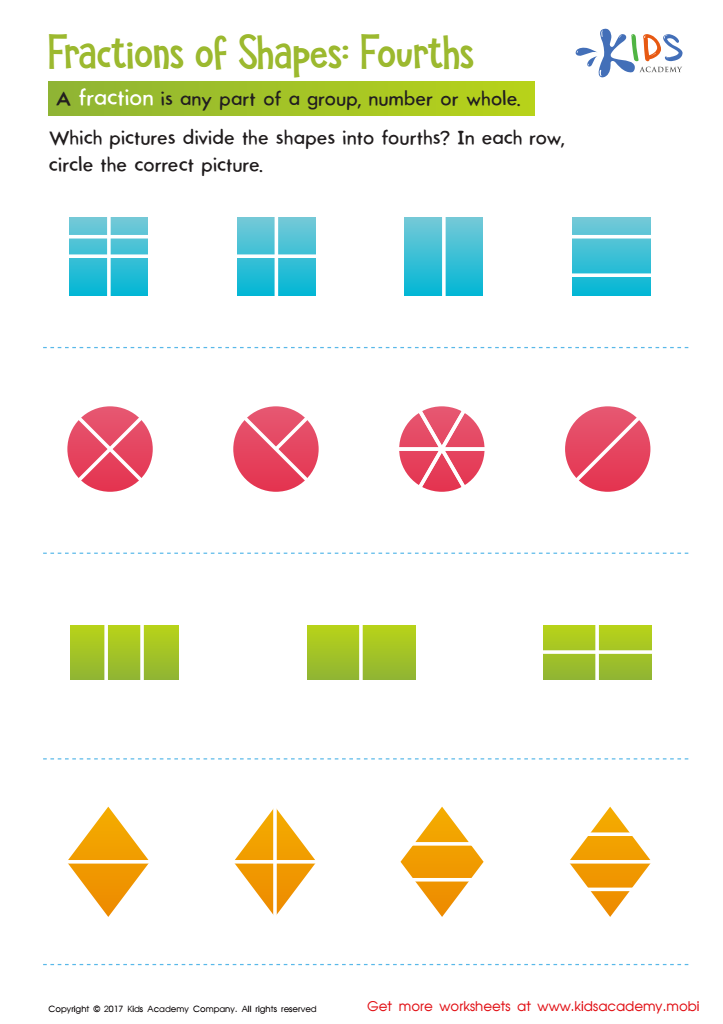
Fractions of Shapes Worksheet
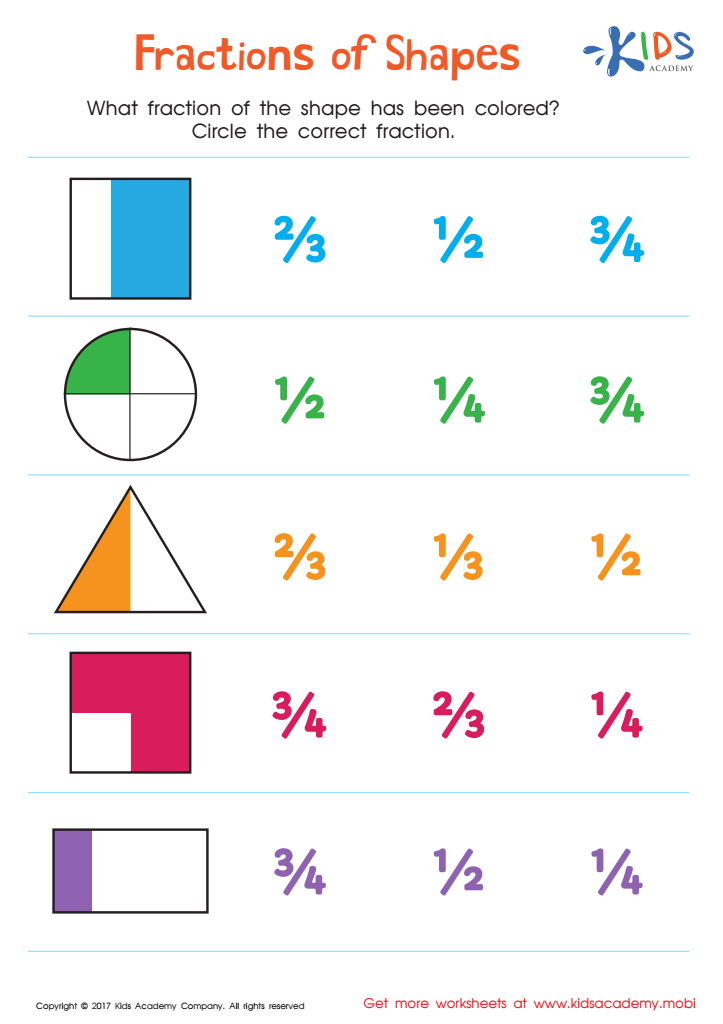
Fractions of Shapes: Math Concept Worksheet








Extra Challenge Fractions of Shapes activities are vital for children aged 4-7 as they provide essential opportunities for developing foundational math skills. During early development, children are naturally curious about the world around them. Engaging with fractions through shape recognition helps them understand concepts of part and whole, which are fundamental to math literacy. When parents and teachers introduce playful and challenging fraction activities, they stimulate critical thinking and problem-solving abilities.
Such activities can enhance spatial awareness and improve fine motor skills through hands-on tasks like cutting, folding, and arranging shapes. This makes learning interactive and enjoyable, effectively capturing children’s attention. Furthermore, understanding fractions lays the groundwork for future mathematical success, as it prepares students for more complex concepts in later grades.
Involving families in these learning experiences fosters a collaborative learning environment, strengthening the bond between children and their caregivers. Parents and teachers together can create rich educational encounters that nurture a positive attitude toward math. Ultimately, recognizing and appreciating the importance of extra challenge fractions activities can inspire a lifelong love of learning, empower students to tackle future challenges, and promote confidence in their mathematical abilities.