Extra Challenge Counting Worksheets for Ages 7-9
4 filtered results
-
From - To
Enhance your child's arithmetic skills with our "Extra Challenge Counting Worksheets for Ages 7-9." Designed to stretch young minds, these engaging worksheets provide stimulating math exercises that go beyond simple counting. Each worksheet combines fun graphics with challenging problems to boost confidence and proficiency. Perfect for both classroom and home use, our collection is aimed at developing critical thinking and sharpening mathematical skills in a fun, interactive way. Stimulate your child’s number sense and prepare them for more advanced math with these expertly crafted activities. Get ready for a rewarding learning experience! Visit Kids Academy to explore.
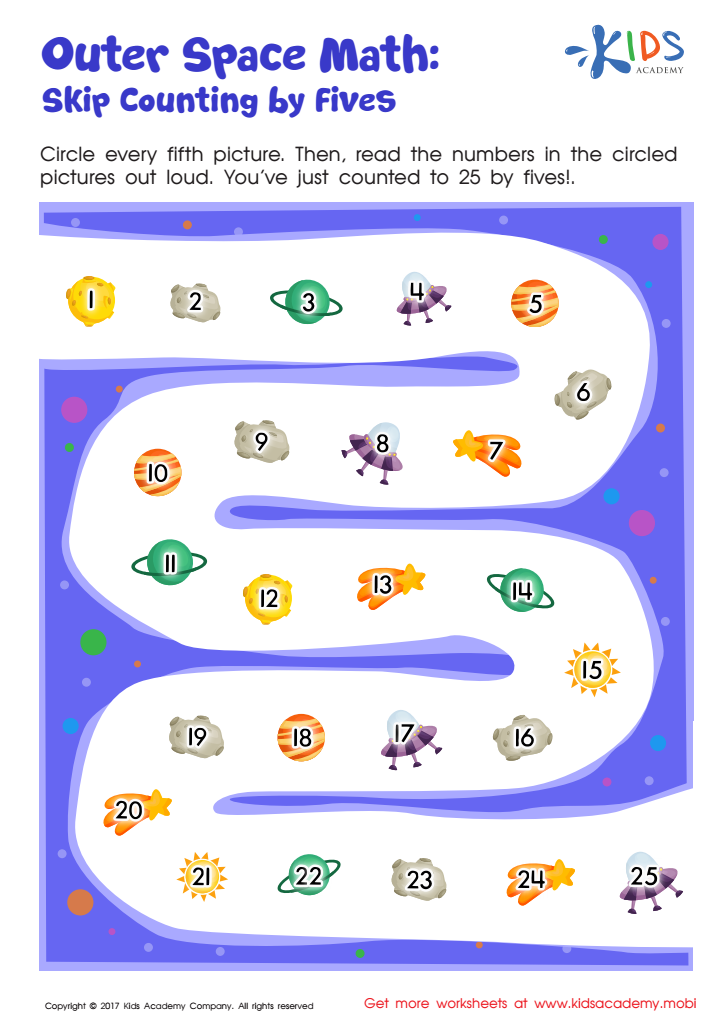
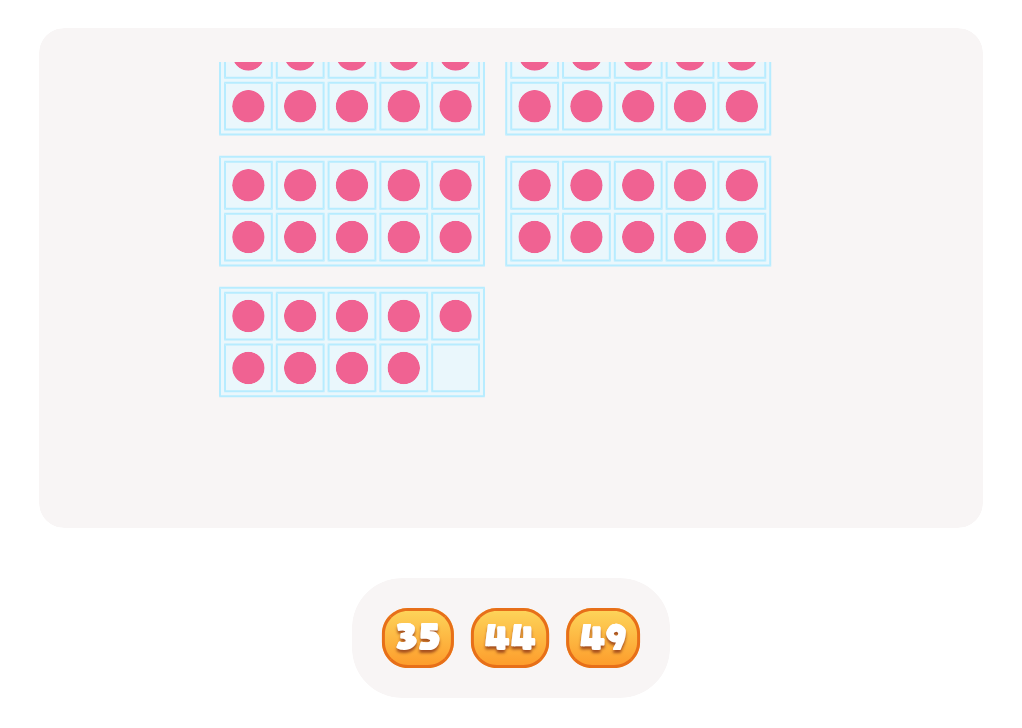
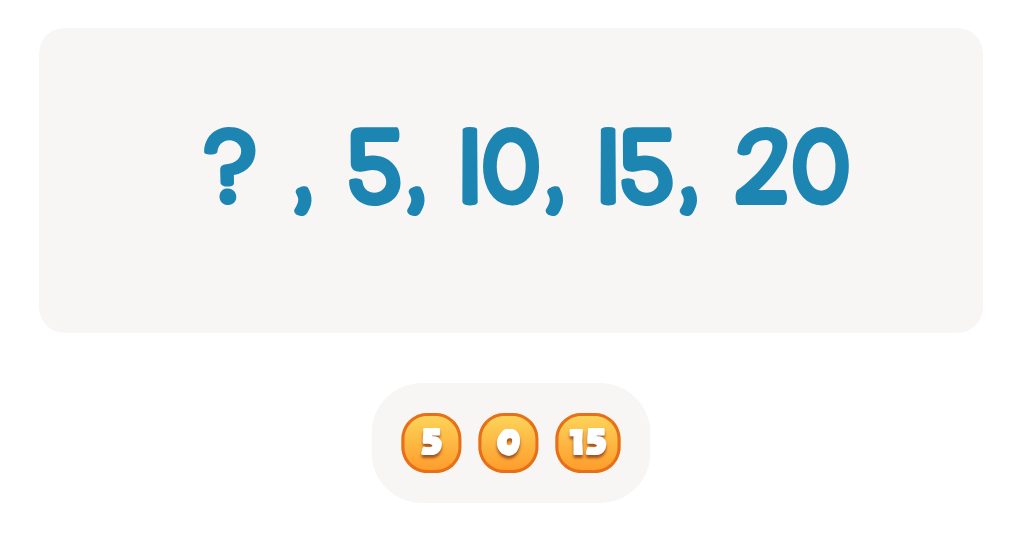
Skip Counting by 5s: Outer Space Math Printable
 Assign to My Students






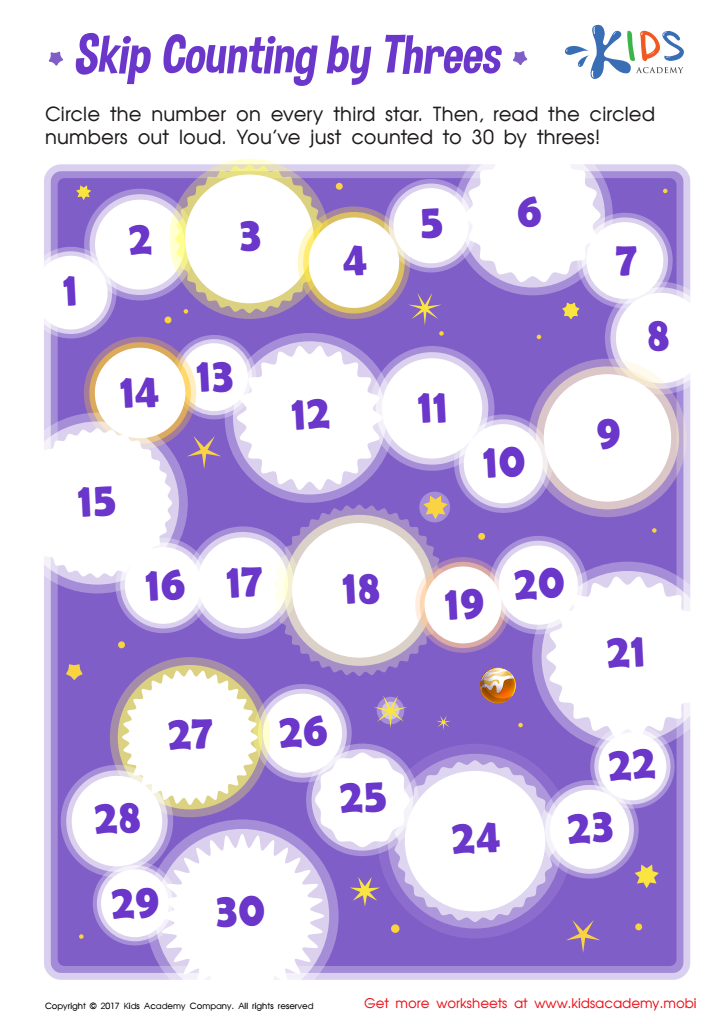
Skip Counting By Three Printable
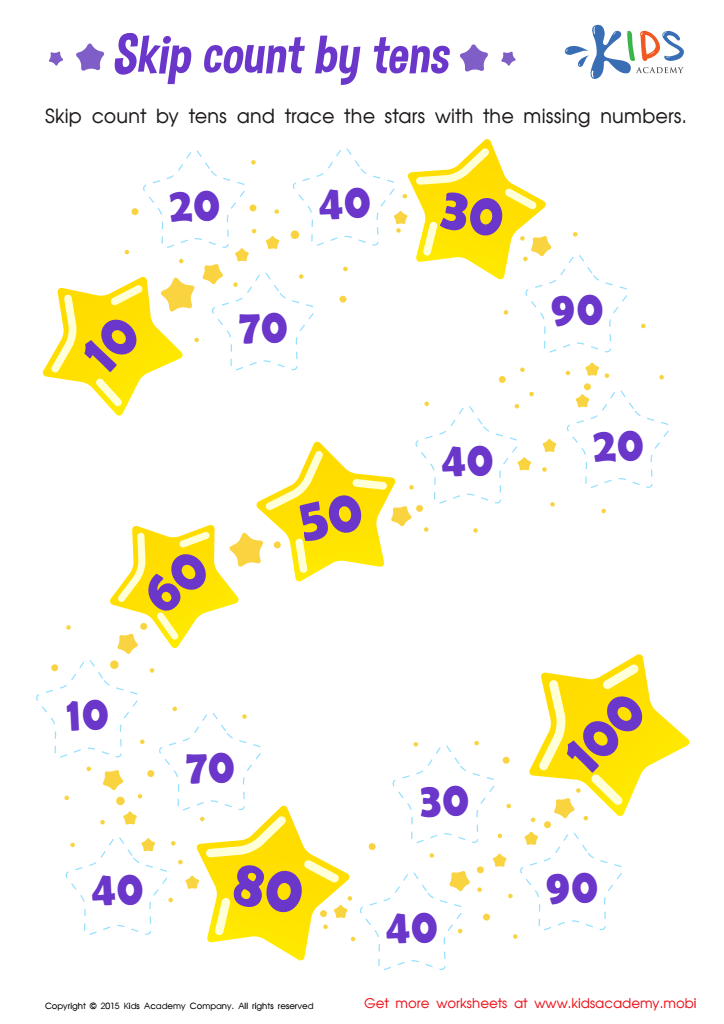
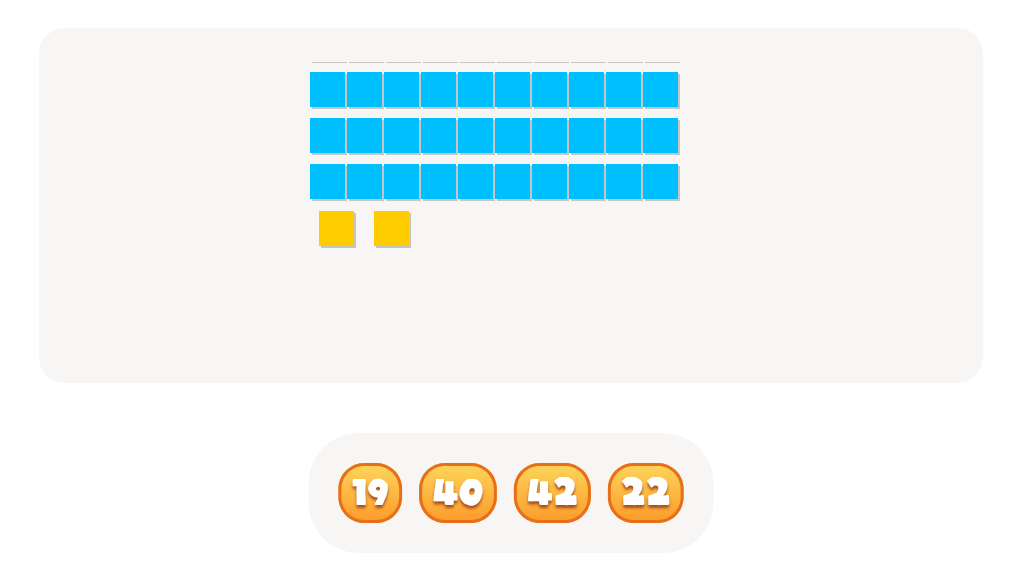
Learn dozens: Skip Count by Tens Printable

Learn Dozens: Skip Counting by Tens Printable








Extra Challenge Counting activities for ages 7-9 are important for several reasons. First, this is a critical period for cognitive development, and engaging in more complex counting exercises helps solidify foundational math skills. By introducing challenges, children learn to think flexibly and solve problems creatively, which fosters a deeper understanding of number relationships and arithmetic operations.
Parents and teachers should also care because these activities promote perseverance and resilience. When children encounter challenging tasks, they learn to cope with difficulty and frustration, which are essential life skills. Mastery of challenging content can boost self-confidence and a sense of accomplishment.
Furthermore, Extra Challenge Counting can enhance a child's attention to detail and concentration. As students grapple with more complex counting problems, they practice focusing their thoughts and efforts, which can positively impact other areas of learning and everyday tasks.
Additionally, these activities can be exciting and engaging, making math enjoyable and less intimidating. Cultivating a positive attitude towards mathematics at a young age can lead to long-lasting academic benefits, opening pathways to future success in STEM fields.
In summary, Extra Challenge Counting for ages 7-9 supports cognitive growth, builds perseverance, improves focus, and makes learning math engaging, critical reasons for parents and teachers to integrate these activities into children's routines.