Extra Challenge Place Value Worksheets for Ages 7-9
11 filtered results
-
From - To
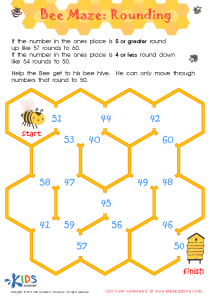
Provide your child with our Extra Challenge Place Value Worksheets for Ages 7-9 to boost their math skills! These engaging worksheets are thoughtfully designed to offer additional practice with understanding and applying place value concepts. Incorporating exercises that challenge young learners, our worksheets aim to strengthen their ability to recognize the value of digits within larger numbers. Perfect for ambitious students seeking extra challenges, each printable includes fun and educational activities aligned with the math curriculum. Help nurture your child's confidence and accuracy with numbers through these stimulating and rewarding place value worksheets from Kids Academy!
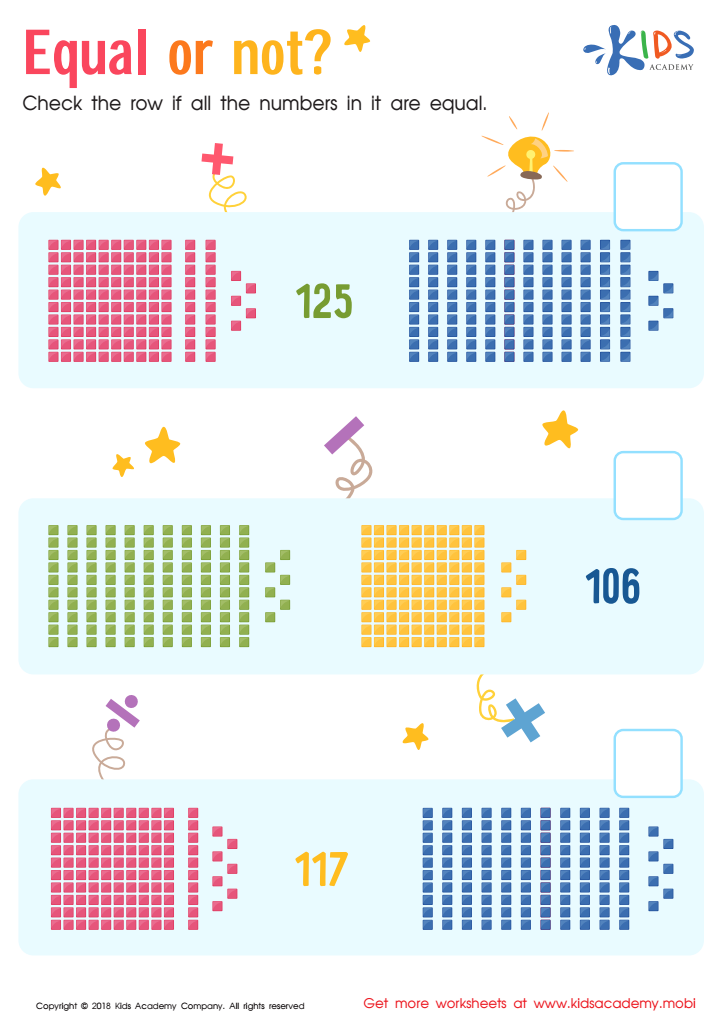
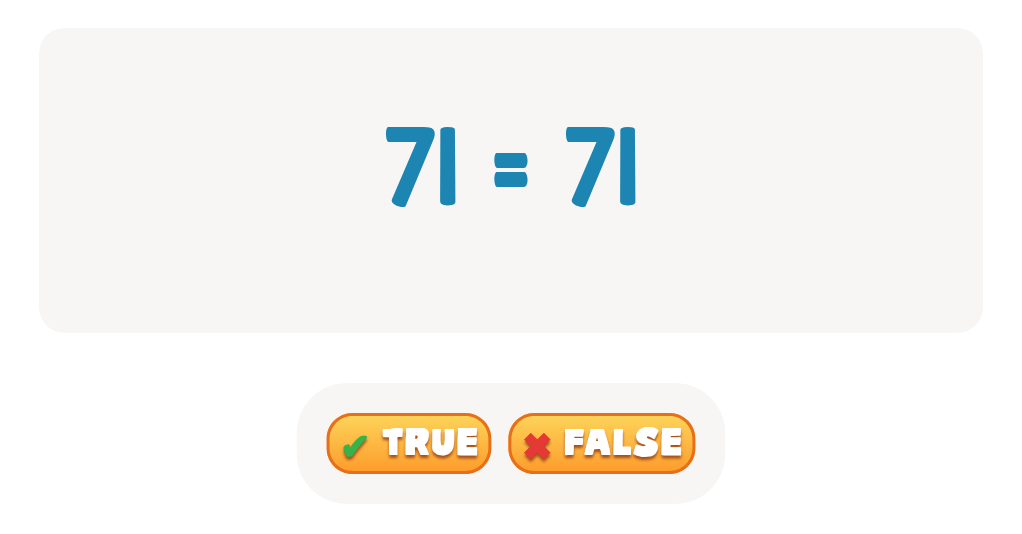
Equal or not Worksheet
 Assign to My Students
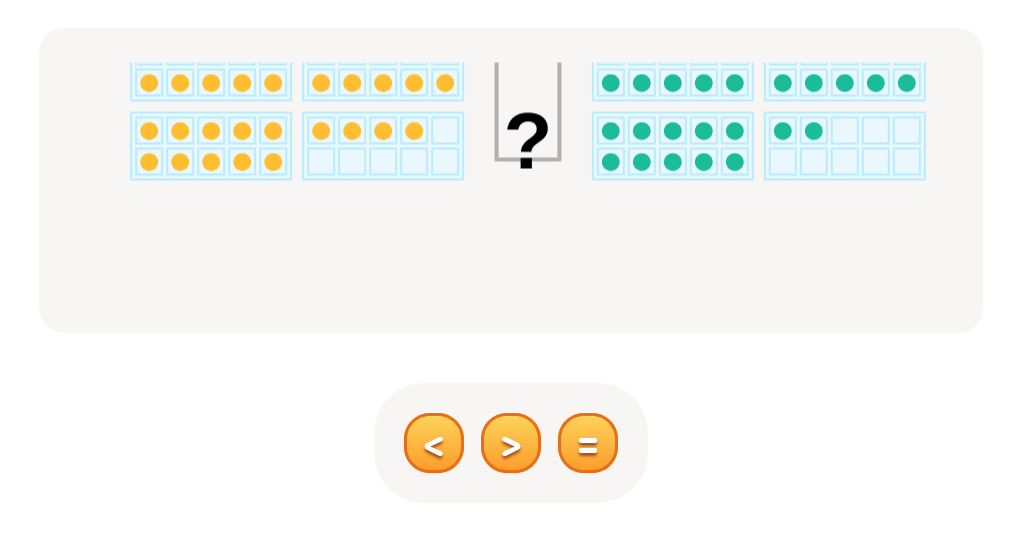

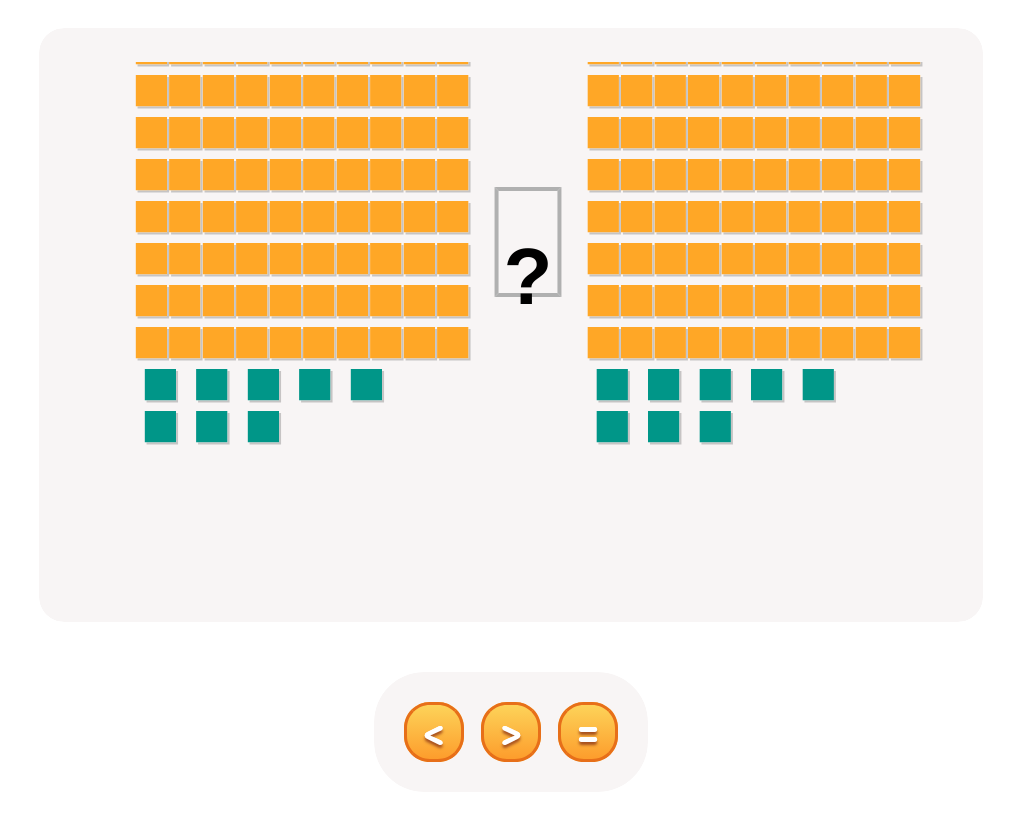
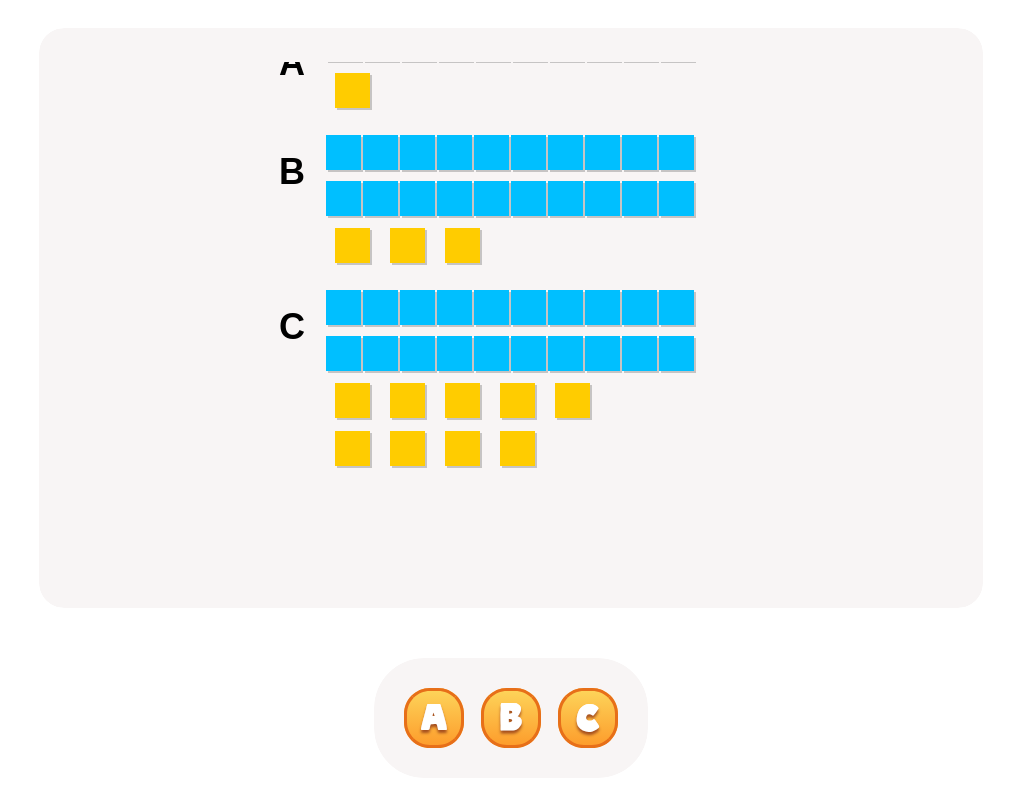
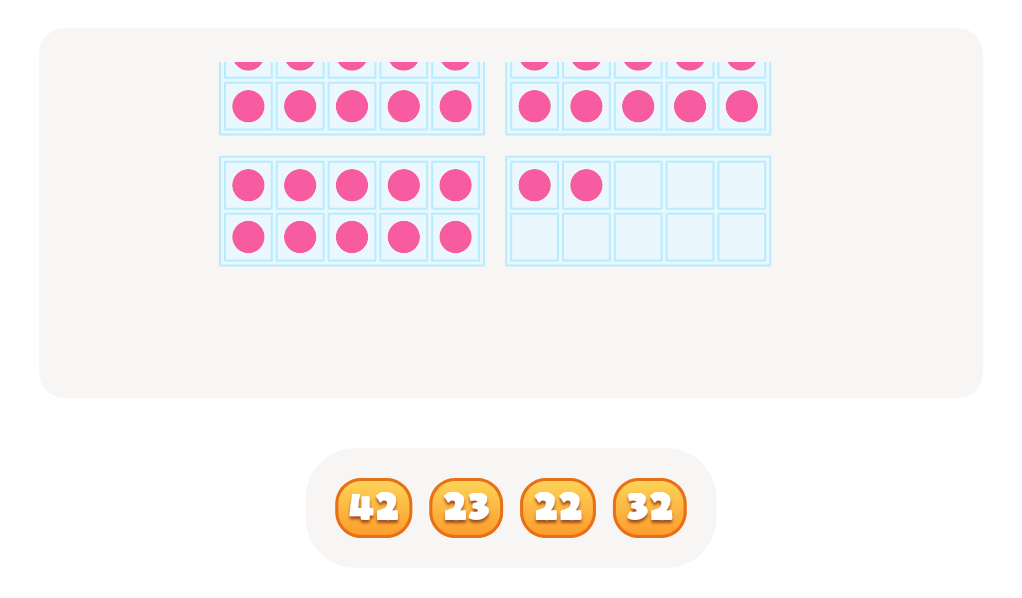
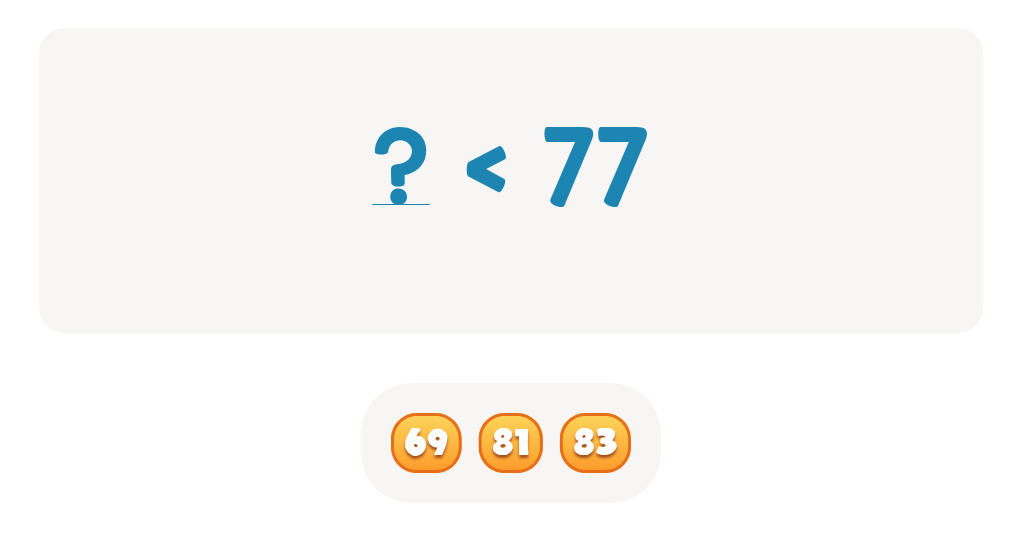
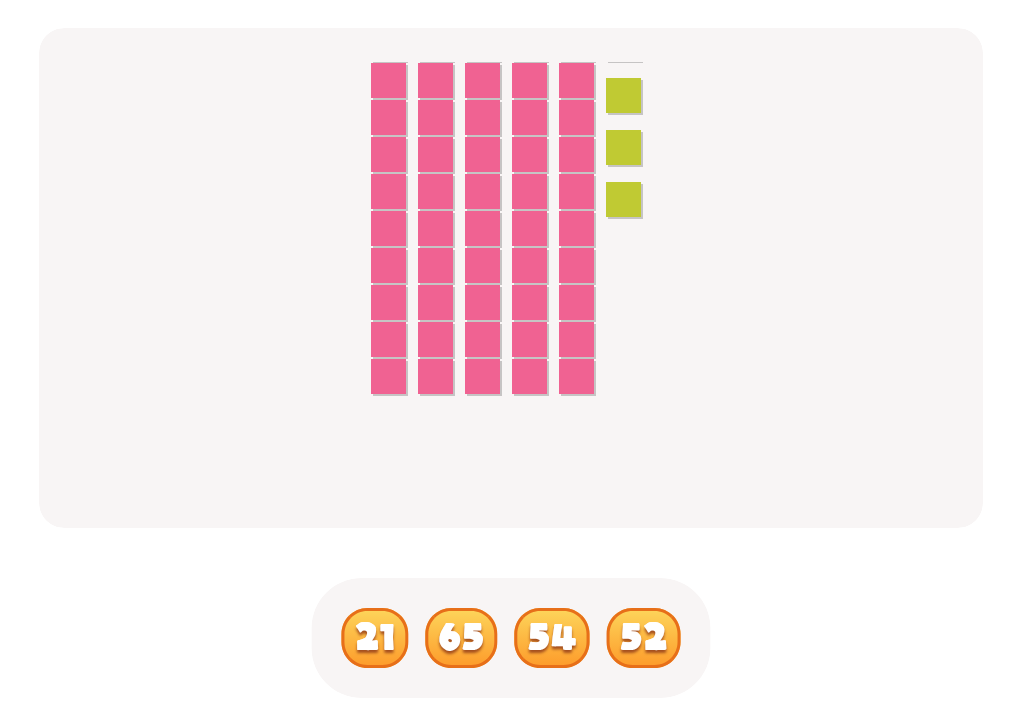
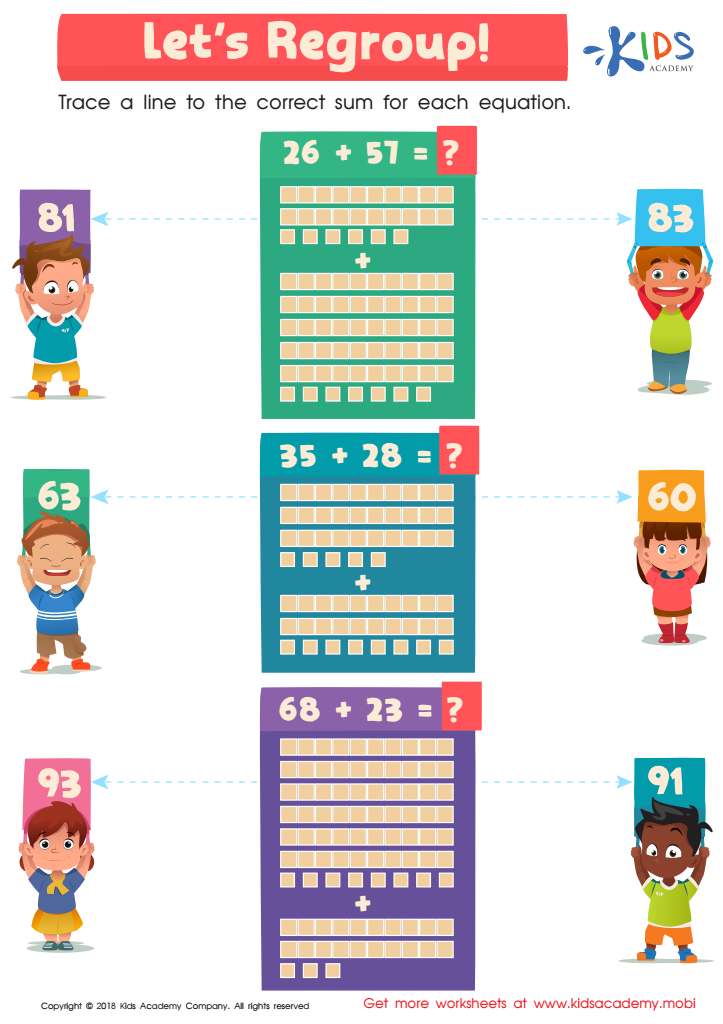
Let's Regroup Worksheet
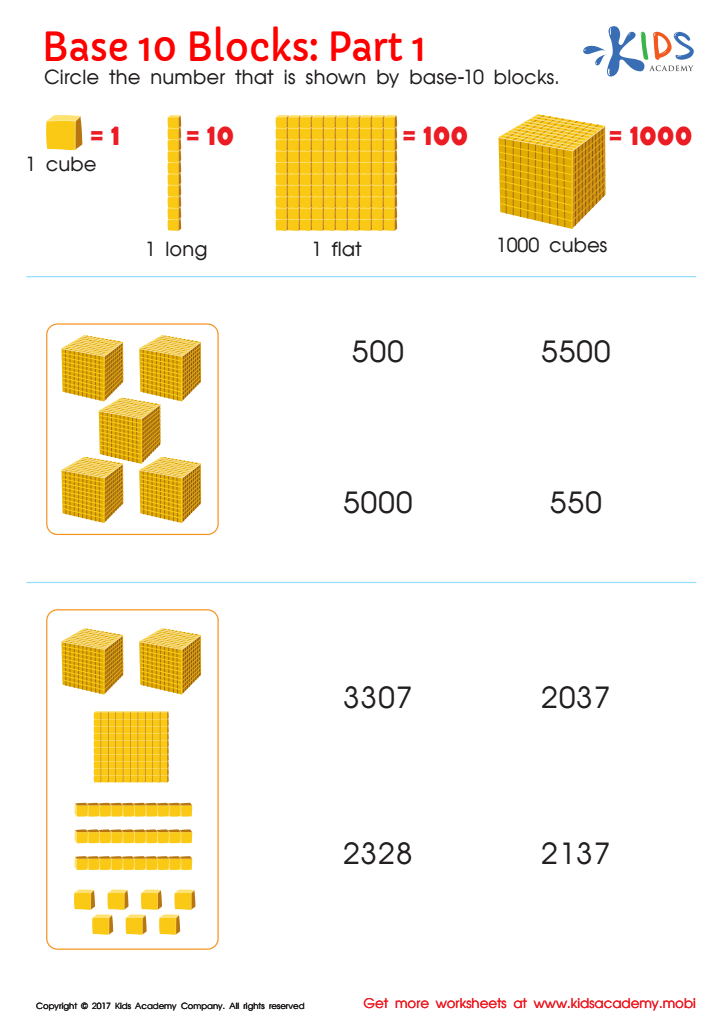
Place Value Thousands Worksheet
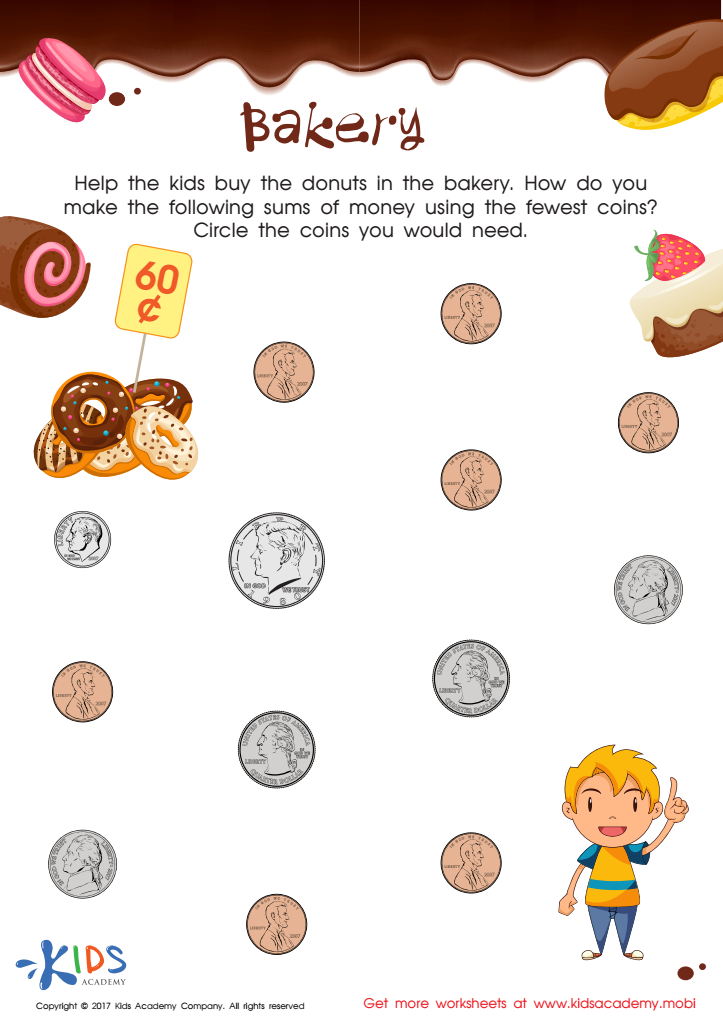
Counting Coins Worksheet
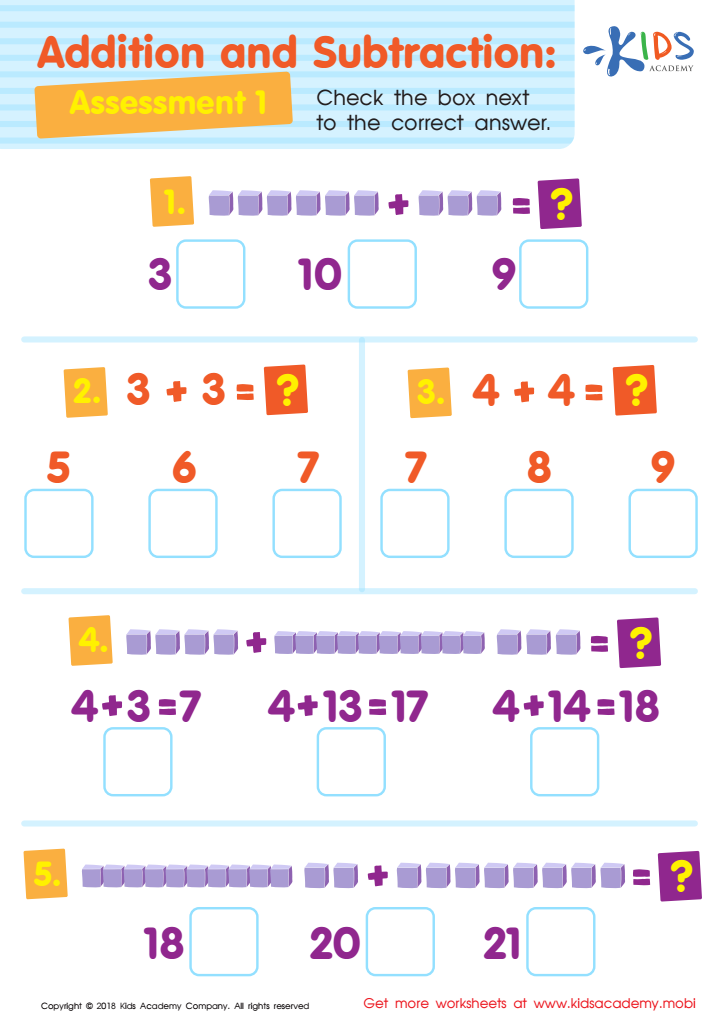
Addition and Subtraction Assessment 1 Worksheet
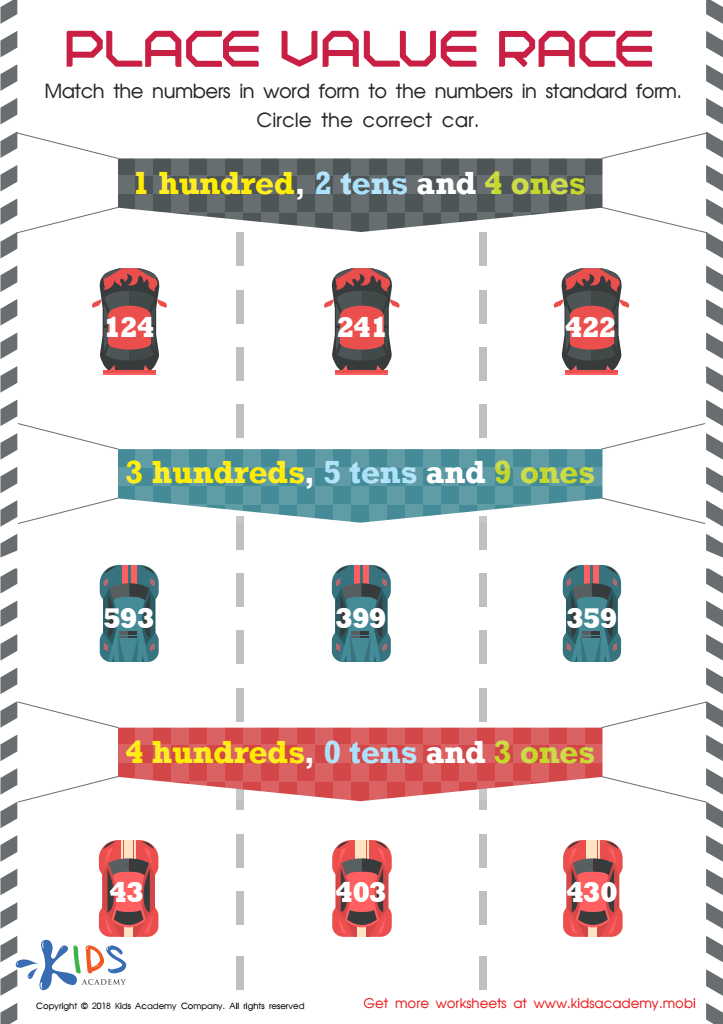
Place Value Race Worksheet
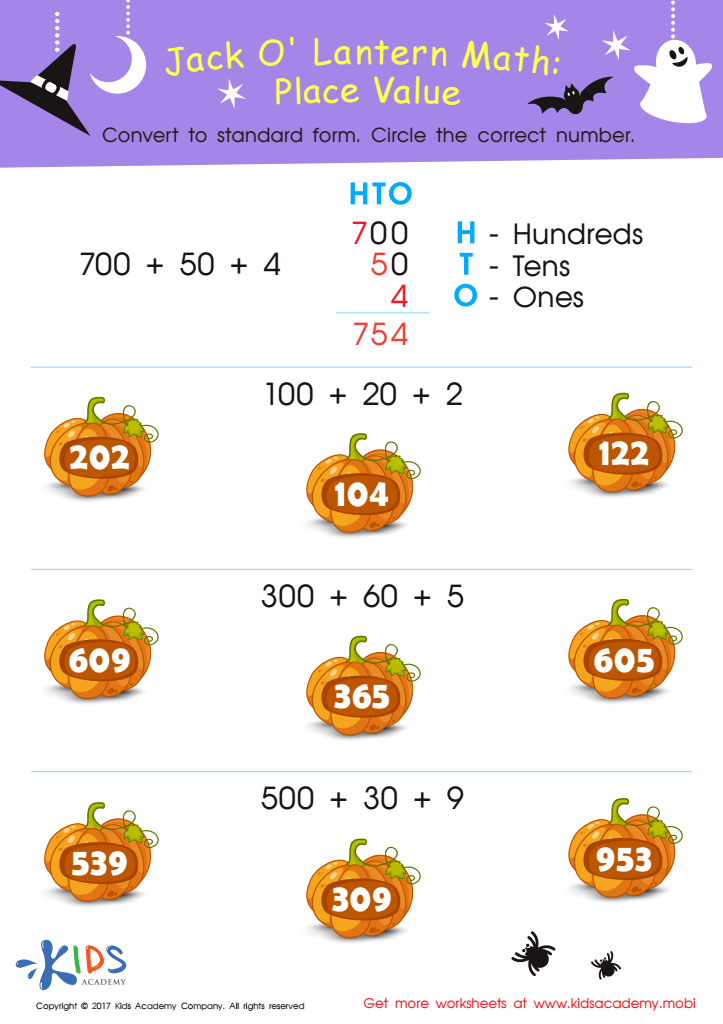
Free Place Value Worksheet
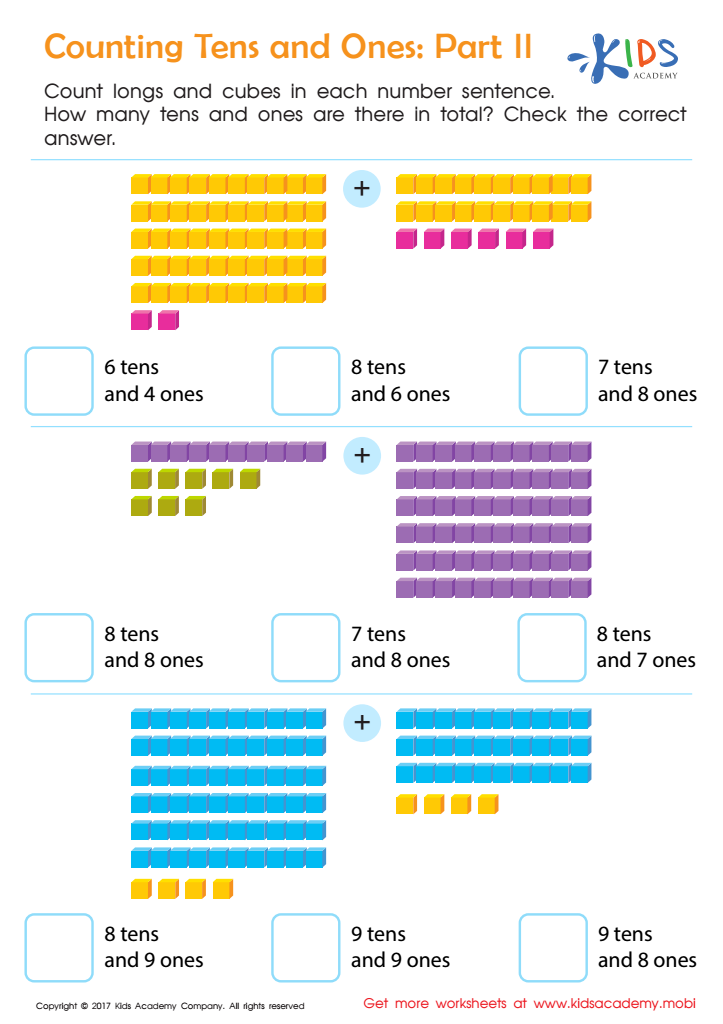
Counting Tens and Ones: Part 2 Worksheet
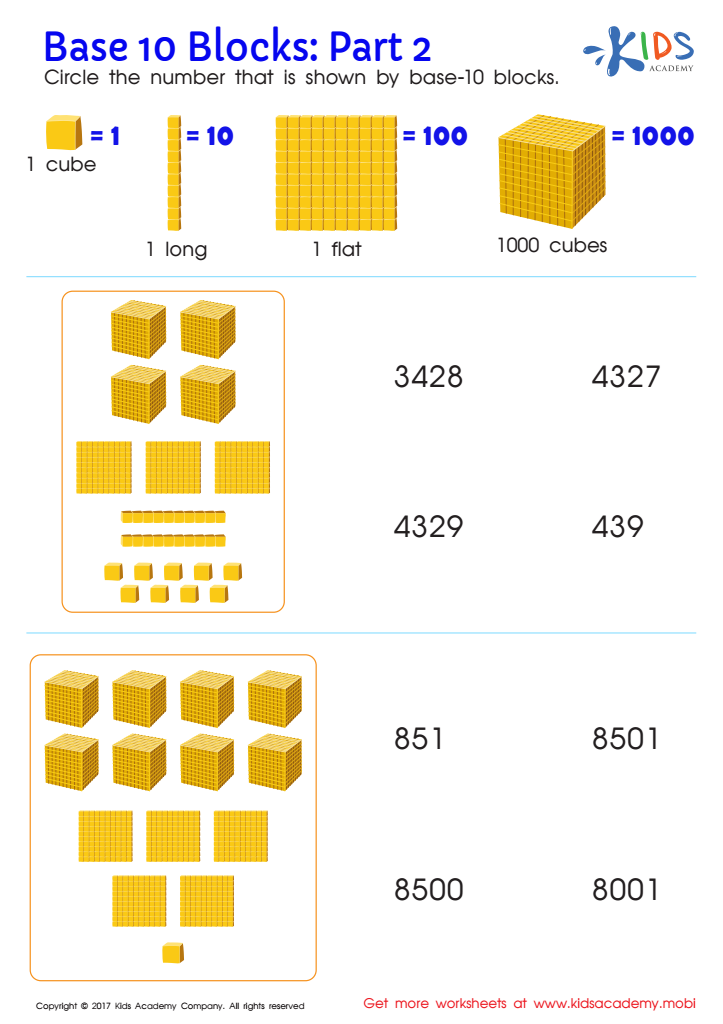
Place Value Worksheet: Thousands
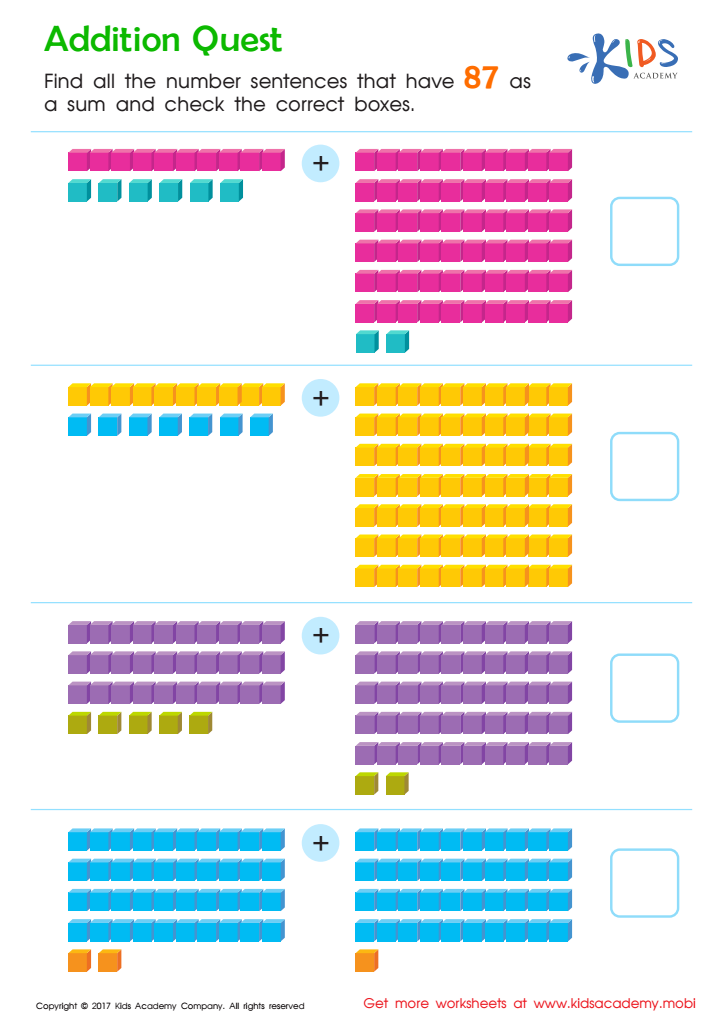
Addition Quest Worksheet: Part 1
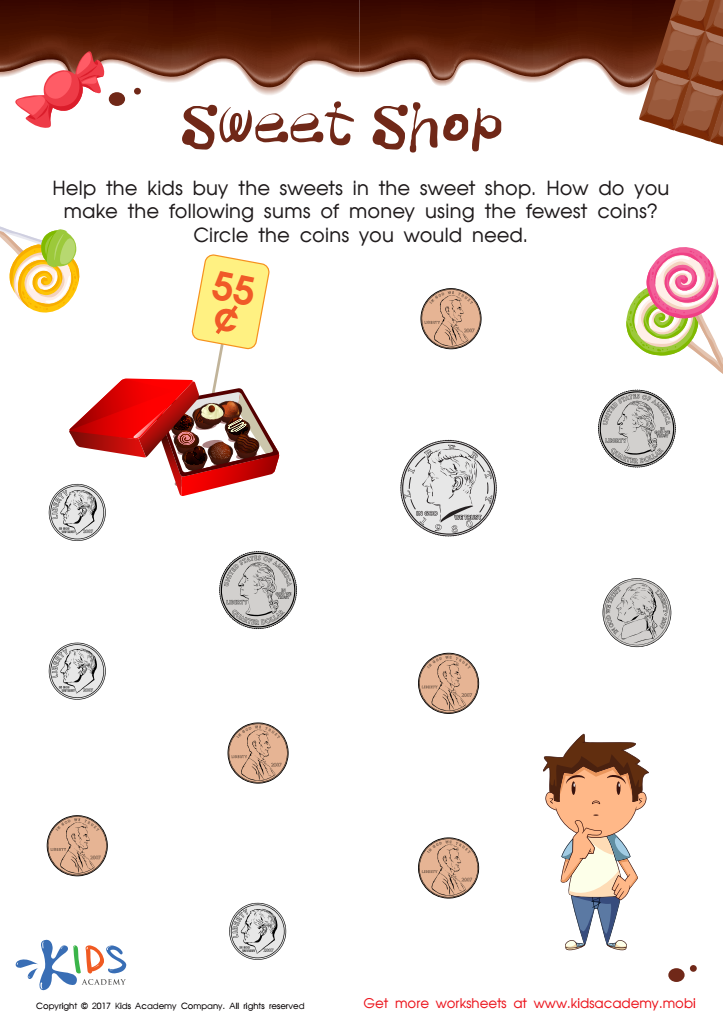
Sweet Shop – Counting Coins Worksheet








Extra Challenge Place Value activities are crucial for children aged 7-9 because they lay the foundational bricks of mathematics that are critical for future learning. At this stage, students are transitioning from basic arithmetic to more complex mathematical concepts. Understanding place value is essential as it is the system where the position of a number determines its value. For instance, in the number 135, the ‘1’ represents 100, the ‘3’ represents 30, and the ‘5’ represents 5.
Mastering place value aids in their ability to perform addition, subtraction, multiplication, and division more efficiently and accurately. Parents and teachers should care about these activities because they blend learning with engaging challenges that foster critical thinking, problem-solving, and analytical skills. Furthermore, extra challenge place value exercises help identify and target individual student needs, allowing for tailored instruction that addresses specific gaps or misconceptions.
Early grasp of place value builds confidence in math, promotes number sense, and enhances cognitive abilities that are applicable across various subjects. In a nurturing and intellectually-stimulating environment, children feel motivation and enthusiasm towards learning, thus cultivating a lifelong love for mathematics. Parents and teachers play pivotal roles in guiding and supporting this crucial aspect of early math education.