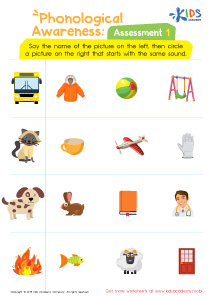
Normal Consonants Worksheets for Ages 3-4
11 filtered results
-
From - To
Introduce your child to the world of literacy with our Normal Consonants Worksheets for ages 3-4. These engaging printable worksheets are thoughtfully designed to help preschoolers recognize and practice consonant sounds. Focusing on foundational phonics and letter recognition, each sheet incorporates fun activities like tracing, matching, and identifying consonant sounds in everyday words. Perfect for at-home learning or classroom use, our worksheets make mastery of consonants enjoyable and effective. Ignite your child's passion for reading and give them the tools to succeed in language with Kids Academy’s expertly crafted resources. Download now for free!
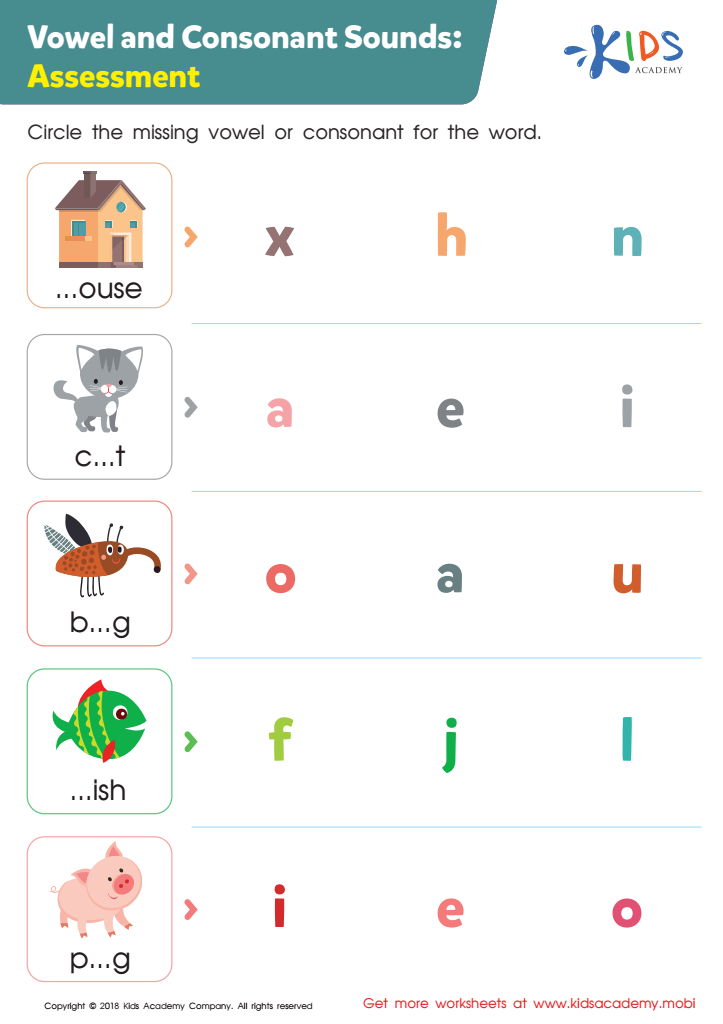
Vowel and Consonant Sounds: Assessment Worksheet
 Assign to My Students
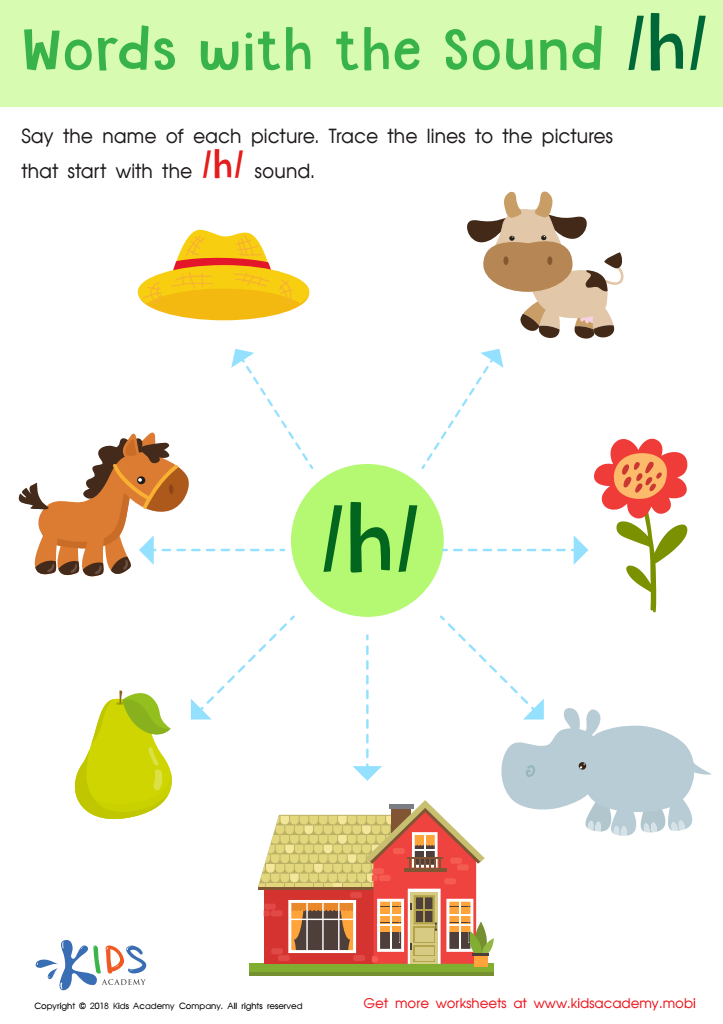
Words with sound h Reading Worksheet
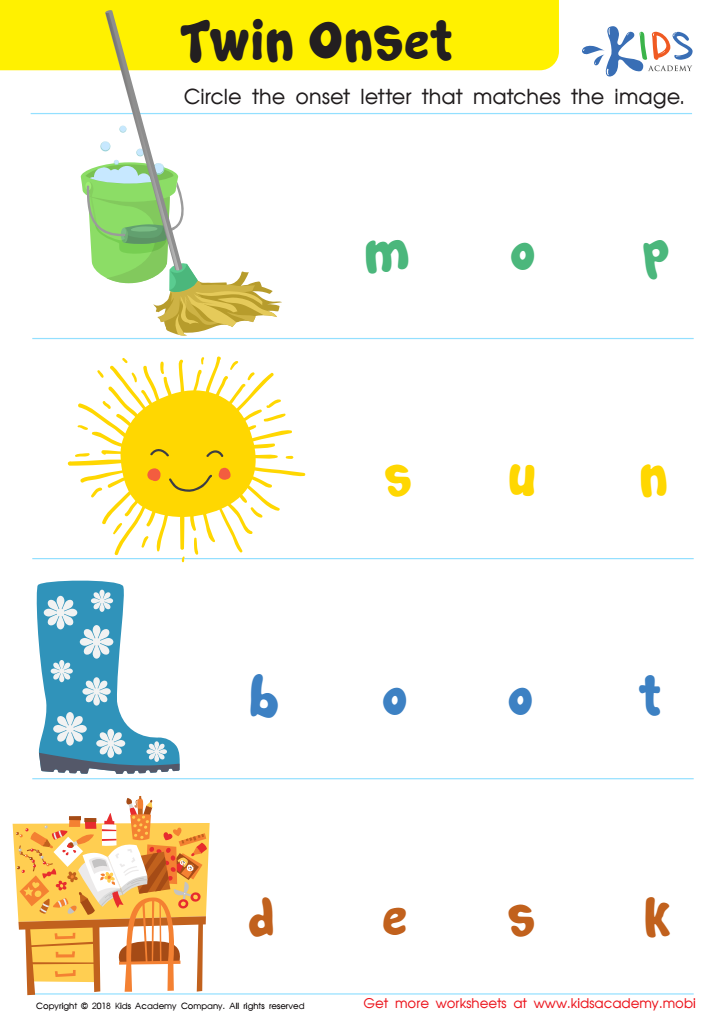
Twin Onset Worksheet
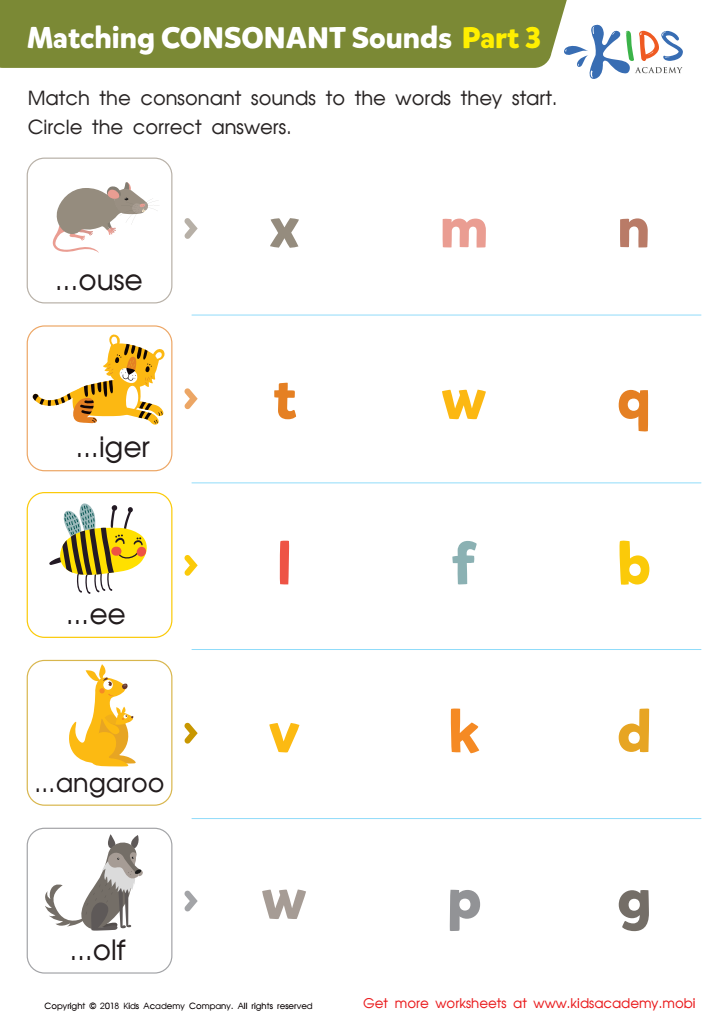
Matching Consonant Sounds: Part 3 Worksheet
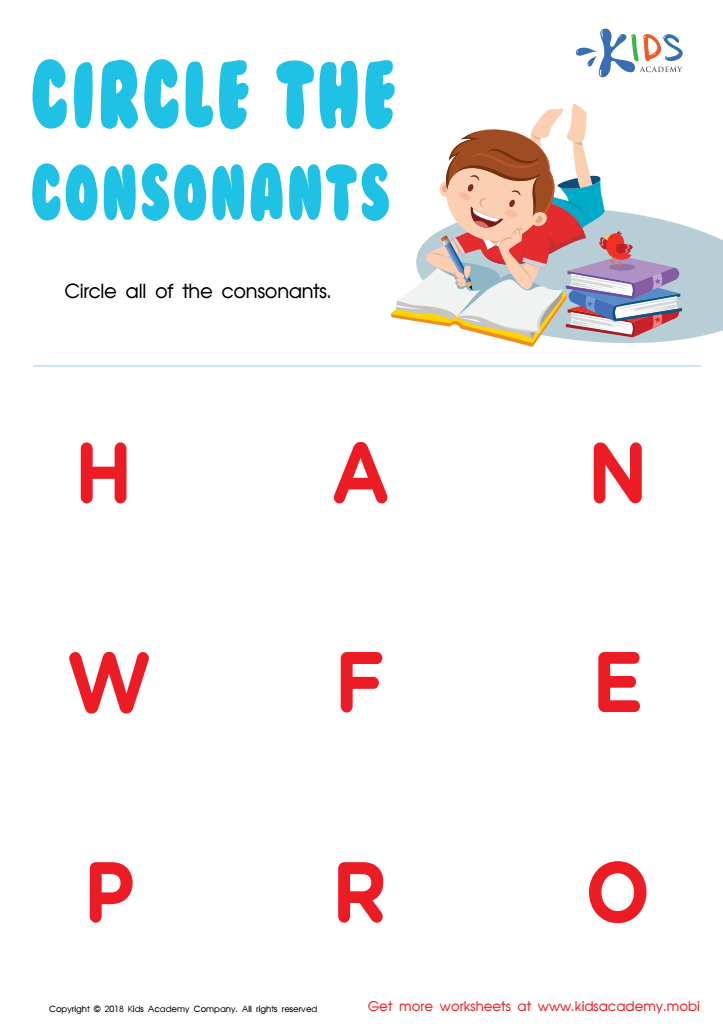
Circle the Consonants Worksheet
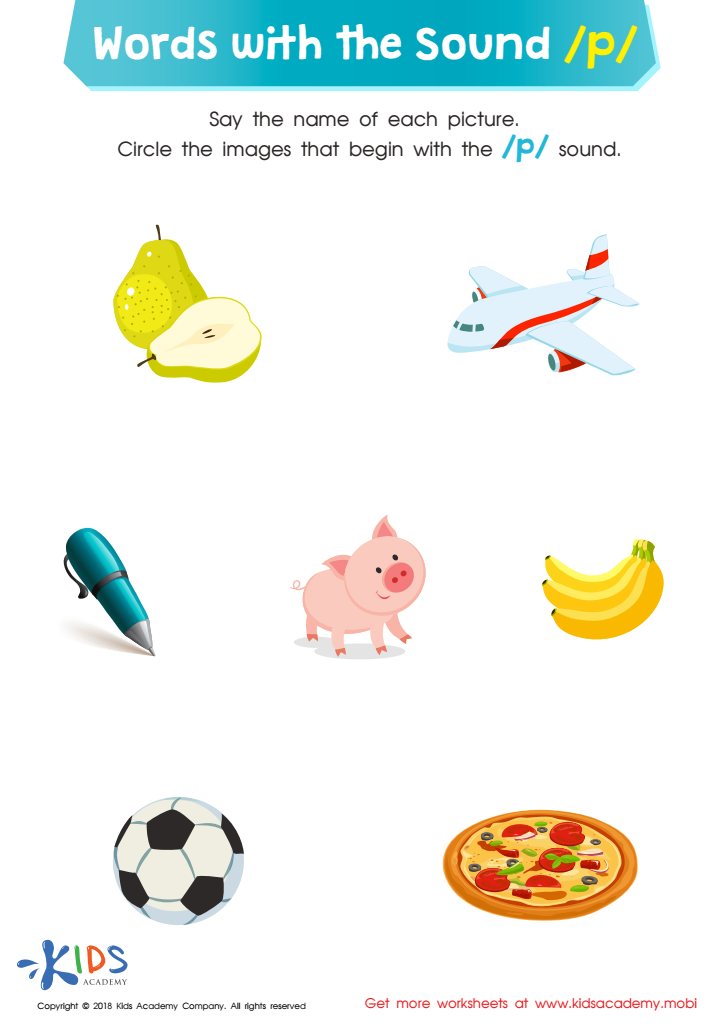
Words with sound p Reading Worksheet
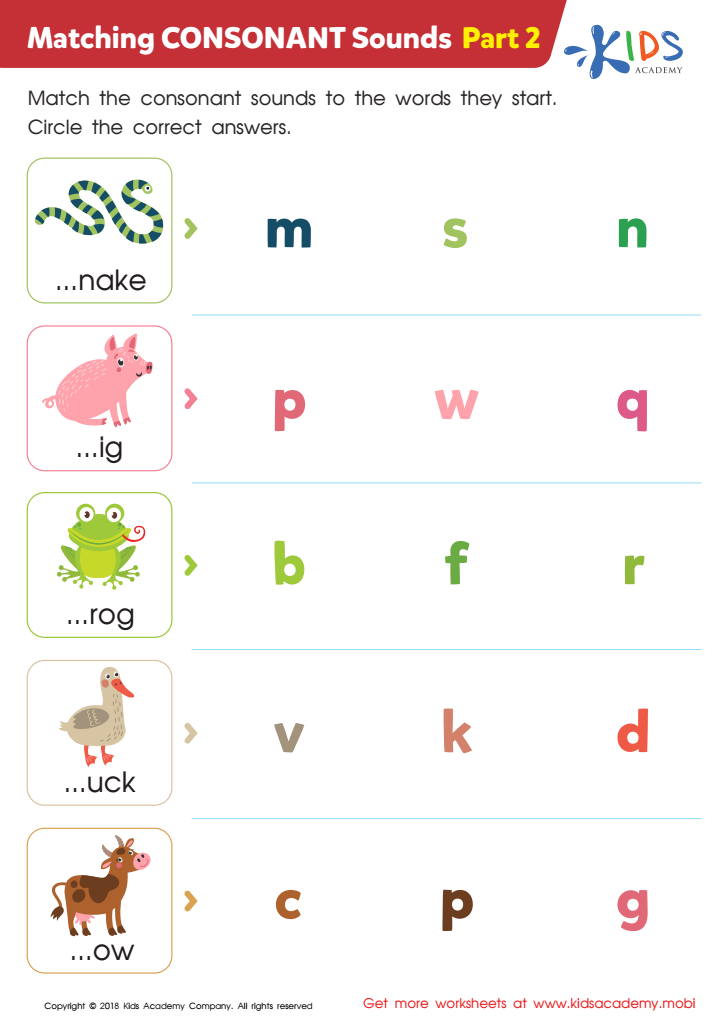
Matching Consonant Sounds: Part 2 Worksheet
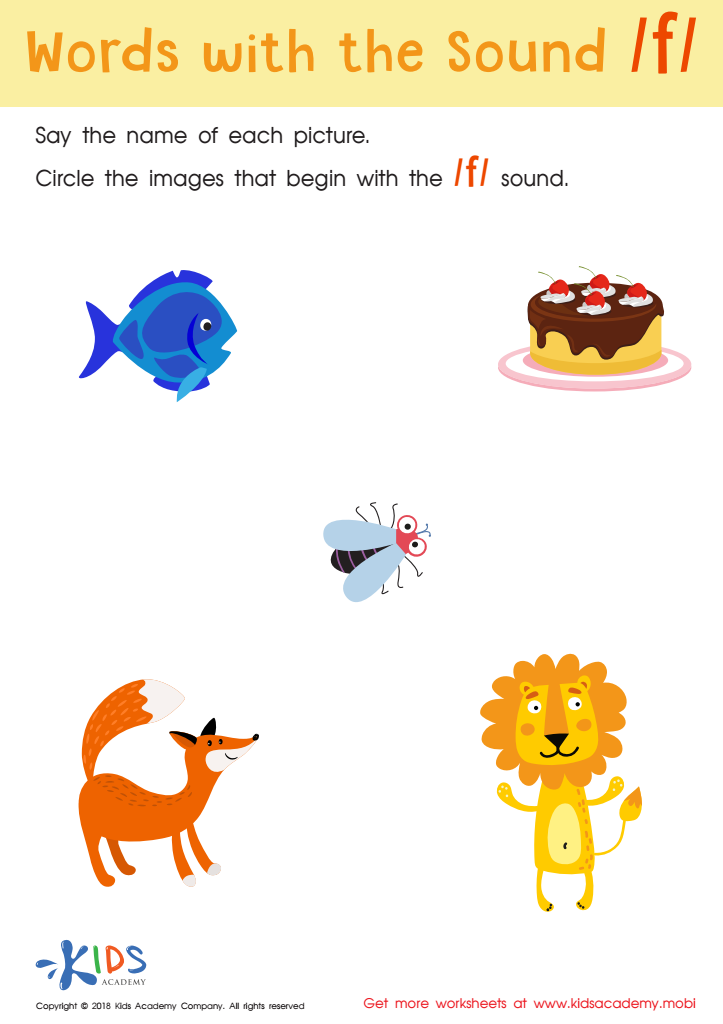
Words with sound f Reading Worksheet
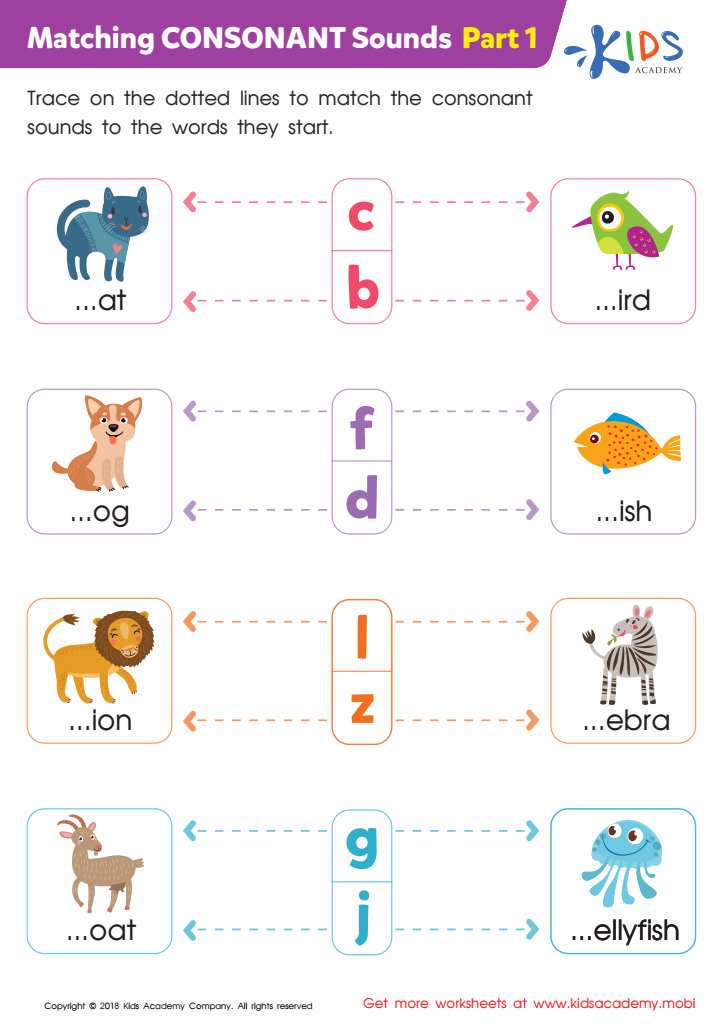
Matching Consonant Sounds: Part 1 Worksheet
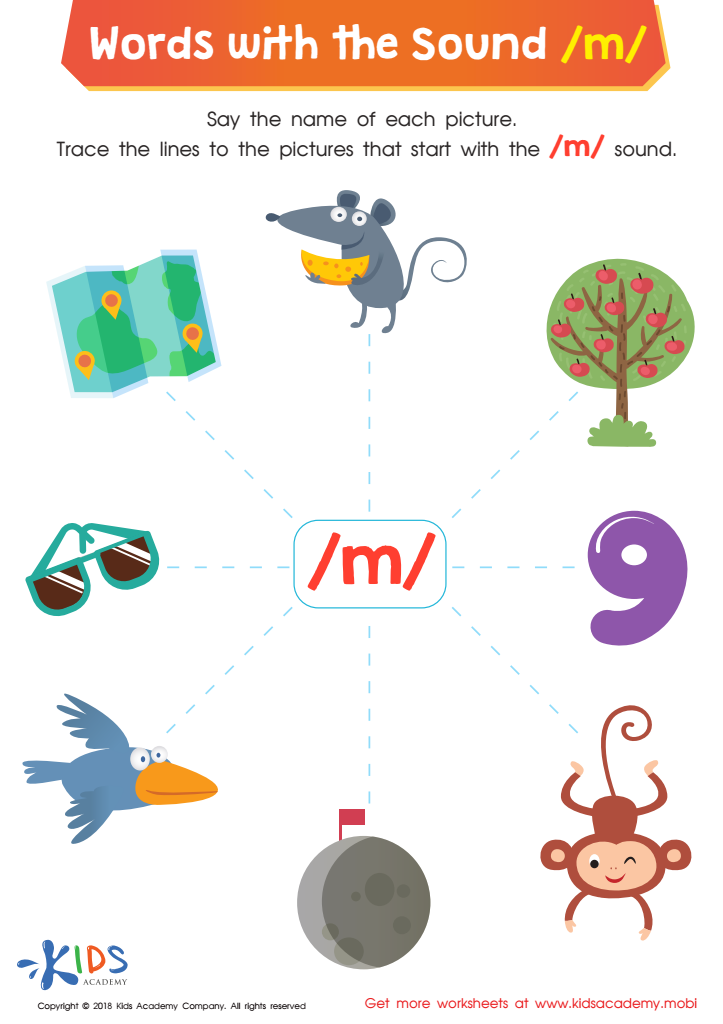
Words with Sound M Reading Worksheet
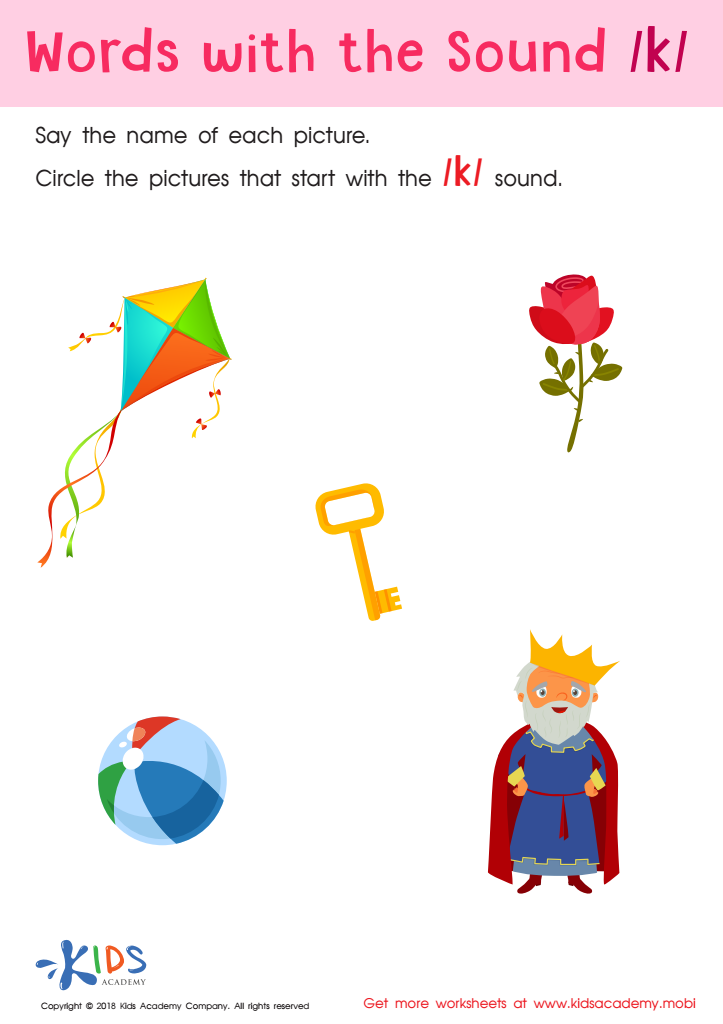
Words with sound k Reading Worksheet



Parents and teachers should care about the development of normal consonant sounds in children aged 3 to 4 because it forms a critical foundation for effective communication and literacy skills. At this age, children are in a vital period of language acquisition and cognitive development. Being able to pronounce consonants correctly helps children make themselves understood, fostering better interaction and social relationships. It also aids in their ability to learn to read and write, as understanding and producing correct sounds are essential for phonemic awareness—a key literacy component.
Moreover, early identification and correction of speech disorders can prevent long-term difficulties. If a child struggles with certain sounds, they may become frustrated or shy, potentially impacting their social confidence and willingness to participate in classroom activities. By monitoring and supporting normal consonant development, parents and teachers can intervene early with speech therapy or targeted practice, thereby ensuring the child does not fall behind.
In essence, the attention to clear consonant articulation contributes to a child's overall academic success and self-esteem. It empowers them to express their thoughts and ideas effectively, which is crucial for their emotional and intellectual growth. Ignoring potential issues in consonant production could lead to broader academic and social challenges, making early attention and intervention imperative.