Filters

5 filtered results

Clear all filters
Favorites
With answer key
Interactive

5 filtered results

Difficulty Level

Grade


Subject

    Discover a variety of engaging "Normal Long and Short Vowel Worksheets" designed specifically for children aged 3-5! Our worksheets help young learners differentiate between long and short vowel sounds, a fundamental skill in early literacy. Featuring colorful illustrations and interactive activities, these resources make learning fun and effective. Ideal for homeschoolers, preschool teachers, and parents alike, our worksheets promote phonemic awareness and support vocabulary development. Encourage your child's reading and writing abilities with easy-to-understand exercises that include tracing, matching, and sorting. Start your child's literacy journey today with our expertly crafted vowel worksheets!

    Check out this FREE Trial Lesson on Long And Short Vowel for age 3-5!

    The Short I Sound

    Favorites
    With answer key
    Interactive
    • 3-5
    • With answer key
    • Long And Short Vowel
    • Normal
    The Short I Words Reading Worksheet
    The Short I Words Reading Worksheet

    The Short I Words Reading Worksheet

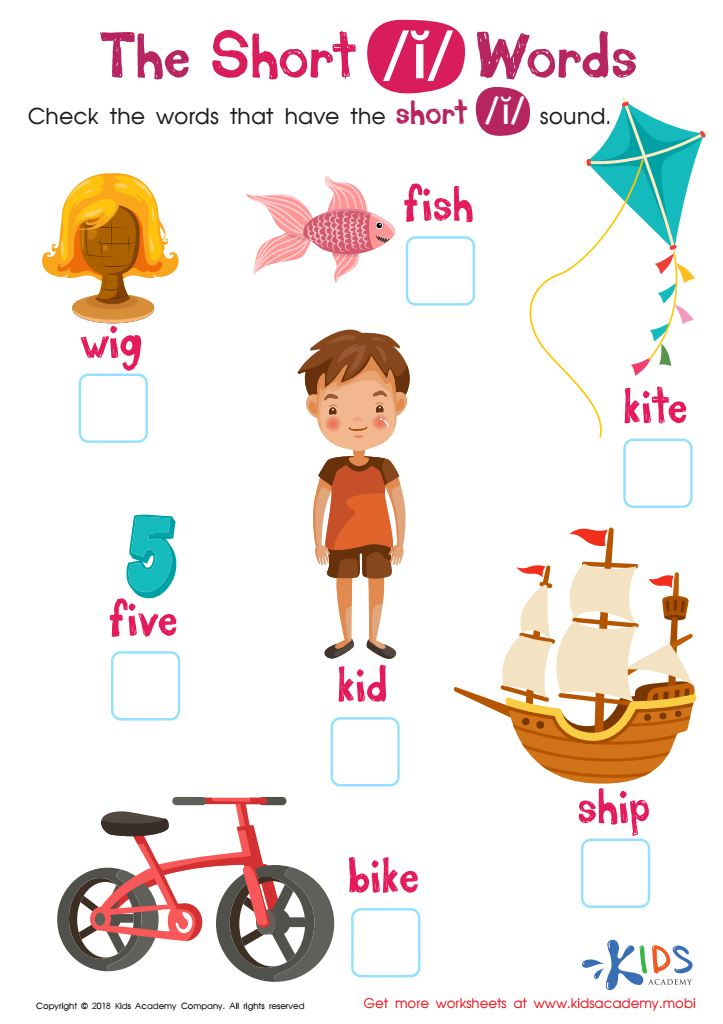
    Teach your kindergartner phonics with this printout worksheet! It introduces the short «i» sound and helps them differentiate and articulate sounds and letters of the alphabet. With practice, your child will soon find it easy to classify sounds into long and short vowels.
    The Short I Words Reading Worksheet
    Worksheet
    Phonics Long O Reading Worksheet
    Phonics Long O Reading Worksheet

    Phonics Long O Reading Worksheet

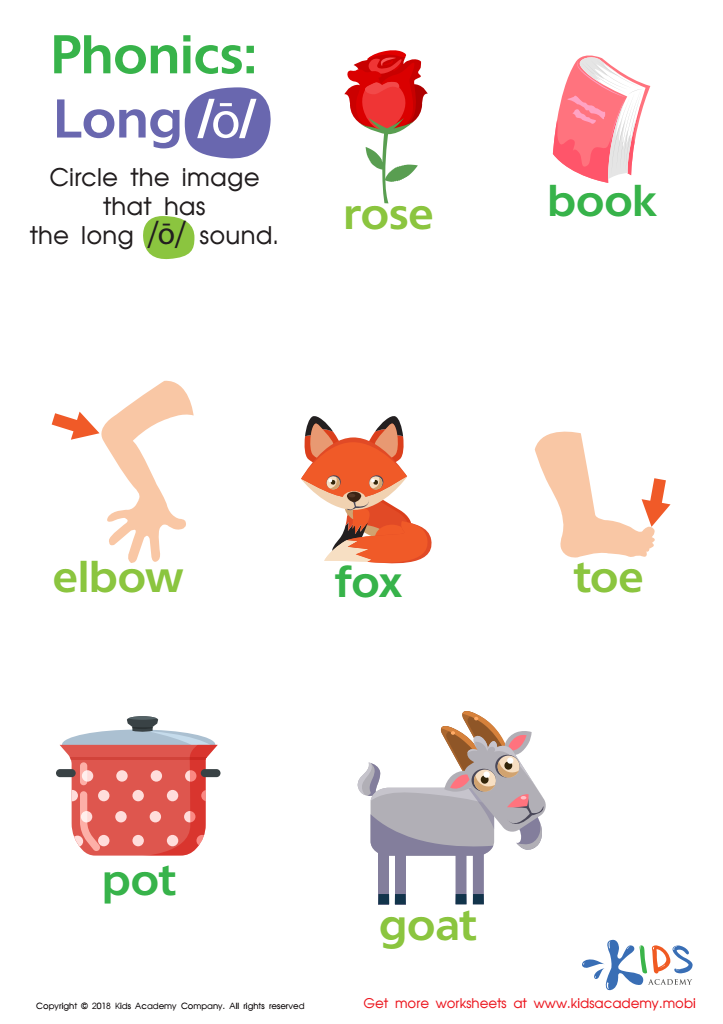
    Are you ready to help your child learn the phonics long «o» sound? This worksheet is designed to aid them in getting familiar with the sound. After completing the exercise, your child should be able to differentiate letters, and recognize words with the long «o» sound. Encourage them to circle the images that have the sound.
    Phonics Long O Reading Worksheet
    Worksheet
    short vowels Worksheet
    short vowels Worksheet

    short vowels Worksheet

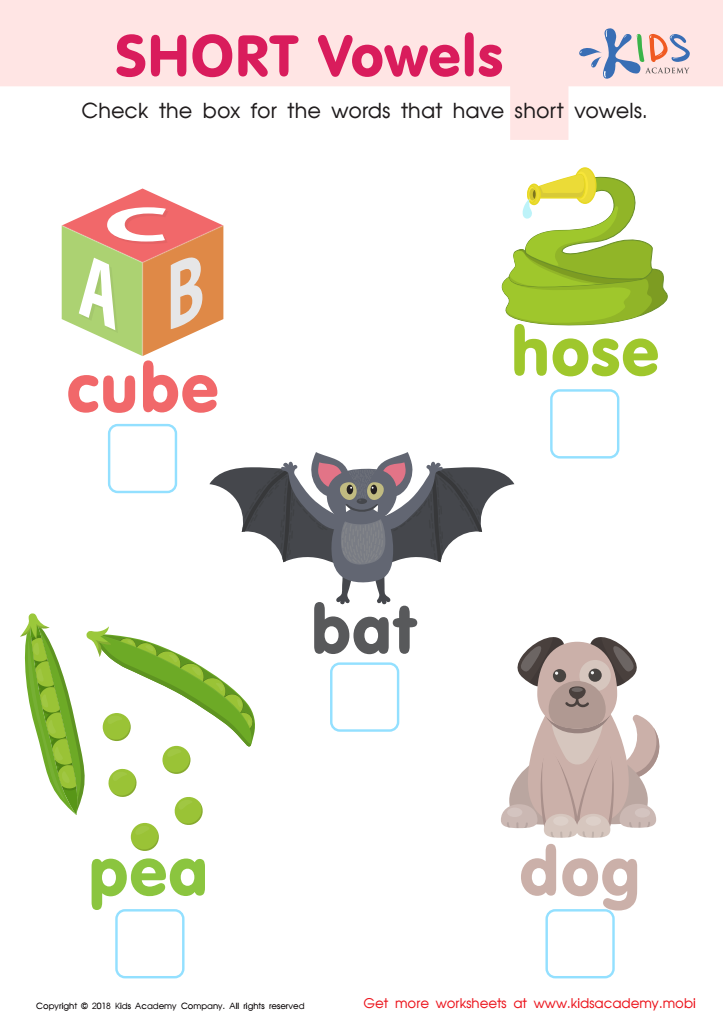
    Say "dog" and notice how long it takes to pronounce the vowel. Is it short or long? Compare it to "pea" and use this worksheet to quickly assess your child's mastery. Have them name each picture and listen for the vowel sounds. Only check the boxes for words with short vowel sounds.
    short vowels Worksheet
    Worksheet
    Why Vowels? Reading Worksheet
    Why Vowels? Reading Worksheet

    Why Vowels? Reading Worksheet

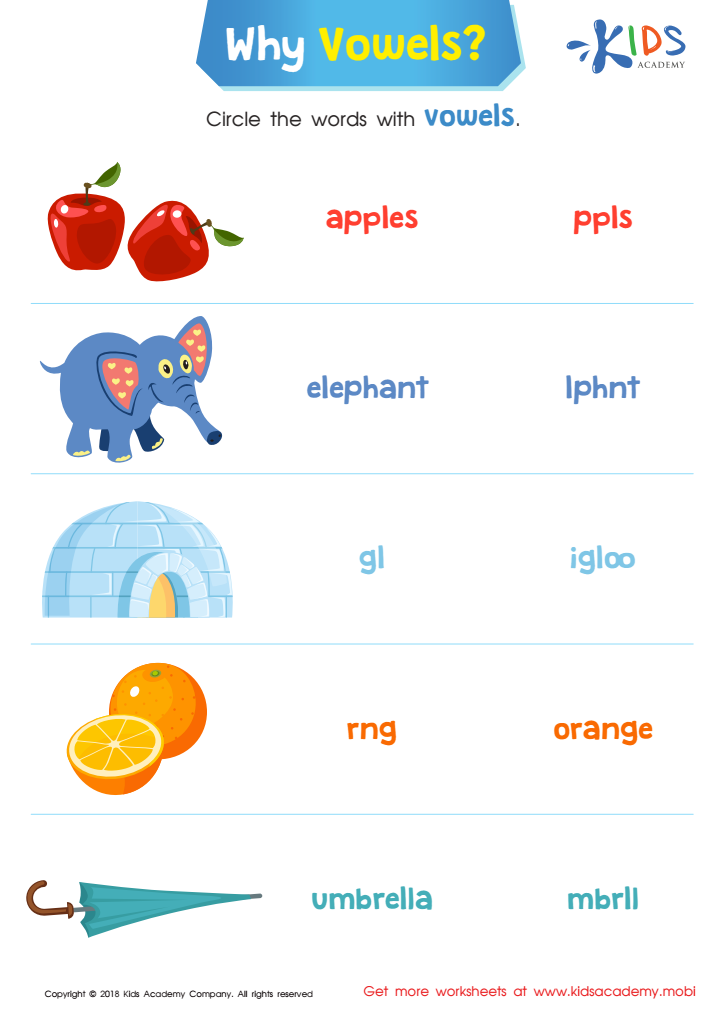
    This worksheet teaches kids to spell words with vowels. It features familiar pics for them to recognize, and they practice fine motor skills by circling the correct spelling. It's an enjoyable way for kids to learn how to spell and promote reading skills.
    Why Vowels? Reading Worksheet
    Worksheet
    Words with Long U Reading Worksheet

    Words with Long U Reading Worksheet

    Words with Long U Reading Worksheet

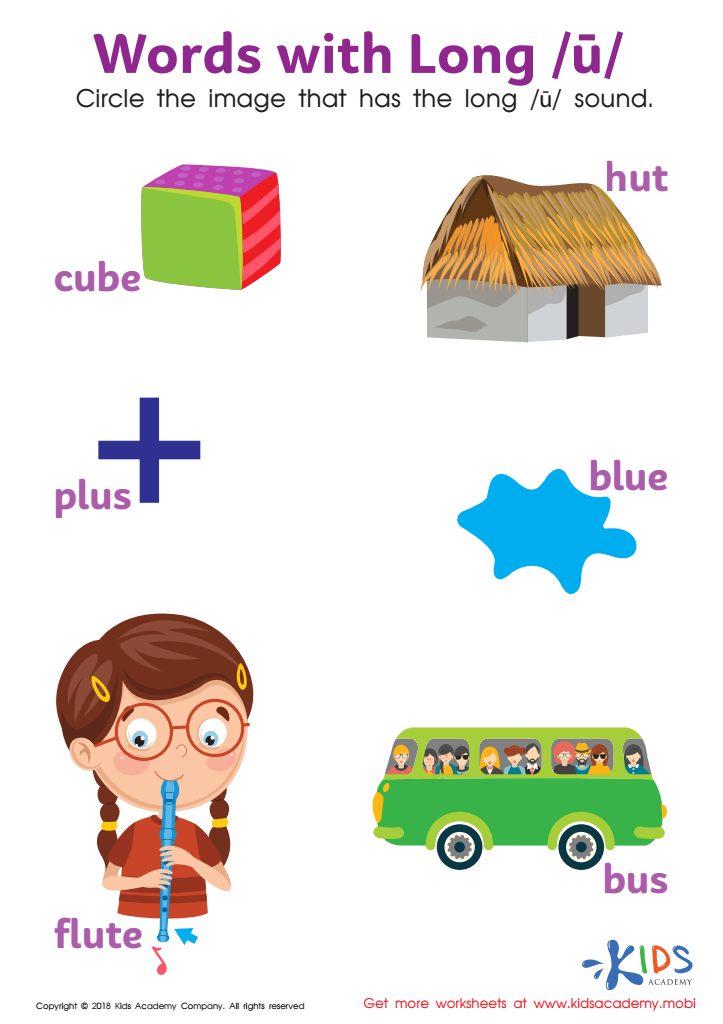
    Help your new reader master vowel recognition with this fun worksheet. By using picture clues and practicing fine motor skills, they'll learn to differentiate between words with the long and short «u» sound. Your learner will also get to practice vowel discrimination in high-frequency words. It's a great way to learn the importance of vowels in reading!
    Words with Long U Reading Worksheet

    Worksheet


    Understanding normal long and short vowels is crucial for children aged 3-5 as it forms the foundation for their reading and language development. At this stage, children are beginning to explore sounds and words, and recognizing the difference between long and short vowels helps them decode language more effectively.

    Short vowels, such as the 'a' in "cat," often indicate a closed syllable, which makes them more recognizable and easier to read for young learners. In contrast, long vowels, like the 'a' in "cake," can introduce children to the concept of vowel combinations and open syllables, broadening their phonetic awareness.

    Parents and teachers play a vital role by engaging children in playful phonetic activities, such as rhyming games and vowel-focused songs. This not only encourages effective learning but also fosters a love for reading.

    Additionally, mastering long and short vowels supports vocabulary expansion and spelling skills, both of which are essential for academic success. Ultimately, by laying a solid foundation of vowel recognition, parents and teachers empower young learners on their literacy journey, allowing them to become confident readers and communicators as they progress through their education.