
Normal Life Science Worksheets for Ages 3-5
3 filtered results
Difficulty Level
Grade
Age
-
From - To
Subject
Activity
Standards
Explore our engaging Life Science Worksheets designed specifically for children ages 3-5! Perfect for early learners, these worksheets introduce fundamental concepts related to the world around them. Featuring fun activities that cover topics such as animals, plants, and the environment, these resources help children develop critical thinking and observational skills. Each worksheet is designed to foster curiosity and encourage interaction with nature through colorful illustrations and simple tasks. Ideal for both classroom and home use, our Life Science Worksheets support early development while making learning exciting. Start your child’s journey in science today and inspire a lifelong love for learning!
Favorites
With answer key
Interactive
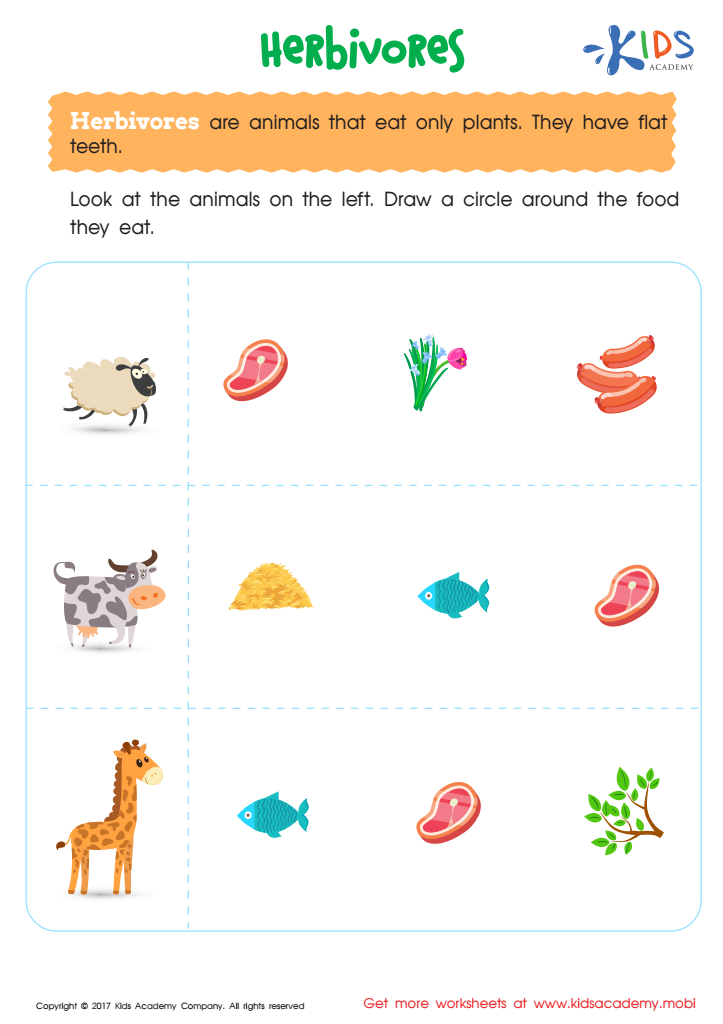
Herbivores Printable
Strengthen their vocab with these fascinating creatures, as they explore an intriguing aspect of beloved animals.
 Assign to My Students
Herbivores Printable
Worksheet
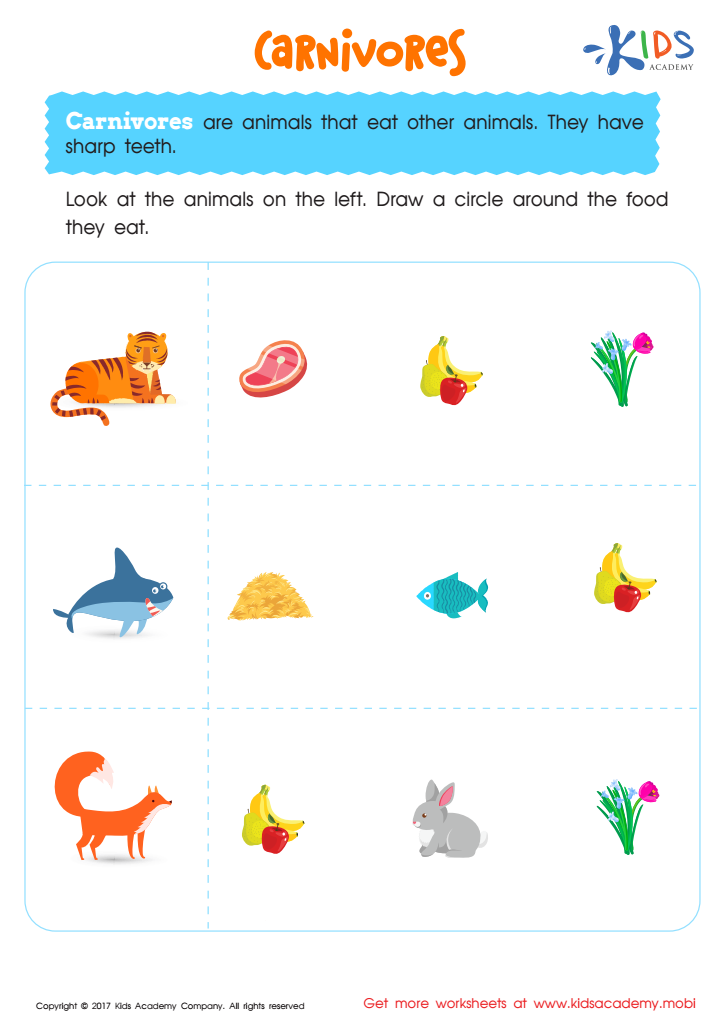
Carnivores Worksheet
Boost their vocabulary and help them explore the incredible world of carnivores.
Carnivores Worksheet
Worksheet
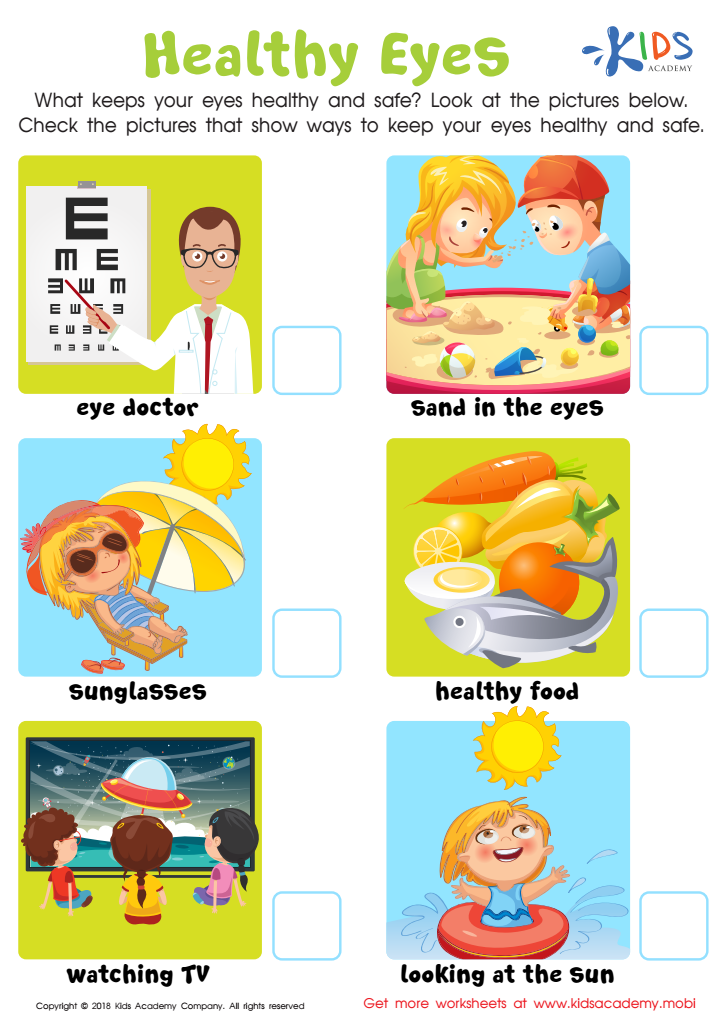
Healthy Eyes Worksheet
Does your child know how to care for their eyes? Help them understand with this worksheet. Look through the pictures together and discuss the different ways to keep the eyes healthy and safe. These include visits to the doctor, wearing sunglasses, and eating healthy food.
Healthy Eyes Worksheet
Worksheet
Join Kids Academy for Free
Who is primarily going to use this learning content?








Parents and teachers should appreciate the importance of Normal Life Science for children ages 3-5 as it lays a foundational understanding of the natural world. During these formative years, children are naturally curious, making it an ideal time to engage them with basic scientific concepts related to life. Introducing simple life science topics, such as plants, animals, habitats, and human growth, fosters this innate curiosity, encouraging exploration and observation.
Emphasizing Normal Life Science promotes critical thinking and cognitive development. When children learn to ask questions, make observations, and engage in simple experiments, they refine their reasoning skills. Additionally, life science can enhance their language skills as they learn new vocabulary and concepts.
Moreover, teaching young children about life science nurtures a sense of respect and responsibility towards living things, promoting empathy and environmental awareness. These acquired values and knowledge issues can help shape a generation more attuned to conservation efforts and sustainability.
Finally, integrating life science into early education encourages parents and teachers to create interactive and educational activities, making learning fun and engaging. Ultimately, supporting early life science education fosters a lifelong interest in science and nature, leading to informed, inquisitive individuals as they grow.








