Normal Silent Vowels Worksheets for Ages 3-6
3 filtered results
-
From - To
Our Normal Silent Vowels Worksheets are perfect for introducing children ages 3-6 to the concept of silent vowels. These engaging, age-appropriate activities help young learners recognize and understand when vowels are not pronounced within words. Featuring colorful illustrations and fun exercises, our worksheets make learning engaging and enjoyable. They are designed to strengthen early reading skills, boost phonemic awareness, and build a strong foundation in literacy. Great for both classroom use and at-home practice, these printables provide a gentle and effective approach to silent vowels, preparing children for their reading journey step by step.
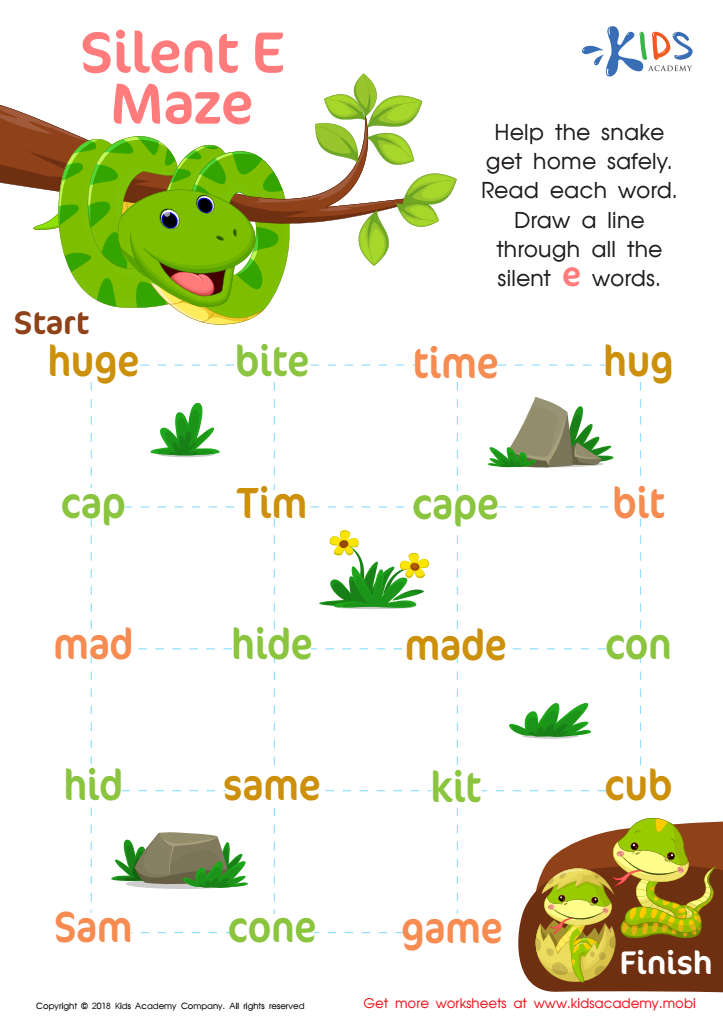
Silent E Maze Worksheet
 Assign to My Students
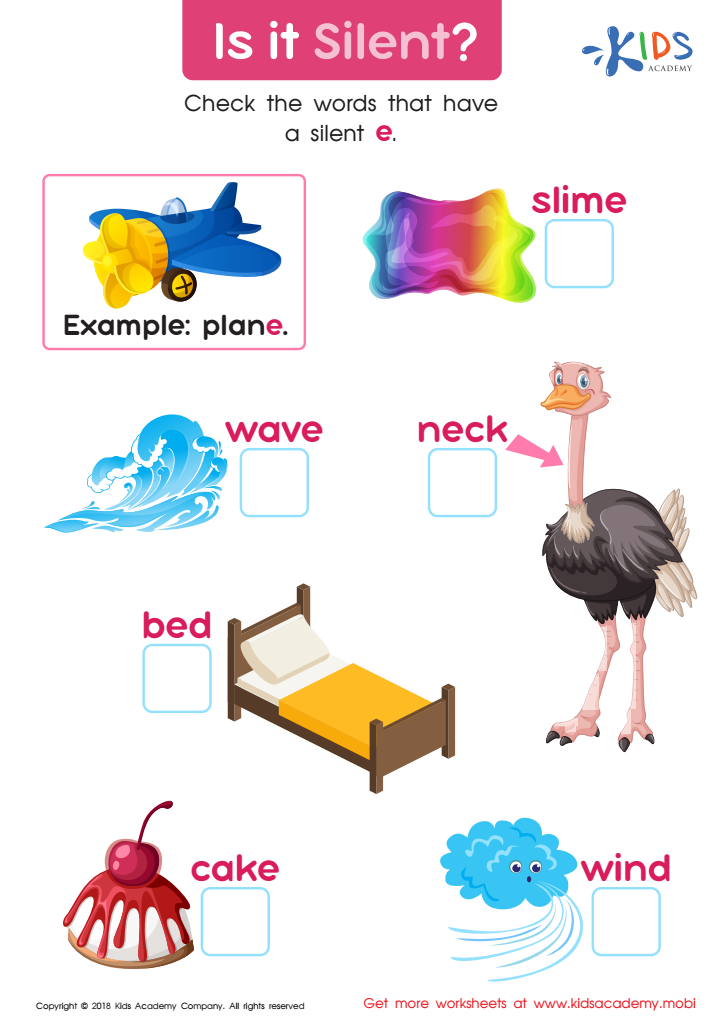
Is It Silent? Worksheet
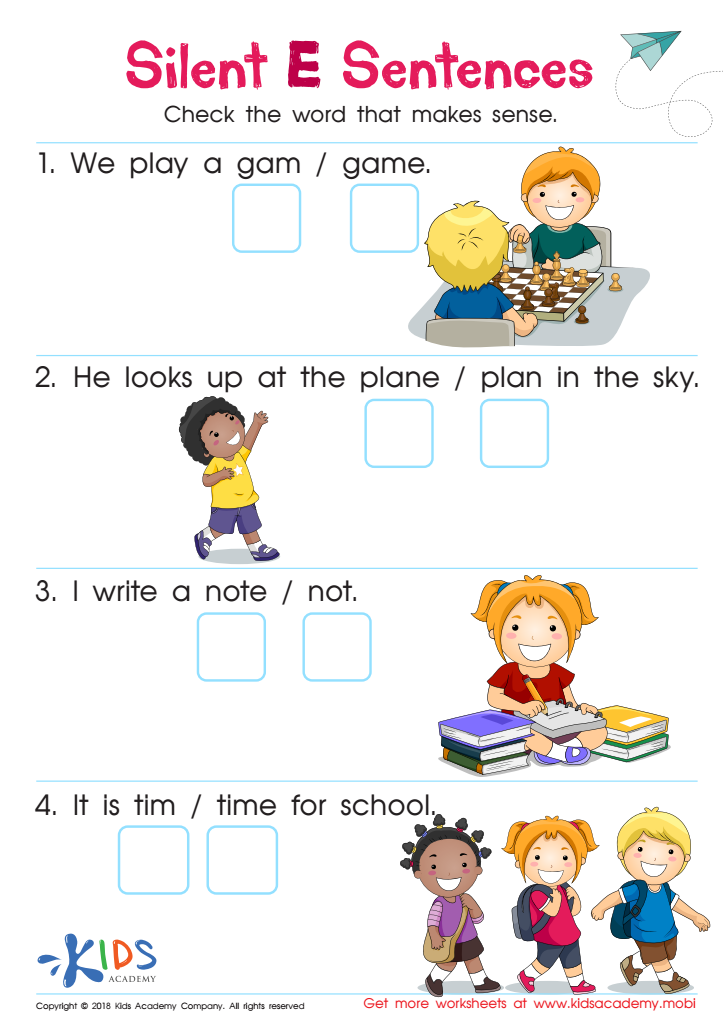
Silent E Sentences Worksheet


Understanding normal silent vowels is a critical aspect of early literacy development in children ages 3-6. Silent vowels, such as the ‘e’ in words like "make" or “bike,” play a pivotal role in learning to read and write proficiently. Recognizing these silent letters helps young learners decode words accurately, ensuring they acquire proper pronunciation and spelling skills.
For parents and teachers, paying attention to silent vowels aids in early intervention, identifying children who may struggle with reading before these difficulties escalate. Emphasizing this aspect of phonics supports the development of phonemic awareness, which is essential for fluent reading. Children who grasp the concept of silent vowels are better able to focus on word meanings and comprehension rather than getting stuck on decoding.
Moreover, mastering silent vowels can boost a child's confidence and enthusiasm for reading, encouraging a lifelong passion for learning. It lays a foundation for more complex literacy skills, avoiding potential roadblocks in future academic progress. Thus, by fostering an early understanding of silent vowels, parents and teachers can promote a positive and effective learning environment that supports holistic educational growth.








