Filters

100 filtered results

Clear all filters
Favorites
With answer key
Interactive

100 filtered results

Difficulty Level

Grade


Check out this FREE Trial Lesson on Reading Comprehension for age 3-6!

Answer Questions About Key Details in a Story

Favorites
With answer key
Interactive
  • 3-6
  • With answer key
  • Reading Comprehension
  • Normal
Match Them Up Worksheet

Match Them Up Worksheet

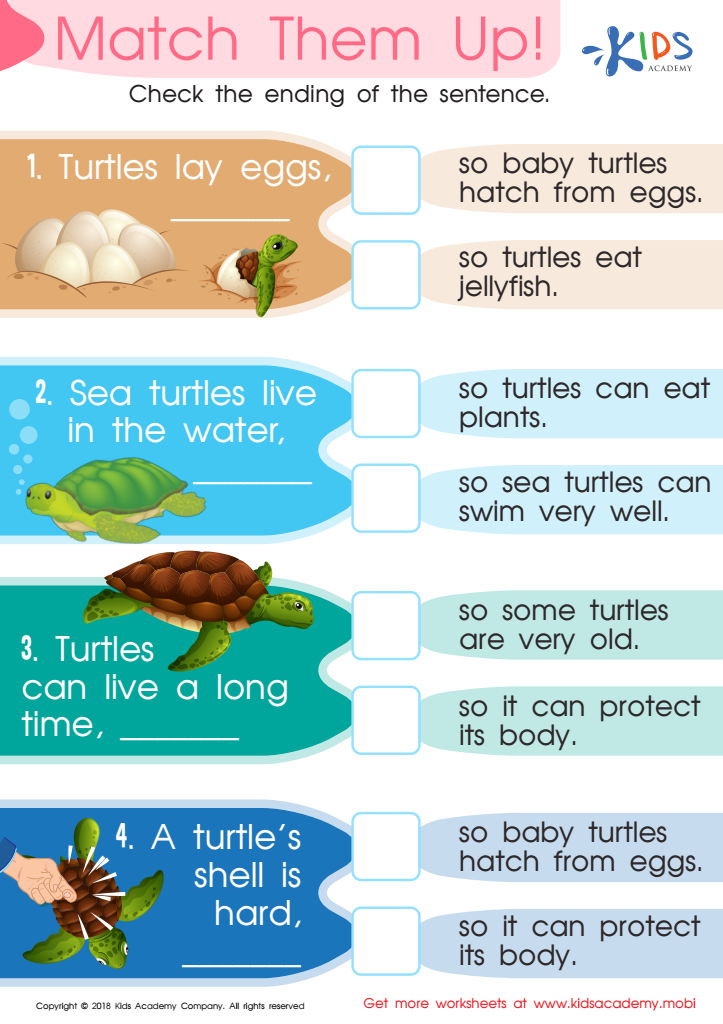
Reading offers a wealth of knowledge, but young readers may struggle to remember info from informational texts. Help your child practice comprehension with this fun turtle-related worksheet. Just read the sentence starters and select the correct ending from the options given. Check the box to indicate the right statement!
Match Them Up Worksheet
Worksheet
Rabbit Facts Worksheet

Rabbit Facts Worksheet

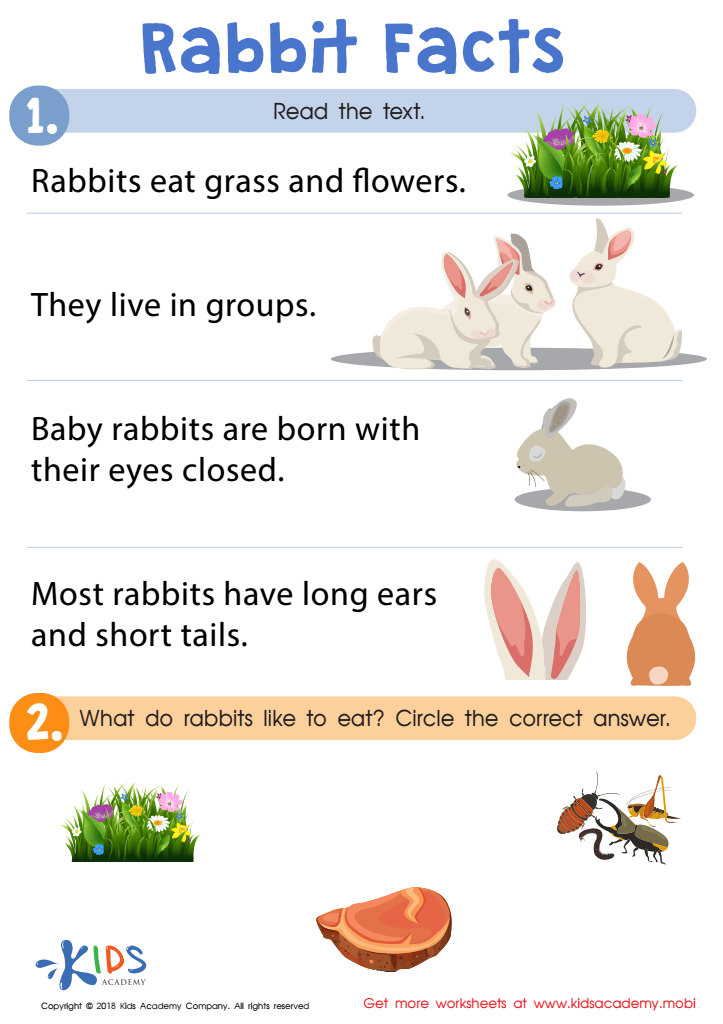
Informational texts offer great learning opportunities. Kids Academy's reading worksheet helps children read and recall important details from a text about bunnies. Kids will love it! Simply read the rabbit facts and circle the correct pictures to answer the questions.
Rabbit Facts Worksheet
Worksheet
Princess and the Pea Questions Worksheet

Princess and the Pea Questions Worksheet

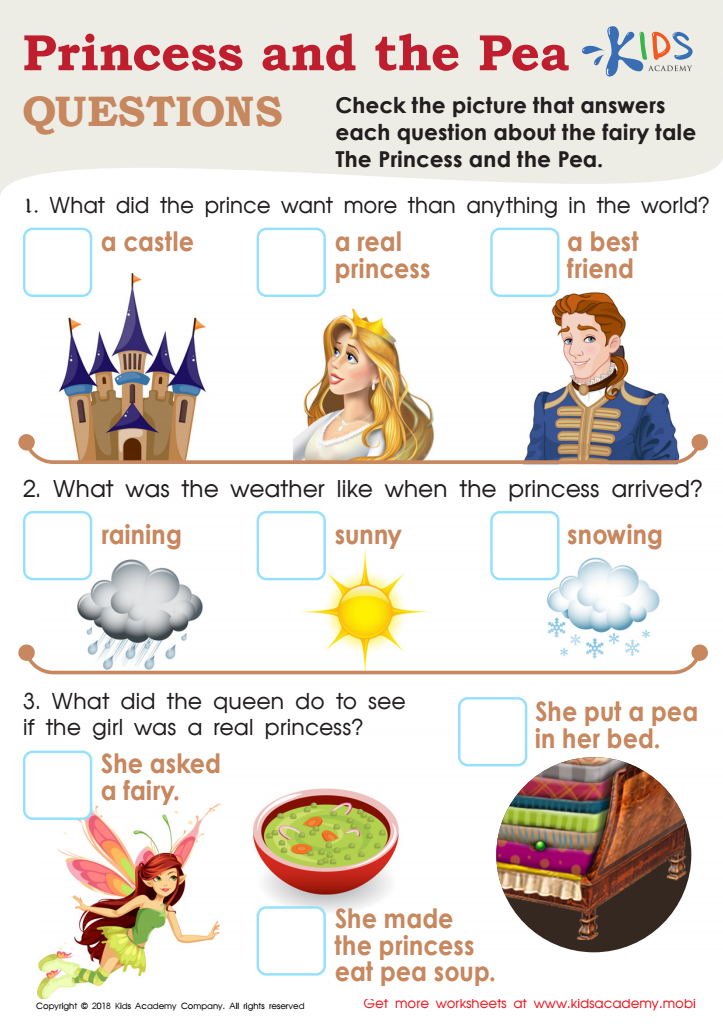
Your kid knows The Princess and the Pea inside-out? Test their knowledge with this worksheet. Ask your little one to read the questions and match each one to the picture. It's a fun way to see just how much attention they've paid to their bedtime story.
Princess and the Pea Questions Worksheet
Worksheet
Craft and Structure of Informational Texts: Assessment 3 Worksheet


Craft and Structure of Informational Texts: Assessment 3 Worksheet

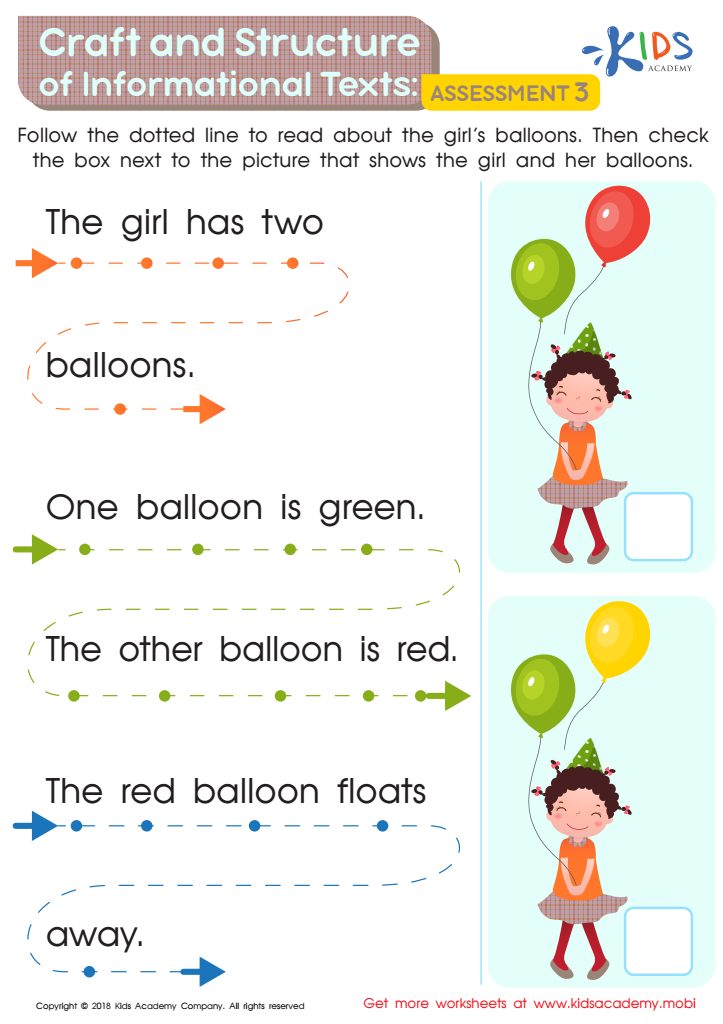
Test your beginning reader's understanding of left-to-right directionality and use of details from informational texts with this fun worksheet. Follow the traceable paths to find the right picture for each sentence. This will help your child gain confidence and be successful as a reader.
Craft and Structure of Informational Texts: Assessment 3 Worksheet

Worksheet


... 4 5

Normal reading comprehension in early childhood (ages 3-6) is crucial for future academic success and overall development. At this stage, children's brains are highly receptive to language and literacy skills. When parents and teachers emphasize reading comprehension, they foster critical thinking, vocabulary development, and a love for learning. Children who understand what they read are more likely to develop strong reading habits and excel in later grades.

Moreover, reading comprehension builds the foundation for effective communication skills. Children learn to express their thoughts and ideas, enhancing their social interactions. Engaging children in discussions about stories encourages them to make predictions, summarize content, and infer meanings—skills that are vital beyond early education.

Incorporating reading comprehension activities prepares children for a variety of subjects and helps them navigate information effectively. When parents and educators promote understanding rather than mere memorization, children develop a deeper sense of curiosity and creativity.

Ultimately, reading comprehension at this young age nurtures a culture of literacy, equipping children with the tools they need to thrive academically and socially throughout their lives. Investing time and resources in early reading practices ultimately pays dividends for children’s lifelong learning journeys.