Normal Letter E Worksheets for Ages 3-7
3 filtered results
-
From - To
Introduce your child to the captivating world of letters with our "Normal Letter E Worksheets for Ages 3-7." These engaging, printable activities are designed to aid early learners in recognizing, writing, and sounding out the letter 'E'. Each worksheet features fun and interactive tasks such as tracing, coloring, and matching exercises, tailored to enhance fine motor skills and boost letter familiarity. Perfect for both classroom settings and at-home practice, these worksheets provide a solid foundation for literacy development. Equip your young learner with essential skills using our comprehensive and enjoyable Letter E activities!
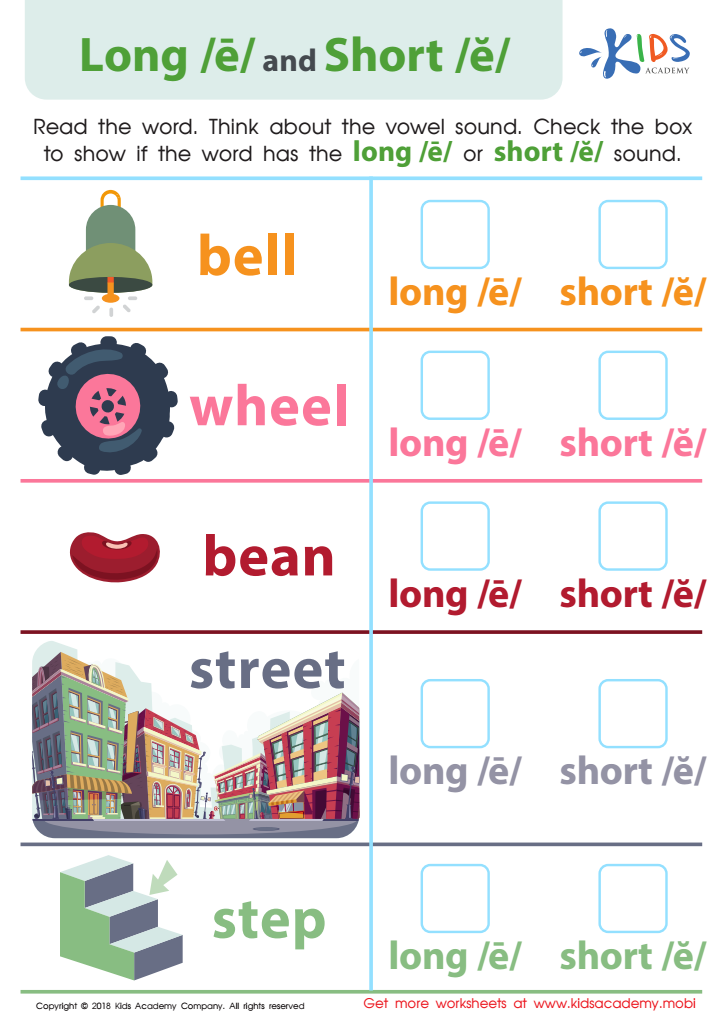
Reading: Long E and Short E Worksheet
 Assign to My Students
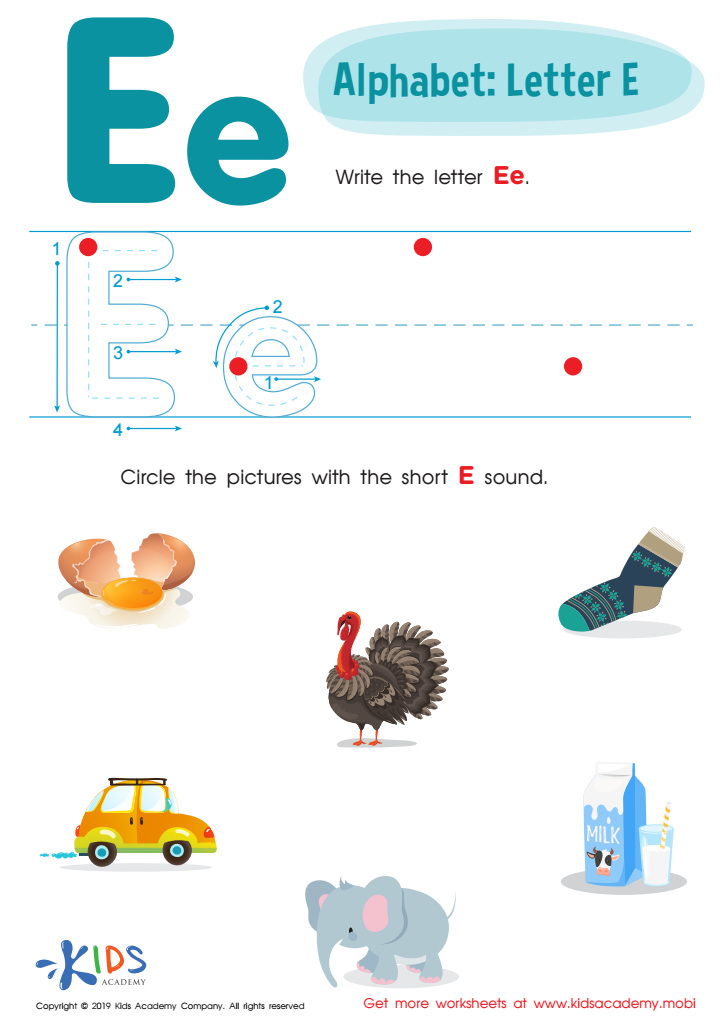
Letter E Tracing Worksheet
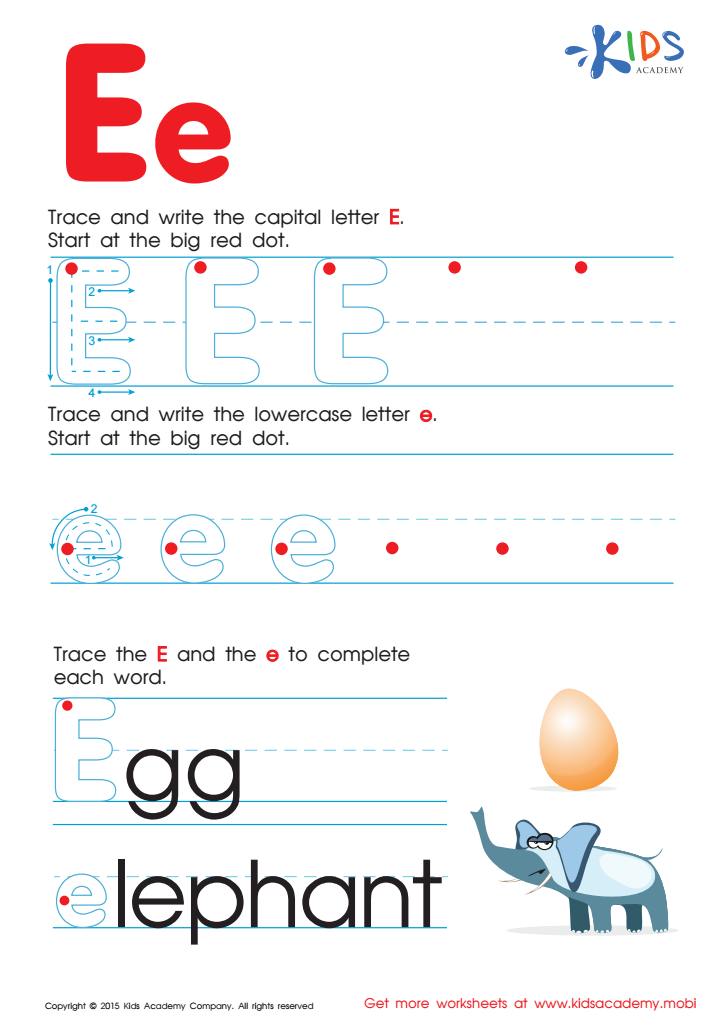
Letter E Tracing Page







The development of writing skills in children aged 3-7 is crucial, and mastering the normal letter "E" lays foundational blocks for literacy. At this early age, children are in what's often termed the "sensitive period" for language acquisition. Properly learning how to write the letter "E" ensures they grasp essential pre-writing skills, including correct hand-eye coordination and fine motor control.
For both parents and teachers, encouraging children to practice writing the letter "E" helps them develop confidence and fluency in written communication. This letter is frequently encountered, making it particularly important; early mastery fosters more fluid reading and writing as they grow.
Moreover, consistent practice can even assist in cognitive development. Writing the letter "E" involves sequential memory, where children recall the strokes needed to form the letter correctly. This practice improves their cognitive skills, such as memory retention and alphabetical knowledge, contributing to their overall academic readiness.
Lastly, forming the habit of correct letter formation prevents issues like dysgraphia, which can hinder a child's academic progress. Therefore, attention to writing the letter "E" equips children with a durable learning foundation, promoting success in future literacy endeavors. Parents and teachers nurturing these early skills are investing in the child's educational journey and overall development.