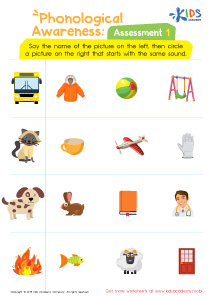
Normal Middle Sounds Worksheets for Ages 3-7
3 filtered results
-
From - To
Explore our engaging Normal Middle Sounds Worksheets, specially designed for children aged 3 to 7! These interactive resources help young learners develop their phonics skills by identifying and practicing middle sounds in words. Each worksheet features colorful illustrations and easy-to-follow activities, making learning fun and effective. Ideal for both classroom settings and homeschooling, these worksheets nurture phonemic awareness, enhance vocabulary, and support early literacy skills. Download and print the worksheets today to foster your child's love for learning and strengthen their reading foundation. Encourage your little ones to sound out middle sounds, refining their language abilities with every activity!
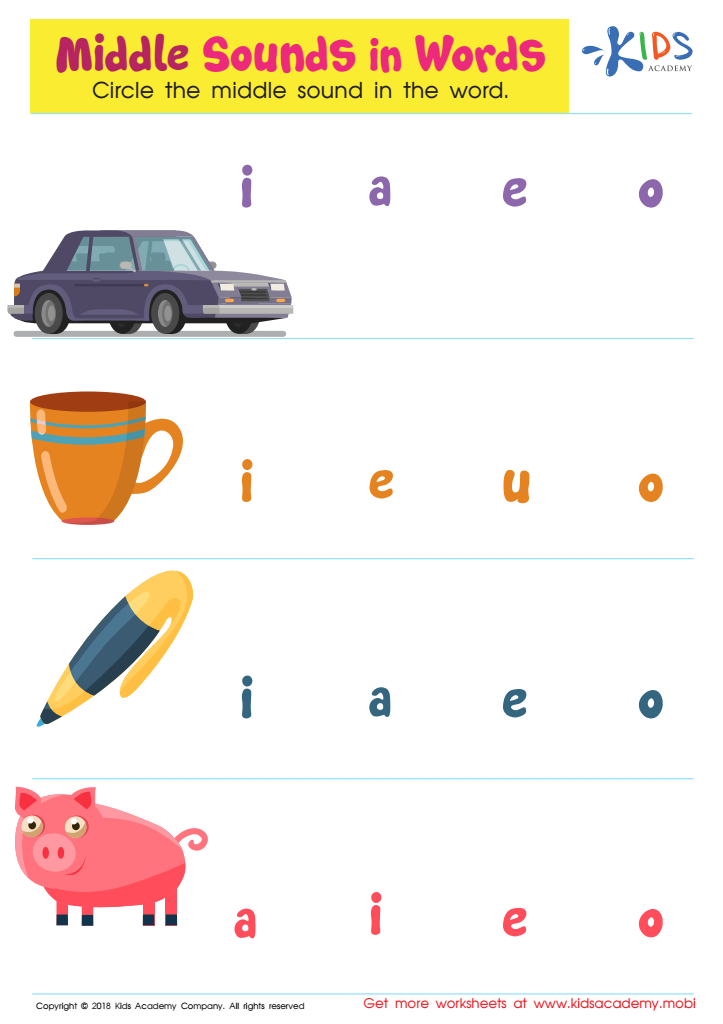
Middle Sounds in Words Worksheet
 Assign to My Students
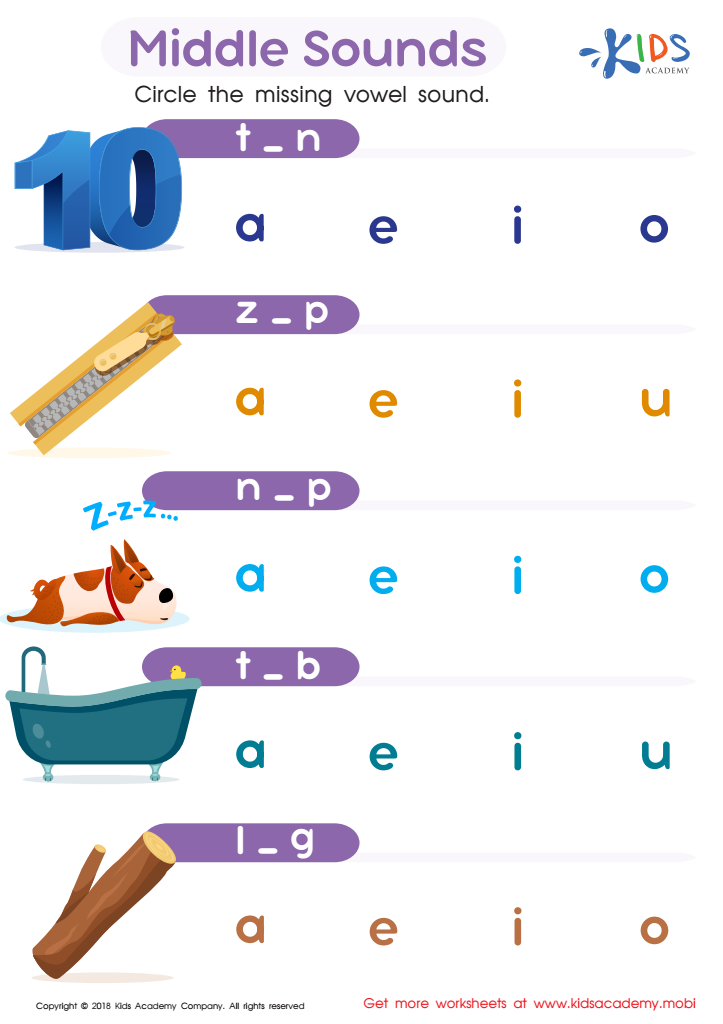
Middle Sounds Worksheet
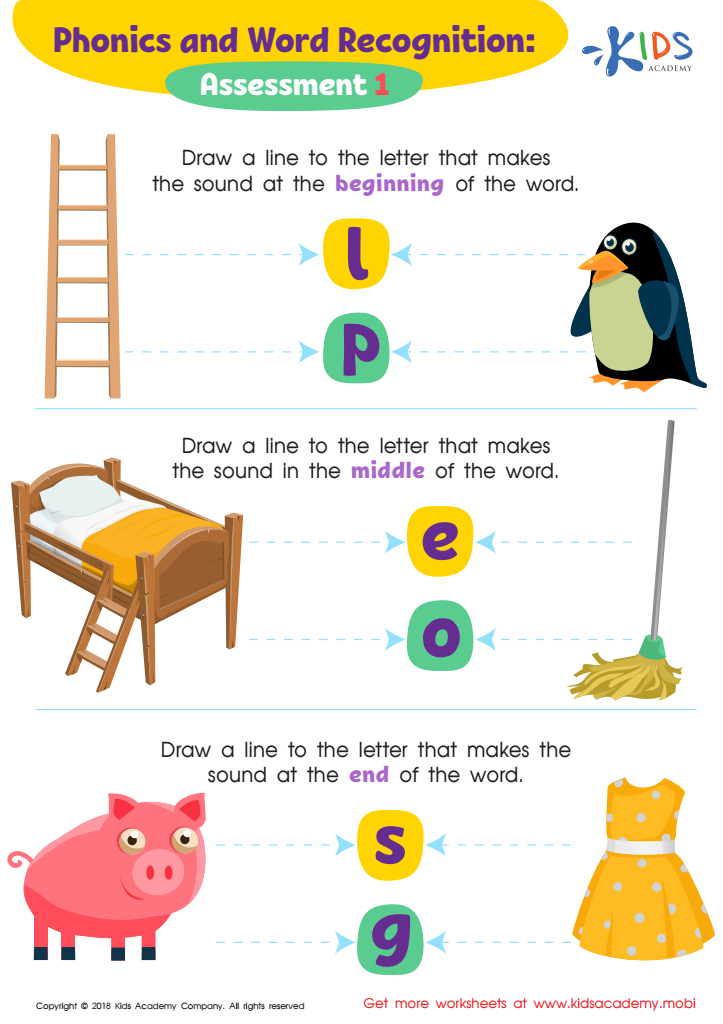
Phonics and Word Recognition: Assessment 1 ELA Worksheet





Normal middle sounds, or the phonemes produced in the middle of words, are critical for early literacy development in children aged 3-7. Understanding and mastering these sounds lays the groundwork for reading and spelling proficiency. Parents and teachers should prioritize middle sound recognition because it enhances phonemic awareness—a crucial skill for decoding words.
At this developmental stage, children are beginning to connect letters with sounds. Focusing on middle sounds helps them grasp the structure of words, enhancing their ability to segment and blend sounds, which is essential for reading. For instance, identifying the middle sound in “cat” (a) or “dog” (o) provides children with the tools needed to read and spell similar words, reinforcing their confidence and motivation.
Moreover, middle sounds play an integral role in vocabulary building. When children can differentiate between sounds, they're better equipped to expand their language skills. Engaging in activities that emphasize middle sounds, such as rhyming games or phonics exercises, fosters an enjoyable learning environment that can nurture a lifelong love for reading.
Ultimately, paying attention to normal middle sounds not only bolsters children's academic success but also enriches their communication skills, setting the stage for future learning.