Normal Governance and Civics Worksheets for Ages 3-7 - Page 2
28 filtered results
-
From - To
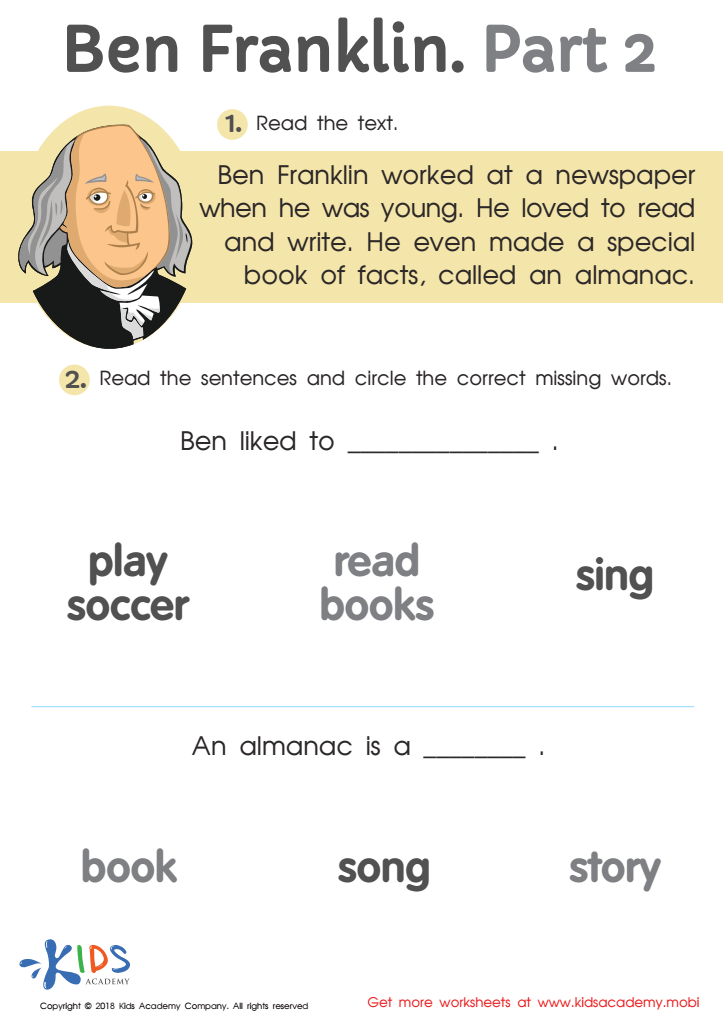
Ben Franklin Part 2 Worksheet
 Assign to My Students
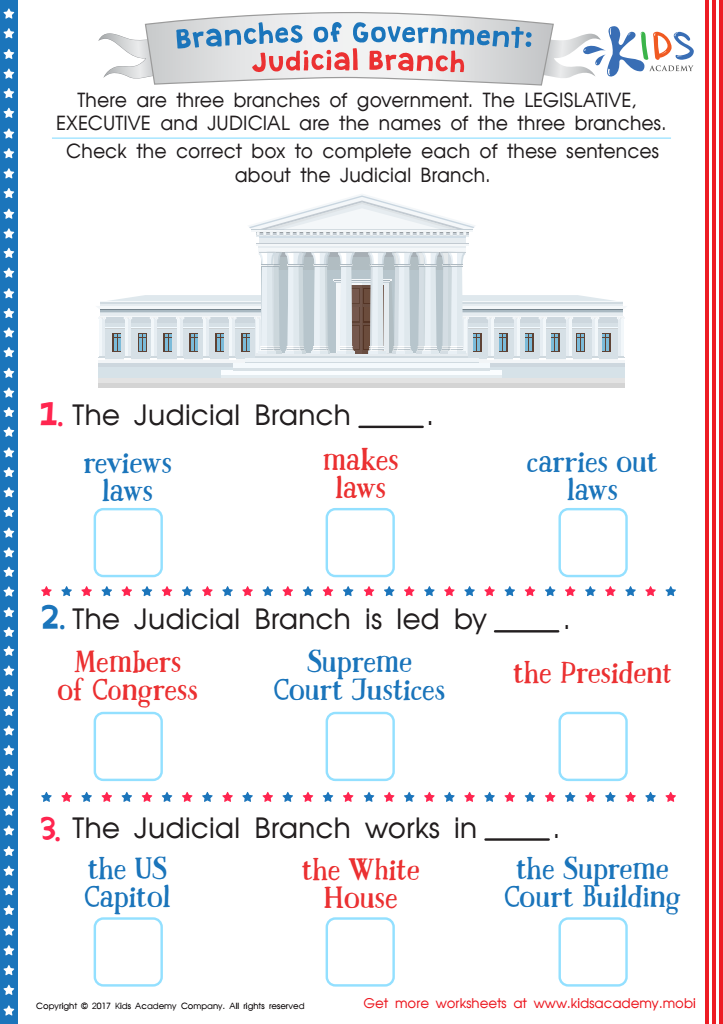
Braches of the Government: Judicial Branch Worksheet
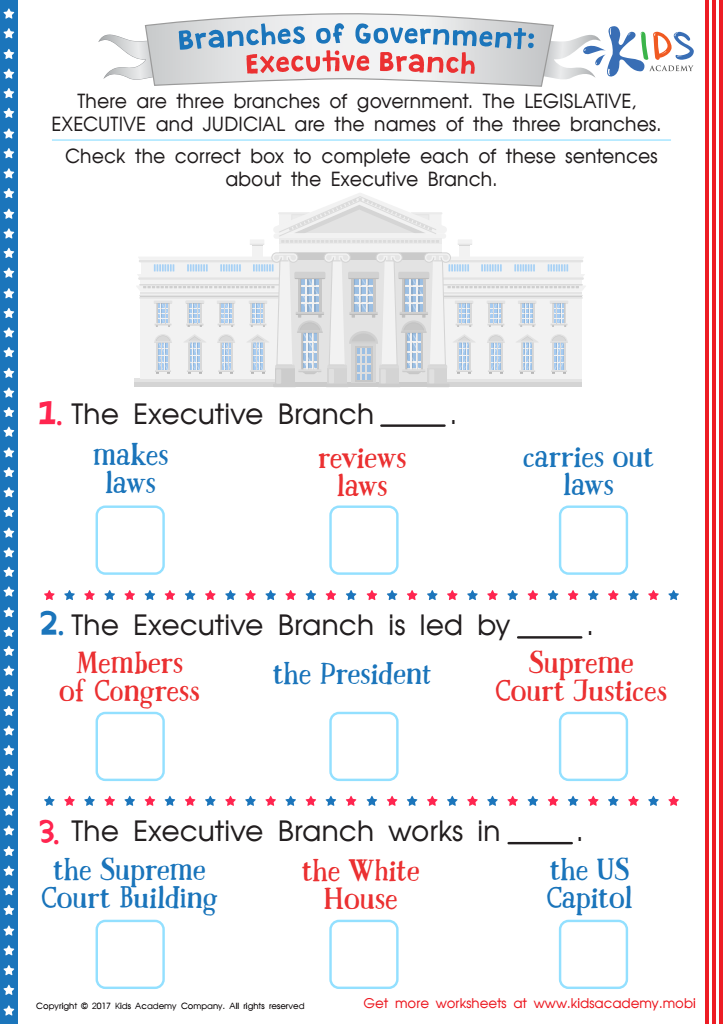
Branches of the Government: Executive Branch Printable
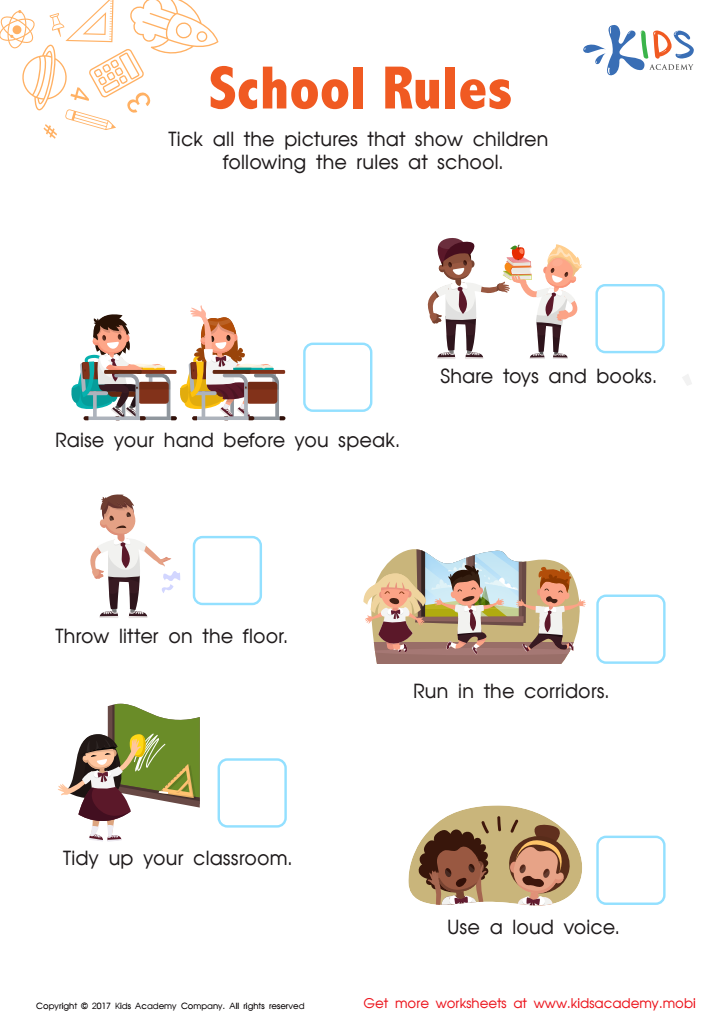
School Rules Worksheet


Incorporating normal governance and civics into early education for children aged 3-7 is crucial for several reasons. First, this period is foundational for developing key social and cognitive skills. By introducing concepts of governance and civics, we nurture their understanding of community, authority, and their role in society from a young age. Learning about fairness, rules, and responsibilities helps children grasp the importance of cooperation, respect, and empathy.
Parents and teachers play a pivotal role in shaping a child’s worldview. By integrating civics, they empower children with knowledge to become informed and engaged citizens. Understanding basic principles of citizenship and governance instills a sense of belonging and responsibility toward their community. This can lead to more mindful, active participation as they grow older, fostering future leaders with a strong moral compass.
Moreover, addressing civics at an early age helps demystify adult-centric concepts, making them accessible and relatable. Simple lessons about sharing, taking turns, and understanding different roles within a game or a classroom setting lay the groundwork for more complex civic duties later on.
In sum, early exposure to governance and civics helps build a generation of conscientious, informed, and responsible individuals, which benefits both the children and society.








