Normal Ending Sounds Worksheets for Ages 3-9
5 filtered results
-
From - To
Explore our "Normal Ending Sounds Worksheets for Ages 3-9," designed to boost your child's early literacy skills. These engaging, educational worksheets focus on helping young learners identify and pronounce the ending sounds of words. Perfect for preschool through early elementary grades, each worksheet is thoughtfully crafted to make learning fun and effective. Through colorful illustrations and interactive activities, children will improve their phonemic awareness, paving the way for reading and writing success. Printable and easy to use, our worksheets are an excellent resource for parents and teachers alike. Unlock your child's reading potential with our specialized materials!
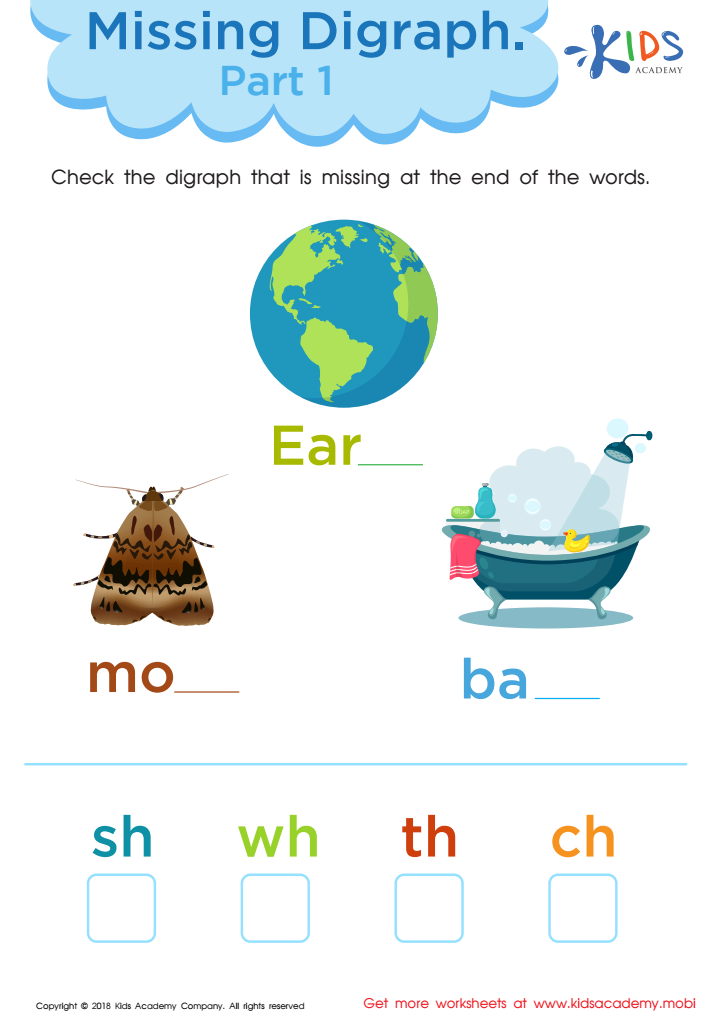
Missing Digraph: Part 1 Worksheet
 Assign to My Students
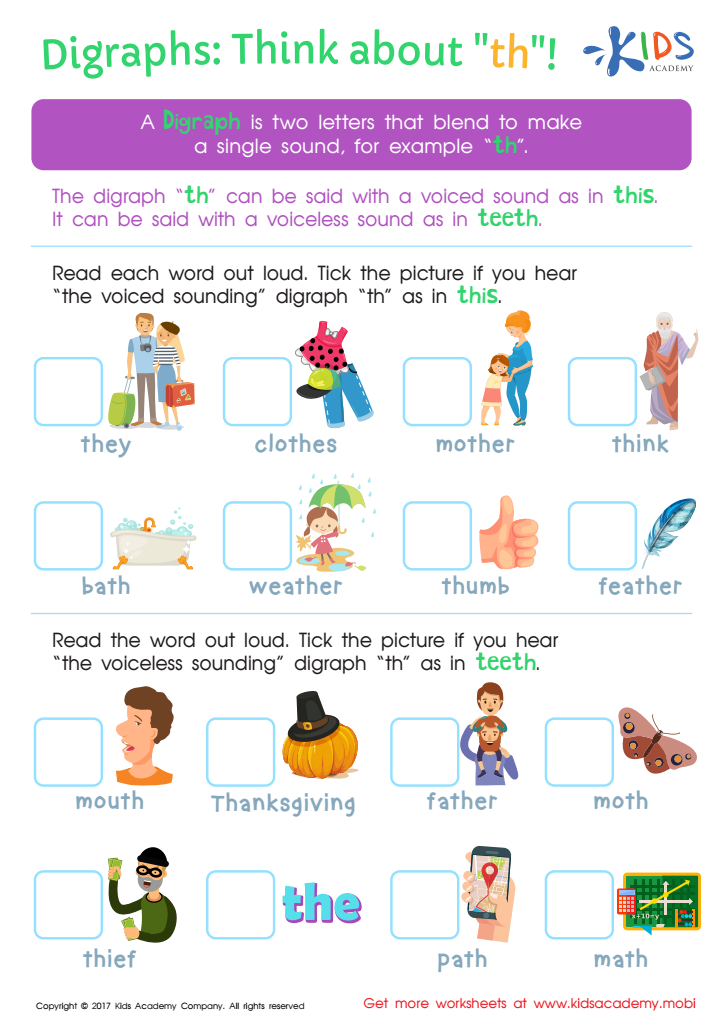
Digraphs: Think About "th" Worksheet
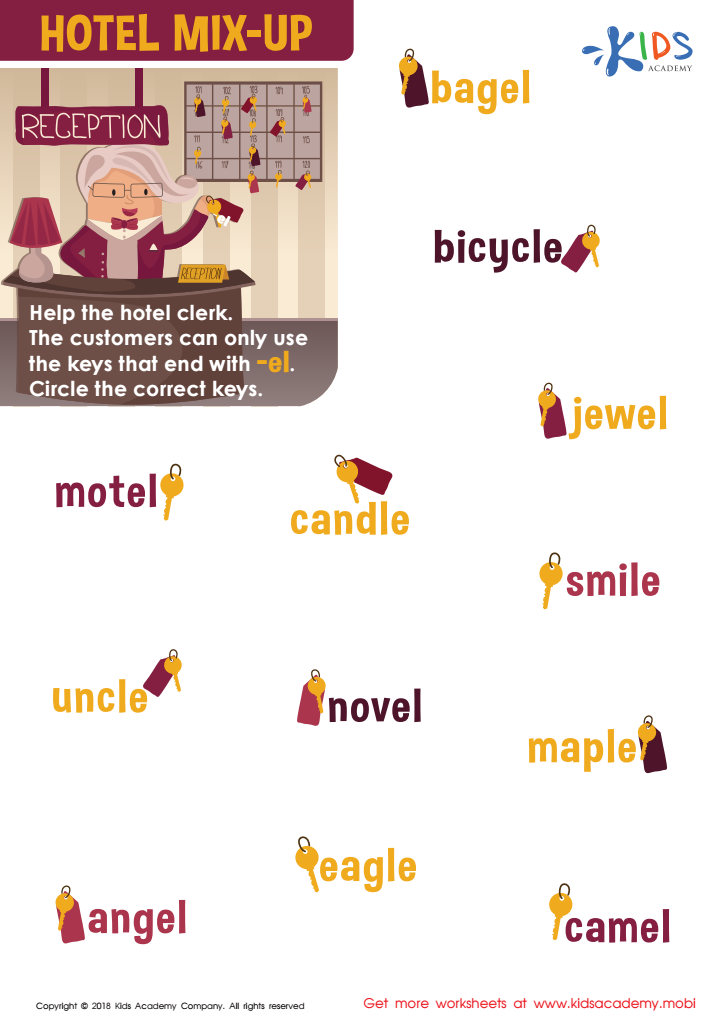
Hotel Mix-up Worksheet
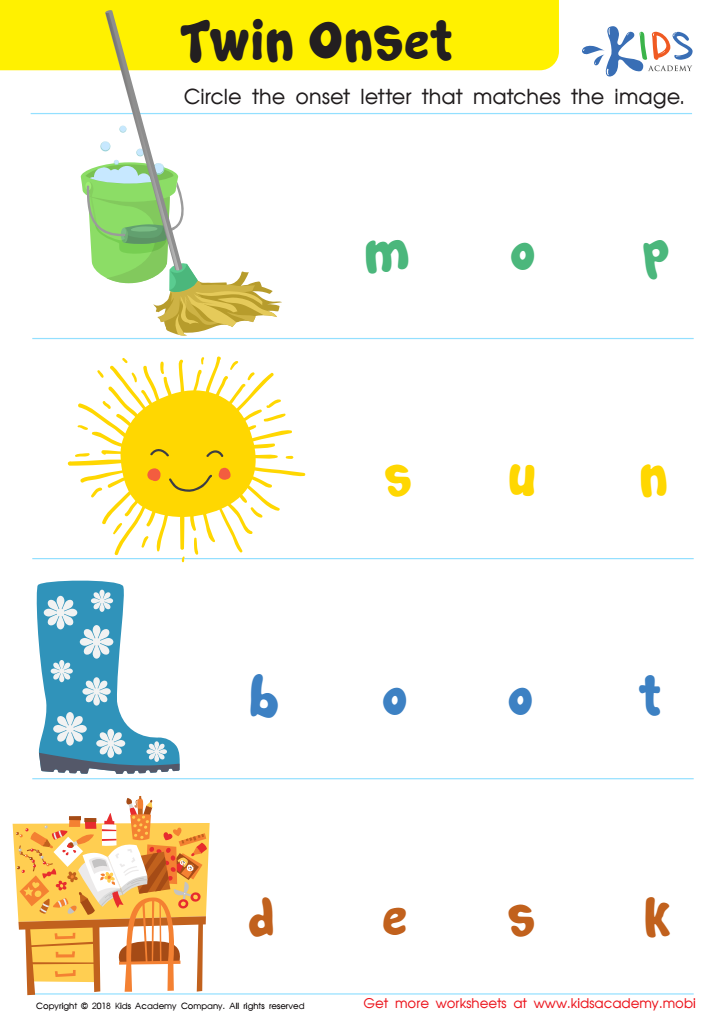
Twin Onset Worksheet
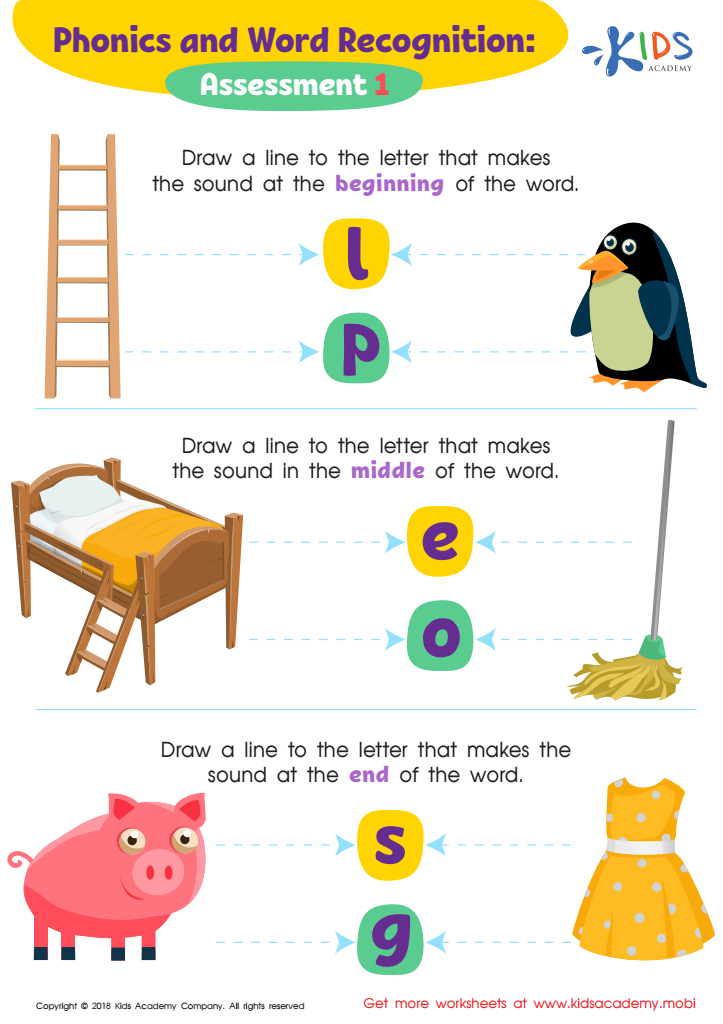
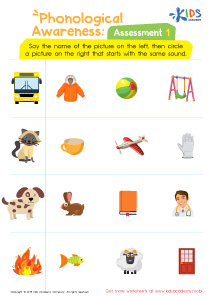
Phonics and Word Recognition: Assessment 1 ELA Worksheet






Normal ending sounds in words play a pivotal role in early literacy and language development for children aged 3-9. At this critical stage, young learners are rapidly acquiring the foundational skills needed for reading and writing. By focusing on normal ending sounds, parents and teachers can effectively support phonemic awareness, which is the ability to recognize and manipulate sounds in spoken words.
Understanding and identifying normal ending sounds help children decode words more efficiently, steering them towards successful reading and spelling abilities. It enhances their vocabulary as they become better equipped to understand the structure and patterns of language.
Moreover, consistent exposure to ending sounds aids in improving pronunciation and speech clarity. For bilingual or multilingual children, grasping these sounds can smooth the transition between languages, bolstering their confidence in verbal communication.
Teachers and parents who emphasize ending sounds provide opportunities for children to engage through activities like rhyming games, storytelling, and phonics practice. This not only fosters a love for reading but also promotes critical thinking and problem-solving skills.
In sum, focusing on normal ending sounds is fundamental to holistic language development. Supporting children in mastering these sounds sets the stage for future academic success, effective communication, and a lifelong love of learning.