Normal Vowels Worksheets for Ages 3-9 - Page 4
73 filtered results
-
From - To
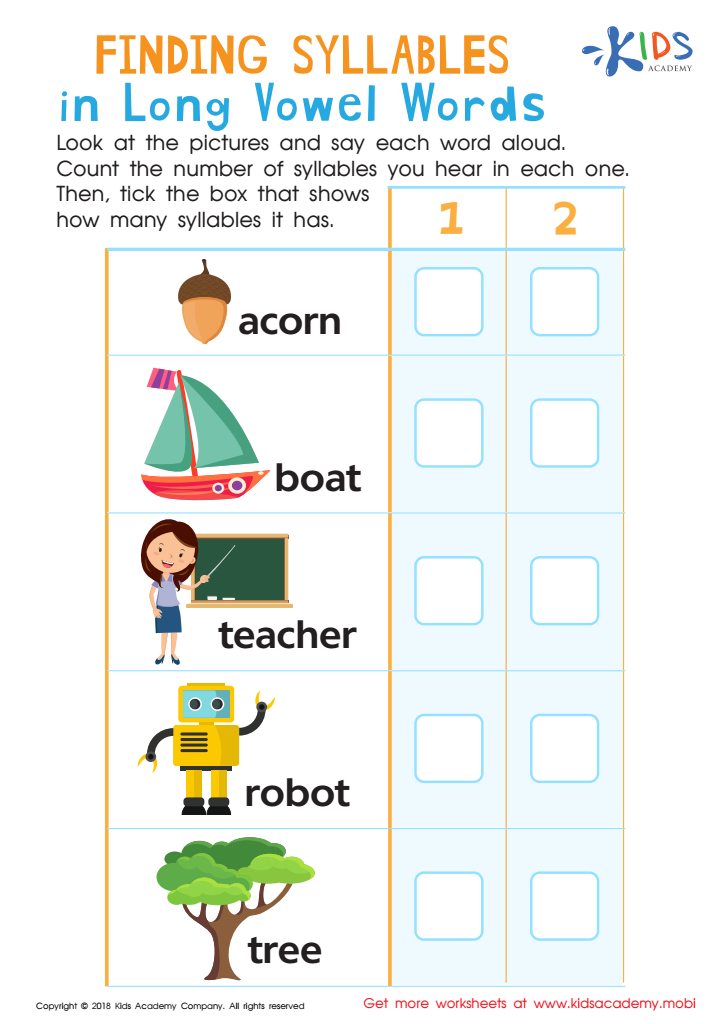
Finding Syllables in Long Vowel Words Worksheet
 Assign to My Students





Understanding normal vowels is crucial for young learners, as it forms the foundation for language skills, literacy, and overall communication. For children aged 3-9, mastering normal vowels—like A, E, I, O, and U—enables them to decode words, build vocabulary, and improve spelling. Early exposure to vowels helps children recognize sound-letter relationships, essential for reading fluency.
Parents and teachers play a pivotal role in a child’s language development. Encouraging a rich, engaging environment filled with songs, books, and games that emphasize vowel sounds can significantly enhance phonemic awareness. This foundational knowledge not only aids in reading but also fosters confidence in expression and creativity.
Moreover, many academic subjects rely on language proficiency. A strong grasp of vowel sounds contributes to success in various areas, from math word problems to science storytelling. When children secure their understanding of vowels, it leads to better overall performance in school, paving the way for lifelong learning.
Ultimately, prioritizing vowel recognition and sound blending leads children to become proficient readers and communicators. By focusing on this aspect of language, parents and teachers can set the stage for resilience and eagerness to tackle future learning challenges.






