Normal Addition and Subtraction Word Problems Worksheets for Ages 3-9 - Page 2
29 filtered results
-
From - To
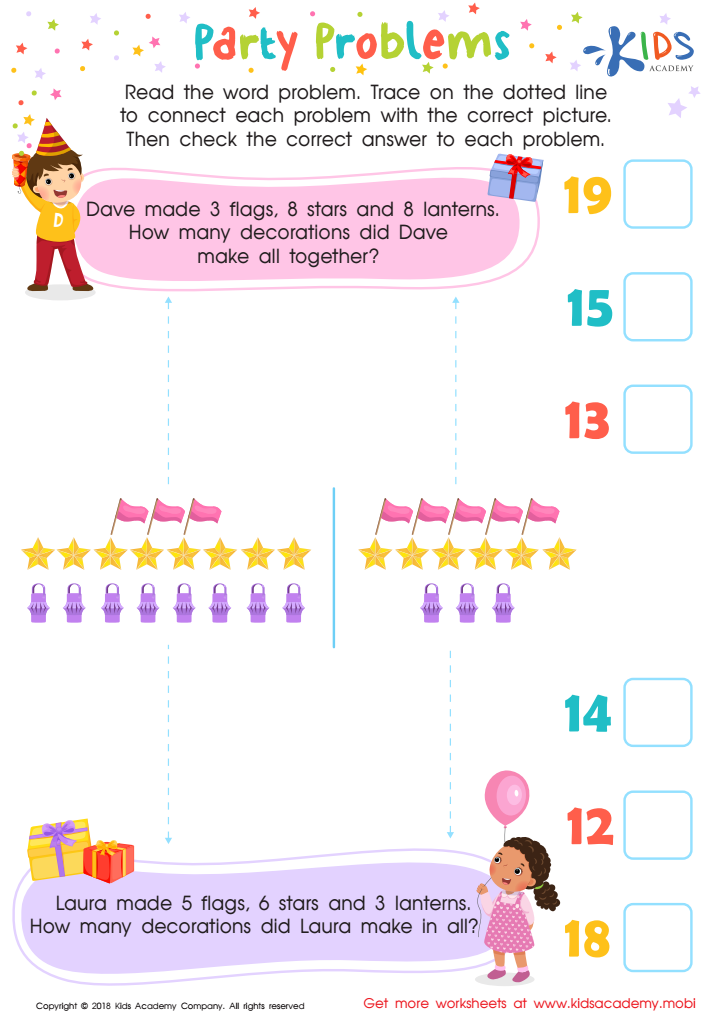
Party Problems Worksheet
 Assign to My Students
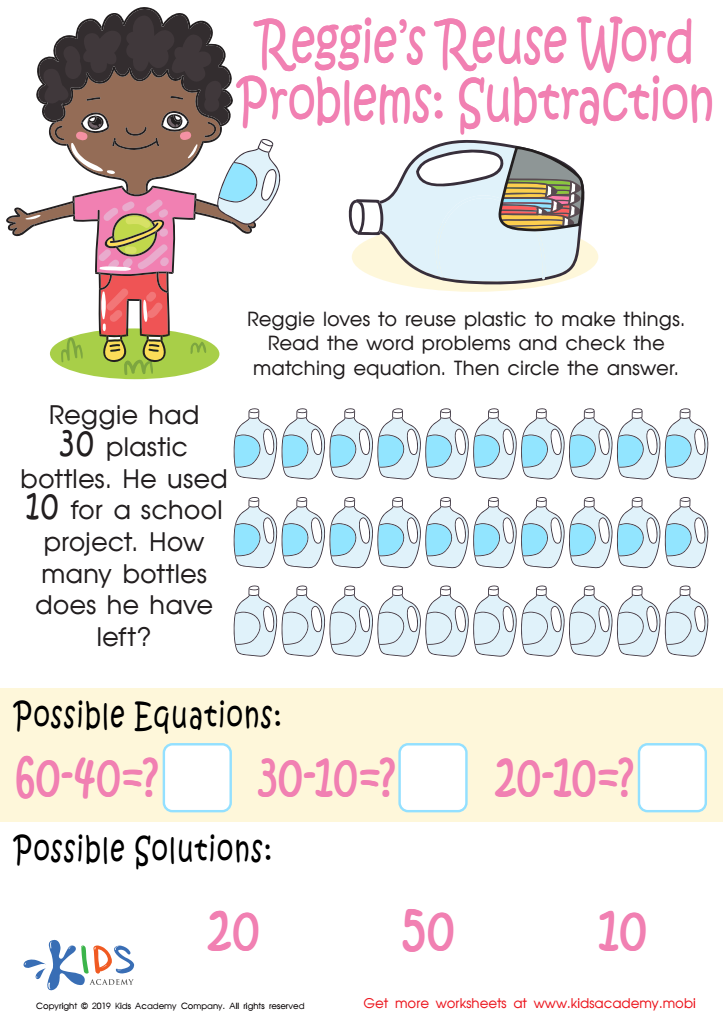
Reggie's Reuse Word Problems: Subtraction Worksheet
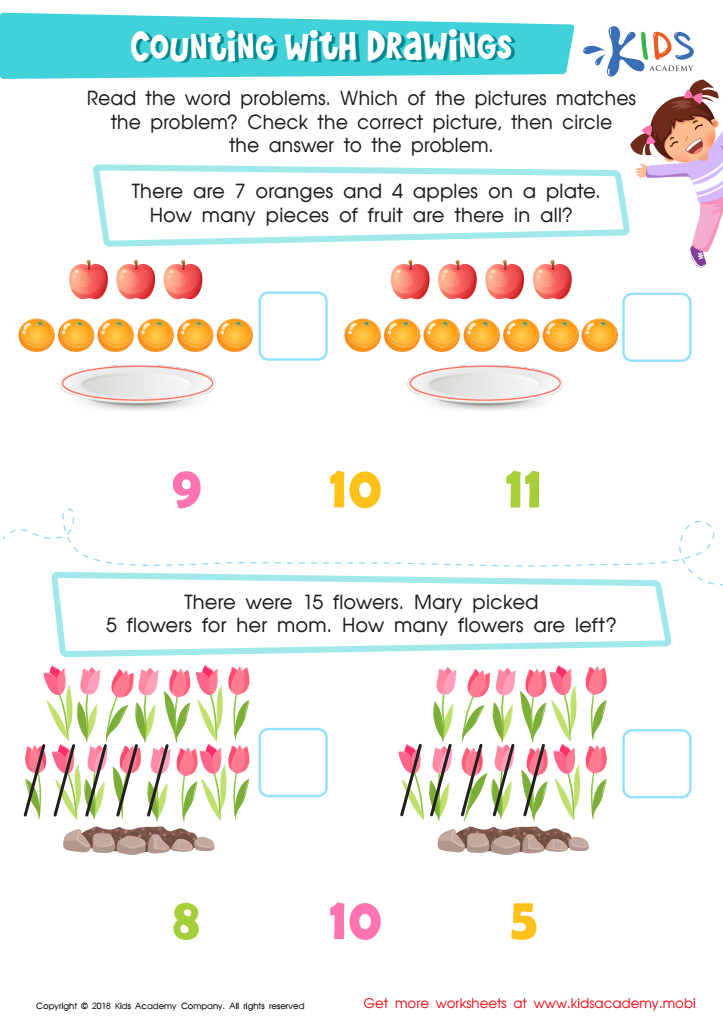
Counting with Drawings:Fruits & Flowers Worksheet
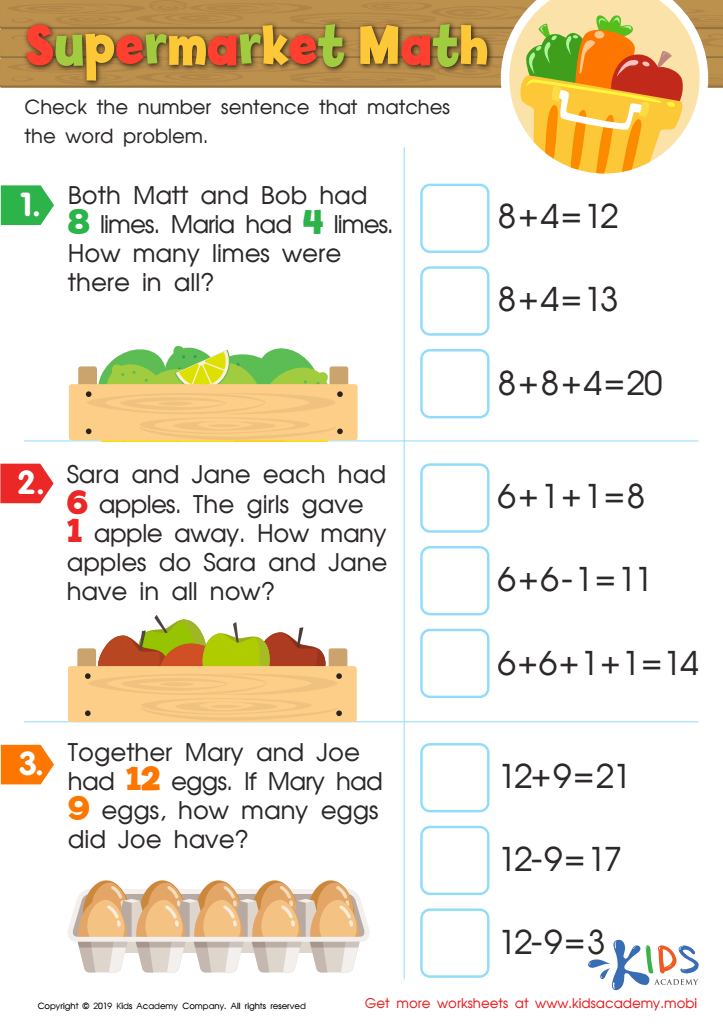
Supermarket Math Worksheet
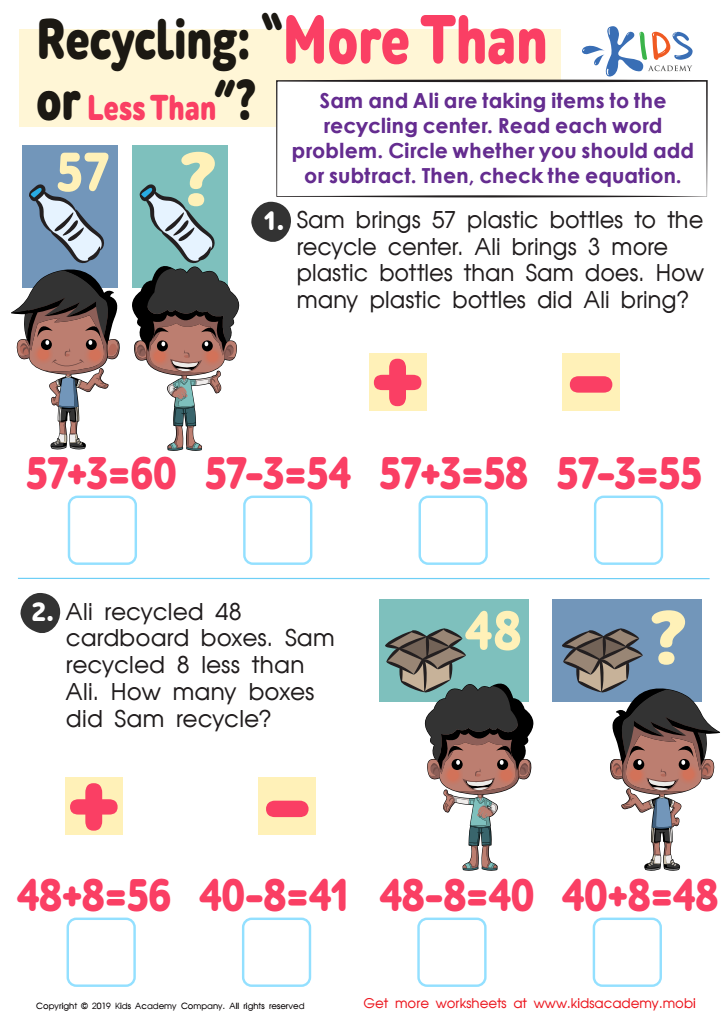
Recycling - More or Less Worksheet








Parents and teachers should care about normal addition and subtraction word problems for children aged 3-9 because these foundational skills are essential for early mathematical development. At this age, children are naturally curious and eager to make sense of their world, and word problems offer a real-world context for teaching addition and subtraction. Engaging with these problems helps develop critical thinking skills as children learn to analyze and interpret situations represented in the text.
Moreover, solving word problems enhances language development and comprehension skills, allowing children to connect mathematical concepts with everyday life. By grappling with stories that involve numbers, children learn to decode problems, identify relevant information, and extract solutions. This not only solidifies their understanding of arithmetic operations but also fosters perseverance and problem-solving abilities.
Furthermore, creating a positive attitude toward math at an early age can lead to lifelong benefits, as confidence in math often translates into academic success later. Parents and teachers play a crucial role in modeling and supporting this learning journey, guiding children through challenges to build a strong foundation in mathematics. Ultimately, mastery of these early skills equips children with the tools necessary for more complex mathematical concepts in the future.