Normal Beginning Sounds Worksheets for Ages 5-9
13 filtered results
-
From - To
Discover our engaging Normal Beginning Sounds Worksheets designed for children aged 5-9! These worksheets help young learners develop essential phonemic awareness by focusing on the initial sounds of words. Each worksheet features vibrant illustrations and interactive activities that make learning fun and effective. Students will practice identifying and writing beginning sounds, enhancing their reading and writing skills. Whether used in the classroom or at home, these worksheets provide a solid foundation for literacy development. Perfect for educators and parents alike, our resource encourages creativity and critical thinking in early learners. Start your child’s journey to reading success with our beginning sounds worksheets today!
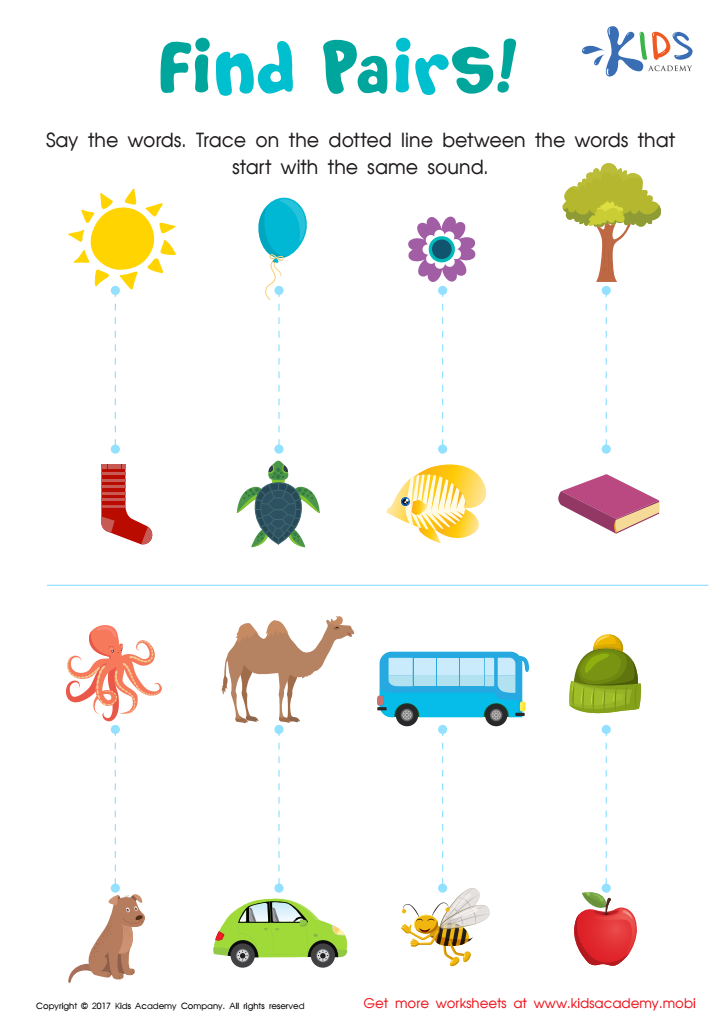
Beginning Sound: Find Pairs Worksheet
 Assign to My Students
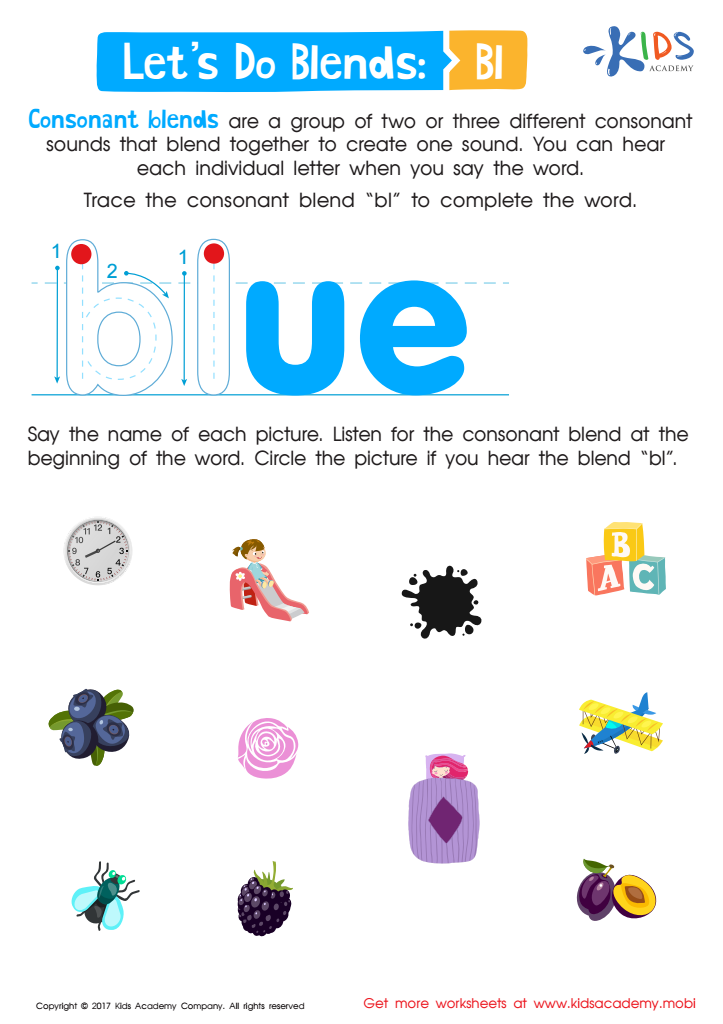
Beginning Blends: "Bl" Words Worksheet
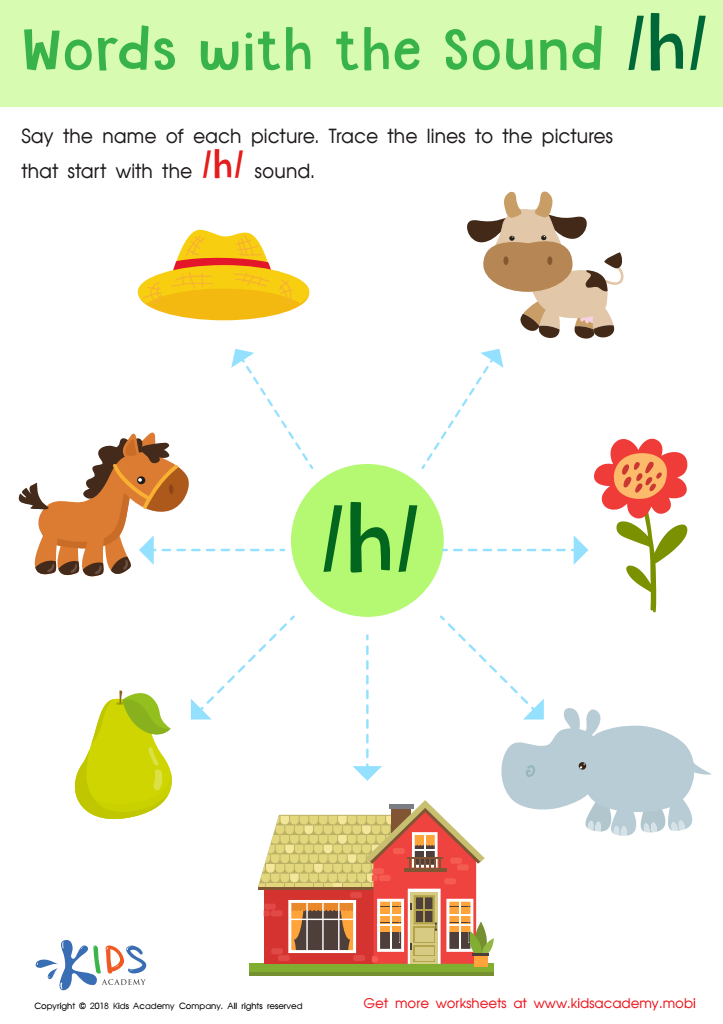
Words with sound h Reading Worksheet
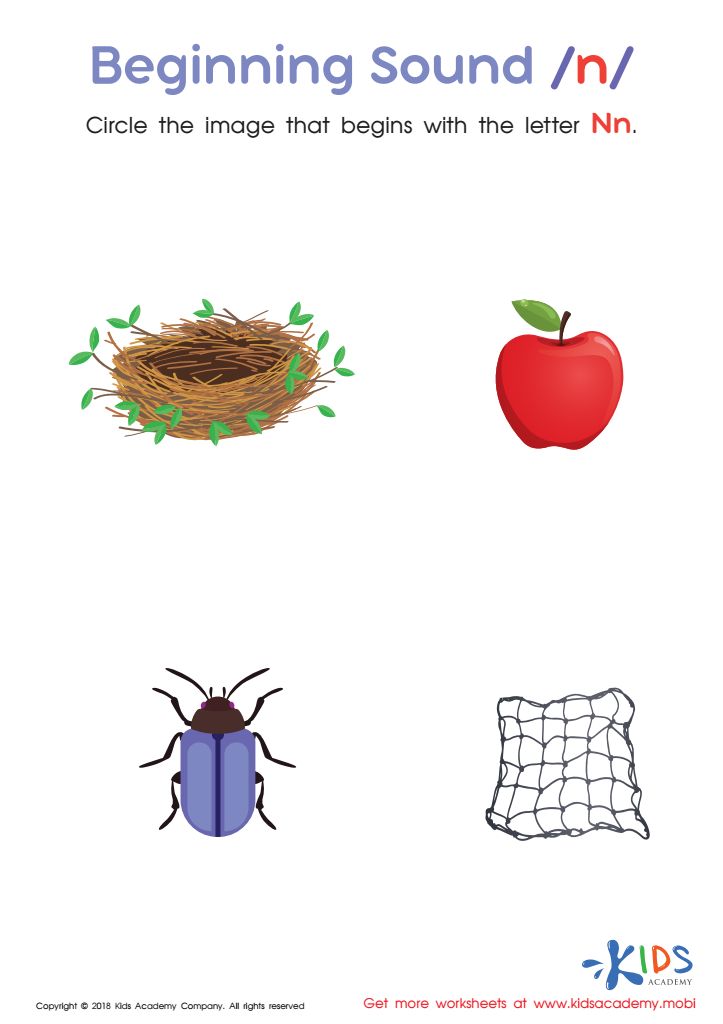
Beginning Sound «n» Worksheet
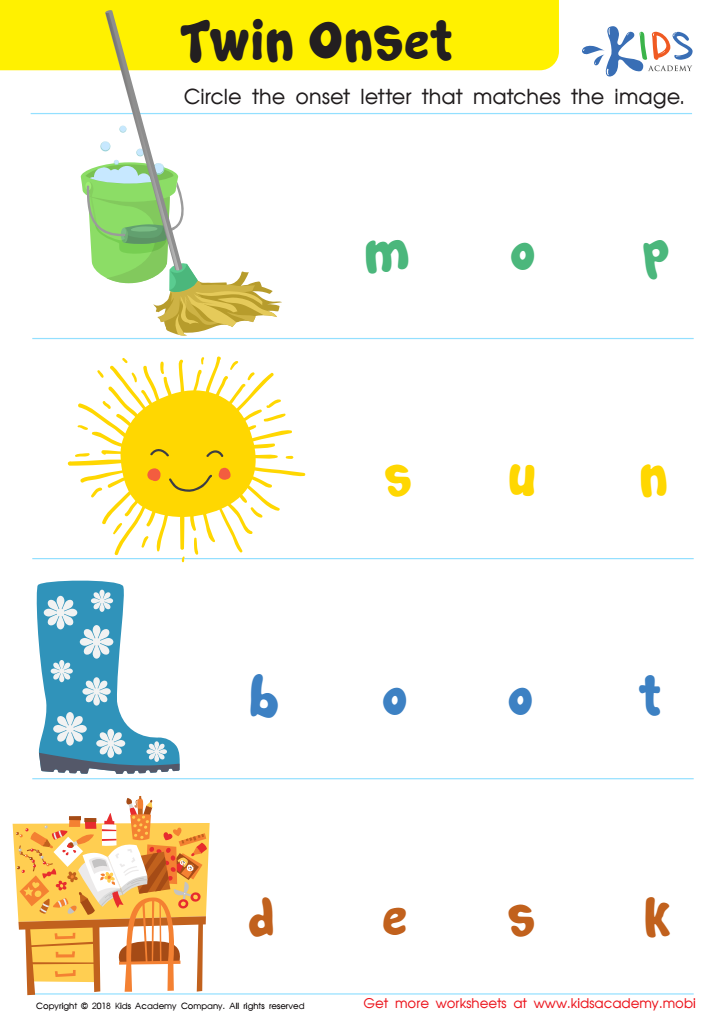
Twin Onset Worksheet
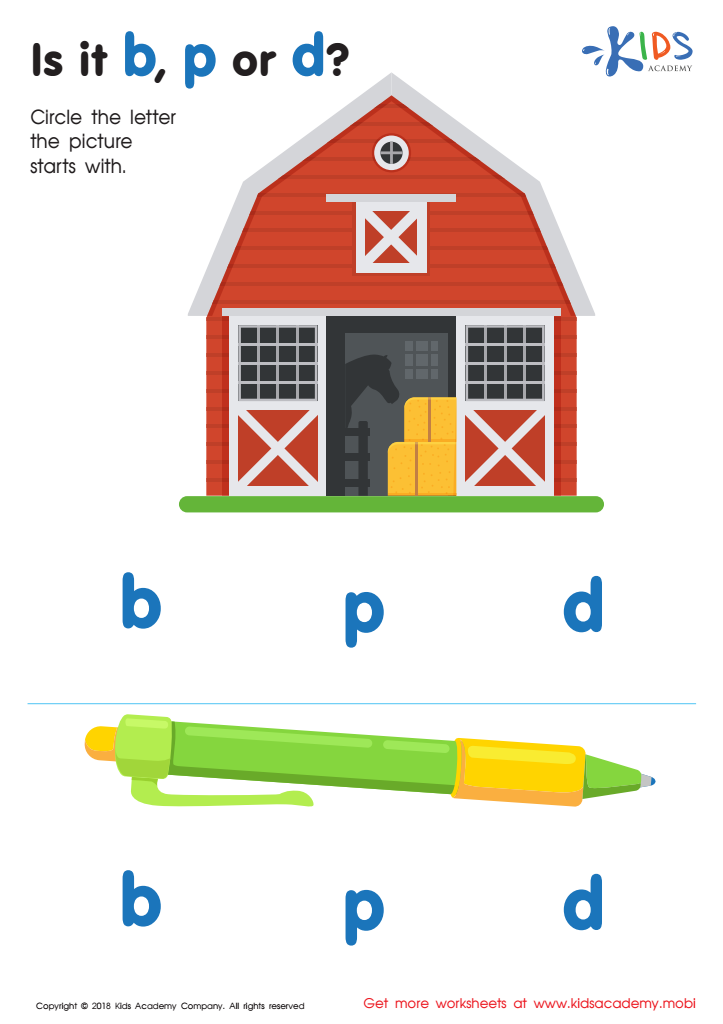
Is it b, p or d? Worksheet
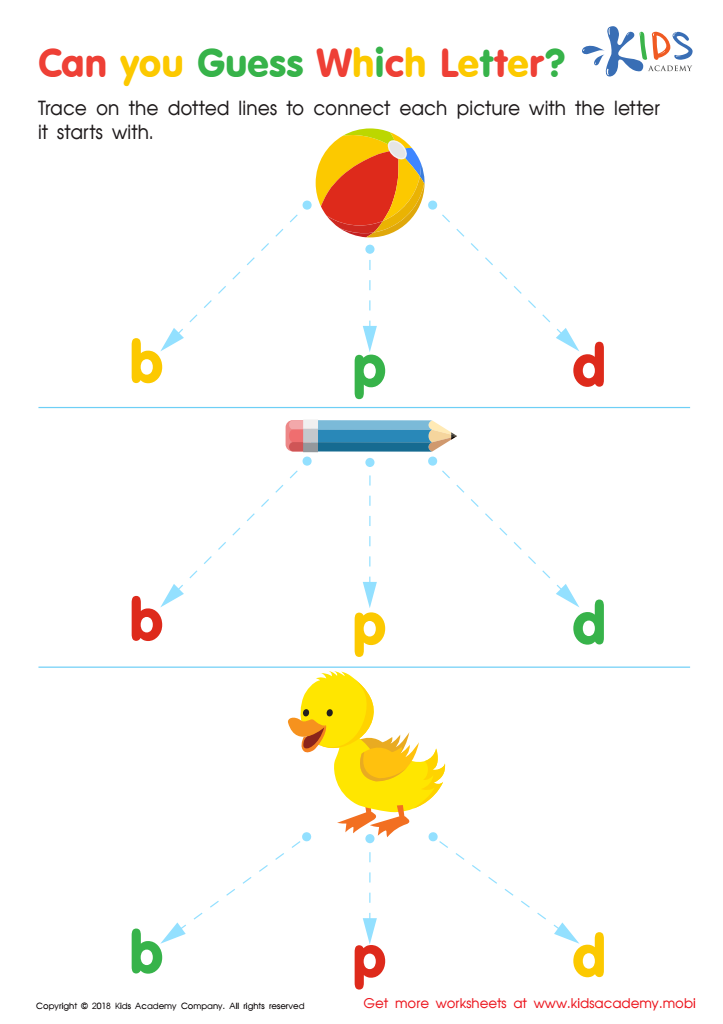
Can you Guess Which Letter? Worksheet
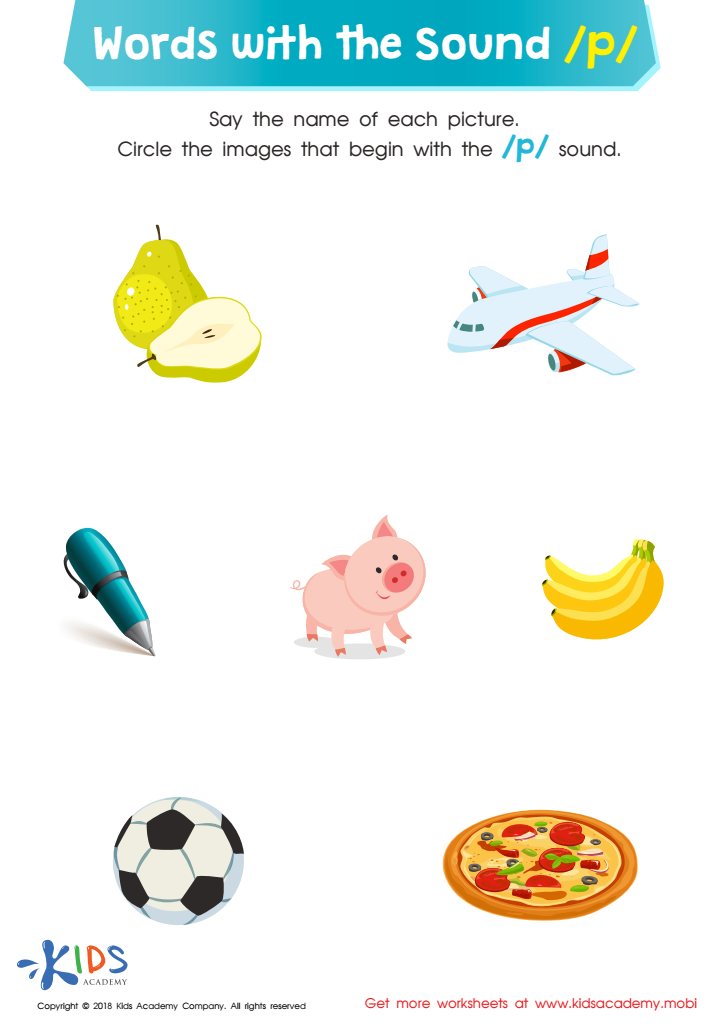
Words with sound p Reading Worksheet
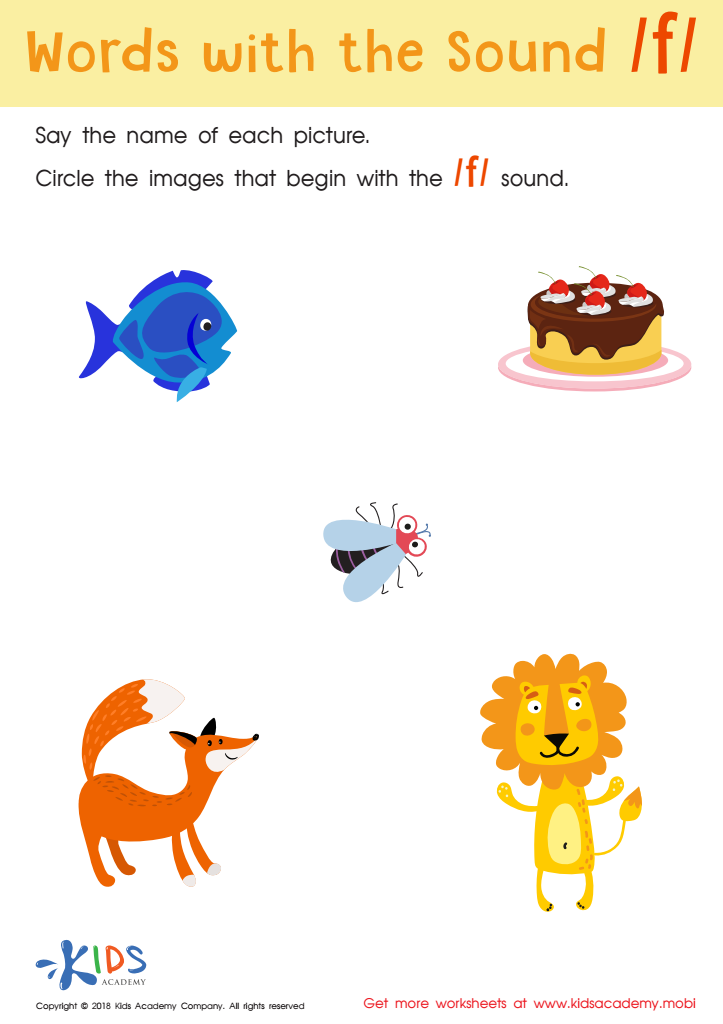
Words with sound f Reading Worksheet
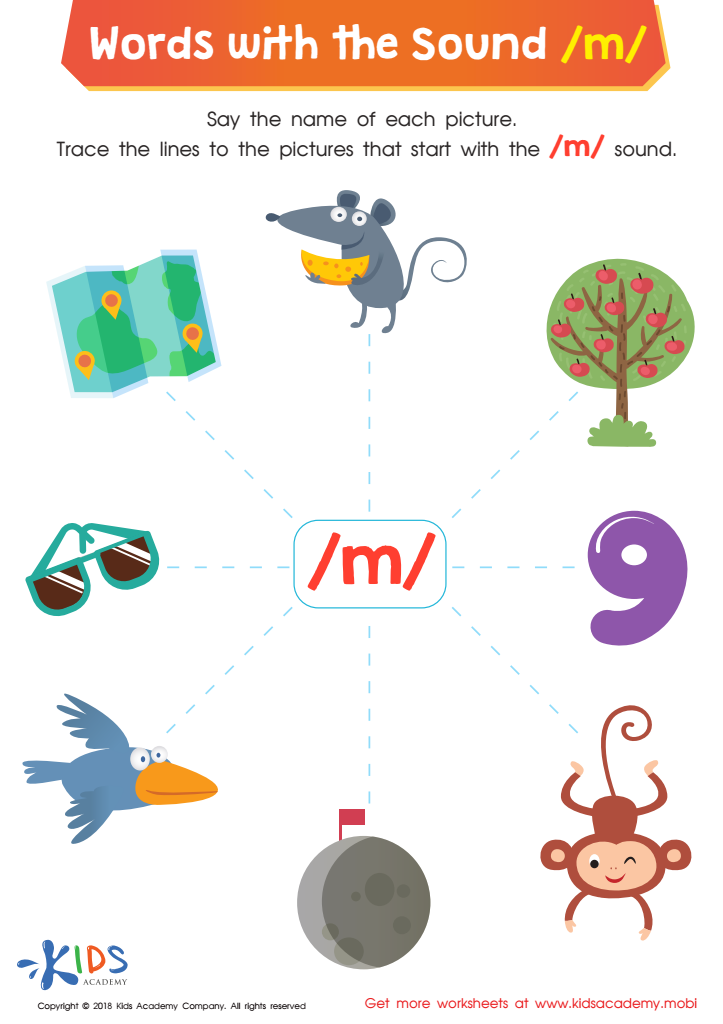
Words with Sound M Reading Worksheet
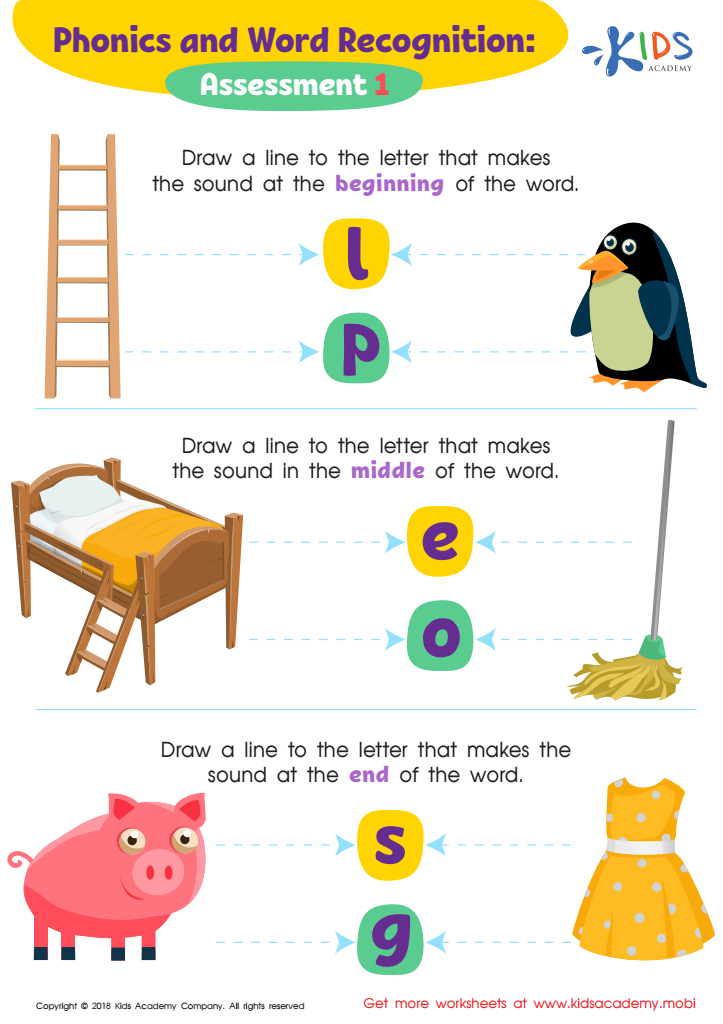
Phonics and Word Recognition: Assessment 1 ELA Worksheet
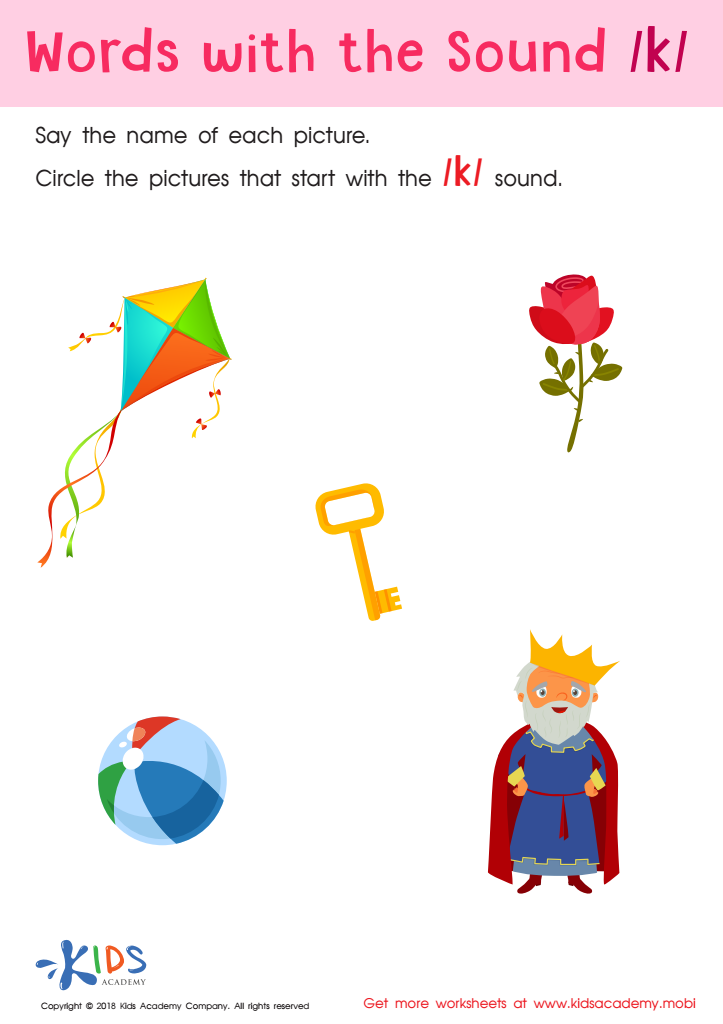
Words with sound k Reading Worksheet
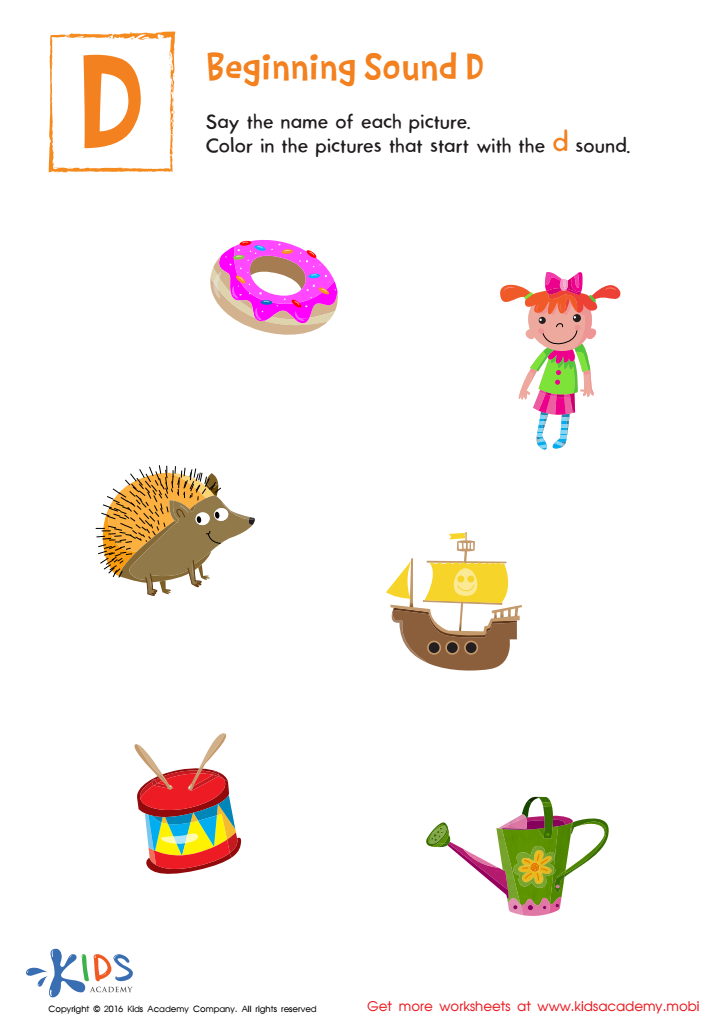
Beginning Sound D Worksheet








Normal beginning sounds, or the initial phonemes in words, play a crucial role in early literacy development for children aged 5 to 9. Understanding these sounds lays the foundation for reading and language skills. When children learn to identify and produce beginning sounds, they enhance their phonemic awareness, an essential component of effective reading instruction.
For parents and teachers, fostering awareness of beginning sounds can develop a child's ability to decode words phonetically, making reading more accessible. Early mastery of these sounds aids in vocabulary expansion and improves spelling, laying a strong groundwork for writing skills. Engaging children in fun and interactive activities that emphasize beginning sounds—like rhyming games or sound matching—can motivate them and make learning enjoyable.
Additionally, a strong grasp of beginning sounds supports reading comprehension, as children can better sound out unfamiliar words, allowing them to focus on understanding the text's meaning. By prioritizing beginning sounds, parents and teachers invest in their children's academic success, confidence, and love for reading. Strong foundational skills built during these years can lead to lifelong literacy and learning, underscoring why caregivers and educators should prioritize this aspect of language development.







