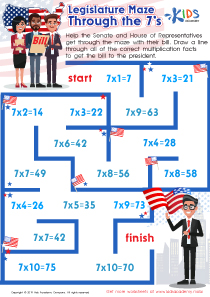
Normal Good Citizenship Worksheets for Ages 5-9
6 filtered results
-
From - To
Explore our engaging "Normal Good Citizenship Worksheets" designed specifically for children ages 5-9! These worksheets aim to instill fundamental citizenship values, encouraging young learners to understand what it means to be a good citizen. Activities include identifying responsible behaviors, recognizing community helpers, and practicing acts of kindness. Each worksheet promotes critical thinking, creativity, and collaboration, providing an interactive experience that enhances social studies learning. Ideal for home or classroom use, these resources nurture empathy and community spirit in budding citizens. Download and spark meaningful conversations about responsibility and respect while equipping children with the skills to contribute positively to their communities!
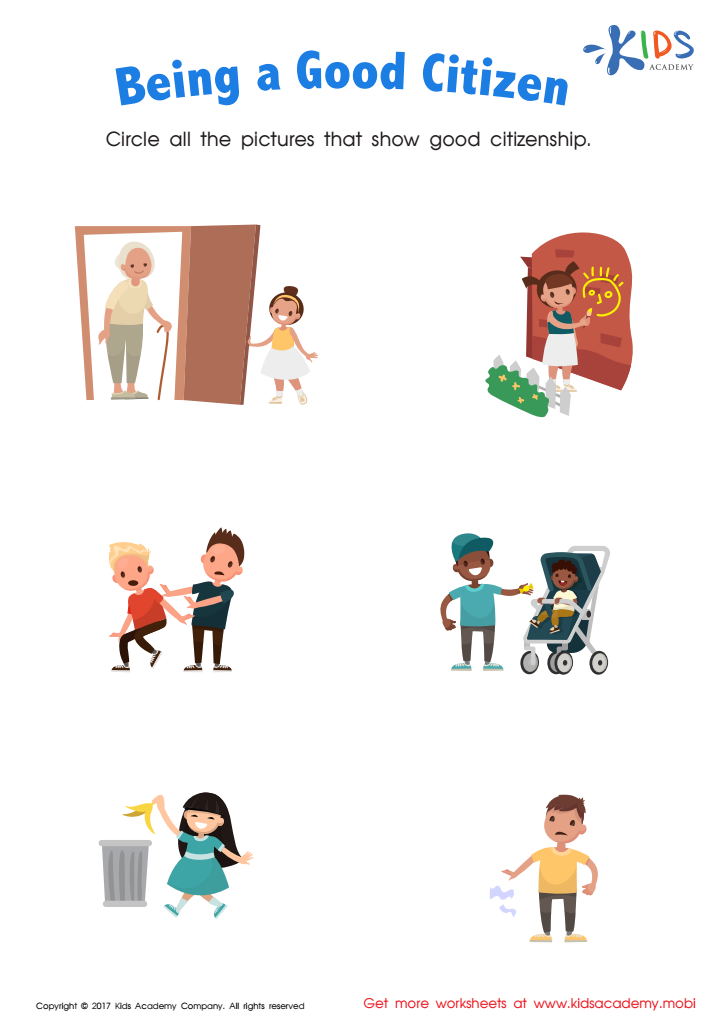
Being a Good Citizen Printable
 Assign to My Students
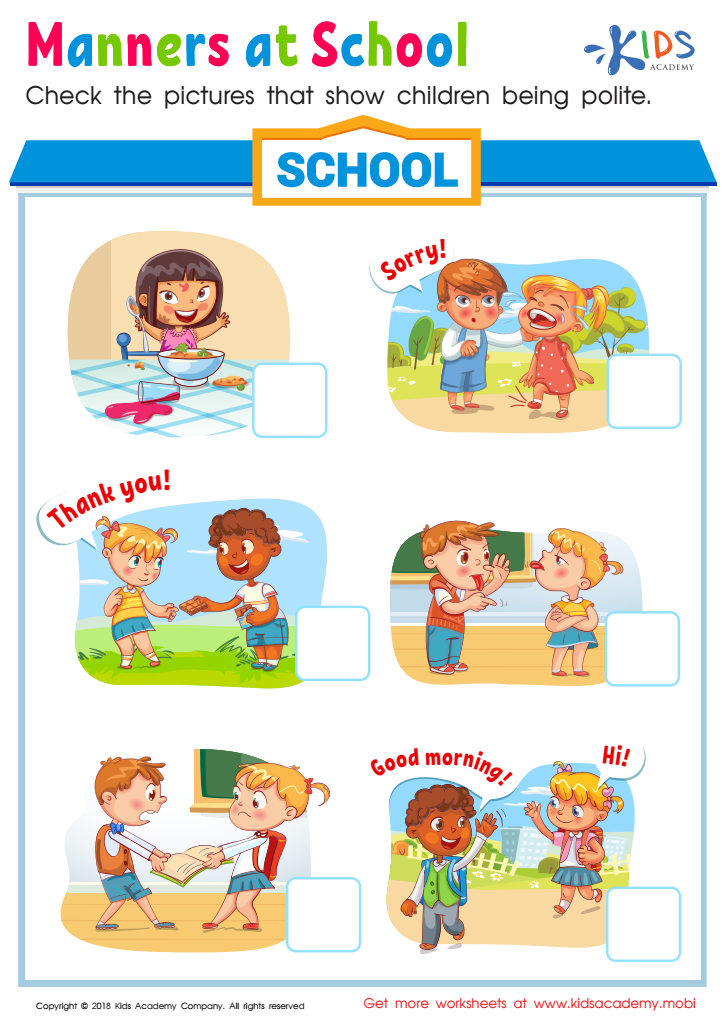
Manners at School Worksheet
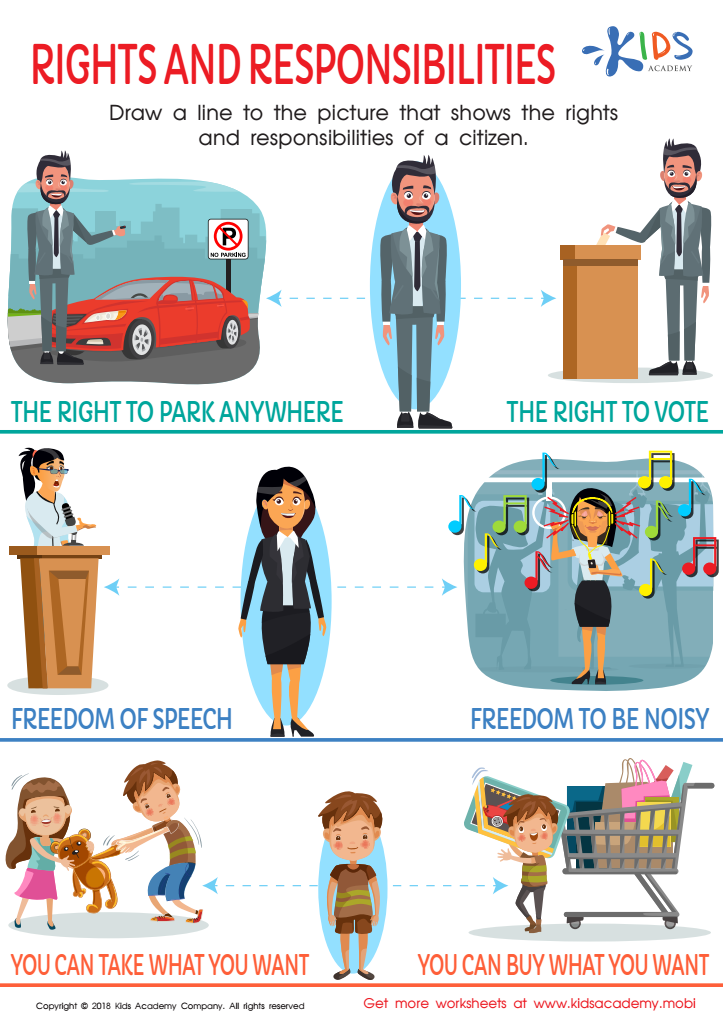
Rights and Responsibilities Worksheet
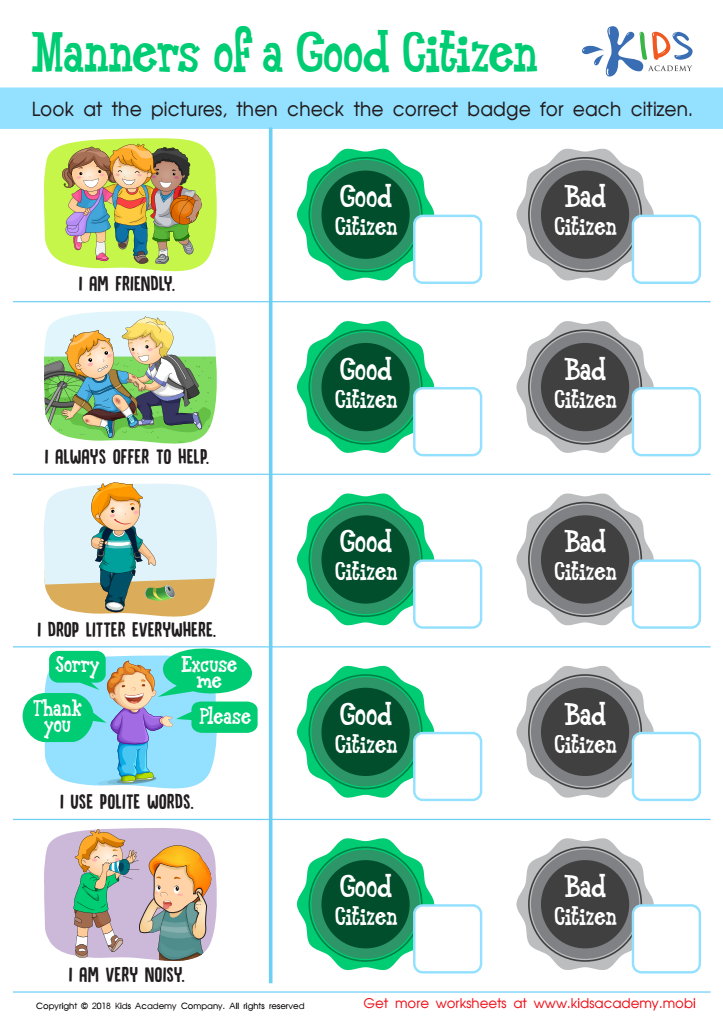
Manners of a Good Citizen Worksheet
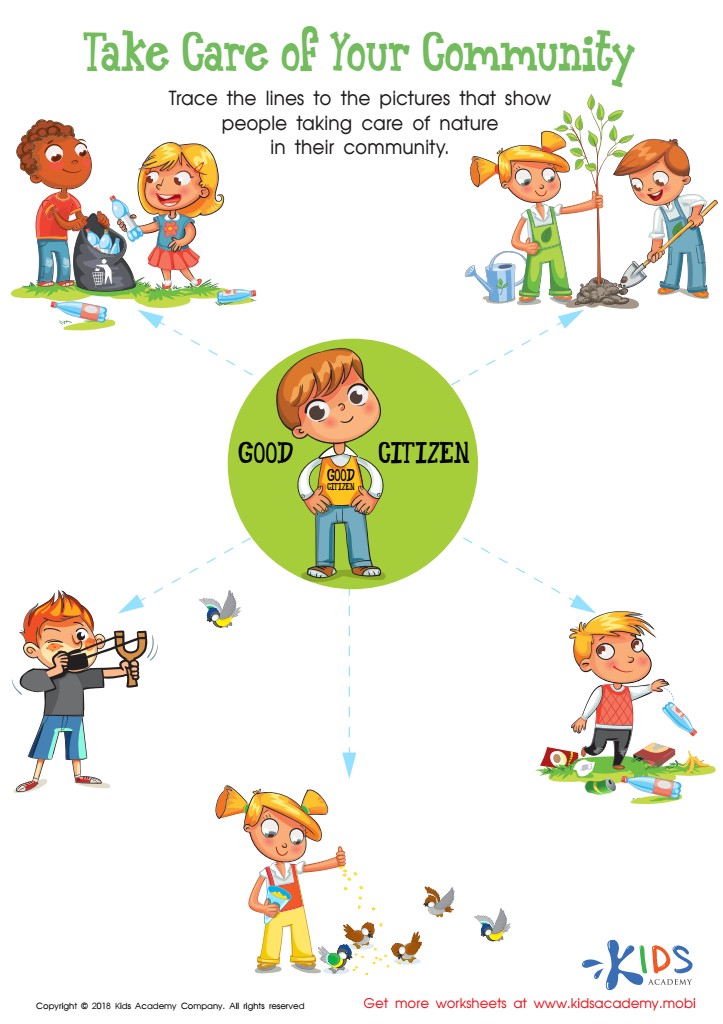
Take Care of your Community Worksheet
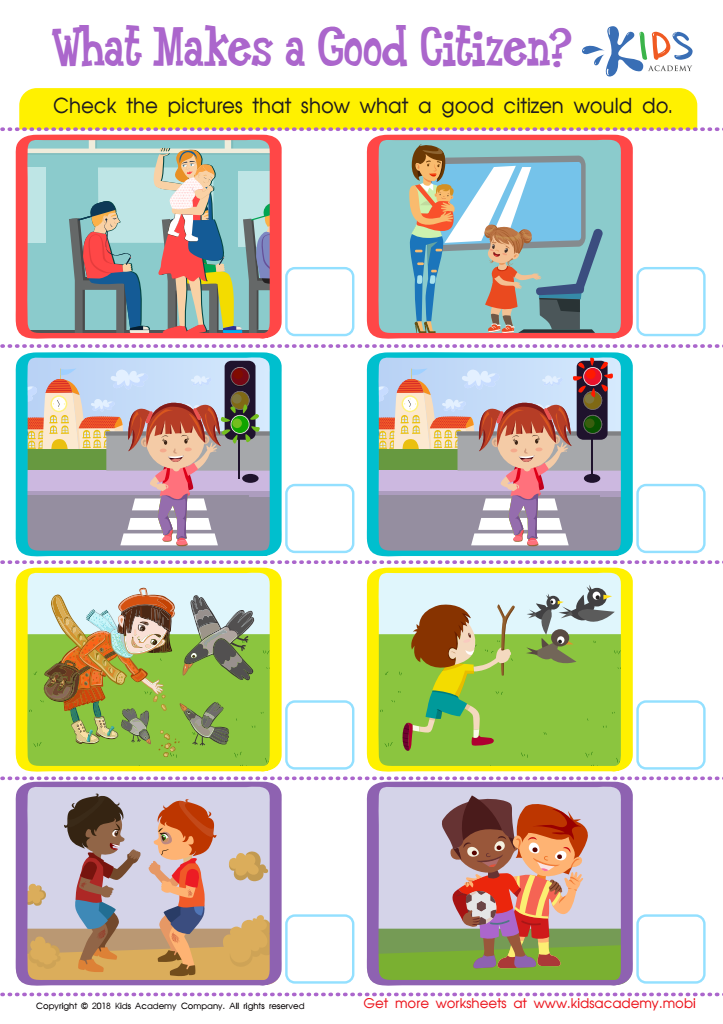
What Makes a Good Citizen? Worksheet




Promoting normal good citizenship in children aged 5-9 is crucial for their social and emotional development. This foundational period shapes their understanding of values such as respect, responsibility, and empathy, which are essential for effective interpersonal relationships. When parents and teachers encourage good citizenship behaviors—like sharing, cooperating, and showing kindness—they help foster a positive school and community environment.
Teaching good citizenship also builds a sense of belonging and identity. Children learn to appreciate the diversity around them and develop an understanding of the importance of helping others. This early groundwork prepares them to be engaged citizens who contribute positively to society as they grow older.
Moreover, instilling these values supports conflict resolution and enhances emotional intelligence. Children learn to communicate their feelings, understand others' perspectives, and work together amicably, skills vital for their future interactions in school and community settings.
By emphasizing normal good citizenship now, parents and teachers not only help cultivate responsible citizens but also enhance the overall classroom and social atmosphere, promoting a culture of support that can lead to long-term benefits in education and community involvement. In essence, nurturing good citizenship helps build a caring, interconnected society for tomorrow.