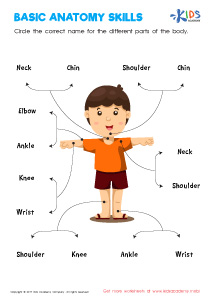
Normal Physical Science Worksheets for Ages 5-9
3 filtered results
Difficulty Level
Grade
Age
-
From - To
Subject
Activity
Standards
Discover "Normal Physical Science Worksheets for Ages 5-9" on Kids Academy. Designed to inspire young minds, these engaging printable activities introduce fundamental concepts in physical science. Perfect for early grade learners, the worksheets cover topics such as matter, energy, forces, and motion. Each worksheet combines fun illustrations and hands-on problems to make learning enjoyable and effective. With step-by-step answer keys included, parents and teachers can easily guide children through exciting scientific explorations. Equip your child with essential knowledge in a way that's both educational and entertaining. Start your child's scientific journey now!
Favorites
With answer key
Interactive
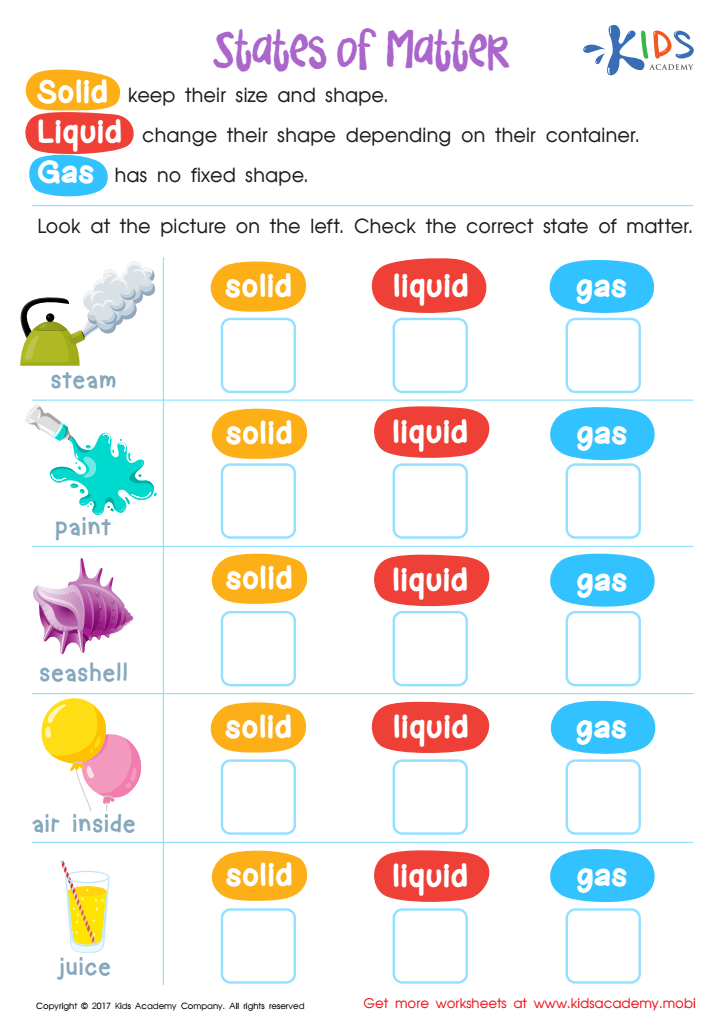
Physical Science: States of Matter Worksheet
Kids must identify a substance as solid, liquid, or gas to master physical science. Help them understand elements in the world with this engaging worksheet!
 Assign to My Students
Physical Science: States of Matter Worksheet
Worksheet
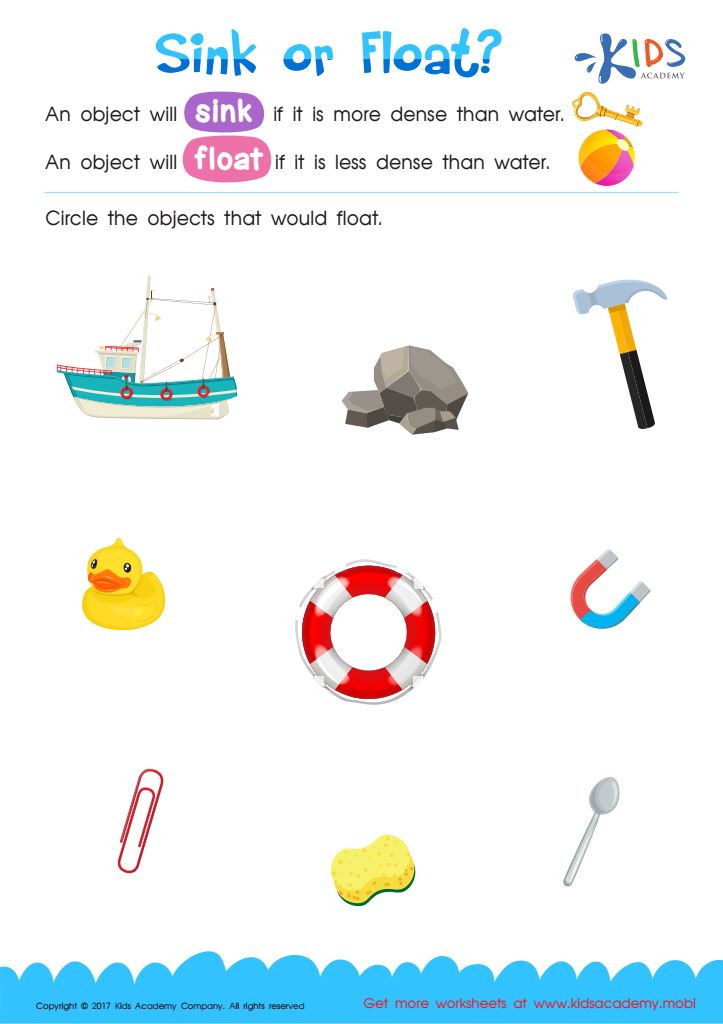
Sink or Float Printable
They'll learn why some things stay on the surface and others sink to the bottom. (80 words)
Sink or Float Printable
Worksheet
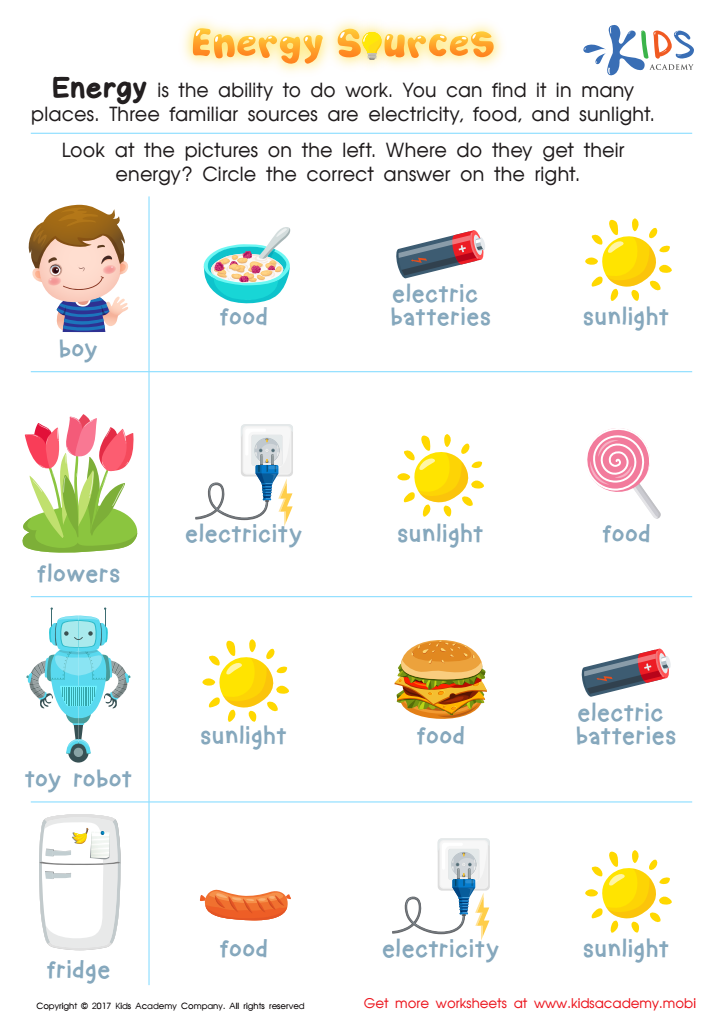
Energy Sources Printable
Introduce energy sources with this worksheet PDF — explore the sun, batteries, and more! Get your mini scientist excited about energy and power up their learning.
Energy Sources Printable
Worksheet
Join Kids Academy for Free
Who is primarily going to use this learning content?







Normal Physical Science for ages 5-9 plays a crucial role in the holistic development of young children. First and foremost, it lays the foundation for scientific understanding by fostering curiosity and inquisitiveness. This stage is pivotal because children are naturally curious about the world around them; understanding basic physical science concepts helps channel that curiosity into structured learning.
By engaging with physical science, children develop critical thinking and problem-solving skills. When they learn about materials, energy, or forces through simple experiments, they're encouraged to ask questions and explore answers. This exploratory learning inculcates an analytical mindset, which is beneficial across all subjects and essential for lifelong learning.
Additionally, understanding physical science enhances literacy and numeracy. Concepts like measurement, volume, and distance directly correlate with math skills, while explaining observations and writing down experiments improves language skills.
Moreover, learning physical science from an early age can foster a positive attitude towards the subject. Many children develop either a love or aversion to science based on early experiences; a strong foundation can lead to continued interest and success in more advanced studies.
Finally, normalizing physical science in everyday discussions empowers children to understand and protect their environment, making informed decisions that are ecologically responsible. Parents and teachers, hence, play a crucial role in a child's scientific education journey, laying the groundwork for enlightened future citizens.