Normal Vowels and Consonants Worksheets for Ages 6-8 - Page 2
26 filtered results
-
From - To
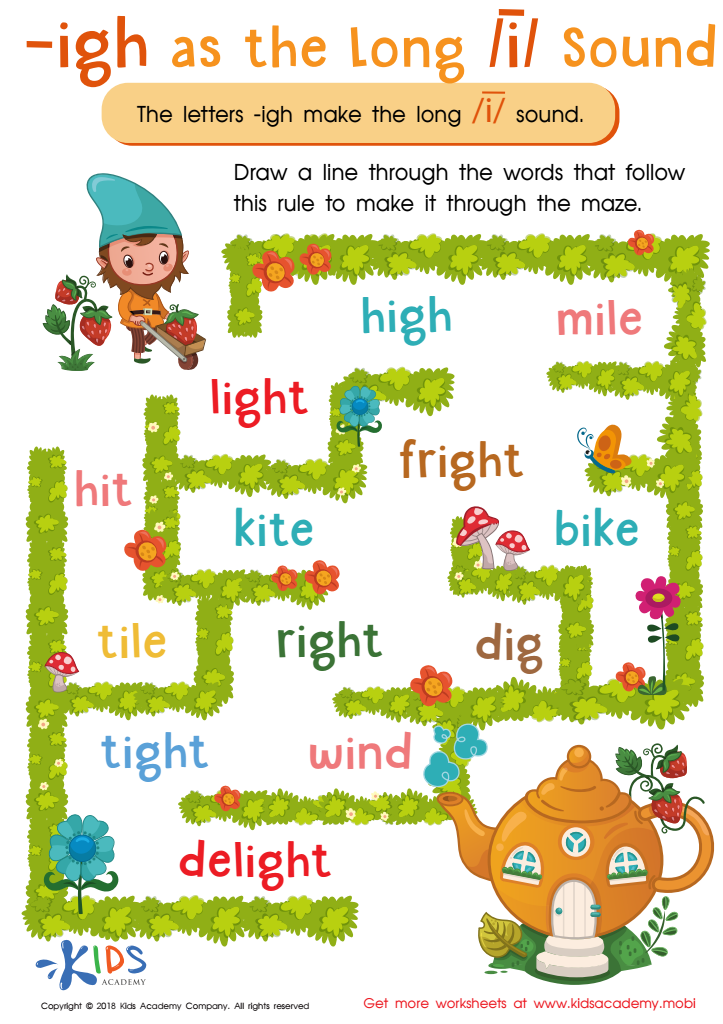
Reading: IGH as Long I Worksheet
 Assign to My Students
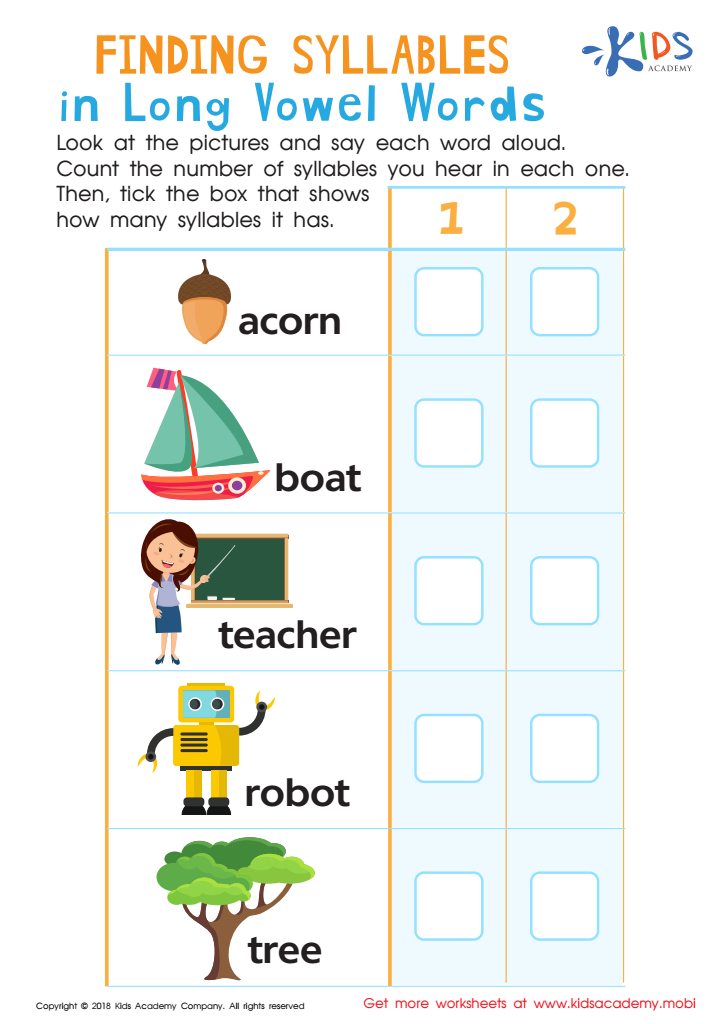
Finding Syllables in Long Vowel Words Worksheet



Understanding normal vowels and consonants is crucial for children aged 6-8, as it forms the foundation of their reading and writing skills. At this developmental stage, children are beginning to decode written language and make sense of complex words. Normal vowels (a, e, i, o, u) and consonants help them grasp the phonetic structure of words, fostering their ability to sound out new words and improve their vocabulary.
For parents and teachers, emphasizing this knowledge can enhance literacy development, allowing children to transition from simple phonetic understanding to more advanced reading comprehension. Mastering vowels and consonants also supports spelling proficiency, which is vital for academic success and effective communication.
Furthermore, teaching about these sounds cultivates critical thinking skills in approaching writing. As children experiment with stringing letters together, they learn to manipulate phonemes, leading to greater creativity and expression in their writing.
Ultimately, a strong foundation in vowels and consonants paves the way for lifelong literacy skills. It fosters a positive attitude towards reading and writing, enabling children to navigate their academic journeys with confidence. For parents and teachers, investing in this fundamental knowledge reaps lifelong benefits, shaping not only proficient readers and writers but also enthusiastic learners.






