Normal Vowel Diphthongs Worksheets for Ages 7-9 - Page 2
25 filtered results
-
From - To
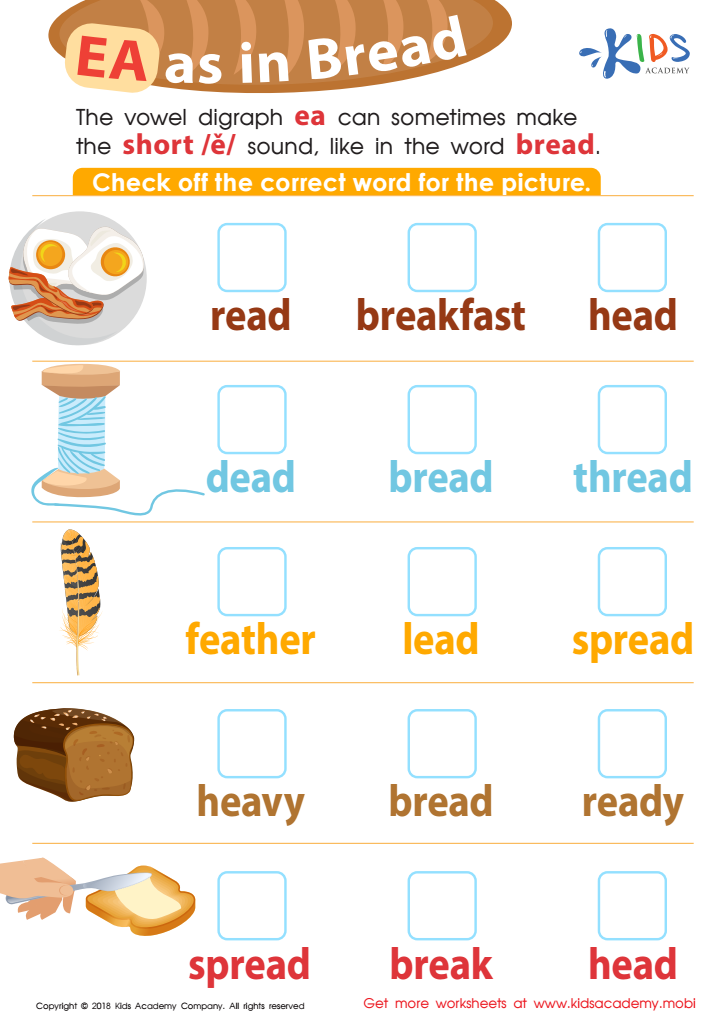
Reading: EA as in Bread Worksheet
 Assign to My Students


Parent and teacher understanding of normal vowel diphthongs is crucial for children aged 7-9 as they represent a key element of language development. Diphthongs, which are complex vowel sounds formed by the combination of two vowel sounds in a single syllable, play a significant role in phonics, spelling, and reading fluency. Mastering these sounds enhances a child's phonological awareness, which is foundational for successful literacy skills.
At this age, children are expanding their vocabulary and improving their reading comprehension. When they are able to recognize and articulate diphthongs, they can decode words more effectively, reducing reading frustration and fostering a love for literature. This also aids in spelling, as many common words contain diphthongs.
Additionally, understanding diphthongs supports students' communication skills. Good pronunciation leads to clearer expression and, in turn, boosts students' confidence in speaking engagements, whether classroom settings or beyond. Parents and teachers play a pivotal role in this development by integrating activities that encourage practice with diphthongs, such as rhymes, songs, and playful word games. By prioritizing normal vowel diphthongs, they can create a strong linguistic foundation that benefits children’s academic and personal growth.