Learning Normal Difficulty Chess Worksheets With Answers for Grade 3 - Page 2
47 filtered results
Difficulty Level
Grade
Age
-
From - To
Subject
Activity
Standards
Favorites
With answer key
Interactive
Two Rook Bingo Worksheet
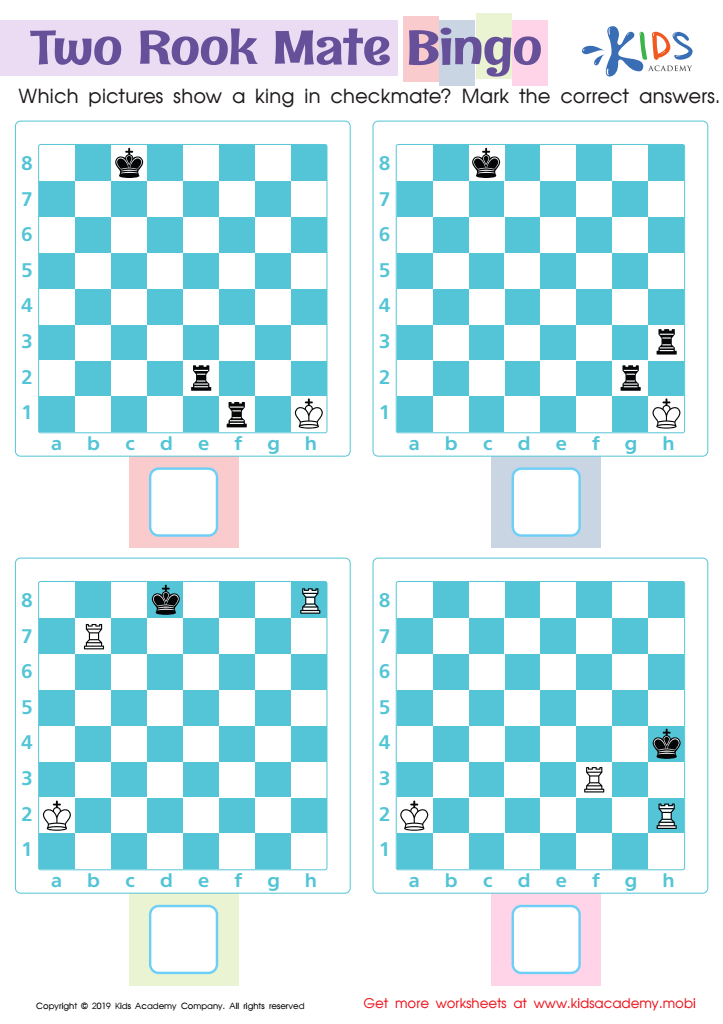
Kids can have fun and strengthen their visual perception skills with Two Rook Mate Bingo. This worksheet challenges them to identify which chess boards show a king in checkmate using the Two Rook Mate strategy. Once they choose the correct one, they get the prize for checkmate! Playing chess helps kids with strategy, logic, and critical thinking.
 Assign to My Students
Two Rook Bingo Worksheet
Worksheet
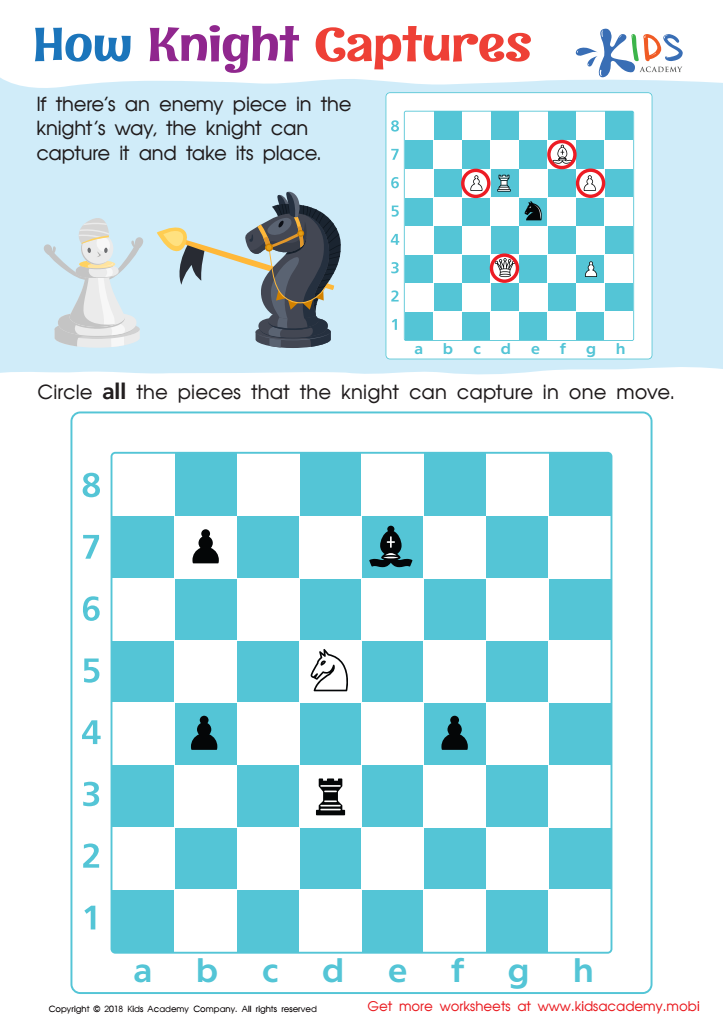
How Knight Captures Worksheet
Test your child's knowledge of chess pieces by asking them to identify the knight. It is shaped like a horse and its goal is to capture the enemy king in order to win the game. The knight has the advantage of being able to jump over other pieces, taking them out and taking their place. See how many pieces the knight can capture in one move with this worksheet.
How Knight Captures Worksheet
Worksheet
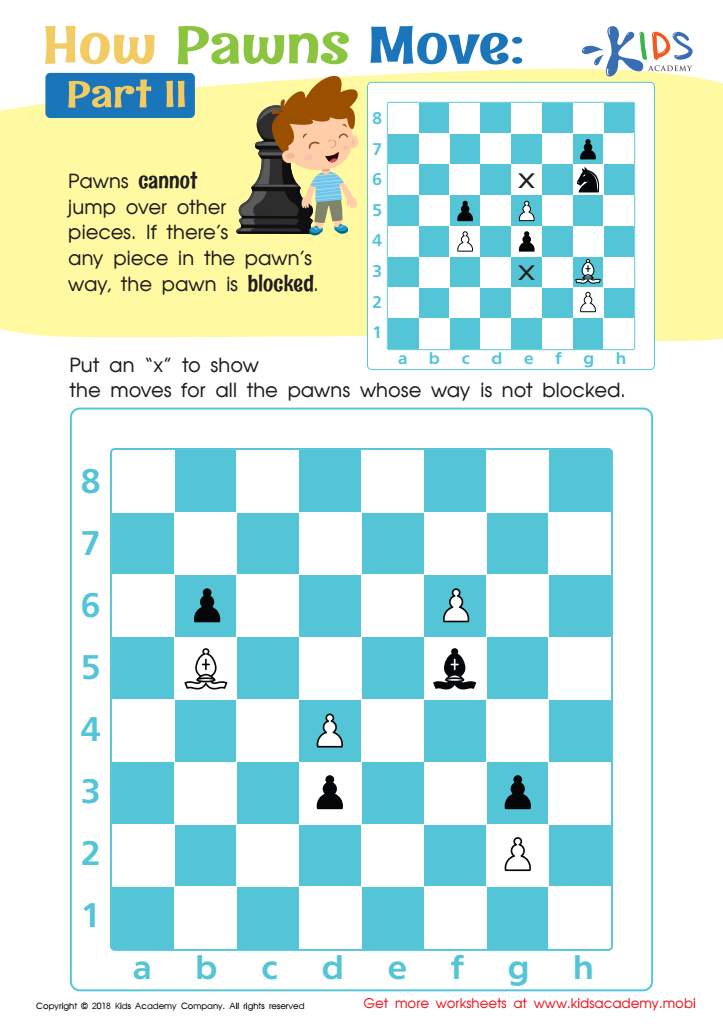
How Pawns Move: Part II Worksheet
Pawns are the first to attack in chess and each player has the most pieces. They can't jump over other pieces, so if there's an obstacle, the pawn can't move. Ask your child to put an X to show all possible moves for the pawns not blocked by other pieces. (80)
How Pawns Move: Part II Worksheet
Worksheet
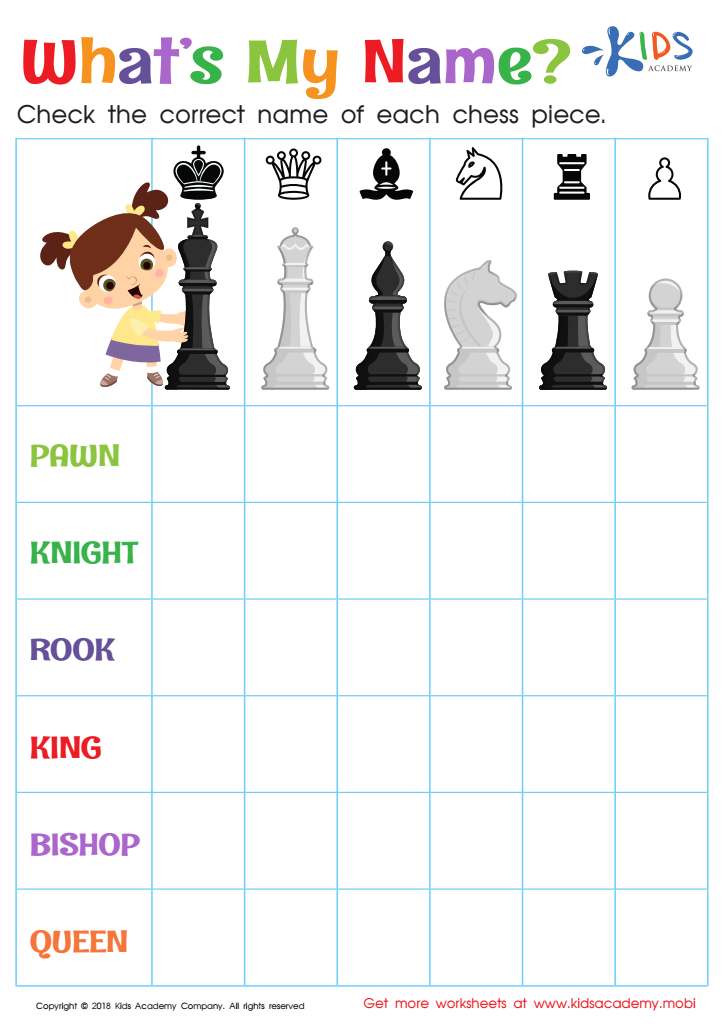
What's My Name? Worksheet
Test your child's chess knowledge with this colorful worksheet! There are six pieces lined up with names underneath. Ask your child to name each piece, then check if it's correct. Help them succeed by brushing up on the different pieces and their names.
What's My Name? Worksheet
Worksheet
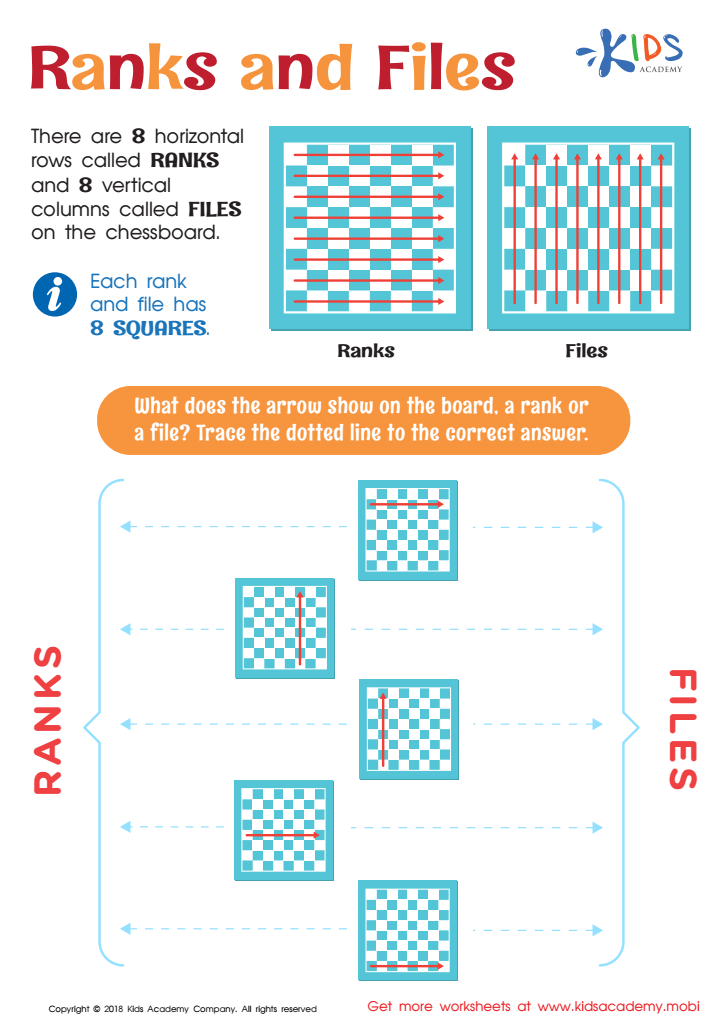
Ranks and Files Worksheet
A chessboard has 8 horizontal ranks and 8 vertical files, each with 8 squares. Test your child's understanding of these directions with this fun worksheet!
Ranks and Files Worksheet
Worksheet
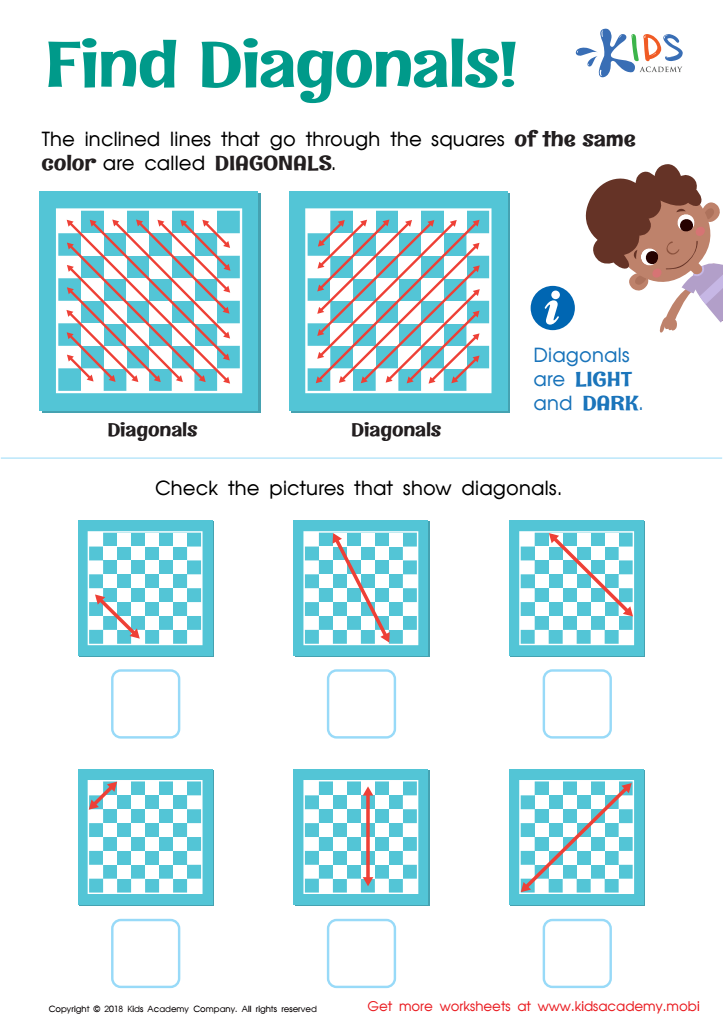
Find Diagonals Worksheet
Help your child learn the name of the lines that go through squares with this fun worksheet. Diagonals slant in left or right directions and create the same shape. Ask your child to identify the pictures with correctly drawn diagonals.
Find Diagonals Worksheet
Worksheet
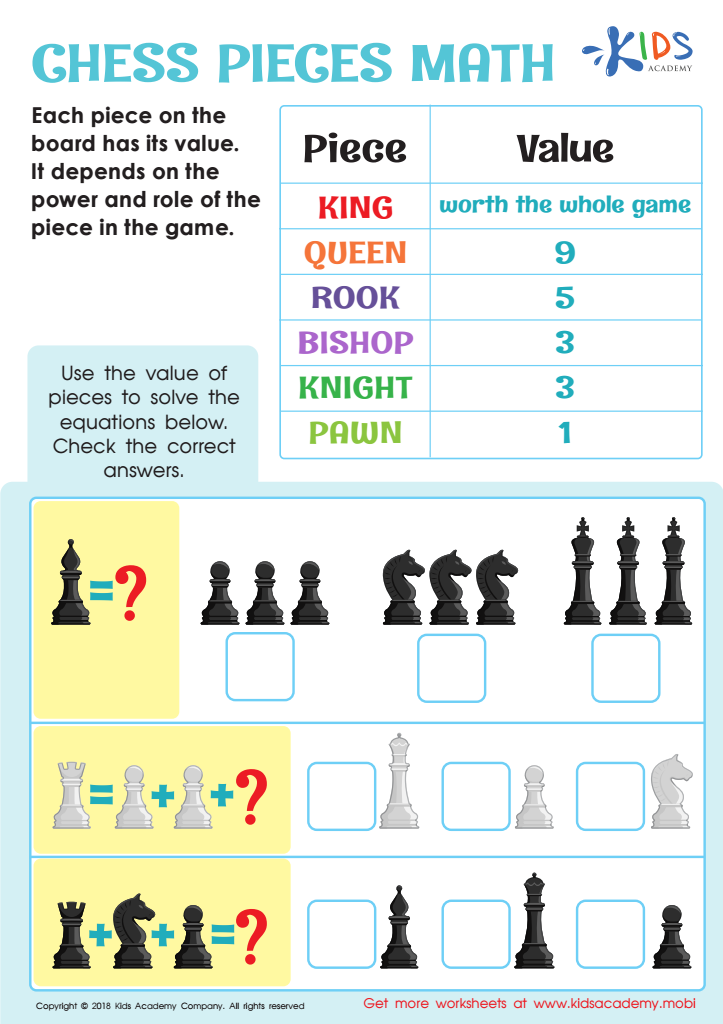
Chess Pieces Math Worksheet
Chess involves math! Each piece has its own value, from the king (worth the entire game) to the queen (9 points), varying according to their power and role. In the worksheet, your child must use these values to solve the equations at the bottom.
Chess Pieces Math Worksheet
Worksheet
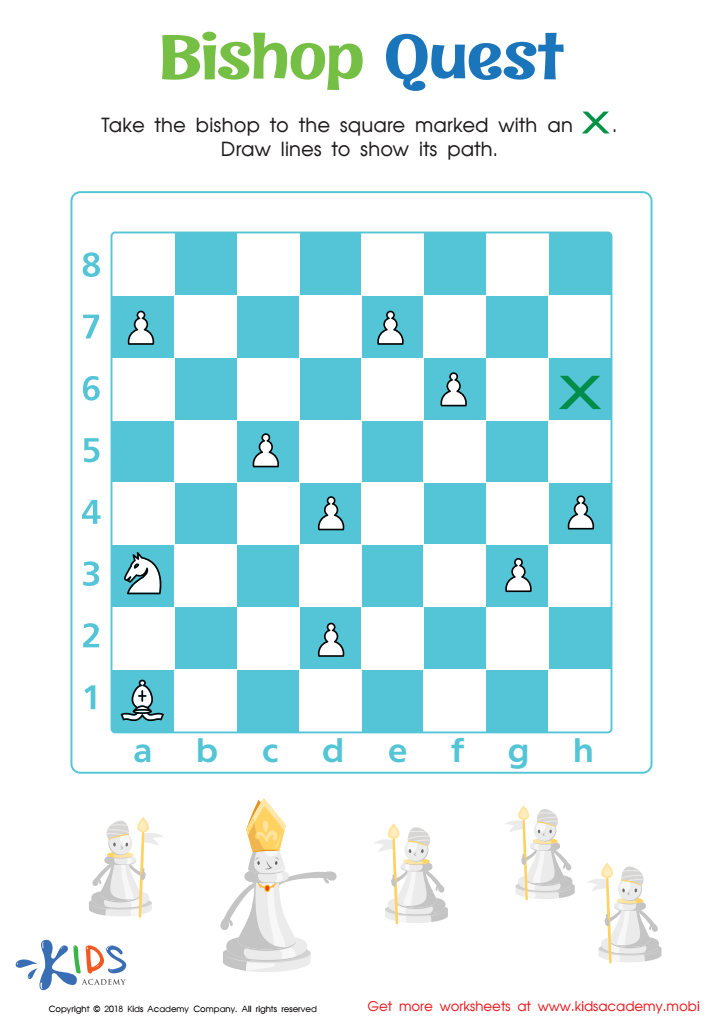
Bishop Quest Worksheet
Show kids the board and ask them to identify the bishop. Then ask them to move it to the square marked 'x', drawing lines to show its path. This worksheet helps teach kids how to move the bishop on a chessboard.
Bishop Quest Worksheet
Worksheet
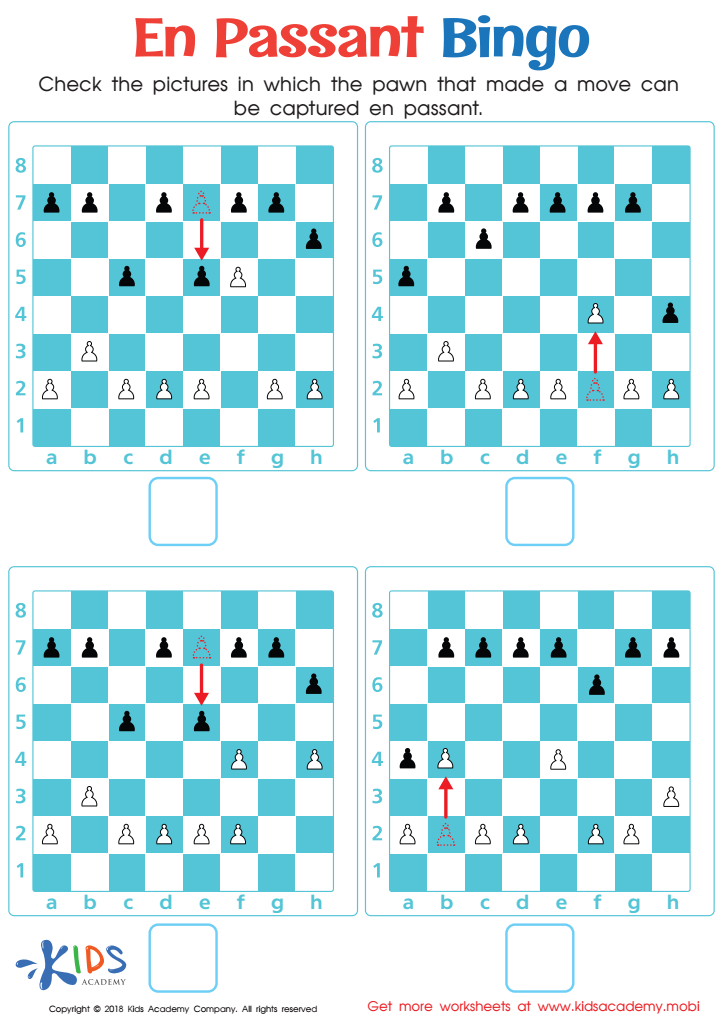
En Passant Bingo Worksheet
To teach kids to perfect the en passant move in chess, use this worksheet. It has pictures which depict when a pawn is in danger of being captured. By looking through the pictures, kids can easily understand and perfect the move.
En Passant Bingo Worksheet
Worksheet
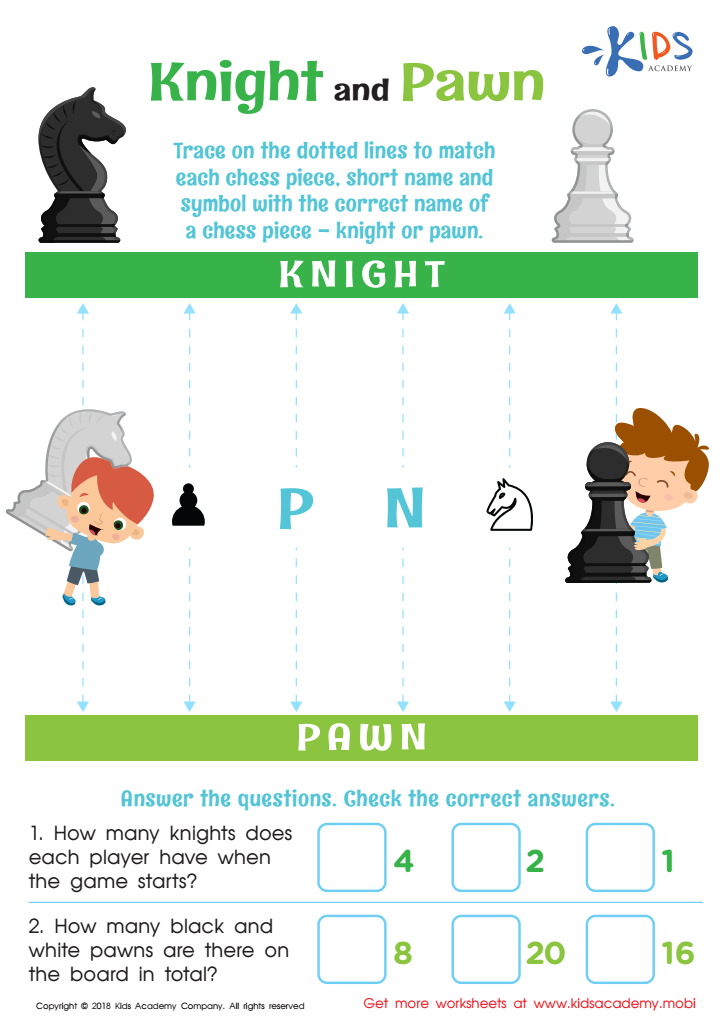
Knight and Pawn Worksheet
This tracing worksheet teaches kids about chess. They trace the dotted lines to match pieces, names and symbols to the correct chess piece. Questions at the bottom test their understanding. It's a simple exercise for a fun way to learn.
Knight and Pawn Worksheet
Worksheet
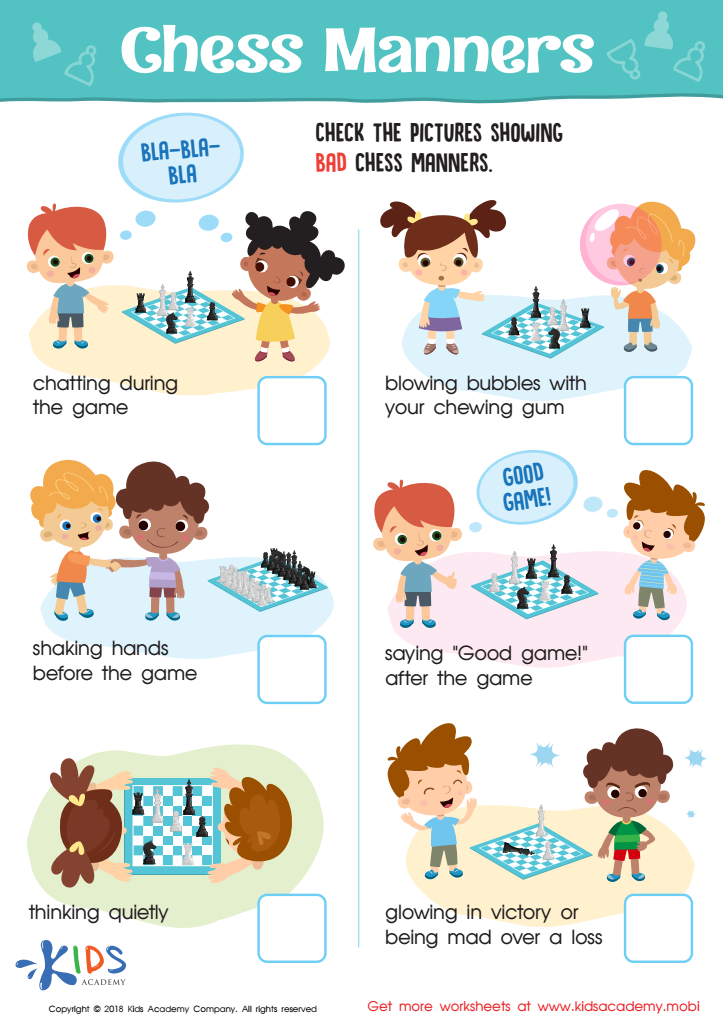
Chess Manners Worksheet
Teach your child chess manners in addition to table and social ones. Chess has clear rules and etiquette which must be followed for a proper game. Review this worksheet with your kid and discuss the pictures that show inappropriate behaviours. This will help them understand how to play the game correctly and with good manners.
Chess Manners Worksheet
Worksheet
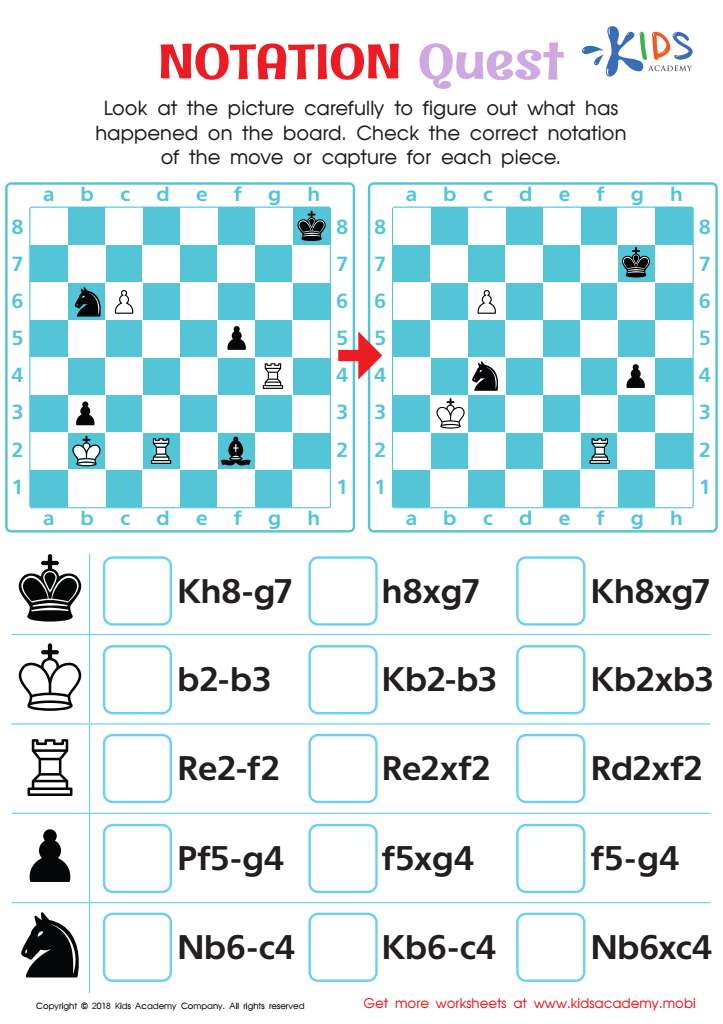
Notation Quest Worksheet
Examine the two chess boards with your kids. On one, chess pieces haven't moved; on the other, pieces have captured each other. Get your child to note the moves and captures with this simple worksheet.
Notation Quest Worksheet
Worksheet
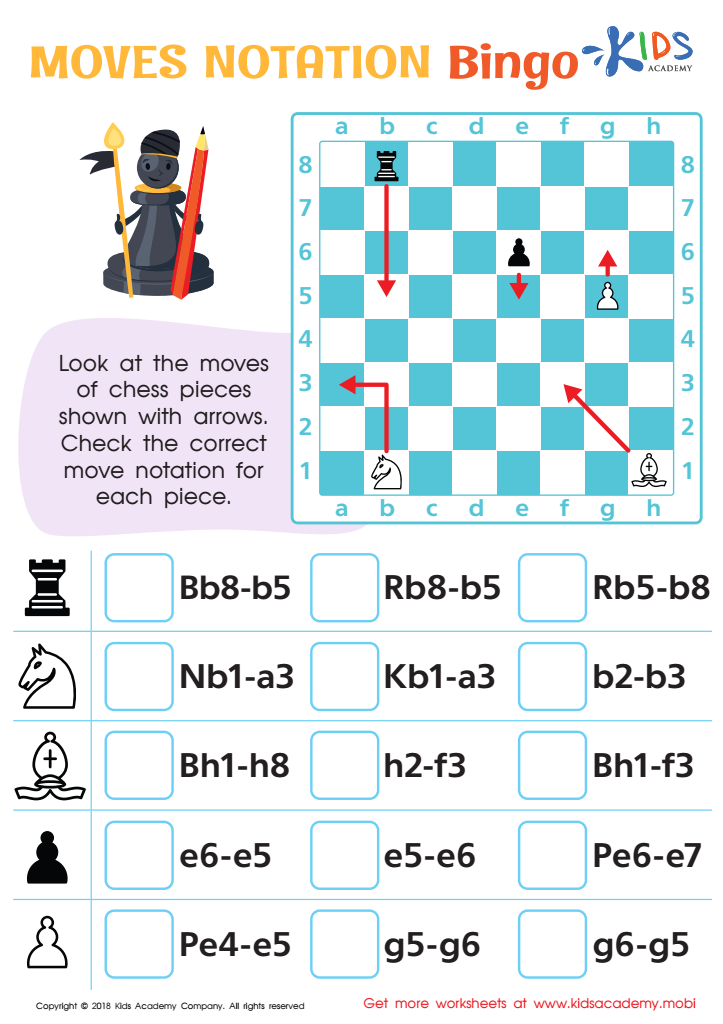
Moves Notation Bingo Worksheet
Test your child's chess notation skills with this simple worksheet. Download the PDF which shows a chess board and arrows pointing to pieces. Ask your child to identify the moves and note them down correctly. The notations needed are for bishop, pawn, rook and knight. Up to 80 words.
Moves Notation Bingo Worksheet
Worksheet
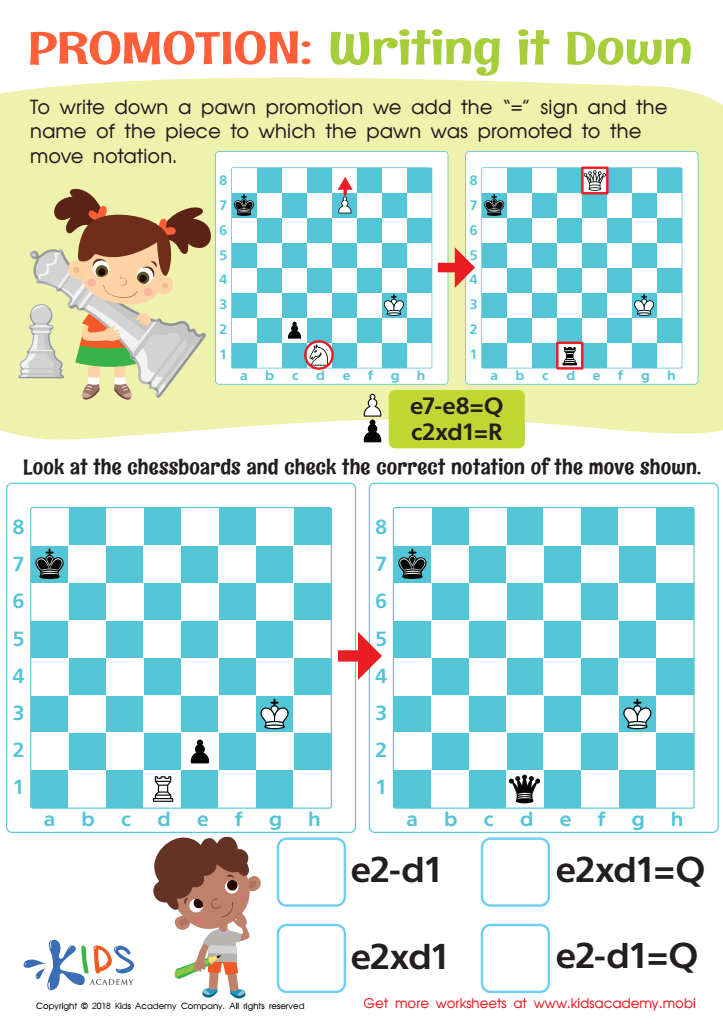
Writing it Down Worksheet
To document pawn promotion, add "=<piece name>" to the move notation. For example: e7-e8=Q. Ask your child to look at the chessboard and take note of the moves. Check the notations are correct. (80 words)
Writing it Down Worksheet
Worksheet
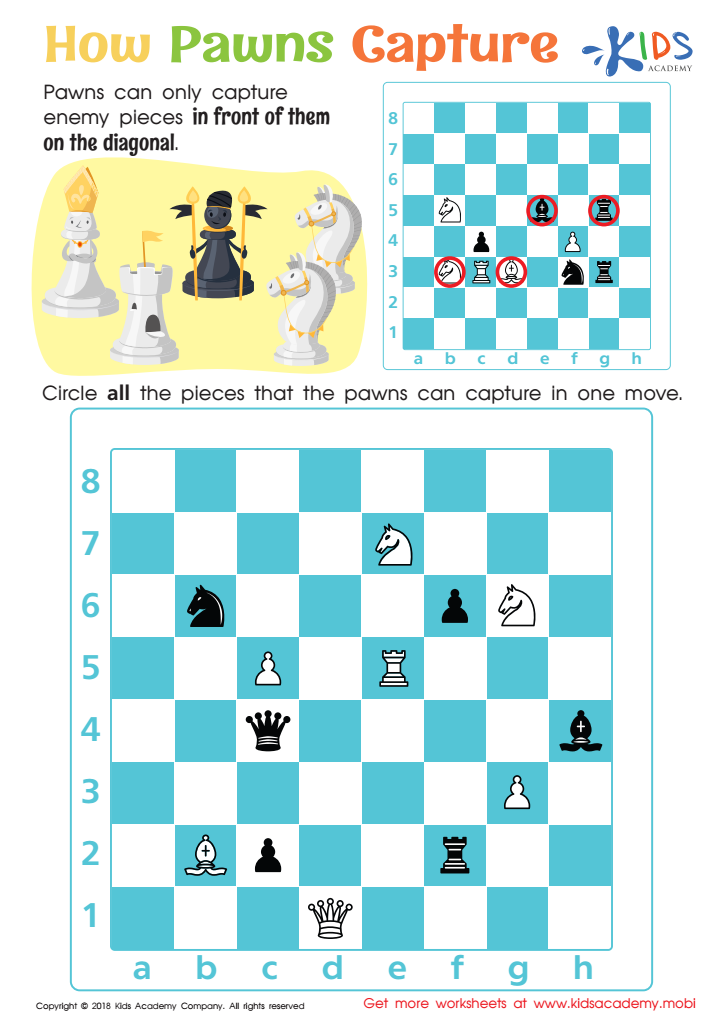
How Pawns Capture Worksheet
Ask your child to circle all the places a pawn can capture in one move on the diagonal. Pawns are limited in the moves they can make, but can still capture enemy pieces. This worksheet will help brush up on their knowledge of the rules of chess.
How Pawns Capture Worksheet
Worksheet
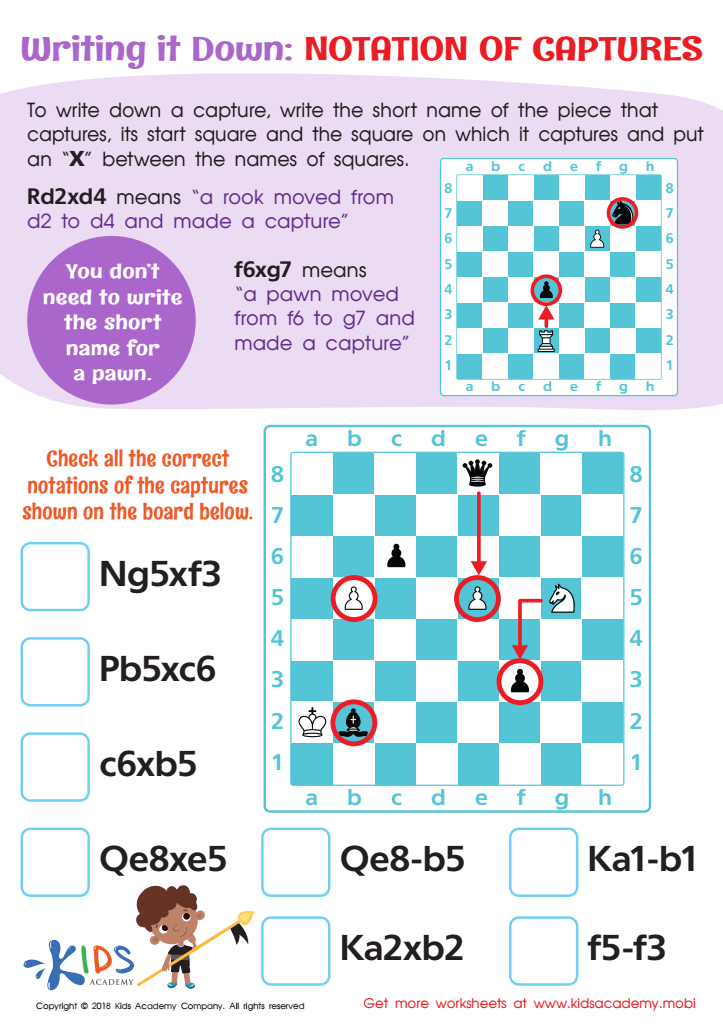
Notation of Captures Writing it Down Worksheet
To teach students how to record captures in chess, use this worksheet. Write down the piece's short name, start sq., and the sq. where it captures, separating them with an X. For example, Rd2Xd4 means a rook moved d2 to d4 and took a piece. Pawn captures don't need a name.
Notation of Captures Writing it Down Worksheet
Worksheet
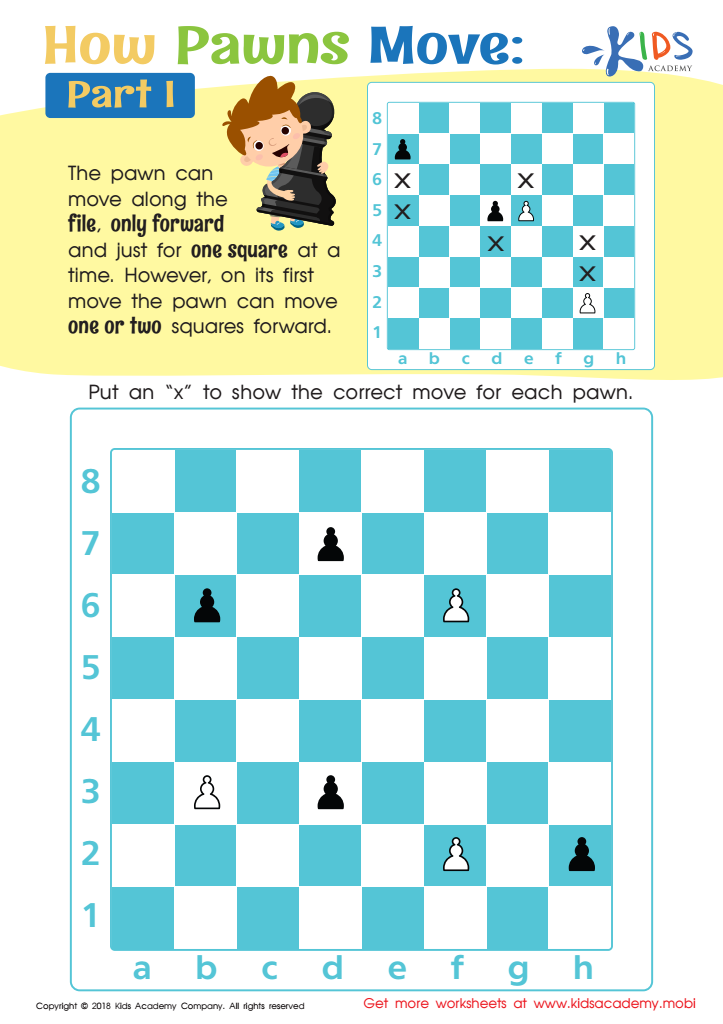
How Pawns Move: Part I Worksheet
Pawns can only move forward along the file one square at a time. For its first move, a pawn can move one or two squares. Show your child how to move pawns by asking them to put an X for the correct move on this worksheet. This exercise will help them gain confidence in using pawns.
How Pawns Move: Part I Worksheet
Worksheet
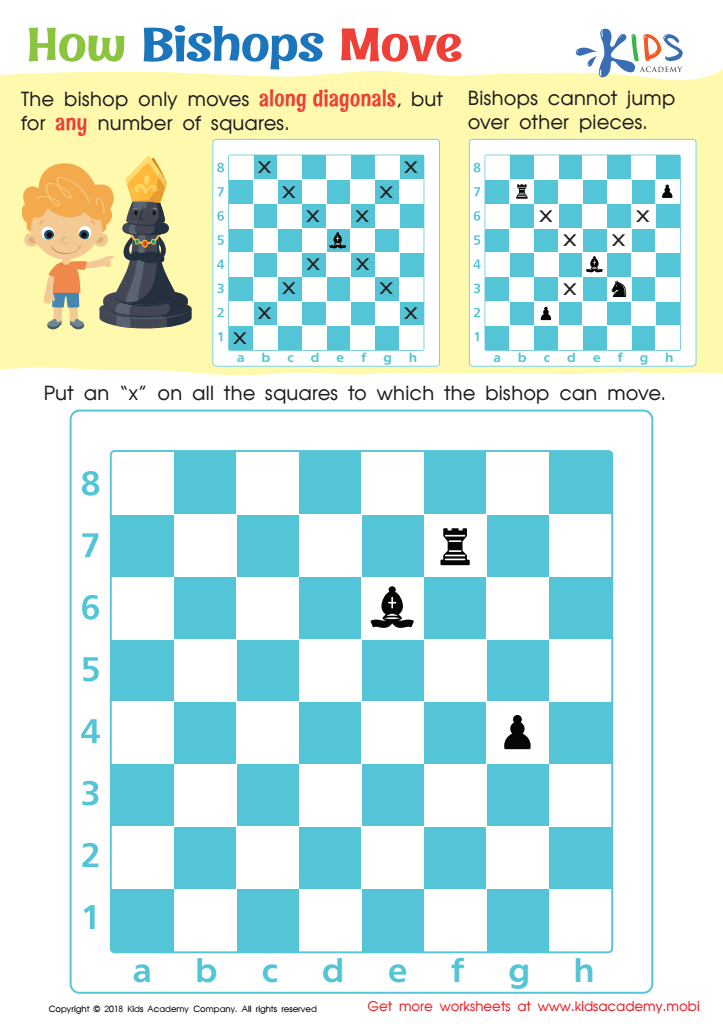
How Bishops Move Worksheet
There is no such thing as too much sharpening of skills. Encourage your child to learn more about chess technicalities with this simple worksheet. It shows them how a bishop moves: along diagonals any number of squares, but it can't jump over other pieces.
How Bishops Move Worksheet
Worksheet
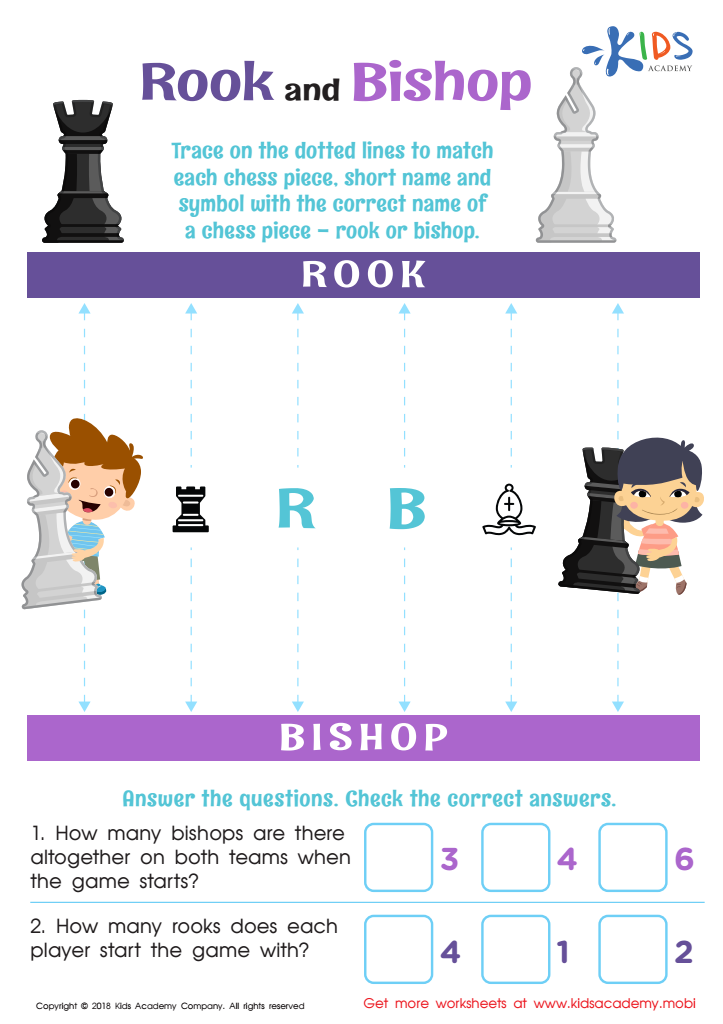
Rook and Bishop Worksheet
This tracing sheet helps your child learn chess pieces by matching each piece, short name and symbol to the correct name. After tracing, have them answer the questions and check their answers. It's a great way for them to become familiarized with chess.
Rook and Bishop Worksheet
Worksheet
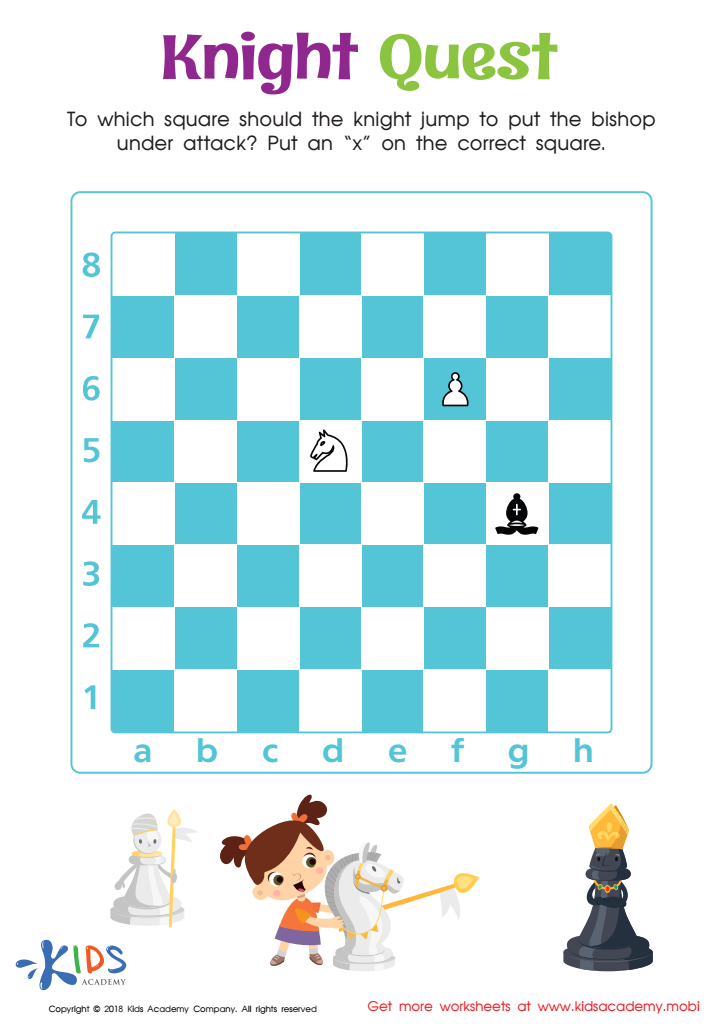
Knight Quest Worksheet
Testing your child's strategic planning and chess skills? Give them this worksheet: Ask them to mark an 'x' on the square where the knight should jump to attack the enemy bishop. See how well they plan for a win! (80 words)
Knight Quest Worksheet
Worksheet
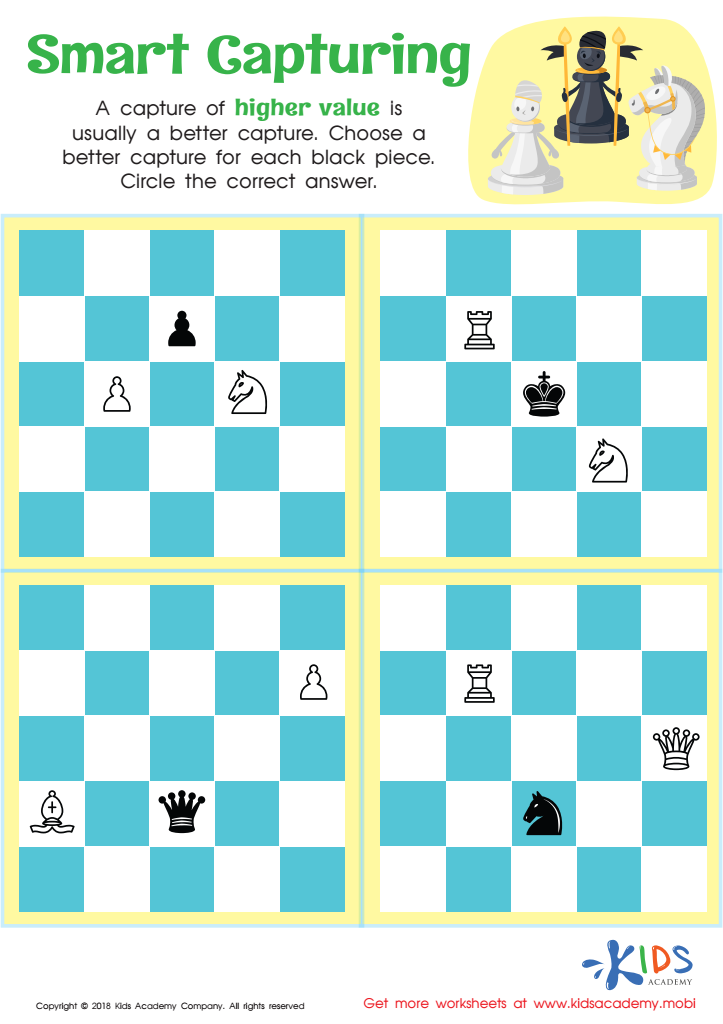
Smart Capturing Worksheet
Chess is a game of strategy and calculation. When presented with two captures, a player should always go for the one that yields the highest value. For example, taking a knight over a pawn. In this worksheet, your children will choose the best capture for each black piece. Ask them to circle the correct answers. (80 words)
Smart Capturing Worksheet
Worksheet
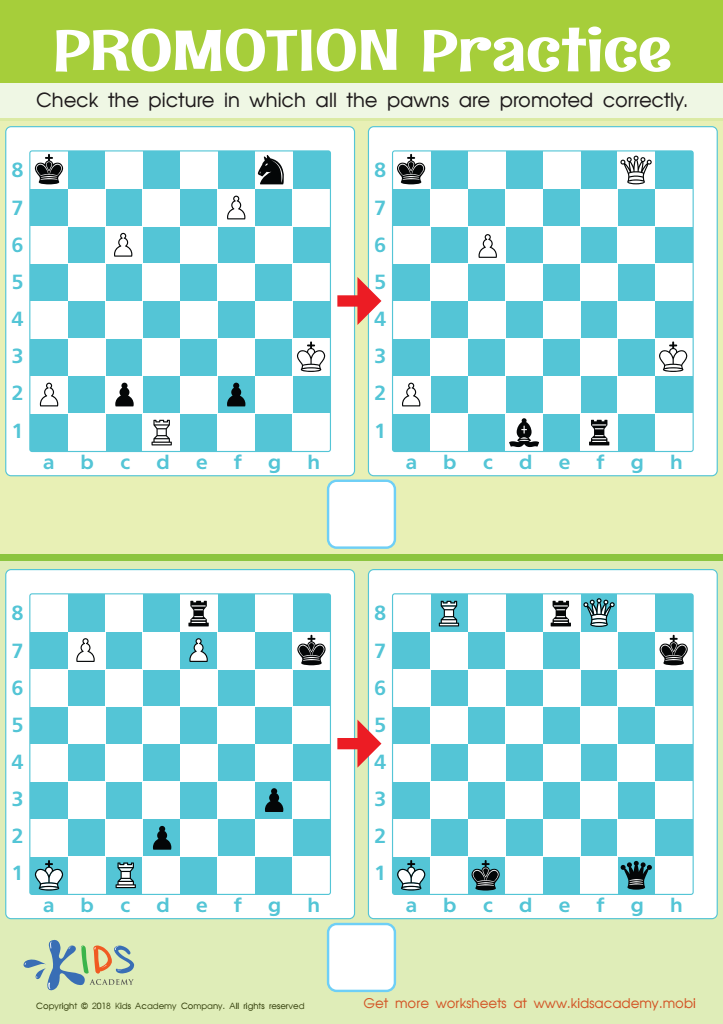
Promotion Practice Worksheet
Test your kids' promotions skills with this worksheet! Ask them to find the pictures in which the pawns are correctly promoted. Remember, when a pawn reaches the last rank it may be promoted to a queen, bishop, knight or rook. In addition, a pawn can be promoted when it captures a chess piece on the last rank.
Promotion Practice Worksheet
Worksheet
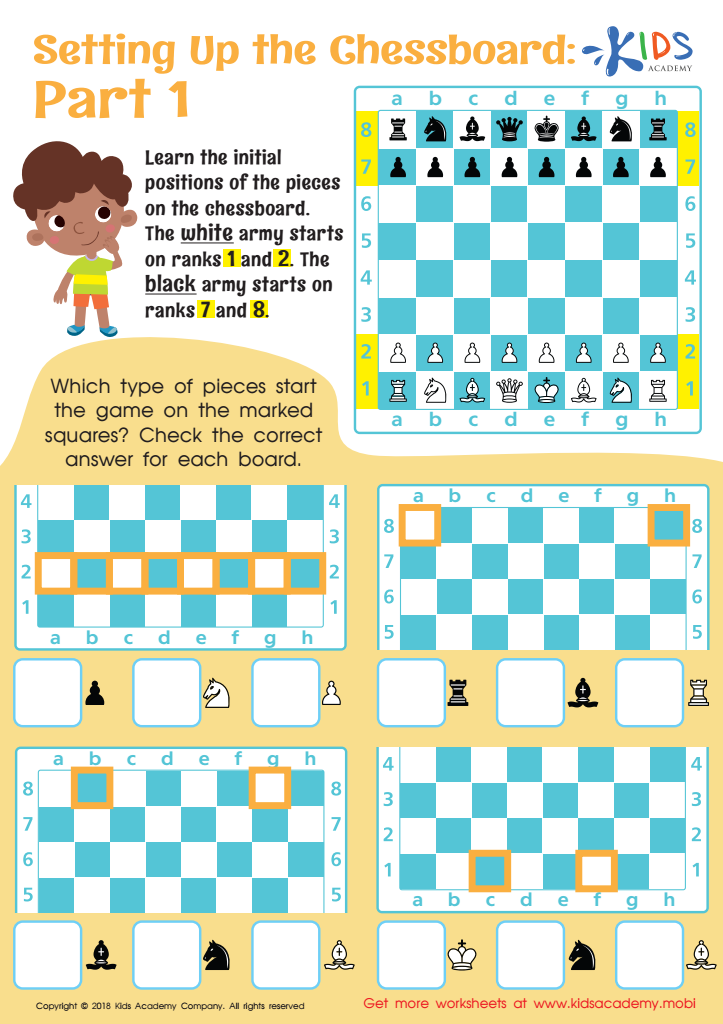
Setting up the Chessboard: Part 1 Worksheet
Teach your child the starting positions of the black and white armies on the chessboard. Black pieces are placed on ranks 7 and 8, and white pieces on ranks 1 and 2. Have them check the highlighted boxes on the chessboard to make sure they know the correct pieces to start with.
Setting up the Chessboard: Part 1 Worksheet
Worksheet
Join Kids Academy for Free
Who is primarily going to use this learning content?