Practice Grammar Worksheets With Answer Keys - Page 2
66 filtered results
Difficulty Level
Grade
Age
-
From - To
Subject
Activity
Standards
Favorites
With answer key
Interactive
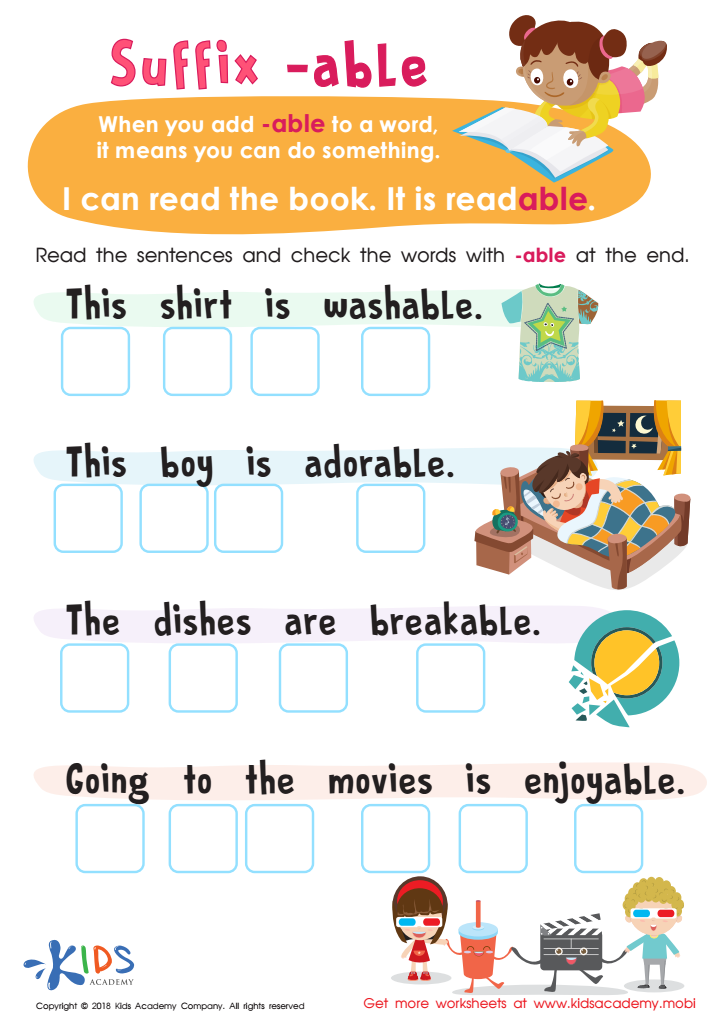
Suffix -Able Worksheet
Suffix -able means you can do something. Example: readable - means you can read it. Give kids examples then check this worksheet. Read sentences with kids, looking for words with -able at the end.
 Assign to My Students
Suffix -Able Worksheet
Worksheet
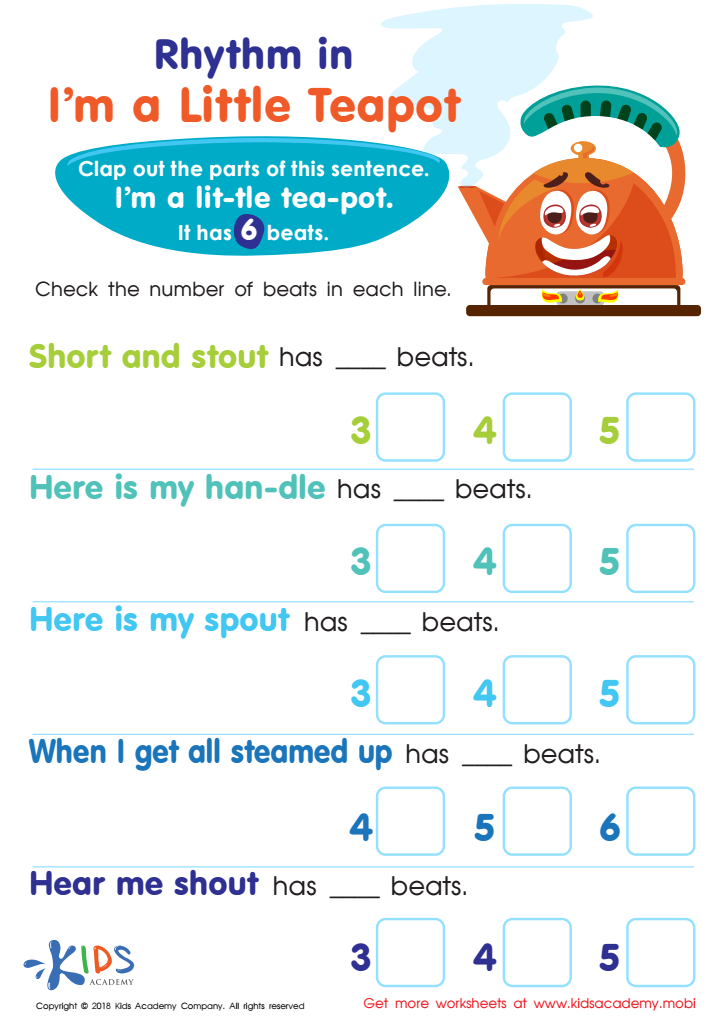
Rhythm in I'm a Little Teapot Worksheet
Clap along and count the beats of this classic children's song! With this worksheet, help your child read and clap out each phrase. Check the boxes for the correct number of syllables in each word. Have fun counting and learning with this cute ELA activity!
Rhythm in I'm a Little Teapot Worksheet
Worksheet
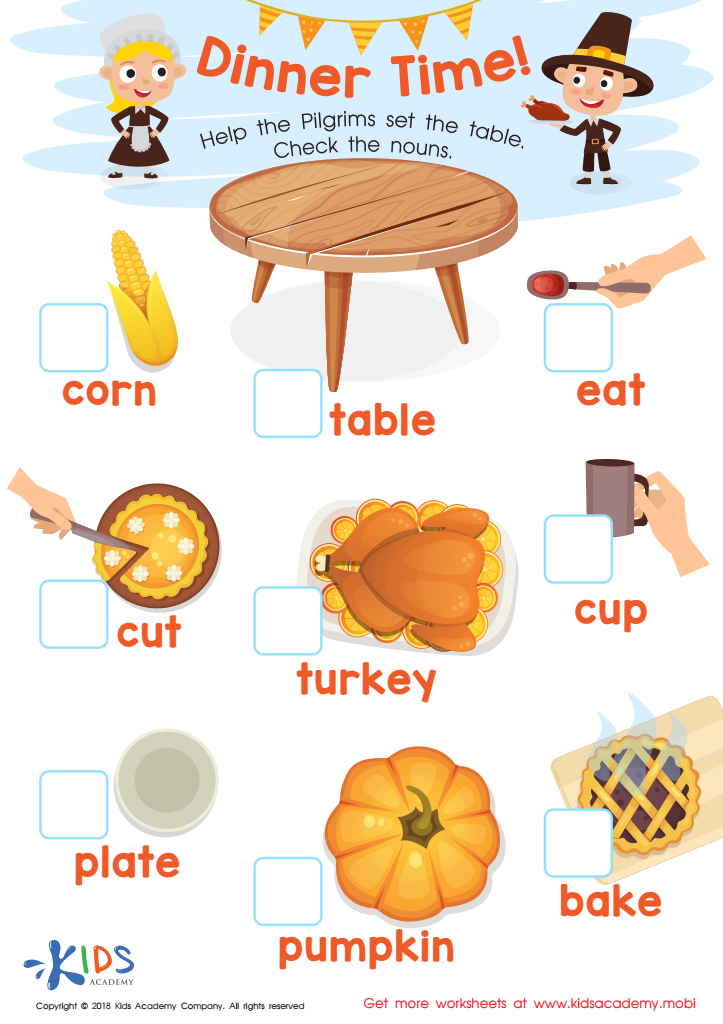
Dinner Time! Worksheet
Help your child learn about the Pilgrims by completing this worksheet! The Pilgrims set sail on the Mayflower in 1620 and colonized America, meeting the Native Americans already living there and picking up some of their traditions, like Thanksgiving dinner. Check the nouns in the picture and help your child set the table with the celebratory turkey!
Dinner Time! Worksheet
Worksheet
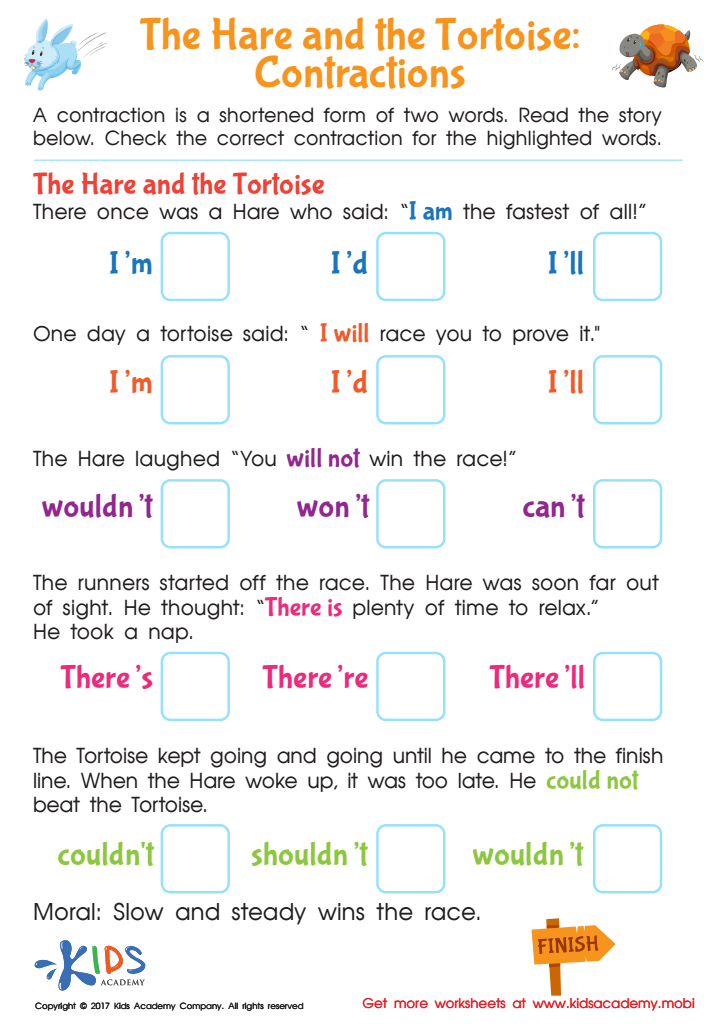
Contractions Worksheet
Read a funny story about the hare and the tortoise to learn about contractions with this grammar worksheet pdf. Tick the right contraction from the options given.
Contractions Worksheet
Worksheet
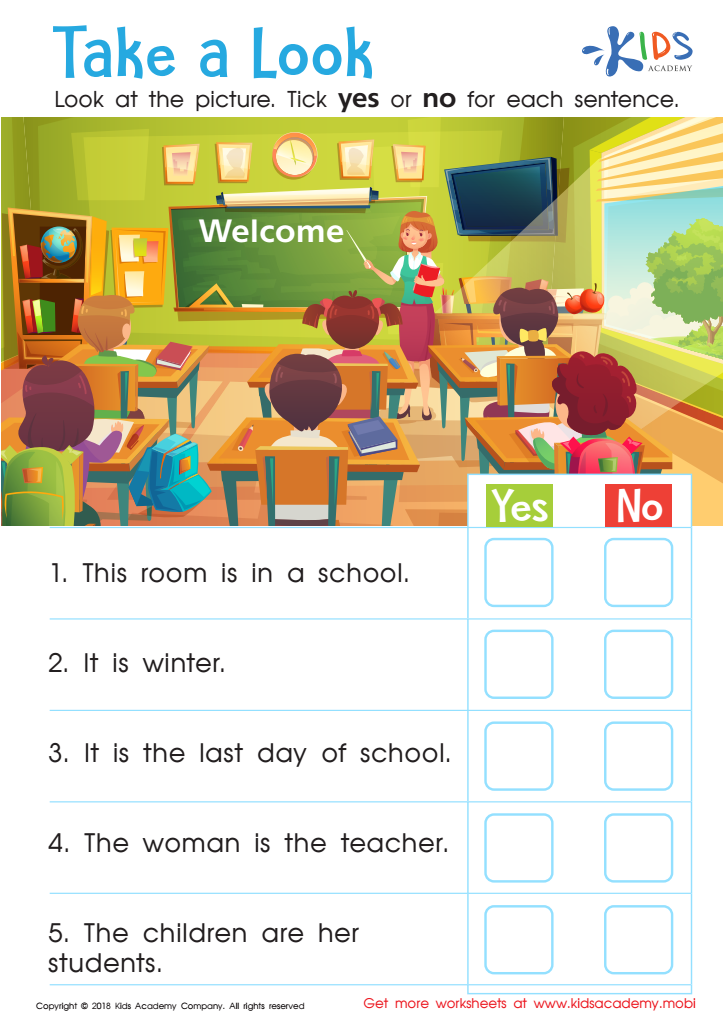
Take a Look - Part 2 Worksheet
Train children to be observant by having them look at a scene and noting all details. Then, read sentences and match them with the picture. Finally, answer whether the statement is true or false. This PDF worksheet helps kids with this skill. 80 words.
Take a Look - Part 2 Worksheet
Worksheet
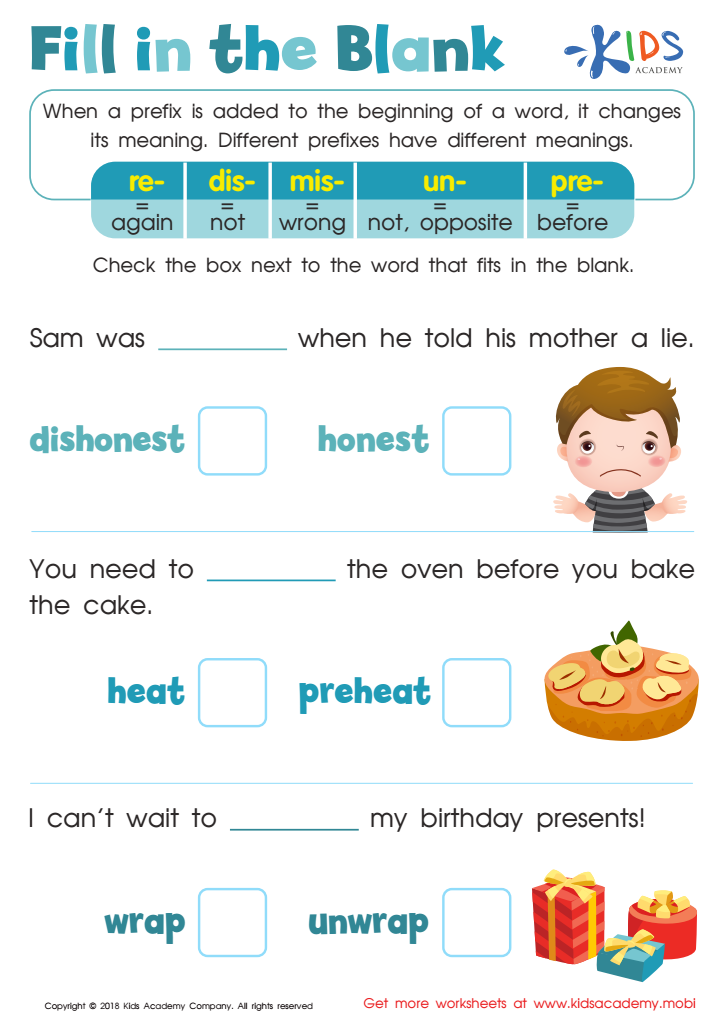
Reading: Fill in the Blank Worksheet
Students can practice understanding the meaning of common prefixes with this worksheet. They read sentences and pick the correct word with the appropriate prefix to complete it. Downloadable and a great addition to reading and vocabulary resources, this helps improve comprehension with mastery of the skill!
Reading: Fill in the Blank Worksheet
Worksheet
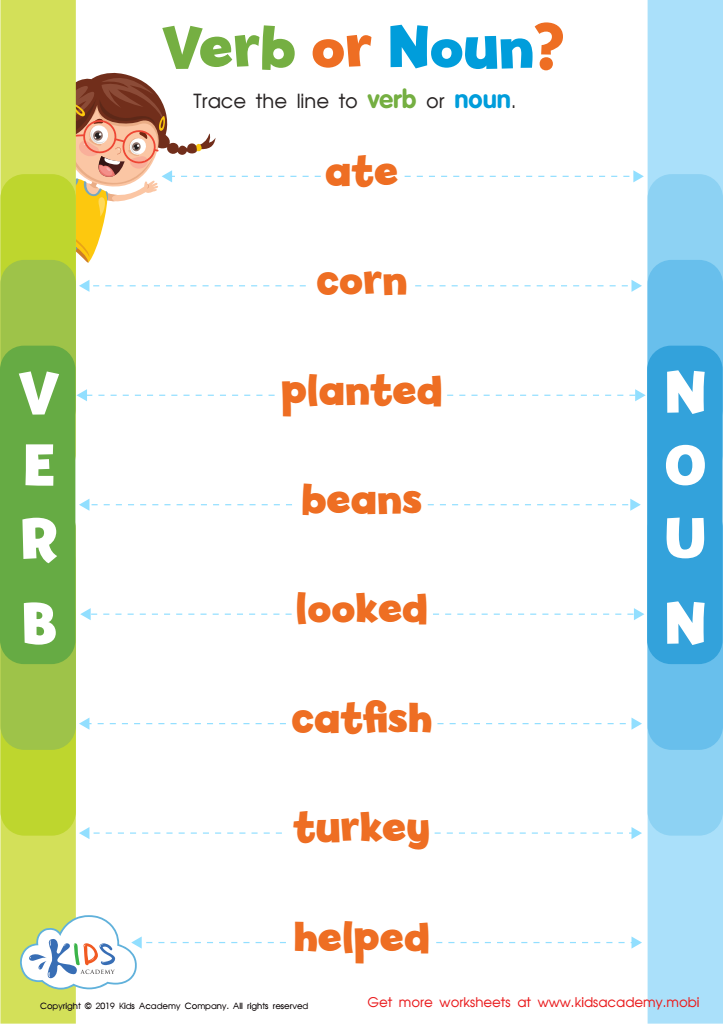
Verb or Noun Worksheet
Explain verbs and nouns to your kids, then read all the words on the tracing sheet aloud. Help them identify and trace the lines to a verb or noun. This activity helps them understand sentence structure and strengthens language skills.
Verb or Noun Worksheet
Worksheet
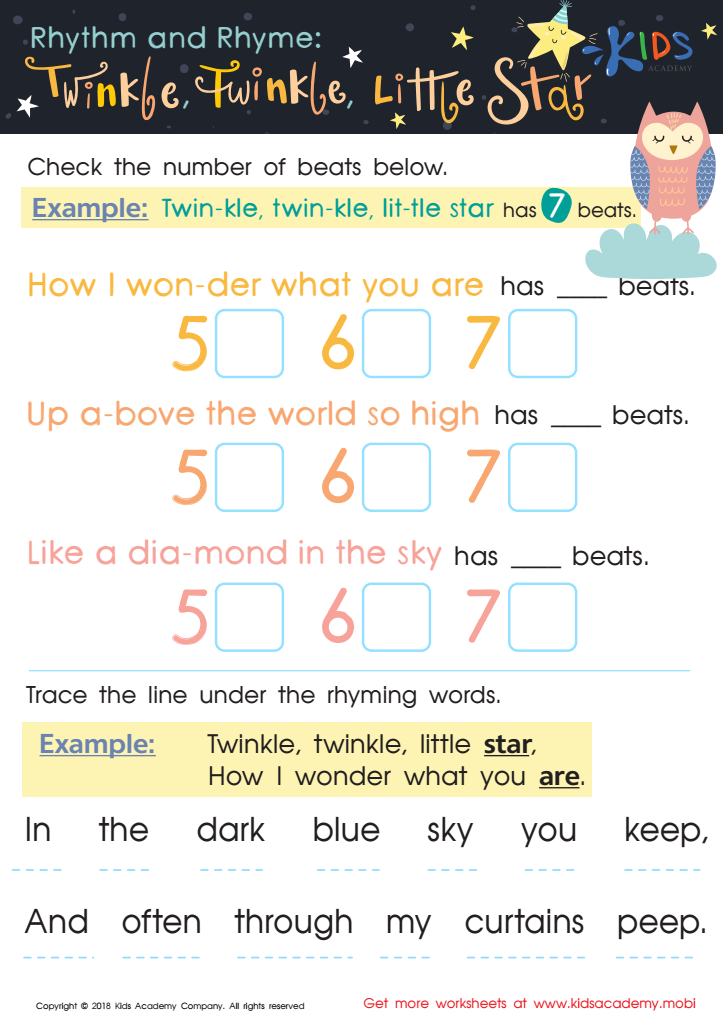
Rhythm and Rhyme: Twinkle, Twinkle, Little Star Worksheet
Kids will love learning about syllables in words with a fun children's song! Use the song Twinkle, Twinkle, Little Star to explain that each word has at least one beat. Have them clap out the beats in each word and check the boxes on this cute worksheet to identify the syllables.
Rhythm and Rhyme: Twinkle, Twinkle, Little Star Worksheet
Worksheet
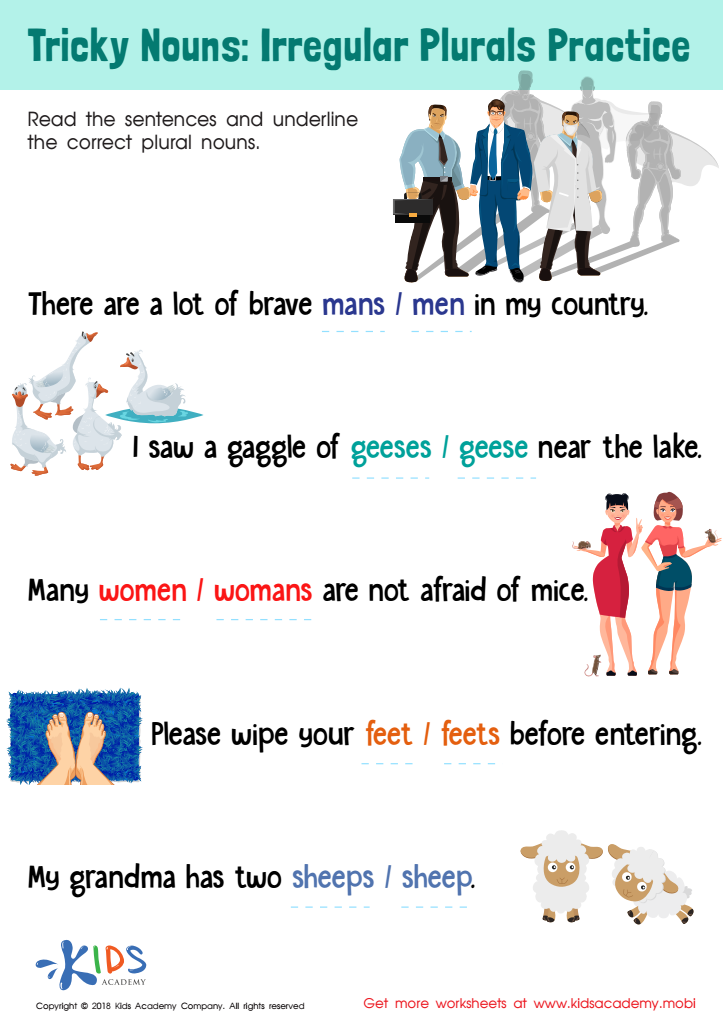
Tricky Nouns: Irregular Plurals Practice Worksheet
Rules for forming plurals of words can be tricky, but with practice, your child can learn to identify the right ones. This worksheet provides the necessary practice - ask your child to read the sentences, then underline the correct plural words.
Tricky Nouns: Irregular Plurals Practice Worksheet
Worksheet
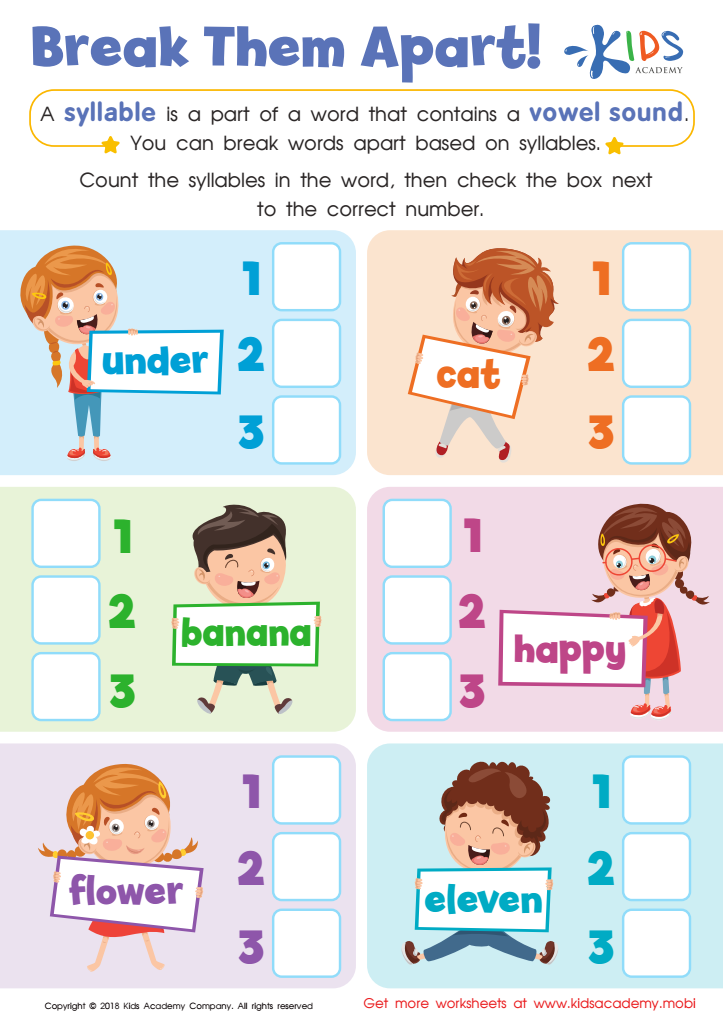
Reading: Break Them Apart Worksheet
See if students understand syllables with this fun worksheet. It teaches them that a syllable is a word part with a vowel sound. Kids read each word and choose how many parts it has. Doing this often helps them decode new words and gain confidence.
Reading: Break Them Apart Worksheet
Worksheet
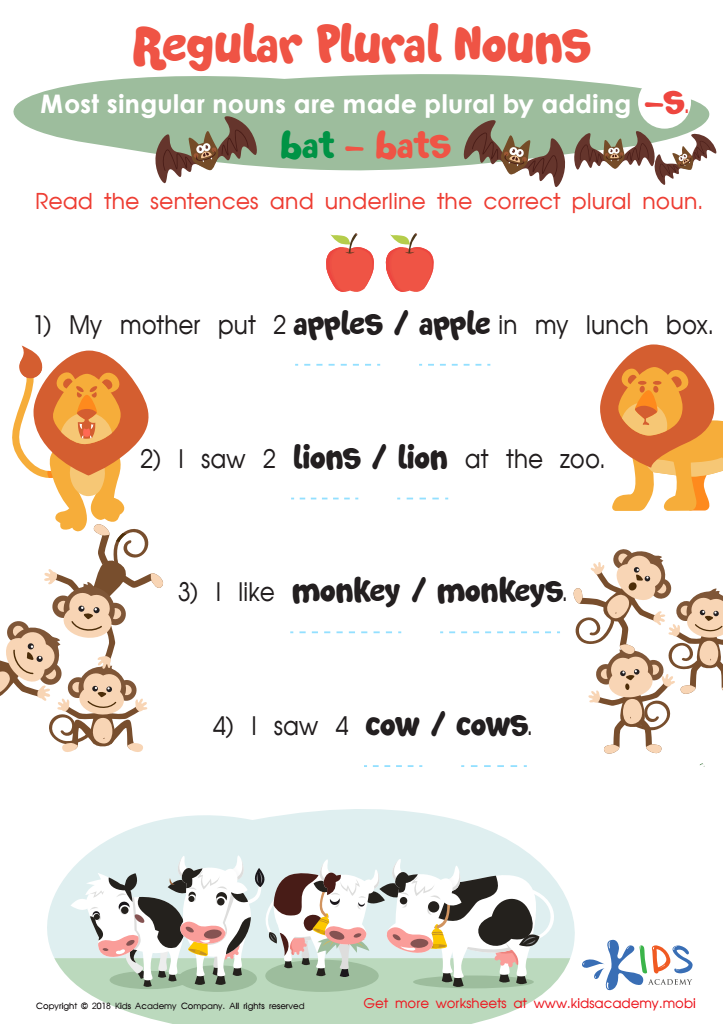
Regular Plural Nouns Worksheet
Your child should know the rule of adding '-s' to form plurals of nouns by now. Examples: bat-bats, cat-cats, song-songs etc. If they understand this, the task in the worksheet should be easy. Read the sentences and ask them to underline the correct plural noun.
Regular Plural Nouns Worksheet
Worksheet
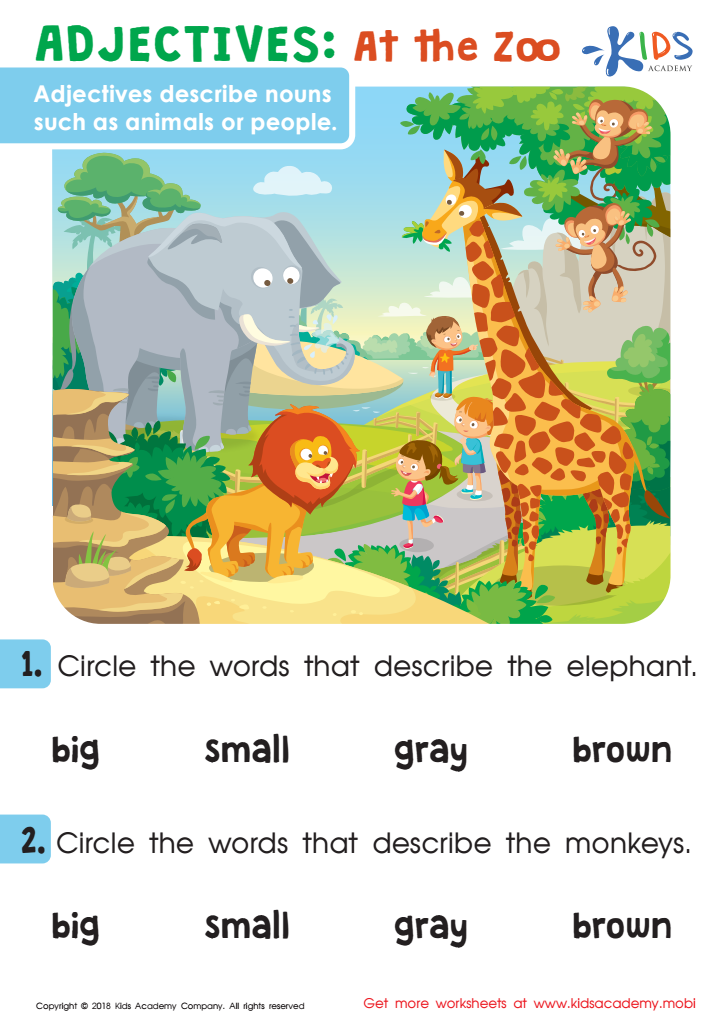
Adjectives: At The Zoo Worksheet
Take your kids to the zoo and ask them about their favorite activities and animals. This worksheet is a great way for kids to learn about adjectives. Explain that adjectives describe nouns like people or animals (e.g. big, tall, dark). Look at the printout with your kids and help them circle words that describe the animals in the picture.
Adjectives: At The Zoo Worksheet
Worksheet
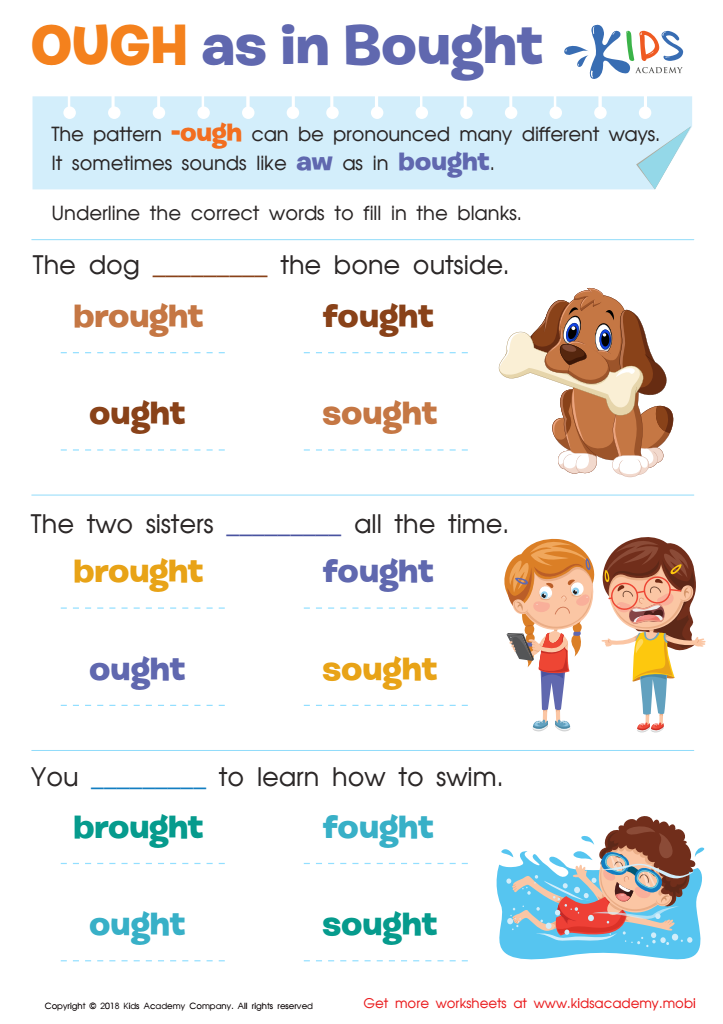
OUGH as in Bought Worksheet
Use this worksheet to teach your child the different pronunciations of -ough. For example, -ough can sound like ‘aw’ in ‘bought’. Ask your child to give more examples and help them underline the correct answers to fill in the blanks.
OUGH as in Bought Worksheet
Worksheet
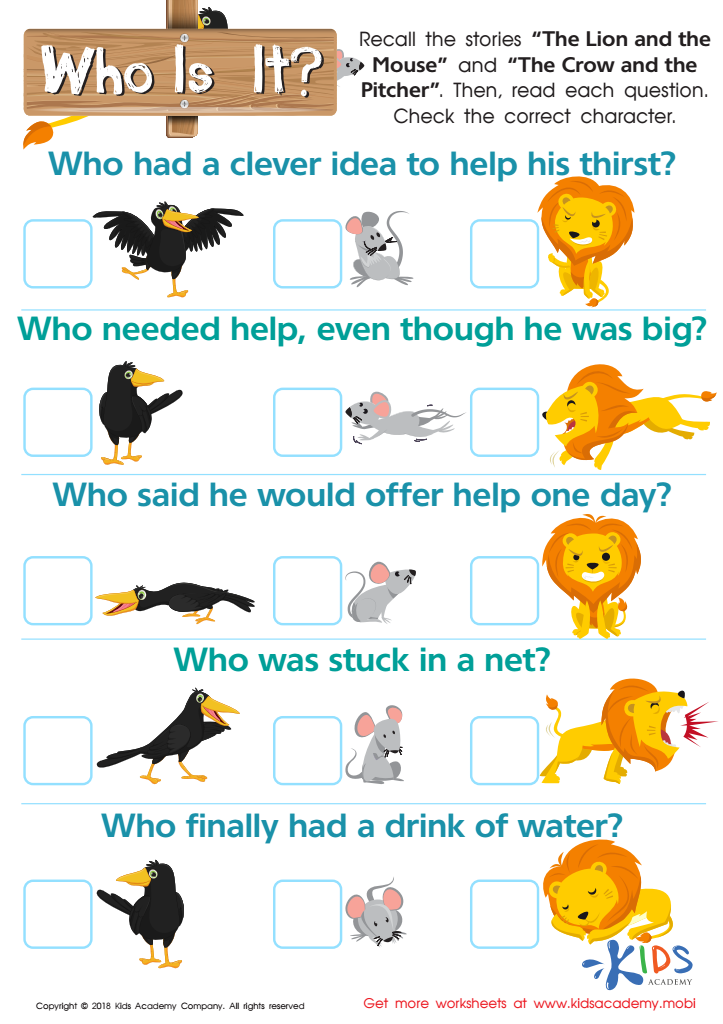
Who Is It? Worksheet
This worksheet helps students recall details from The Crow and the Pitcher and The Lion and the Mouse stories. Students will answer questions about the characters' actions. Use it to assess their understanding of both stories, as this is a key comprehension skill.
Who Is It? Worksheet
Worksheet
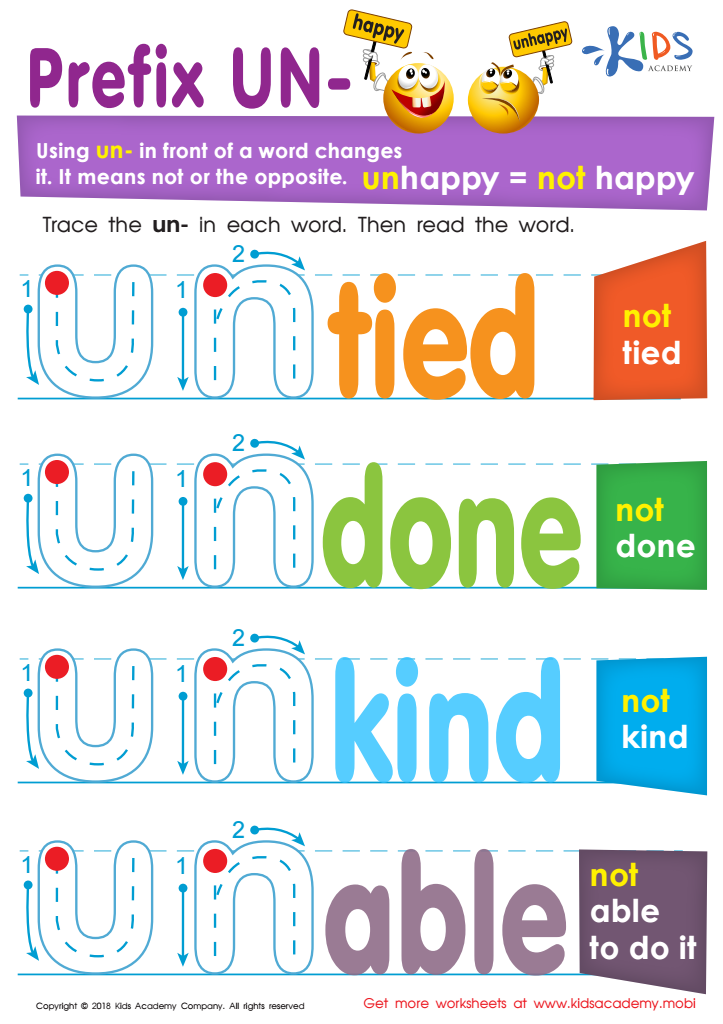
Prefix Un- Worksheet
Help your child understand the concept of adding "un-" to the front of words by giving examples such as "unhappy" (not happy) and "unserious" (not serious). Guide them in tracing the "un-" in each word and read it aloud together.
Prefix Un- Worksheet
Worksheet
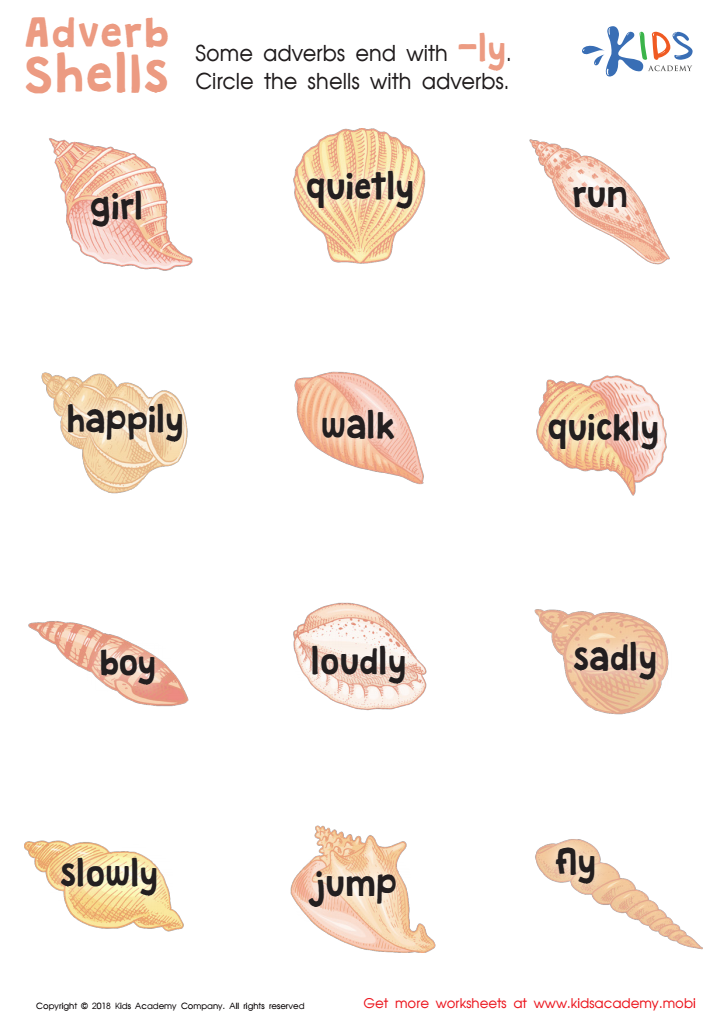
Adverb Shells Worksheet
Help your kids understand adverbs by giving them an example with an adverb. Ask them to point it out. Adverbs often end with –ly. Give them a worksheet to circle adverbs in a picture. This way, they'll easily identify them in a sentence.
Adverb Shells Worksheet
Worksheet
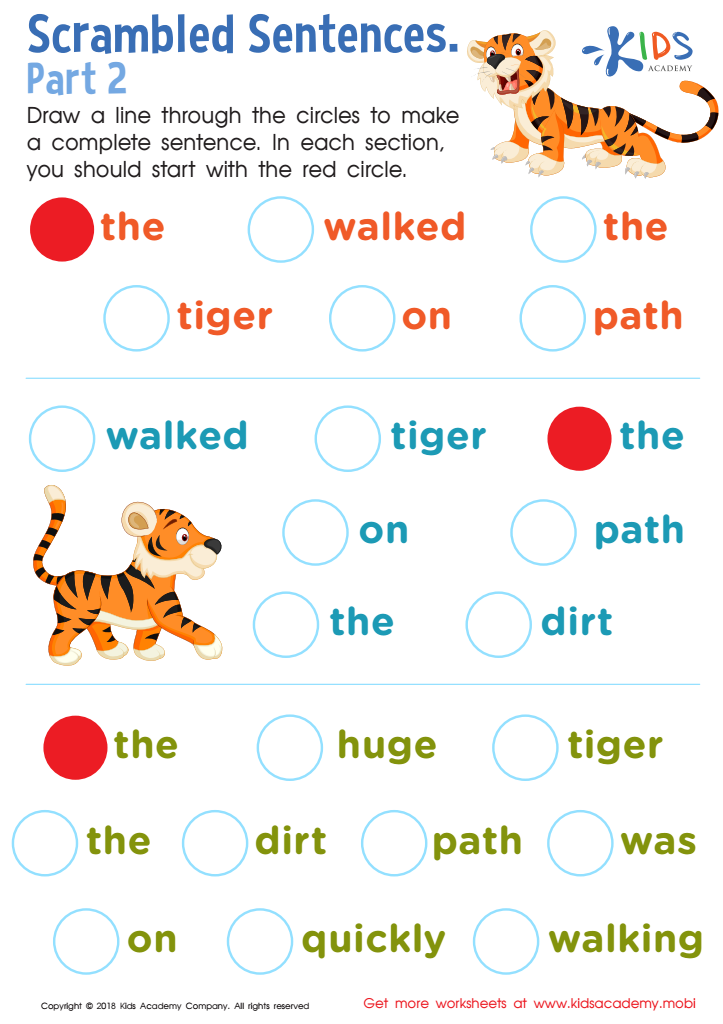
Scrambled Sentences Part 2 Worksheet
This printable worksheet helps kids construct simple, correct sentences. Introduce them to making sentences if they're new to it. Have them draw a line through the circles to form a sentence, starting with the red circle. After completing this exercise, they'll be able to craft short sentences with confidence.
Scrambled Sentences Part 2 Worksheet
Worksheet
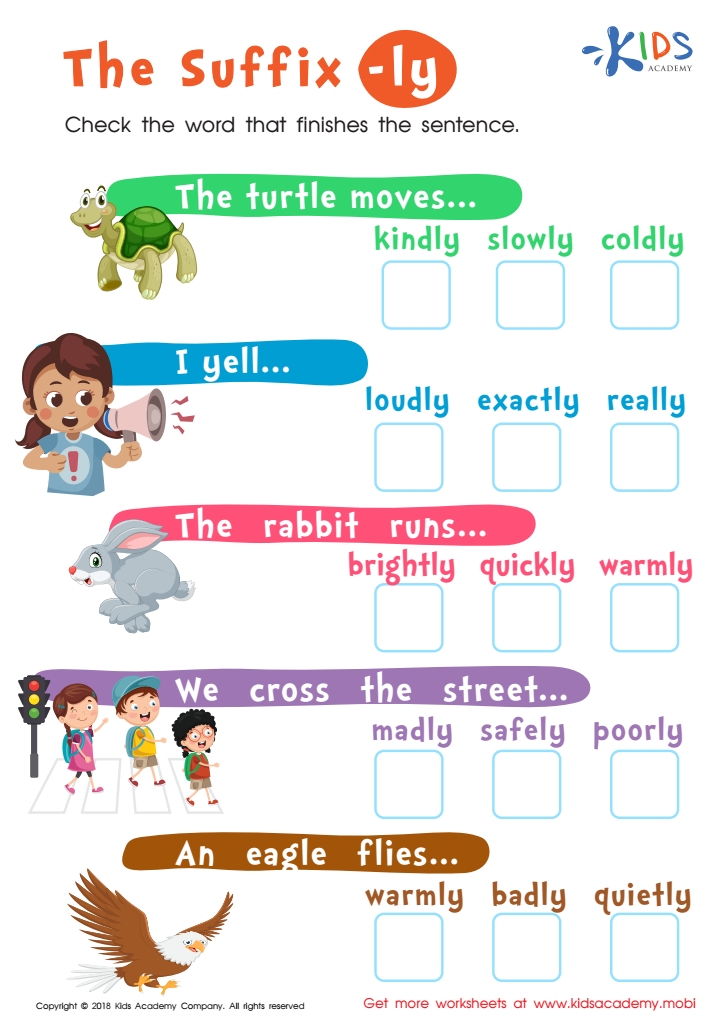
The Suffix -Ly Worksheet
Suffixes change the meaning of words: the -ly suffix usually describes how an action is done (e.g. slowly, quickly, loudly). Help your child understand this and then check out the fun worksheet. Ask them to identify the animals and people in the pictures, then read the sentences out loud and have them check the ones that finish the sentence.
The Suffix -Ly Worksheet
Worksheet
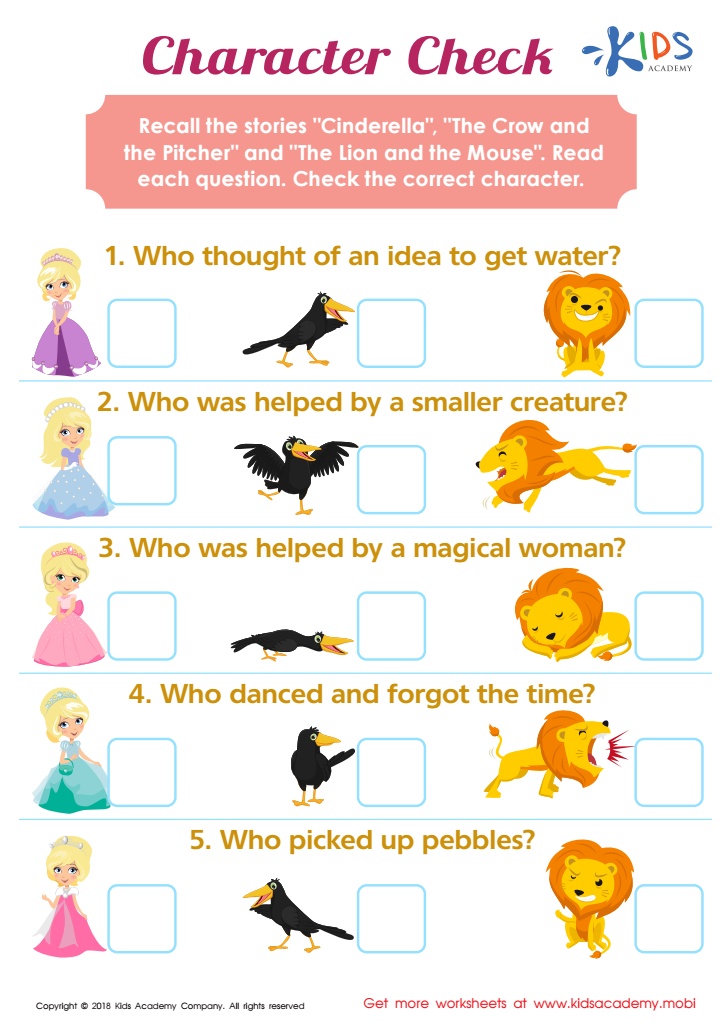
Character Check Worksheet
Ensure your child has read "Cinderella," "The Crow and the Pitcher" and "The Lion and the Mouse" before using this worksheet to assess their reading comprehension and characterization skills. Read each question and have them check the box next to the correct character to complete the task!
Character Check Worksheet
Worksheet
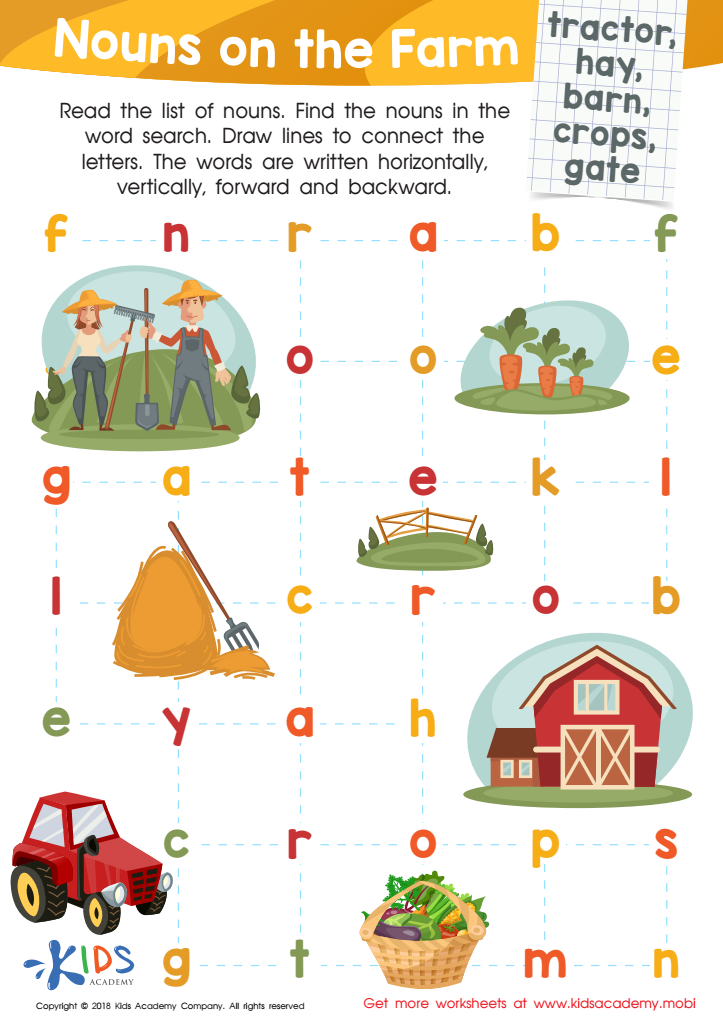
Nouns on the Farm Worksheet
Help your child learn nouns with this worksheet: Read the list to them and have them find the nouns in the word search. Draw lines to connect the letters, and explain the words can be found horizontally, vertically, forward, and backward.
Nouns on the Farm Worksheet
Worksheet
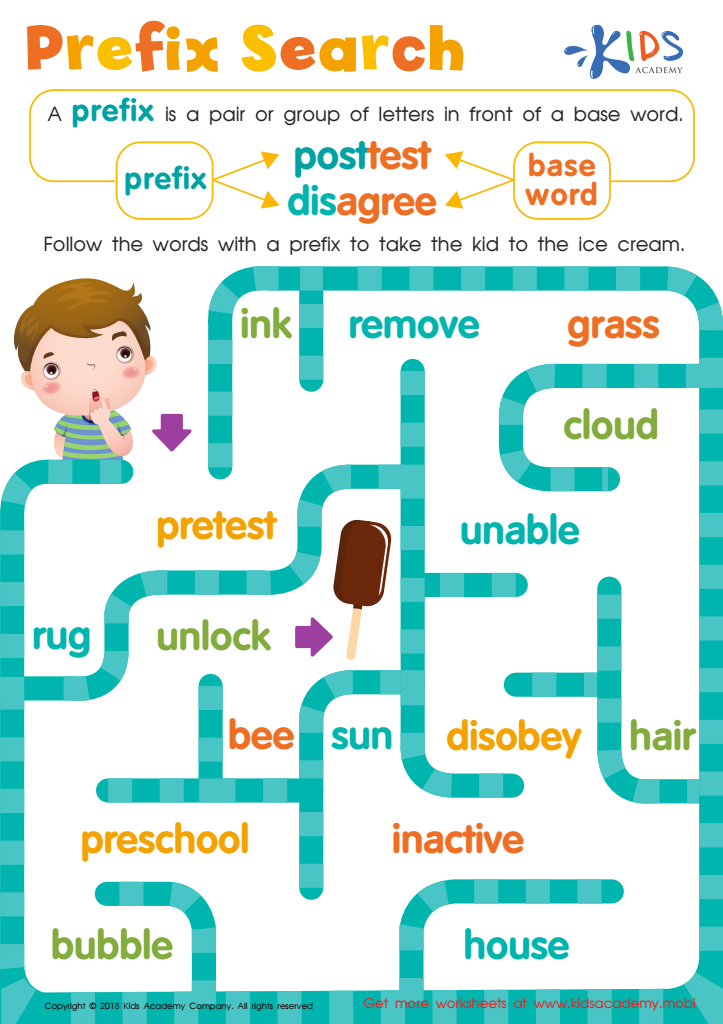
Reading: Prefix Search Worksheet
Maze your way through prefixes! This worksheet helps students practice reading new words with a prefix and figuring out the base word. An understanding of prefixes gives students the skills to comprehend new words. A fun and useful activity for the reading classroom!
Reading: Prefix Search Worksheet
Worksheet
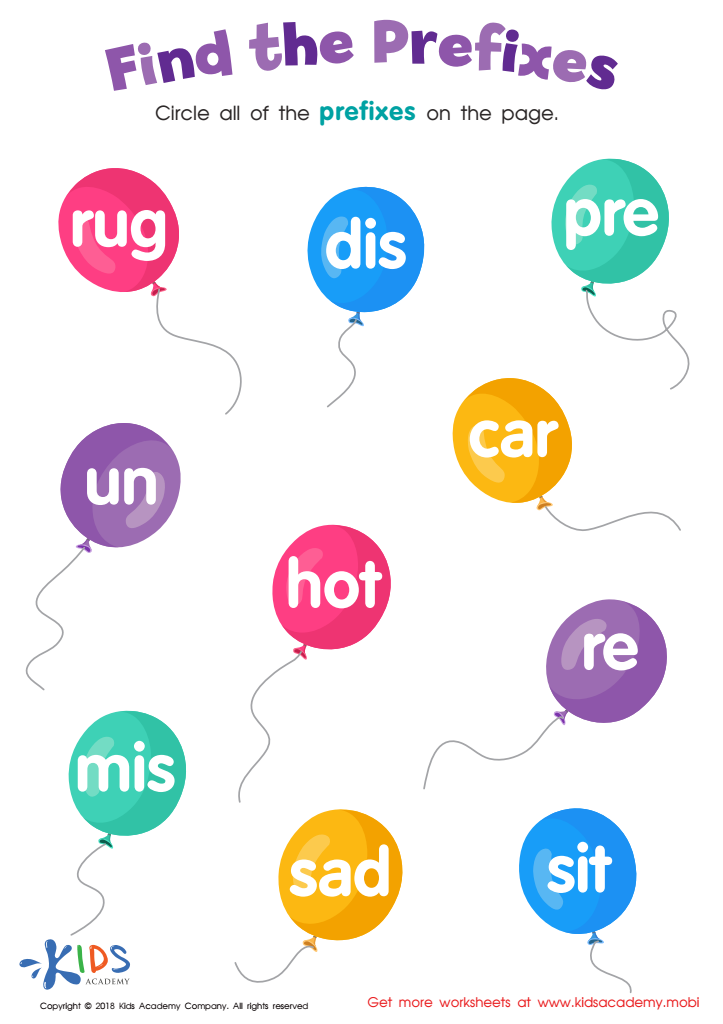
Reading: Find the Prefixes Worksheet
Students are asked to circle all prefixes on this worksheet and brainstorm a list of words that have them. It's a great tool for teaching vocabulary and helps students understand new and unfamiliar words by recognizing how prefixes change meaning.
Reading: Find the Prefixes Worksheet
Worksheet
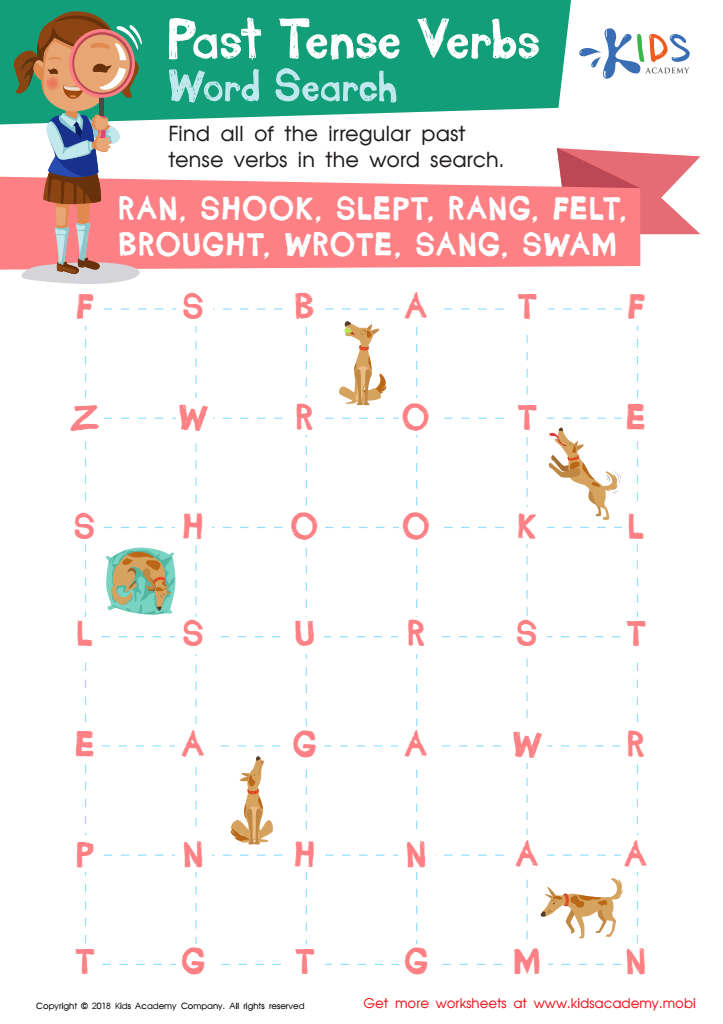
Past Tense Verbs Word Search Worksheet
Kids must learn the rules of past tenses to speak English correctly. This worksheet helps them understand irregular past tense verbs. As they search for them, ask them to read the words aloud; this reinforces the learning.
Past Tense Verbs Word Search Worksheet
Worksheet
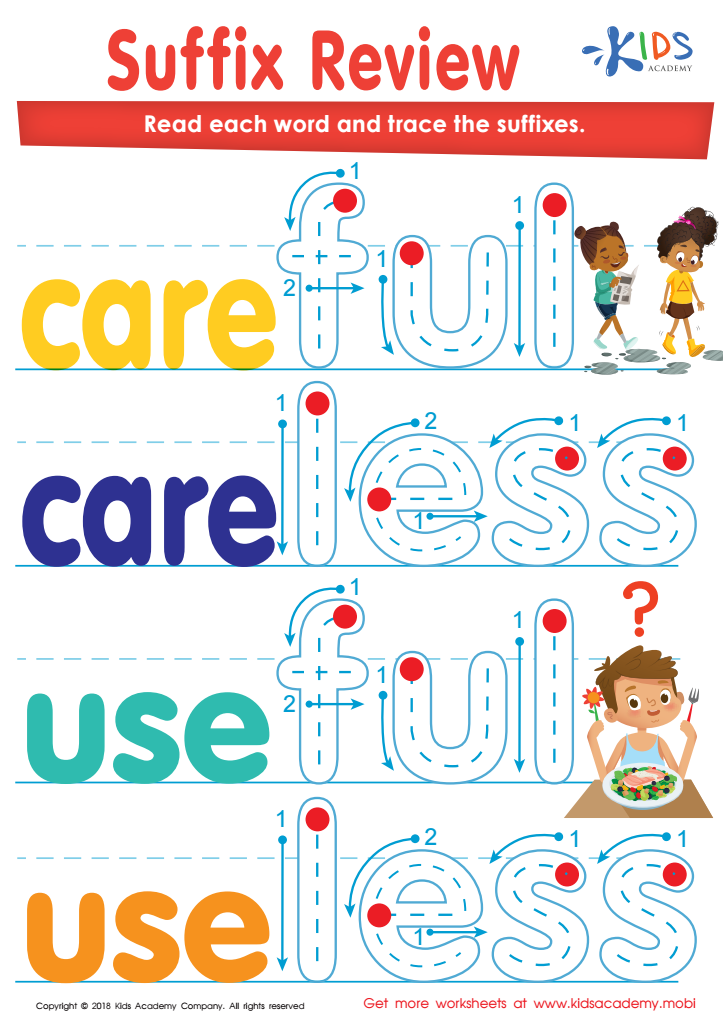
Suffix Review Worksheet
Help your child build language skills by reviewing suffixes with this illustrated worksheet! Trace suffixes and talk about how each change the word's meaning using familiar words. Vivid illustrations make the process fun and engaging. Get the building blocks of language your child needs!
Suffix Review Worksheet
Worksheet
Join Kids Academy for Free
Who is primarily going to use this learning content?