Critical thinking enhancement Chess Worksheets
4 filtered results
-
From - To
Enhance your child's critical thinking skills with our engaging Chess Worksheets! Designed for early learners, these printable activities stimulate strategic thinking and problem-solving through the exciting game of chess. Children will explore concepts like planning, forecasting moves, and evaluating opponents' strategies, all within a fun context. From beginner basics to more advanced concepts, each worksheet balances challenge and creativity. These resources not only promote cognitive development but also foster patience, focus, and decision-making abilities. Perfect for classroom or at-home use, our worksheets are a valuable tool to nurture young minds. Inspire your child’s intellect and love for chess today!
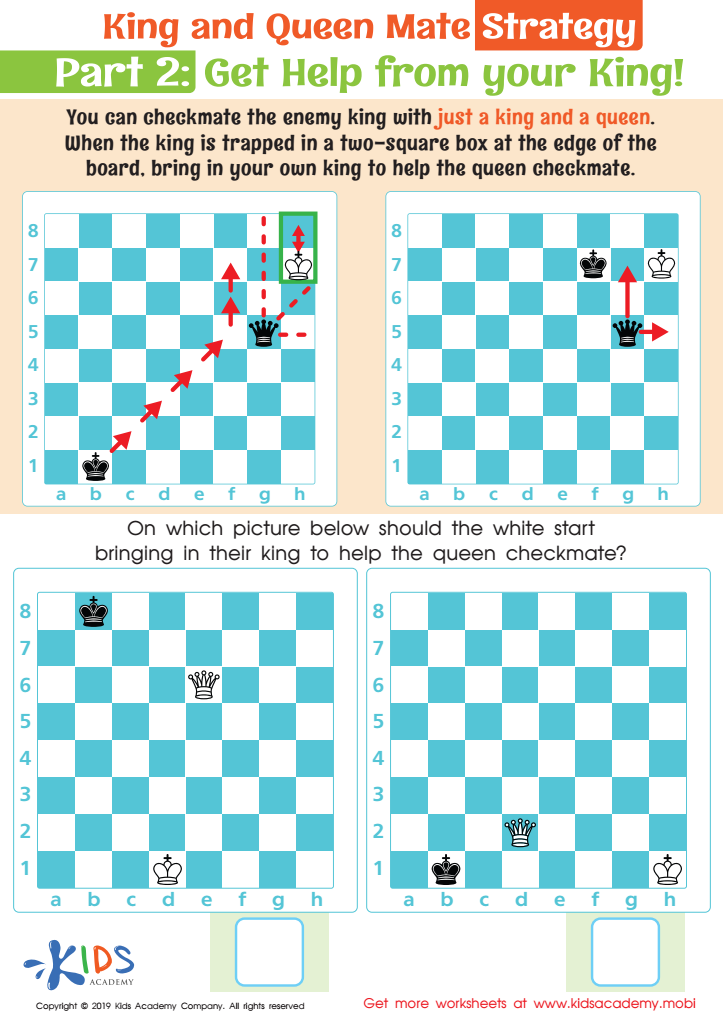
King and Queen Mate Strategy: Part 2 Worksheet
 Assign to My Students
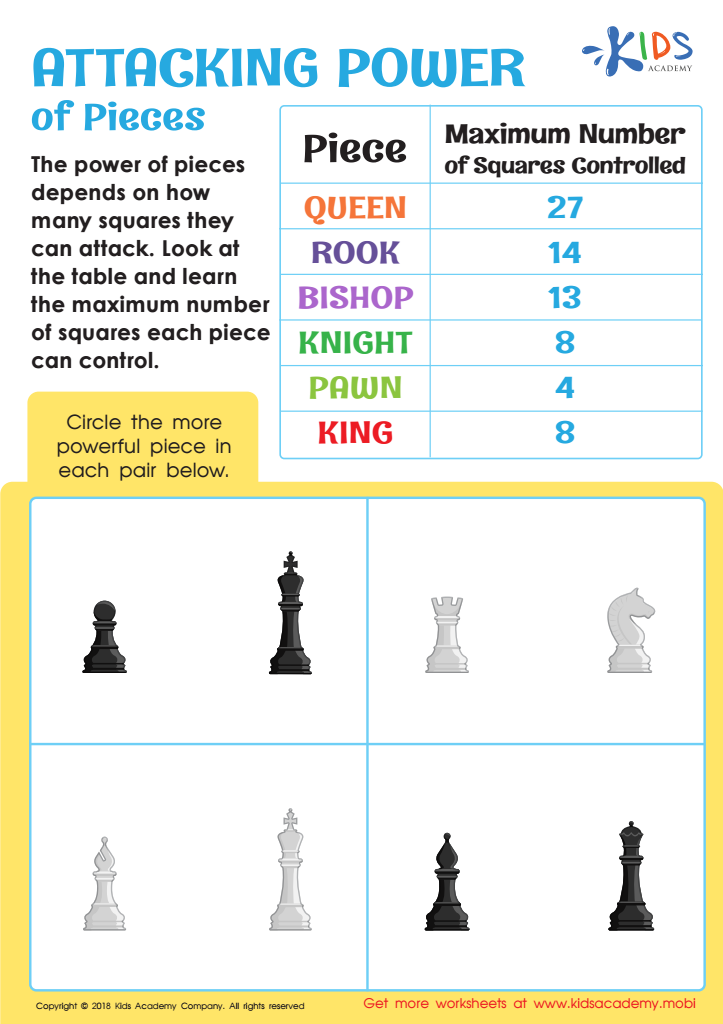
Attacking Power of Chess Pieces Worksheet
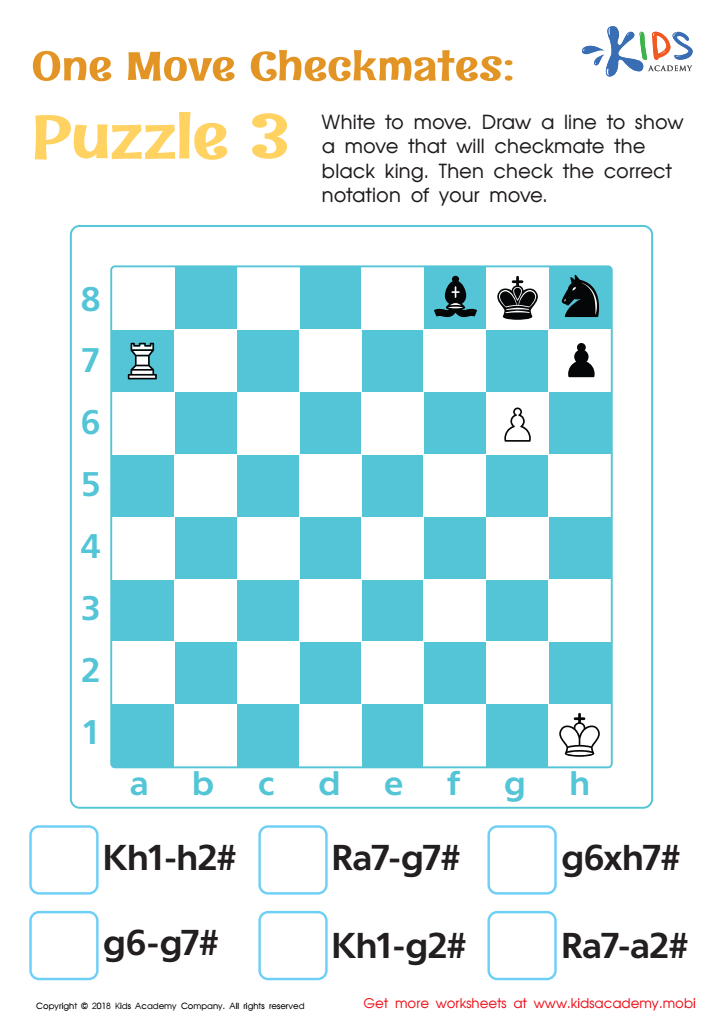
One Move Checkmates: Puzzle 3 Worksheet
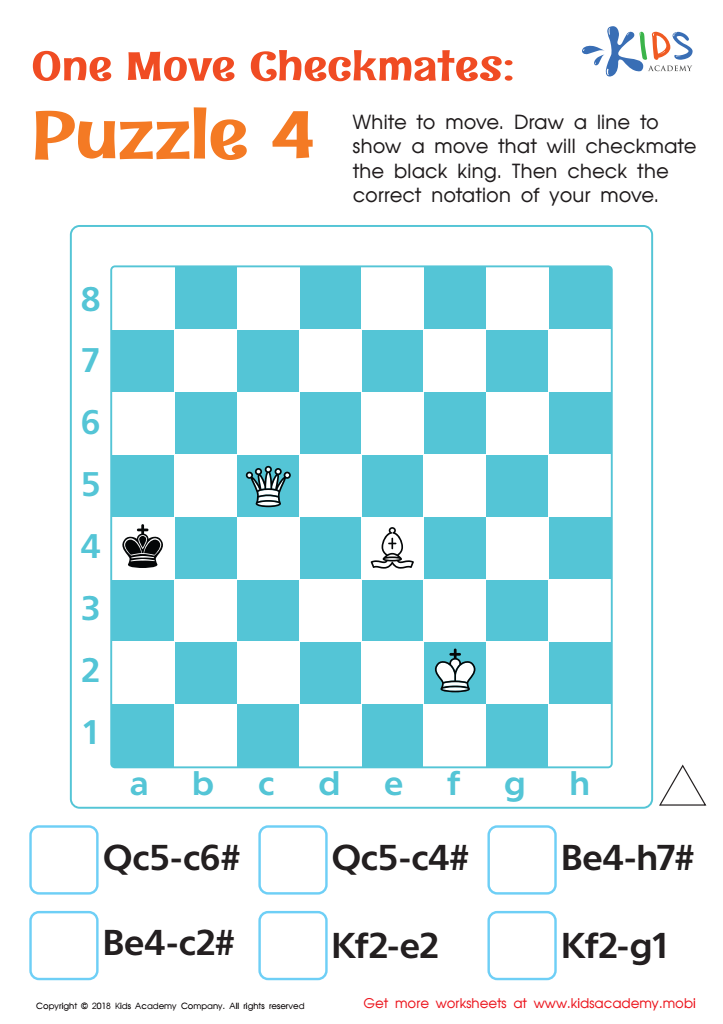
One Move Checkmates: Puzzle 4 Worksheet







Critical thinking enhancement through chess is vital for parents and teachers as it fosters essential cognitive skills in children. Chess requires players to think strategically, anticipate consequences, and analyze various outcomes before making a move. This aligns seamlessly with the development of critical thinking skills, encouraging children to develop problem-solving abilities, make informed decisions, and think independently.
Engaging children in chess can also enhance their focus and concentration. As they learn to evaluate their options, balance competing priorities, and plan several moves ahead, they are not only having fun but also honing their ability to process information systematically.
Furthermore, chess promotes patience and resilience, as players learn from their mistakes and adapt their strategies. This experience teaches children valuable life skills, making them more adaptable to challenges both academically and personally.
Lastly, promoting chess in educational settings cultivates a sense of community and teamwork, building social skills as children engage with their peers. Overall, introducing chess into the curriculum or at home is an investment in nurturing critical thinkers capable of thriving in an increasingly complex world. This thoughtful engagement helps set the foundation for lifelong learning and intellectual curiosity, making it a responsibility for both parents and teachers.