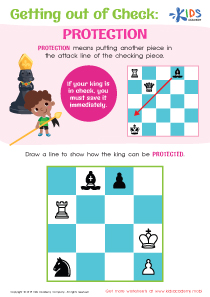
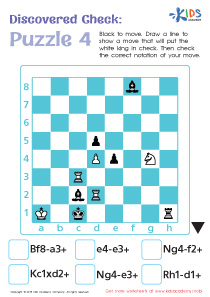
Number Recognition Chess Worksheets
4 filtered results
-
From - To
Enhance your child's math skills with our "Number Recognition Chess Worksheets"! Designed for young learners, these engaging worksheets combine the strategic world of chess with essential number recognition practice. Kids will love identifying and matching numbers while developing their counting skills using fun chess-themed activities. Our carefully crafted exercises not only make learning enjoyable but also promote critical thinking and problem-solving abilities. Whether at home or in the classroom, these worksheets provide an excellent resource for early grade teachers and parents alike. Download and print our free worksheets today to set your child on the path to numeracy success while having a blast!
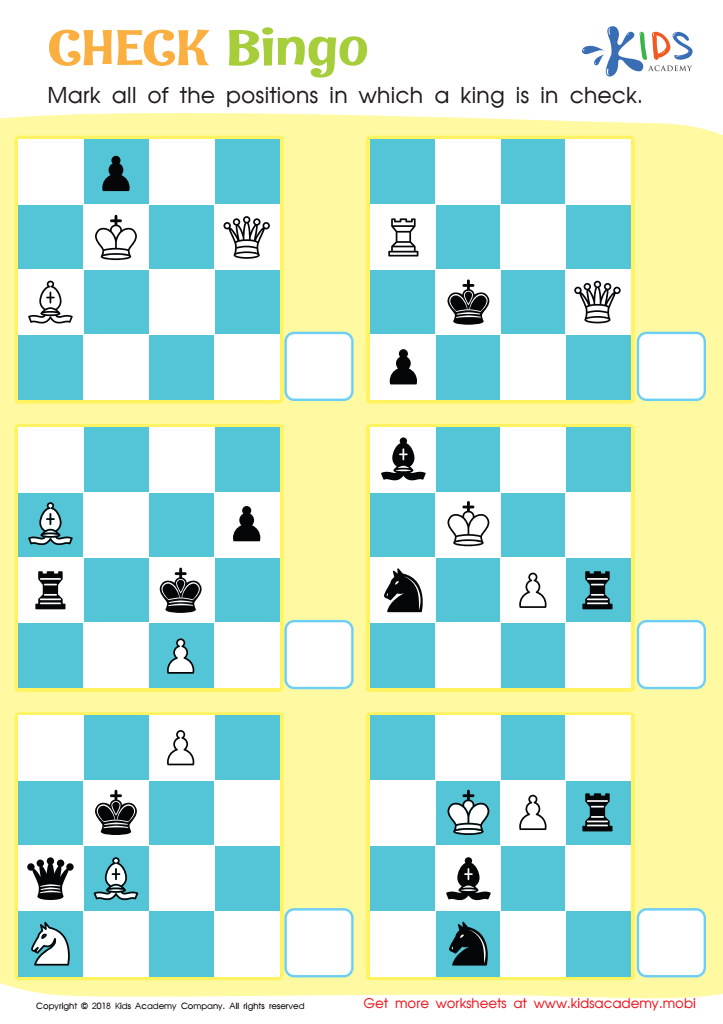
Check Bingo Worksheet
 Assign to My Students
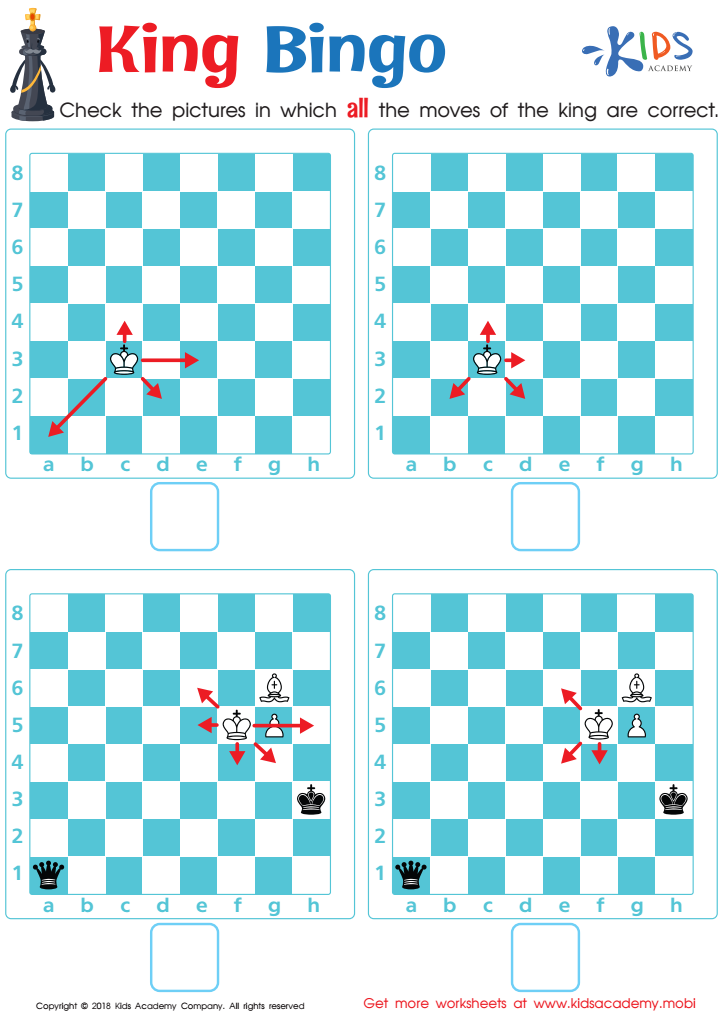
King Bingo Worksheet
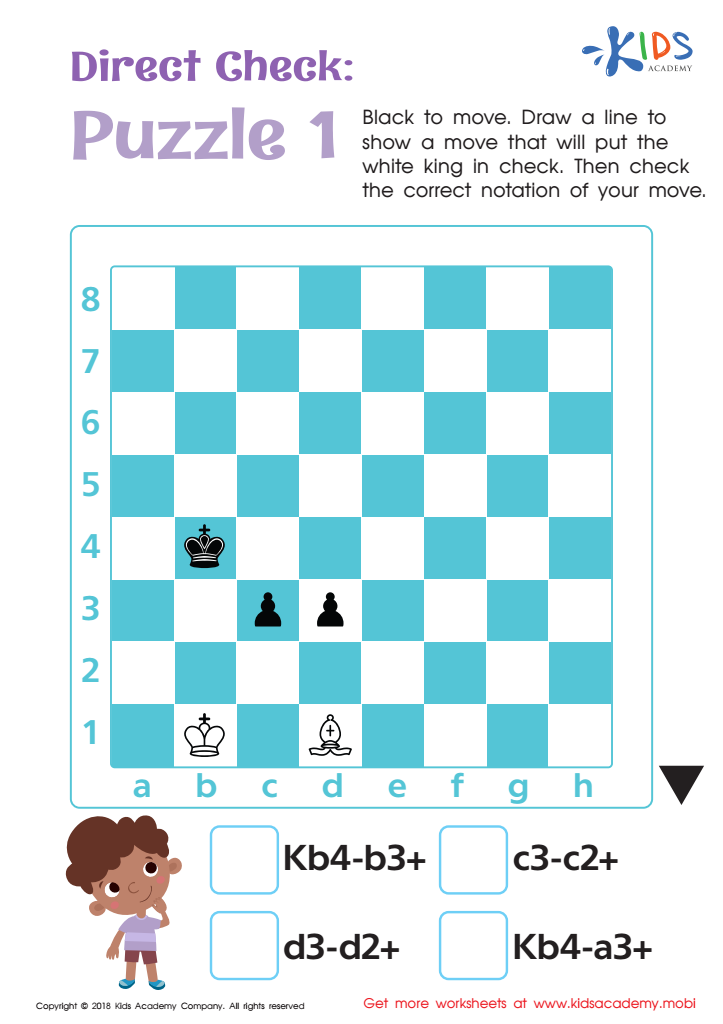
Direct Check: Puzzle 1 Worksheet
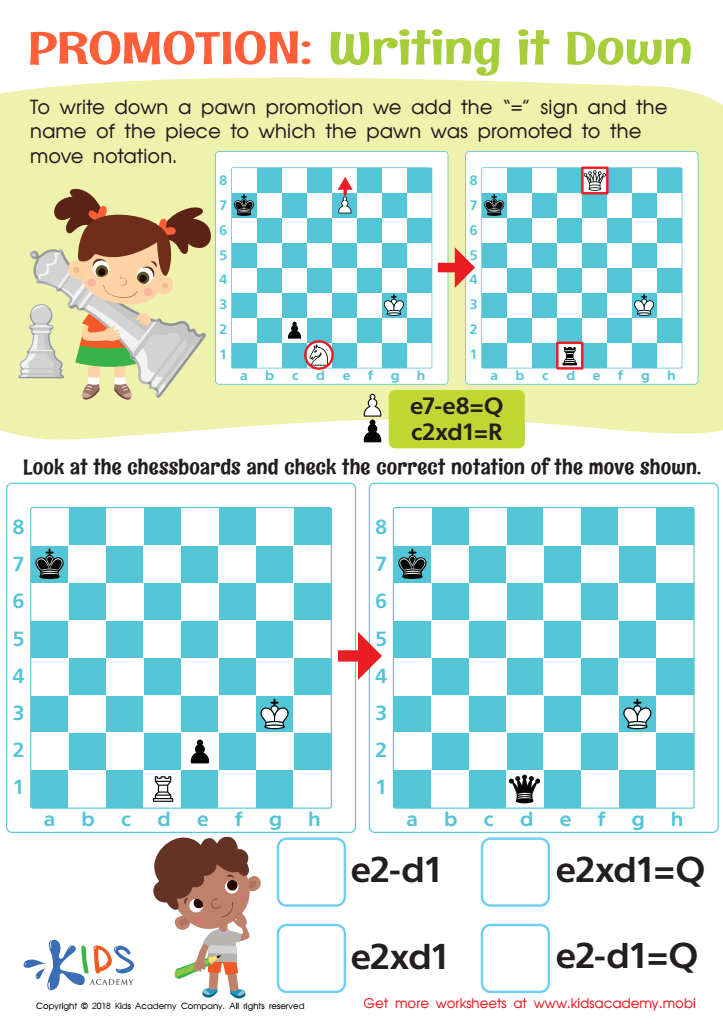
Writing it Down Worksheet


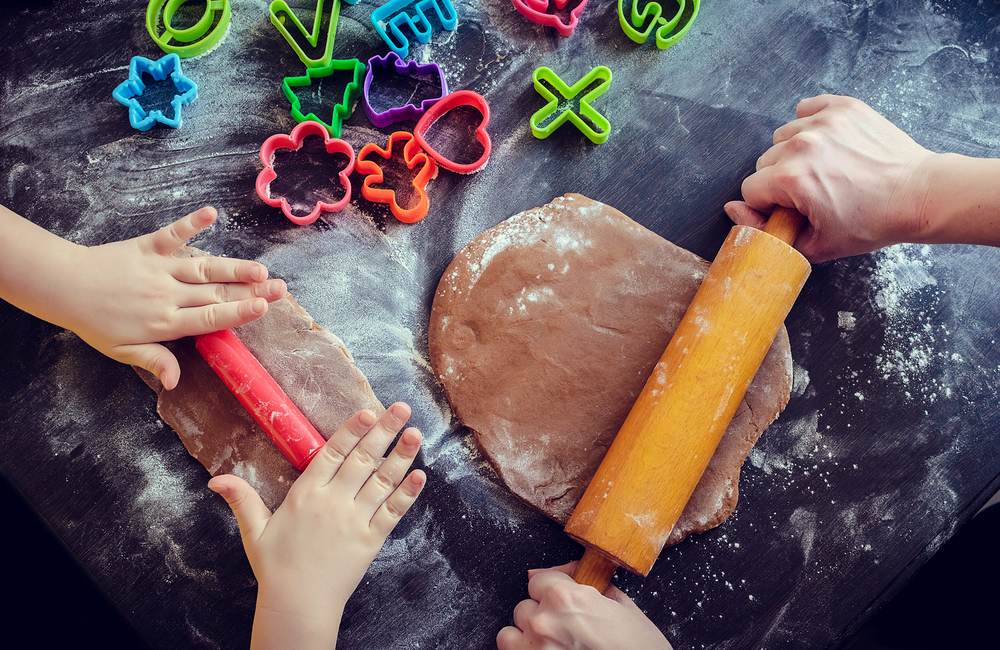

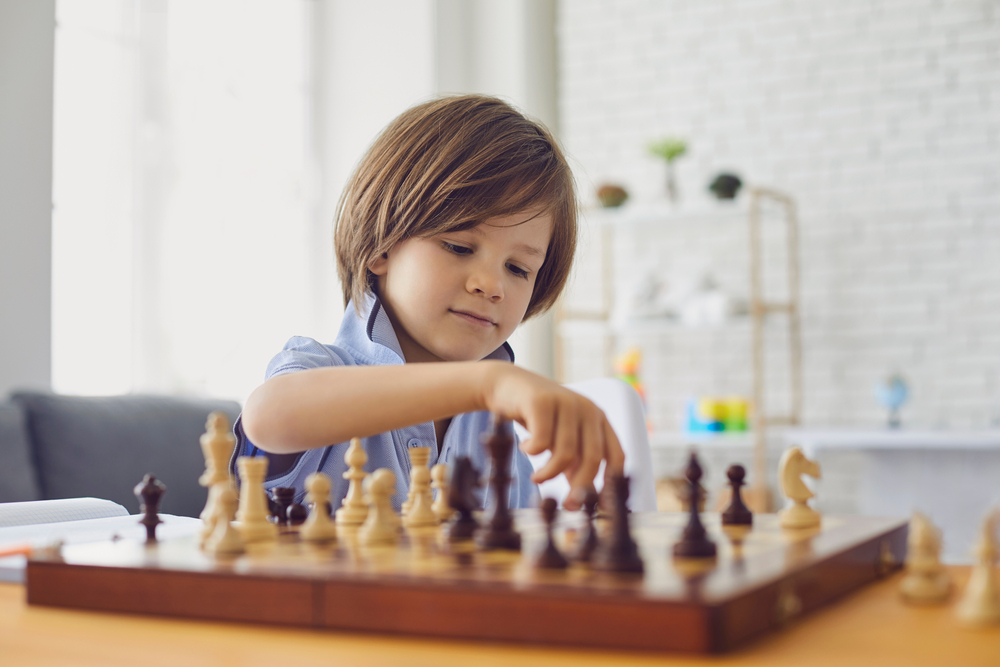
Number Recognition Chess is an innovative educational tool that blends the strategic elements of chess with foundational math skills, particularly number recognition. For parents and teachers, this approach offers a dual benefit: it enhances cognitive skills while fostering a love for mathematics and strategy.
Engagement in Number Recognition Chess helps children develop critical thinking, problem-solving abilities, and spatial reasoning—all essential skills not just in math, but across various subjects. As children navigate the game and recognize numbers on the board, they simultaneously strengthen their mathematical foundation. This integration makes learning numbers fun and interactive, reducing anxiety often associated with math subjects.
Moreover, playing chess promotes patience, concentration, and sportsmanship. As children track their opponents’ moves and calculate potential outcomes, they build perseverance and resilience. This makes Number Recognition Chess not just a game, but a comprehensive learning experience.
For parents and teachers emphasizing the importance of STEM education, incorporating Number Recognition Chess into learning routines can significantly enhance a child’s educational journey. It encourages independent learning and collaboration, allowing children to engage with peers and adults, thus promoting social interaction and collaborative skills that extend beyond the classroom. In a rapidly evolving world,these are invaluable skills for future success.